Tag Archives: featured

New record set for Masseto

A sale of wines released directly from the Masseto Caveau surpasses the high estimate to bring a grand total of €376,625

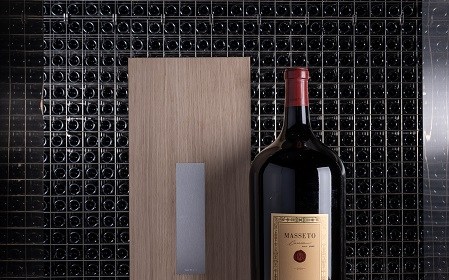
Nebuchadnezzar of the 2010 vintage sells for a record €56,250

Sotheby’s sale of wines released from the Masseto Caveau concluded yesterday, having achieved an outstanding total of €376,625 with all 46 lots finding buyers and selling for prices above their high estimates. The announcement of the auction in March created much excitement and anticipation among wine collectors, and by the time the first day of bidding on 12 April drew to a close, the sale was already 100% sold. As the lots began to close yesterday, a flurry of bids resulted in a final total far beyond a pre-sale estimate in the region of €200,000, with collectors across Europe, the Americas and Asia competing to purchase one or more of the extremely limited number of 132 bottles on offer in varying formats. The sale was led by a nebuchadnezzar of the 2010 vintage, which sold for €56,250, tripling its estimate and establishing a new record for any bottle of Masseto at auction.

Amayès Aouli, Sotheby’s Head of Wine, Europe, said: “These standout results, not least the record price for the nebuchadnezzar, are testament to the quality of the wine produced by Masseto and the unprecedented opportunity to acquire bottles directly from the Masseto Caveau. We saw bids coming in from all over the world, with competition among both established collectors and buyers new to Sotheby’s. It has been a pleasure to partner with this iconic estate for such a special occasion and to bring their wines to as wide an audience as possible.”

Giovanni Geddes, CEO Masseto says: “We are truly proud of the results that went beyond our expectations. We would like to thank all wine collectors and buyers for their enthusiasm showed towards our wines. This is the best recognition Masseto can receive. We would like to thank Sotheby’s as well for their professionalism and passion during this collaboration.”


Axel Heinz, Estate Director concludes: “It is an honor to know that the work of our team is highly esteemed internationally. We are very pleased that these wines will be kept and also enjoyed by collectors who appreciate their identity, history and uniqueness.”

For this special sale, Sotheby’s joined forces with Masseto earlier this year to select vintages directly from the most secret space in the winery’s cellar carved deep beneath the vineyard above – a stunningly designed location where bottles of every Masseto vintage rest in perfect conditions, each protected in its very own steel cradle. The contents of the auction spanned three decades, including 35 cases containing the 2006, 2010 and 2011 vintages, as well as magnums, double magnums, imperials and a single nebuchadnezzar. Among the top lots were two imperials of the 2001 and 2016 vintages, which sold for €15,000 each.

All the bottles from the Masseto Caveau were presented for sale in numbered cases handcrafted in oak and containing a certificate of origin signed by Axel Heinz, Estate Director. Furthermore, every bottle came to auction with a Prooftag®, attesting to the wine’s authenticity, including the date when the bottle left the Caveau stated on the front label: April 2023. In addition, Caveau features on every capsule as well as on the seals of guarantee that close the wooden cases, a singular confirmation of watertight provenance.

Masseto has gained a unique place in the pantheon of collectible wines, to become one of the most valuable, coveted wines in all of Italy and beyond. The estate is located on a magical hillside on the Tuscan Coast where unique, individual, complex, compelling yet elegant wines are being produced, with each vintage having the specific personality of Masseto, but always showing a different facet.

Full results available here.

AXEL HEINZ to leave Bolgheri for France

Axel Heinz, Estate Director of Ornellaia and Masseto, announces that his time in Bolgheri will draw to a close in Summer 2023 when he will return to France.

Axel Heinz came to Bolgheri in 2005 and his professionalism and expertise have assisted the company, enabling vintage after vintage to communicate the impressive expressions of the terroir belonging to both estates.

For me, it has been an incredible honour to contribute to the success of Ornellaia and Masseto in these years and I’d like to thank Giovanni Geddes and the Frescobaldi family for this invaluable journey,” remarks Axel Heinz. “I have had the chance to manage these astonishing vineyards and two innovative wineries, which have allowed us to bottle the fruits from a terroir that expresses all the elegance of the Mediterranean. Now the moment has come to return to France. Bolgheri, Ornellaia and Masseto will always remain in my heart and Italy, after all these years, has become my third home, after Germany where I was born and France, where I have lived for most of my life.”

Axel Heinz has decided to take on new professional challenges in France after more than 17 years of working with Ornellaia and Masseto,” comments CEO Giovanni Geddes. “These years have been ones of massive development and success, also thanks to Axel’s professionalism and technical, communicative and human abilities, who I thank for the results achieved. The excellence of Ornellaia and Masseto comes from the benevolence of Nature and the passion and experience of an outstanding team.” The President of Marchesi Frescobaldi, Lamberto Frescobaldi, also thanksAxel Heinz and reassures that, “a strong team will remain at Ornellaia and Masseto, which has worked side by side with Axel for many productive years”.

Henry Borzi

125 Years of Castello di Querceto

La Corte 2019: Interpreter of the past and present

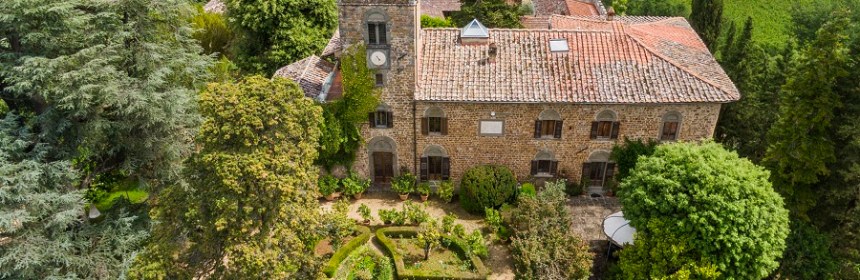
The origins of Castello di Querceto, with its crenellated tower, date back to the Middle Ages, but the milestone being celebrated by the François family this year is an impressive 125 years as wine producers.

It was in 1897, in fact, in Dudda, in the commune of Greve in Chianti, that Carlo François purchased Castello di Querceto. Even then, estate-grown wine was being made within its venerable cellars from the surrounding vineyards, and Carlo, immediately recognising the innate quality of its Sangiovese, began to make a monovarietal from a small vineyard parcel of particular promise. That was the ancestor of La Corte, and a few bottles, dated 1904, still survive. A few years later, in 1924, Castello di Querceto became a founding producer of the Consorzio Chianti Classico.

The estate’s modern history, however, begins with Alessandro François, and his pioneering concept of the Chianti Classico cru. Since the 1970s, he has been minutely studying every individual plot on the estate, and, confirming the ground-breaking intuitions of his grandfather, he determined that the qualities of that very same parcel merited his first single-vineyard wine. La Corte thus debuted officially in 1978 as an IGT Toscana, produced from that 3.4-hectare vineyard lying at an elevation of 450 metres, planted with a south-southwest-facing exposure in sandy soils.     

Over the following decades, other singular expressions enriched the collection, and Castello di Querceto became a benchmark for the entire denomination, a growing area for which Alessandro and his wife Antonietta have been ambassadors literally across five continents, exporting their wines to over 50 countries. Today, Simone and Lia François work side by side with their father in managing the wine estate, as do their respective spouses Stefania and Marco, sharing responsibility for hospitality, administration, and export. 

Over the years, research at the Castello has proceeded uninterrupted. The introduction of precision viticulture has proved decisive, as well as minimal intervention in the winemaking process; both testify to the philosophy of striving to highlight the distinctive characteristics of each individual vineyard parcel. 

The historic La Corte cru fully embodies this approach. With the 2017 vintage, it became a Chianti Classico Gran Selezione, thus joining the other prestigious cru, Il Picchio, which has been a Gran Selezione since 2011. “Both of these Sangiovese wines have always so impressed us that they deserved to bear the denomination’s highest quality designation,” commented Simone François.

“At 125 years from the founding of Castello di Querceto,” added Alessandro François, “La Corte continues to gift us a vibrant, comprehensive, and eloquent expression of our terroir. It amply demonstrates the incredible qualities of this growing area, as well as of the denomination that we are so proud to be a part of.”

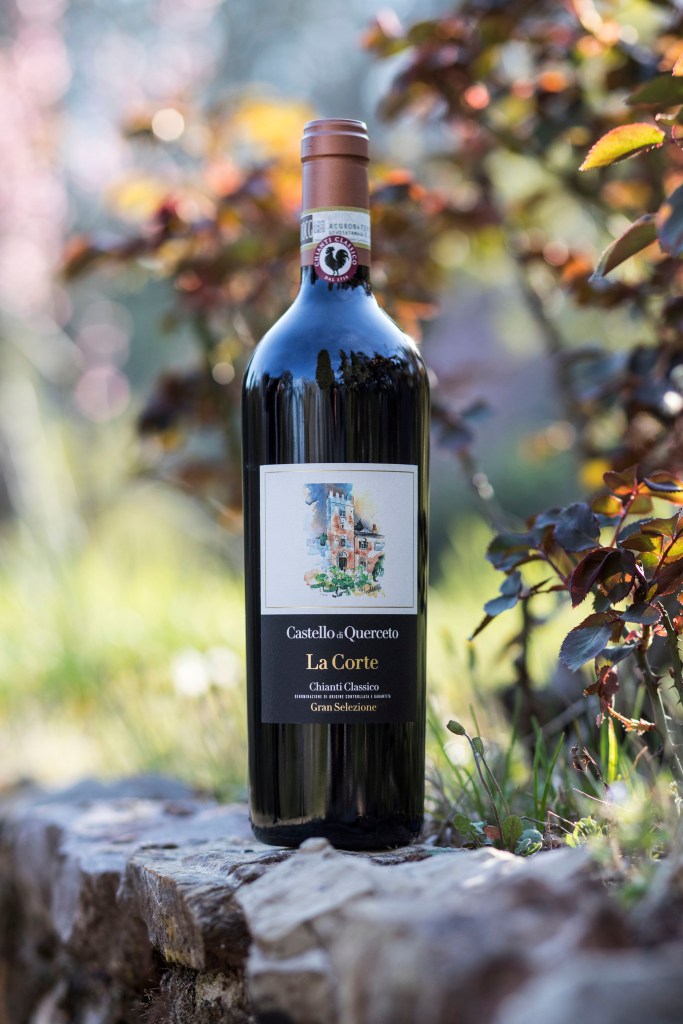
Chianti Classico Gran Selezione La Corte 2019, released just recently on the market, is the fruit of a growing season which proved well-balanced and of impressive quality. Generous rainfall in the spring filled groundwater reserves that helped the vines cope with a dry summer. The heat was not excessive, however, thanks to Castello di Querceto’s elevation and to significant day-night temperature differences. Finally, very favourable weather in September and October allowed the winery to push back the start of harvest. The results were ideally-ripe clusters that yielded a taught, clean-edged, pleasurable Sangiovese.    

“All in all, a perfect vintage for our celebration of such an important anniversary,” concluded Simone François, fourth generation of a family fiercely proud of its traditions, and one whose long history gives it the ability to see far into its future.

*

The winery, along with its agriturism and luxuriant park, lies in Dudda, in a small valley in the hills high above Greve, in north-central Tuscany. Here, the François family grow their wines in some 65 hectares of estate vineyards, subdivided into 26 individual parcels planted in Cretaceous-Eocene polychrome schists. In addition to the Chianti Classico line, led by the two Gran Selezione crus, La Corte and Il Picchio, the portfolio boasts various IGT crus, Il Cignale, Il Querciolaia, Il Sole di Alessandro (Cabernet Sauvignon), and QueRceto Romantic, an elegant blend of Petit Verdot, Merlot, and Syrah.

Citizenship in the contemporary world and responsibility to the local environment and to future generations require a commitment to sustainability, and thus Castello di Querceto has been a certified participant in the Italian government’s ViVa program since 2022.    

Henry Borzi

Vintage 2022 a year of contradicting weather: the winemakers display versatility and resilience to achieve an expression of the finest quality

The 2022 harvest has ended and now we can review a year of unusual weather contradictions. Axel Heinz, Ornellaia’s Estate Director, describes the vintage as a continual challenge that required the expressive abilities of mankind to adapt to the working processes. A vintage that was always on the edge, where disaster was constantly on the horizon, but where in the end various weather events balanced out the negative effects, enabling the winemakers to find a nuanced expression of the finest quality through mental nimbleness and resilience.”

A climatic analysis shows how the 2022 vintage began as usual without prognosticating any issues, with winter temperatures within the norm and a cool spring with a slightly delayed budbreak on the vines. The conditions inverted in May, with temperatures exceeding 30°C and a dearth of rain for 75 consecutive days, truly testing the growth, flowering and veraison of the vines.

The harvest started early on 9 August with the first bunches of Sauvignon Blanc, but was immediately interrupted by the arrival of the much-awaited summer storms, which again disrupted the conditions that had distinguished the year thus far. The abundant rainfall instigated a turning point, eliminating the water stress and reactivating the ripening process. A cool and sunny September brought near-perfect conditions to ripen the Cabernet Franc and Cabernet Sauvignon.

Interpreting the unusual weather contradictions in the vineyard and in the cellar required certain measures to achieve a fine expression, such as night harvesting of the earliest white grapes in order to preserve the freshness and aromas; the use of a refrigerating room to keep the temperature of the grapes low; and the meticulous discarding of dried grapes as well as ones that had remained green after the veraison. Experimentation on the winemaking front also occurred with the addition of the use of amphorae alongside barriques and tonneaux.

“The hallmark of a hot vintage is clear in the wines,” explains Axel Heinz. “The wines are ample and bodied, yet balanced by a beautiful acidity and precise aromas. The Sauvignon Blanc shows its exotic side with tropical fruit aromas, while the Viognier and Vermentino display prolonged floral notes. Less concentrated than usual and struggling to free the skin content, the Merlot required longer static maceration to obtain an enjoyable density, doing away with rustic tannins. On the contrary, the Cabernets demonstrated deep and layered hues, even in the first few days of maceration, developing a traditional aromatic profile with signature notes of cassis for the Cabernet Sauvignon and spiced violet nuances for the Cabernet Franc. The aromatic freshness is surprising, dotted with menthol and balsamic overtones, as well as plush tannins, all of which provide an exceptional basis for long, harmonious ageing.

Now comes the final challenge of 2022: “The blending, when we will need to find the right balance between the various parts to express the many virtues that 2022 yielded to those who listened to nature with respect and dedication through the struggles,” concludes Axel Heinz.

Michele Zanardi

Dalla Valle Vineyards and Ornellaia Release 2019 DVO

The 2019 Vintage Marks the Second Release from the Collaboration Between the Two Iconic Estates

Dalla Valle Vineyards in Napa Valley and  Ornellaia estate in Bolgheri present DVO 2019, the second vintage in their collection, an expression of uncompromising excellence and the result of a partnership that reveals the expertise honed by the two estates and the traditions in each wine region. DVO 2019 will be available on the market starting with November 2022.

A project desired and designed by second-generation winemaker, Maya Dalla Valle and Naoko Dalla Valle, Founder and Proprietor of the Californian estate; Axel Heinz, Estate Director of Ornellaia and Giovanni Geddes da Filicaja, CEO of the Bolgheri estate, DVO is a blend of Cabernet Sauvignon (85%) and Cabernet Franc (15%). Bearing the authentic and distinctive personality of the region from which the wine takes shape, the style refers to traditional winemaking with the clear aim from the outset of obtaining a Californian wine with a European sensibility.

Maya Dalla Valle, who oversees the day-to-day operations, describes how “the 2019 vintage stands out as another classic yet modern Napa Valley vintage, balancing the expressiveness of Napa through a European lens. This has been and will always be the goal with DVO, to continue our core value of farming first, while honoring our Italian ties.”

The 2019 vintage highlights the rich terroir of Napa Valley with inspiration from Italy. It exhibits a progression of black and red currents, violet and cassis. The small influence of Cabernet Franc seamlessly ties together the blend with baking spices and crushed summer herbs. Velvety and polished tannins give the wine a prolonged and elegant finish. Aged for 22 months in a French Oak Barrel, the 2019 DVO is distinctive and authentic to both wineries.

With DVO, we are crafting wines that are representative of the legacy and expertise of our estates while moving towards the potential future goals that this collaboration could bring,” emphasizes Axel Heinz. “DVO 2019 is a perfect example of this. Blending the past with the future to shape a vintage to remember.”

ORNELLAIA VENDEMMIA D’ARTISTA

“Il Vigore” 2019

THE ONLINE FINE WINE AUCTION HAS FINISHED.

DESIGNED BY ARTISTS NATHALIE DJURBERG AND HANS BERG, THE FINAL AMOUNT RAISED WAS

$ 302,000

All the profits have been given to the Solomon R. Guggenheim Foundation for the Mind’s Eye program.

The online auction of Vendemmia d’Artista 2019: Il Vigore, hosted by Sotheby’s, finished yesterday. The fine bottles of wine, which were designed this year by Swedish artists Nathalie Djurberg and Hans Berg, were allocated to art and wine collectors, raising a final amount of $ 302,000. The profits from the auction will be given to the Solomon R. Guggenheim Foundation to further the important endeavours of the Mind’s Eye program.

On announcing the results of the auction for this fourteenth edition of Vendemmia d’Artista, the CEO of Ornellaia, Giovanni Geddes da Filicaja, communicated his pleasure of having renewed the partnership with the Guggenheim Museum for another three years. “We are very enthusiastic about continuing to support the development of this special project that we believe in. Since the beginning, we wanted Mind’s Eye to be able to develop and become available to a vast audience from different places around the world. This global vision has now developed even more, ensuring that the program has become a feature of all the Guggenheim museums, in New York, Venice and Bilbao.”

Mind’s Eye is more than a mere experience; it is a set of tools capable of broadening accessibility to art through the use of the senses. As Richard Armstrong, Director of Solomon R. Guggenheim Foundation and Museum, explains: “With Ornellaia’s continued support, we will expand the Mind’s Eye programs to a global audience with a focus on developing the verbal descriptions in all our museums. Next year, we will produce content for the Peggy Guggenheim Collection with translations in several languages. Furthermore, we will continue the events in New York and the online programs, which will be available internationally. Looking towards 2023, thanks to the auction profits, we will concentrate on creating Mind’s Eye content for the Guggenheim Museum Bilbao. These projects will continue in 2024 to expand the program, increasing the resources and the audience.”

Wine, like art, transcends words and, through the senses, the use of an emotional language takes on a universal value. The interpretation of the vintage was entrusted to the creativity of Swedish artists Nathalie Djurberg and Hans Berg. The themes of metamorphosis and the constantly evolving cycles of nature and its driving force form the core of the work, providing the perfect canvas for the artists of the fourteenth edition of Vendemmia d’Artista to interpret the theme of “Vigore” through art. The precious lots provided for the auction included 9 six-litre Imperial and the only nine-litre Salmanazar of Ornellaia Vendemmia d’Artista 2019, whereby the evolution of the concept of the relationship between humans and the earth is expressed through the sculptures.

Nittardi, 40 years of wine and art

From 10 to 30 November 2022… in homage to Chianti Classico Casanuova di Nittardi Vigna Doghessa, the Nittardi collection will be on display at the Galleria Palazzo Coveri of Florence: over 80 works by the most important contemporary artists.

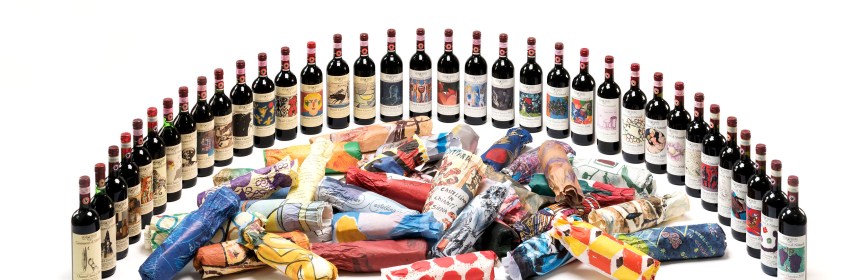
Casanuova di Nittardi is the historic Chianti Classico of Nittardi winery. Its very first vintage saw the launch of an art project, which has now, with the wine’s 2020 vintage, reached its 40th anniversary. Since 1981, the Canali-Femfert family has been celebrating the character and history of Casanuova di Nittardi by means of a unique artwork series: for each vintage, artists are invited to create two art pieces, one for the bottle label and one for its wrapping paper.

To celebrate this particular milestone, the Canali-Femfert family decided to establish an international art competition – the Premio Nittardi. Its prestigious jury has selected not one, but six artists, since the guiding concept is to offer passionate collectors of Nittardi an unpredecented case of six bottles of Chianti Classico Casanuova di Nittardi Vigna Doghessa 2020, each with a different label and wrapping paper.

This one-of-a-kind eno-artistic treasure, the Collezione Nittardi, from 10 to 30 November 2022, moves to Florence’s Galleria di Palazzo Coveri, at 19 Lungarno Giucciardini, where visitors may admire both the original art works as well as the entire set of bottles with their front labels and wrapping paper.

This journey through 40 vintages of a wine that is itself an artwork offers the rare opportunity to appreciate some of the most influential figures of contemporary international art, and in doing so has created a further artistic dimension… for all the senses.

Over the years, Chianti Classico Casanuova di Nittardi Vigna Doghessa has proudly borne the signatures and artworks of international artists such as Pierre Alechinsky, Corneille, Dario Fo, Karl Otto Götz, Günter Grass, Friedensreich Hundertwasser, Yoko Ono, Mimmo Paladino, Fabrizio Plessi, Mikis Theodorakis and many others. They are joined today by this year’s winners of the Premio Nittardi: Italian artists Chiara Mazzotti and Fausto Maria Franchi, and from abroad, Pengpeng Wang, Ulrike Seyboth, Olle Borg, and Andreas Floudas-Zygouras. In addition, the Femfert family also selected a seventh artist, Roberto Maria Lino, to artistically dress the Magnums.

***

The exhibition _ The public may visit the exhibition in the Galleria Palazzo Coveri, at Lungarno Giucciardini 19, in Florence from 10 to 30 November 2022, Tuesday through Saturday, from 11.00am to 1.00pm and from 3.30pm to 7.00pm. Entry is free.

The Premio Nittardi jury _ The Premio Nittardi jury is composed of Luigi Toninelli (Gallerista of Milan/Monte Carlo), Johannes Heisig (German author and artist of an art piece for the 2019 vintage), Amy Ernst (artist, niece of Max Ernst), Anthony von Mandl (Canadian art collector and wine producer), Young Ho Kim (Korean art collector), Gianna Martini Coveri (CEO, Gruppo Coveri).

Winners of the Premio Nittardi _ Chiara Mazzotti (I) with “Purezza concreta” and “Celebrazione”; Fausto Maria Franchi (I) with “Capriccio italiano”; Pengpeng Wang (CHINA) with “Pensieri”; Ulrike Seyboth (D) with “fructueux” and “abondance”; Olle Borg (S) with “Sine Nomine”; and Andreas Floudas-Zygouras (GR) with “Per Edoardo” and “Wine stages”. Special prize awarded to Roberto Maria Lino (I) by the Femfert family, for the Magnum label and for his works “Sutura”.

The Nittardi Collection _ The artists who have created labels and wrapping papers to date are Bruno Bruni (1981), Maurilio Minuzzi (1982), Karl Korab (1983), Simon Dittrich (1984), Miguel Berrocal (1985), Alfred Hrdlicka (1986), Paul Wunderlich (1987), Rudolf Hausner (1988), Friedensreich Hundertwasser (1989), Horst Janssen (1990), Valerio Adami (1991), Corneille (1992), A.R. Penck (1993), Eduardo Arroyo (1994), Raymond E. Waydelich (1995), Luigi Veronesi (1996), Igor Mitoraj (1997), Elvira Bach (1998), Emilio Tadini (1999), Sandra Brandeis Crawford (2000), Volker Stelzmann (2001), Giuliano Ghelli (2002), Robert Combas (2003), Klaus Zylla (2004), Yoko Ono (2005), Mimmo Paladino (2006), Tomi Ungerer (2007), Günter Grass (2008), Pierre Alechinsky (2009), Dario Fo (2010), Kim Tschang Yeul (2011), Karl Otto Goetz (2012), Alain Clément (2013), Hsiao Chin (2014), Joe Tilson (2015), Allen Jones (2016), Mikis Theodorakis (2017) Johannes Heisig (2018) and Fabrizio Plessi (2019).

The wine _ Chianti Classico Casanuova di Nittardi is grown near the villa residence in Castellina in Chianti and, since 2012, has been the offspring of a single vineyard, Vigna Doghessa. This parcel, lying at 450 metres above sea level with superlative southern exposure, has soil of medium depth, rich in galestro and alberese, two geological materials that define the character of our Chianti Classico. The wine is as unique as it is complex, just as a work of art can be.

The winery _ Nittardi has 40 hectares of vineyards, organically formed since 2014, divided between Castellina in Chianti and Maremma in Tuscany. In the sixteenth century, the estate was owned̀ by Michelangelo, who would send wine from there to Rome as a present for Pope Paul III. Art and creativity are in the DNA of the estate, as evidenced by the extraordinary park of contemporary sculptures and the exceptional artists who, every year since 1981, have created two works dedicated to the historic Chianti Classico Casanuova di Nittardi at the invitation of the curator Peter Femfert; his wife Stefania Canali, historian; and their eldest son Léon, who has managed the estate since 2013.

Passorosso and Passobianco 2020

Passopisciaro’s “self-portrait wines” interpret the soul of Mount Etna

“In the 2000 growing year,” read notes written by Andrea Franchetti, “summer brought rains, but the heat returned in July, ushering in optimal conditions characterised by beneficial alternations of warmth and summer rains, with the result that we were able to harvest fully-ripe white grapes in late September and reds in late October.” 

Two years have passed since these notes were written, and today, the Mount Etna wine operation founded by Franchetti and now managed by his sons Benjamin and Giordano has released its two standard-bearers, Passorosso and Passobianco. 

It was in the year 2000 that Andrea Franchetti first realised the great potential of this area, with its power-filled yet delicate life-force, and dreamed of what would – with the help of his pioneering contribution – become a one-of-a-kind institution for the Contrade, as well as a winemaking name renowned world-wide. Vineyards growing at the very limits of the extreme yield wines full of emotion. These wines are testament to an unbelievable biodiversity that is nourished by the volcano’s unstoppable vital force.      

“Here is a land that is both ancient and young at the same time,” remarks Benjamin Franchetti, “a place that demands both respect and commitment to quality.” “Passobianco and Passorosso,” continues Vincenzo Lo Mauro, winery director since the very beginning, “are not individual Contrada wines; rather, they each are faithful expressions of our winery’s philosophy and expressions of the extraordinary land.”

Passorosso is made from a blend of grapes from ancient Nerello Mascalese vines growing at elevations between 500 and 1000 metres on Etna’s north slope. This wine represents the comprehensive style of Passopisciaro and its Contrade, with terroir, the emotions of Etna, and the philosophy of the winery all concentrated in a single wine. This year, one notes hints of red berry fruit and eastern spices in the glass, perfectly balanced by minerality.

Passobianco, on the other hand, is the uncompromised essence of Chardonnay, a variety that Andrea Franchetti found perfectly suited to the steep terraces of the Contrada Guardiola, lying between 850 and 1000 metres above sea level. The soil here is deep and loose, consisting of mineral-rich volcanic ash, giving the Chardonnay its Mediterranean flavour and ash-tinged minerality that are balanced by notes of spice.

Together, these are the perfect ambassadors for those who would like to explore the style of Passopisciaro.

WINE: GAS CRISIS ALSO FREEZES ITALIAN WINE, COST SURPLUS AT 1.5 BILLION EURO

UIV-VINITALY Observatory: market holds (for now), but does not compensate for cost escalation


It is a gap of almost 1.5 billion euro that caused by gas and energy on Italian wine. Even one of the healthiest Made in Italy sectors is forced to raise the alarm, and now the main fear is that the escalation in costs will be compounded by a crisis in consumption, in Italy and worldwide. According to the UIV-Vinitaly Observatory survey carried out last week on companies in Italy, the surplus of energy costs alone (+425 million euros) and, consequently, of dry raw materials (over 1 billion more for glass, paper, cardboard, caps, aluminium) are worth an 83% increase on the budgets at the beginning of 2022. In addition to these, other increasing items (bulk wine, commercial costs, workforce) lead to a 28% increase in total costs this year. The result, according to the survey of a panel representing 30% of the market, has the flavour of a mockery for the sector.

The increase in list prices estimated by the Observatory in the first nine months of this year is in fact 6.6%, a positive figure but insufficient to cover an upward variation in prices that companies have requested in the order of 11%. The equivalent gap is equal to EUR 600 million in costs not covered by revenues that Italian wine is forced to bear in order to stay on the market. The ones losing out the most are the supply chain companies, the largest cluster – but with the least bargaining power – made up mostly of small businesses that produce, vinify and bottle everything, or almost everything, in-house. But, with some exceptions, the wine industrialists and the world of cooperation are also suffering due to a dynamic that particularly penalizes the basic and popular segments of the offer, starting with medium-priced sparkling wines. The impact on the premium segment is different, not only because it is better able to absorb variations but also by virtue of a market that is more willing to accept requests for price increases.

For the president of the Italian Wine Union (UIV), Lamberto Frescobaldi: ‘The survey shows how the current crisis does not spare our sector, which is not energy-intensive but in many of its components suffers direct consequences. What we can do now is to consolidate with a supply chain pact all the dynamics that can produce a buffer effect to guarantee competitiveness and the market. Producers, industrialists, cooperatives and distributors will therefore have to absorb part of the increases so as not to dump them completely on consumers and avoid a dangerous depression of consumption’.

 For the CEO of VeronaFiere, Maurizio Danese, “We consider it a duty for Vinitaly to monitor the dynamics of the sector, all the more so in a delicate moment such as this. What is happening also has a strong impact on wine, but we are aware that today’s events, like those of 2 years ago, represent exogenous and non-structuring factors affecting a sector that is in any case healthy. At the next wine2wine, scheduled for 7-8 November, we will present, together with UIV, the second part of this economic study, also with this year’s complete forecast estimates for the market, profitability, and balance sheet of the Italian wine industry”.

www.osservatoriodelvino.it

1982-2022: 40 VINTAGES OF BRICCO DELL’UCCELLONE BRAIDA

There are wines that you fall in love with the very first time you taste them. That you never forget. That go down in history. Wines that actually succeed, somehow, in shaping history. And this is the case of Braida’s Bricco dell’Uccellone, first harvested in 1982, exactly 40 years ago.

At a time when Barbera was regarded as a grape-variety of little prestige, trailblazer Giacomo Bologna reinterpreted the potential of this grape with a view to modernity and internationality. Giacomo knew how to think big: his recipe was based on the selection of crus, much lower yields than usual and the ageing of the wine in French oak barriques to give it elegance and structure. These were the tools that were key to reclaiming dignity and lending new emphasis to one of Piedmont’s most important grape varieties, launching a revolutionary phase for Barbera that was soon emulated by many other winemakers.

Three years after the first harvest, when this bottle, labelled as “table wine” at the time, was released onto the market, its success was overwhelming. The acknowledgements of Bricco dell’Uccellone began to pour in immediately, so much so that the English journalist Jancis Robinson, in her Oxford Companion to Wine, under the heading Barbera wrote: “The man who first put Barbera on a pedestal, proving that it was a serious wine, was Giacomo Bologna of the Braida winery, whose Bricco dell’Uccellone was the first Barbera to be sold internationally”.


To seal this journey, Braida’s Bricco dell’Uccellone Braida received the “Wein Legende” award at Bensberg Castle in 2019. It was the first wine from Piedmont to be listed in the hall of fame of the world’s most important wines and the third Italian wine, along with Ornellaia and Sassicaia.

The first 2022 bunch of this Barbera was been cut on the 12th of September.
A new challenge, according to Giuseppe Bologna: “Since taking over full responsibility for production at the winery in 1994, I have seen some strange vintages… This one is certainly unparalleled, a historic vintage but without any applicable historical references: a whole range of brand-new emotions”.

We’ll discover its value in the glass in three years’ time.

Meanwhile, the overview of all the vintages on the market so far (up to 2019) is impressive.

Some trivia?

  • L’Uccellone was the nickname of a woman who lived on the hill where the vineyards are located. Her nose resembled a bird’s beak, and she always wore black: this earned her the nickname in the village. Hence the name Bricco dell’Uccellone.
  • The label of Bricco dell’Uccellone has remained unchanged since the first vintage, 1982. Together with the label of La Monella, it was the first work of Giacomo Bersanetti and Chiara Veronelli, who designed it even before founding their agency.
  • Bricco proudly bore the indication “Barbera di Rocchetta Tanaro” on the label, from 1982 to 1994, then the production regulations changed the indication to Barbera d’Asti DOC.
  • The 1985 bottle has a darker capsule than the others.
  • The bottle of the 1993 vintage is different from all the others, slightly taller, due to a production blockage in France.
  • The first bottle to bear the Braida serigraphy, to prevent the risk of counterfeiting, was that of the 2004 vintage.
  • The only vintage not produced was the 2002, due to adverse weather conditions.
  • The first vintage to carry the DOCG Barbera d’Asti was the 2008.
  • Several pets and some horses have been named Bricco dell’Uccellone.
  • A collection of photos, stories and anecdotes about this wine was compiled in 2015, to mark the 30th anniversary of the launch of Bricco dell’Uccellone on the market.
« Older Entries Recent Entries »