Category Archives: HOT NEWS

From soil to wine: the energy of the soils at Caiarossa

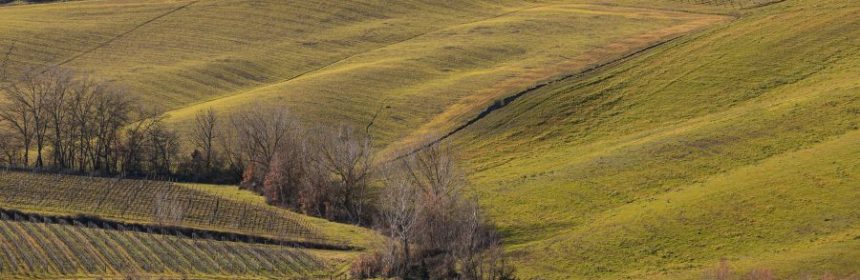
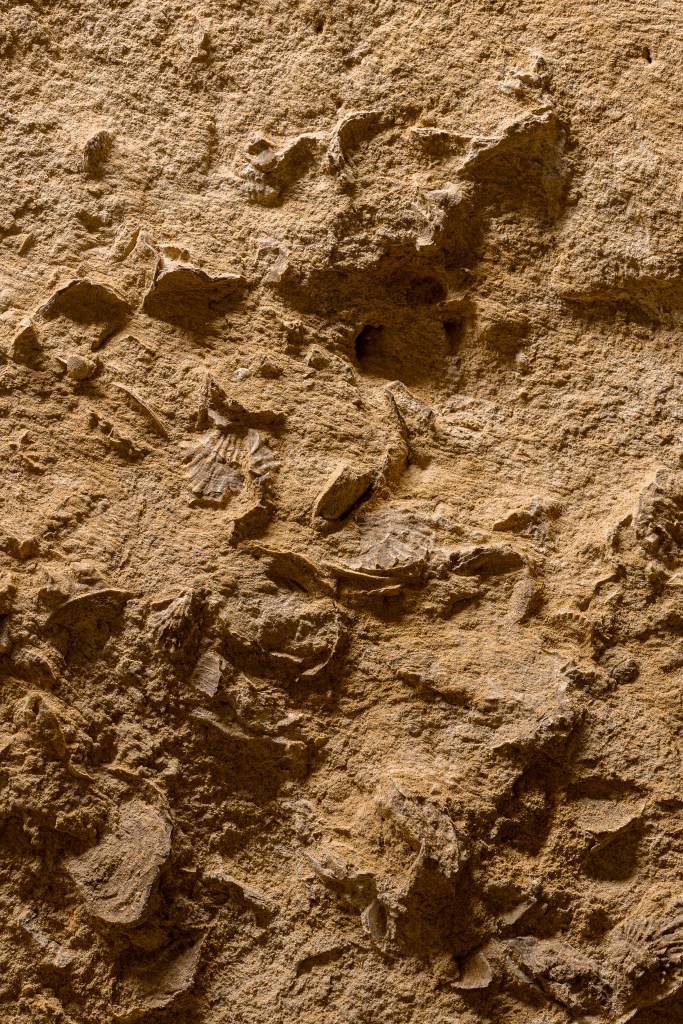
Clay, limestone, sand and volcanic formations: in Riparbella, the diversity of the terroir takes shape in the wines and inspires a philosophy founded on a balance between nature and viticulture. At Caiarossa, wine identity begins with the land. In the hills of Riparbella, just a few kilometres from the Tyrrhenian Sea, clay, limestone, sand, gravel, iron and volcanic formations alternate across a complex landscape, further shaped by differences in altitude, exposure and ventilation. It is this diversity of conditions that gives the estate one of its defining characteristics: the ability to read the different expressions of the terroir and translate them into wines with a distinct identity.

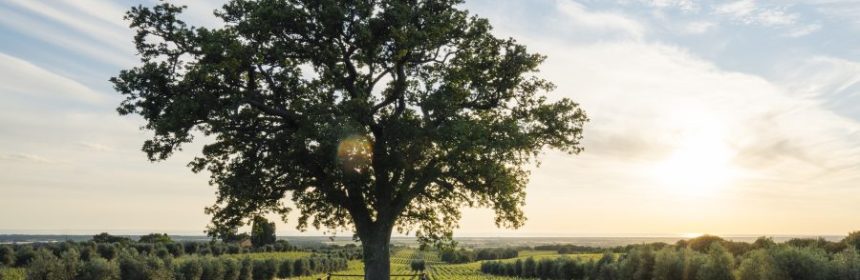
Caiarossa extends across approximately 110 hectares, including woodland, flowering meadows and olive groves, of which 40 hectares are planted with vines. The vineyards lie at altitudes ranging from 120 to 350 metres above sea level, surrounded by Mediterranean scrub and influenced by sea breezes and the characteristic light of the Tuscan coast.

The study of soil composition, microclimate and the orientation of individual vineyard sites has enabled the estate to identify 59 individual parcels, determining for each the variety, from among the 10 cultivated – six red and four white – best suited to express its potential. Each parcel is therefore monitored and managed throughout the year according to its own characteristics, without reducing its complexity to a uniform model.

The vineyards are divided into three main areas, each with its own distinctive characteristics. Podere Serra all’Olio is the historic heart of Caiarossa and home to the winery. Its soils are predominantly clay-based, with gravel, limestone and iron also present.

Further south, not far from the Cecina River, Le Lame has a different geological profile. Here, predominantly sandy and calcareous soils are exposed to breezes coming from inland.

Nocolino, on the slopes of Poggio di Nocola, reaches 350 metres above sea level and is the estate’s highest vineyard. Facing directly towards the sea and constantly ventilated, it is characterised by marl, schist and mineral-rich soils of volcanic origin.

It is precisely from the study of soil heterogeneity and the micro-parcellation of the vineyards that Caiarossa’s blending philosophy has evolved: an approach that seeks harmony and balance by bringing together the different expressions of the terroir and transforming them into wines with a strong sense of identity.

The clearest expression of this vision is Caiarossa IGT Toscana Rosso, the estate’s flagship wine, created through the blending of all the red varieties cultivated on the estate: Cabernet Franc and Syrah, together with Cabernet Sauvignon, Merlot, Sangiovese and Petit Verdot. Each variety is vinified separately and interpreted according to its specific characteristics. The diversity of grape varieties and terroirs combine to make it the broadest expression of the complexity and freshness of the Tuscan Coast. Fine, harmonious and complex in character, it is aged in barriques for at least 14 months.

Aria di Caiarossa IGT Toscana Rosso, meanwhile, focuses on the Nocolino vineyard and its Mediterranean character, with a selection of Syrah, Cabernet Sauvignon, Cabernet Franc and Merlot. The result is a wine with a velvety, deep and vibrant structure, aged for approximately 13 months in barriques, mainly second- and third-use.

Pergolaia IGT Toscana Rosso offers a contemporary interpretation of Sangiovese, Tuscany’s signature grape variety, complemented by a small proportion of Cabernet Sauvignon, Cabernet Franc and Merlot. The blend is aged for 12 months in large wooden casks. The wine combines softness, minerality and depth.

Following the same philosophy, Pergolaia Bianco IGT Toscana Bianco is made from a selection of Vermentino grapes with Chardonnay and Viognier. Fresh and vibrant, it evokes the summers of the Tuscan coast and is fermented and aged in stainless steel and concrete.

The selection of calcareous and sandy soils is showcased in Caiarossa Bianco IGT Toscana Bianco, produced in limited quantities from Chardonnay, Viognier and Vermentino. The grapes are hand-harvested in the early morning hours and gently pressed. Fermentation and ageing take place separately: Chardonnay is fermented and aged in barriques to develop depth and softness, while Viognier and Vermentino are handled in concrete or amphora to preserve their freshness and aromatic intensity. The result is a balanced, fine and mineral wine, with fruity and floral notes.

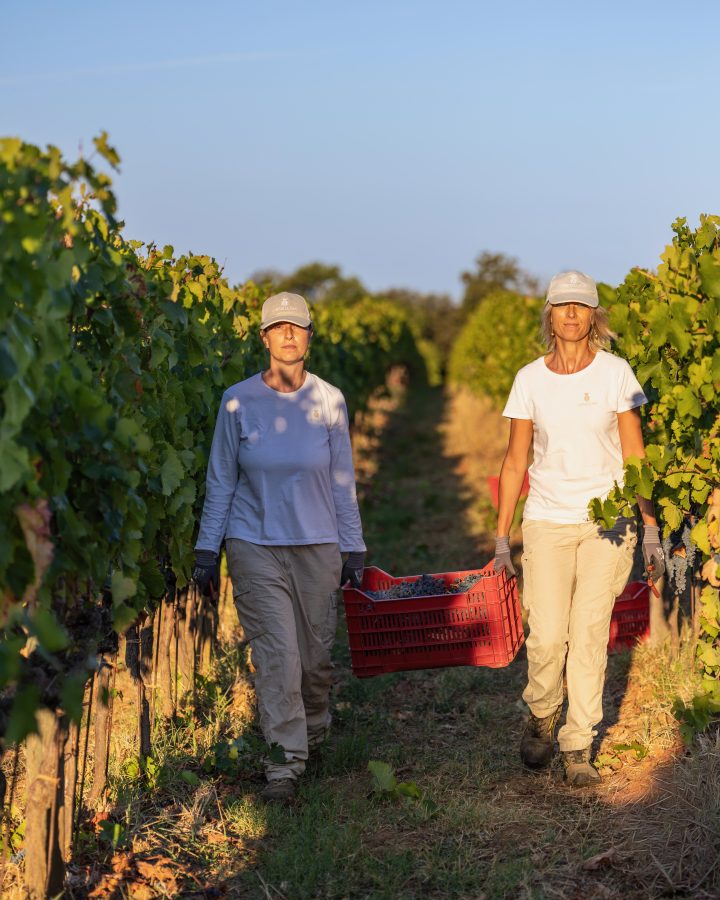
This attention to the distinctive characteristics of each terroir is also reflected during harvest. The grapes from each individual parcel are hand-harvested separately, at the point of ripeness considered ideal, and remain separate in the winery as well. The availability of fermentation vats of different sizes makes it possible to vinify each parcel individually, adapting the winemaking process to the specific characteristics of the grapes and preserving their identity through to the blending stage, when the technical team builds the final blends.

“Our work is primarily about listening: to the vineyard, the vintage, each individual parcel and each variety,” explains Francesco Villa, Technical Director at Caiarossa. “Our approach to viticulture and winemaking reflects our connection with Bordeaux culture, but here at Caiarossa it is shaped by the sea, the light and the Mediterranean climate. What we seek is balance: precision without rigidity, and expression without excess.”

Once vinification is complete, the wines are tasted and assessed to determine the individual labels, each offering a different interpretation of the estate’s vineyards and grape varieties, before following their separate ageing paths.

A plurality of identities united by a common vision: that of the Jelgersma family, which brings together close observation of the land, respect expressed through biodynamic practices, and a search for balance between people and nature, complexity and freshness, precision and naturalness.

Climate Change and Quality in the Glass:Montalbera announces its 2026 red wines night harvest

The Piedmont winery combines ethical sustainability with winemaking precision: cooler nighttime temperatures help preserve the rich aromatic profile of its native grape varieties while ensuring safer working conditions for vineyard crews

Montalbera, one of Piedmont’s leading wine estates with vineyards across Monferrato and the Langhe, has officially announced that its 2026 red wines night harvest will begin on 6 September.

What began in 2023 as an experimental response to climate change has now become a cornerstone of the winery’s production philosophy, bringing together the highest expression of its native grape varieties—first and foremost Ruchè di Castagnole Monferrato DOCG—with greater energy efficiency and a strong commitment to employee wellbeing. 

“Climate change is forcing us to rethink the rules of the game and adapt more quickly than ever before,” says Franco Morando, General Manager of Montalbera. “Every harvest reflects an entire year of dedication, yet it is during the night that its most precious moment unfolds. Harvesting in the cooler hours allows us to bring grapes to the winery with their aromas, freshness and identity fully preserved. It is a choice that combines experience, respect for nature and people, and an uncompromising pursuit of quality.”

The star of the evening will be Ruchè di Castagnole Monferrato DOCG Riserva Il Fondatore, the winery’s flagship wine and the ultimate expression of Montalbera’s heritage, vision and identity. The night will also mark the start of the harvest for Piemonte DOC Viognier

Harvesting after sunset is a deliberate decision aimed at preserving the integrity and elegance of every berry, safeguarding its organoleptic qualities and ensuring that the fruit reaches the winery in optimal condition for vinification. The harvest is carried out entirely by hand and supported by a meticulously planned logistics operation, including mobile lighting systems installed along the vineyard rows. This approach guarantees maximum safety and comfort for vineyard workers while complying with the latest agricultural labour regulations. 

From a winemaking perspective, night harvesting offers a significant advantage in preserving grape quality. Delivering fruit to the winery at naturally cool temperatures prevents unwanted spontaneous fermentation during transport while maintaining the structural integrity of the berries. The cool night air also protects the grapes’ delicate and complex aromatic profile, preserving the floral and spicy notes that have become hallmarks of Montalbera’s wines and contributed to their international acclaim. 

With this strategic decision for the 2026 vintage, the Morando family once again confirms Montalbera’s pioneering approach—successfully combining the scale and strength of a market leader with the meticulous attention to detail traditionally reserved for every single bunch of grapes. 

CANTINA RAUSCEDO CELEBRATES ITS 75TH ANNIVERSARY  AND LOOKS AHEAD TO A NEW CHAPTER

From its first Sustainability Report and anniversary wines to the upcoming year of Pordenone as Italian Capital of Culture 2027, the Friulian cooperative celebrates a major milestone in the presence of institutional representatives and embarks on a new phase of renewal.

On Saturday 1st August, Cantina Rauscedo opened its doors to celebrate its 75th anniversary. The evening brought together members, employees, institutional representatives and guests to celebrate the cooperative’s journey and look ahead to the coming years with renewed momentum. The event marked the beginning of a programme of initiatives dedicated to the anniversary, which will continue throughout 2026.

The evening was hosted by Simon Staffler, an expert wine taster and a familiar face of Falstaff Italia, who welcomed guests and introduced a celebratory video specially created for the anniversary: a visual journey through the winery’s 75-year history, from its foundation in 1951 to the present day. 

The spotlight then turned to Cantina Rauscedo President Antonio Zuliani, who presented the cooperative’s first Sustainability Report, a document that demonstrates the company’s commitment to making the value it generates for its members and the local area increasingly measurable and transparent. 

“The renewal process we have embarked on is built around one fundamental principle: quality,” said Antonio Zuliani. “For this reason, we have strengthened our production structure by bringing in highly qualified new professionals who work alongside our long-standing staff, the people who have played a central role in the company’s growth over the years. At the same time, we have invested in the innovation of our production facilities and winery, with the aim of continuously improving the processes involved in grape handling and transformation. This commitment also extends to our members, whom we support through ongoing professional development, enabling them to fully express the value of the territory and further strengthen the identity of our wines. Only through continuous improvement can we consolidate the trust of our existing customers and win over new ones.”

Next to speak was General Manager Flavio Geretto, appointed to lead the cooperative just a few months ago and already a tangible sign of the new direction undertaken by Cantina Rauscedo. He presented the company’s future projects and outlined its development strategy for the coming years: a path that builds on the cooperative’s history while embracing an increasingly international and contemporary vision for the brand. 

cantina-rauscedo-from-the-left-simon-staffler-and-president-antonio-zuliani

The 75th anniversary coincides with a period of profound renewal for the cooperative’s image, involving its headquarters, hospitality areas and brand positioning. The process aims to strengthen Cantina Rauscedo’s identity by highlighting its history while embracing an international and contemporary outlook. 

During his address, Geretto also unveiled two commemorative magnums created especially for the anniversary – one Refosco and one Sauvignon, two varieties that are emblematic of Friuli’s wine heritage. Both feature a specially designed label celebrating Cantina Rauscedo’s 75th anniversary and were subsequently shared with guests during the evening. 

“Our 75th anniversary is a moment of reflection and awareness. We are proud of the journey that has brought us this far, but even more determined to build what we will become tomorrow. This confidence is rooted in an heritage that, over the past few months, I have come to know and appreciate even more deeply: a membership base with strong ties to the cooperative, a forward-looking governance structure, and a team whose technical, agronomic and oenological expertise ranks among the most highly qualified in Italy,” added Geretto. 

“The renovation of our headquarters is the first tangible sign of a broader project to enhance the image of the winery and the values of our community, because we believe that every major transformation must begin with its roots. We want to strengthen Cantina Rauscedo as a recognisable brand, one that can be shared and communicated internationally and showcase the value of Friuli and its wine heritage to the world. We are also preparing to embrace the important opportunity presented by Pordenone becoming Italian Capital of Culture in 2027, convinced that wine can be one of the most authentic ambassadors of our territory. We have a 75-year history behind us that gives us solid foundations; ahead lies the challenge of continuing to play a leading role in a rapidly changing wine world, where we increasingly compete with businesses of ever greater scale.

“In this context, collaboration is not an option but the surest path to creating shared value for our members, our territory and the entire supply chain. We do not see this anniversary as a destination, but as a responsibility we are taking on for the future of the winery and for those who will follow us. It is a challenge we intend to face with clear projects, consistent investment and a shared vision developed together with our members, our employees and our territory.”

The deep connection between Cantina Rauscedo and its local community was further underlined by the numerous institutional contributions throughout the evening. A video message from Francesco Lollobrigida, Italy’s Minister of Agriculture, Food Sovereignty and Forestry, conveyed his congratulations to the Friulian cooperative on reaching this important milestone, followed by a message from Massimiliano Fedriga, President of the Autonomous Region of Friuli-Venezia Giulia

The evening also featured contributions from MEP Alessandro Ciriani and Stefano Zannier, Regional Councillor for Agri-food, Forestry and Fisheries Resources of the Autonomous Region of Friuli-Venezia Giulia, who reiterated the institutions’ appreciation for Cantina Rauscedo’s role in the regional and national wine landscape. The series of institutional addresses concluded with Michele Leon, Mayor of San Giorgio della Richinvelda, who brought greetings from the local community that has hosted the cooperative for 75 years. 

The celebrations continued with the unveiling of a new work of art, discovered in the presence of artist Giorgio Celiberti, who explained its meaning and its connection with the history and territory of the cooperative. The moment was marked by a commemorative photograph with the company’s employees. 

Guests were then invited on a guided tour of the winery, offering an opportunity to discover first-hand the spaces and processes that have given life to Cantina Rauscedo’s wines for 75 years. The celebrations continued with a convivial buffet and a DJ set by Nico Bignucolo, who entertained guests and members late into the evening with music and cocktails, bringing the anniversary celebrations to a fitting close. 

With this event, Cantina Rauscedo paid tribute to a journey built over more than seven decades of cooperation, sharing with its members, institutions and local community a vision for the years ahead. The aim is to continue creating value for its members, promoting the territory and strengthening its role as a leading name in Friulian wine and among the outstanding producers of the Italian wine landscape. 

The evening marked the first of a series of events accompanying the 75th anniversary celebrations throughout 2026. The next appointment is scheduled for 7 October, when Cantina Rauscedo will host a conference dedicated to the future of the wine industry. The event will provide an opportunity to continue, together with members, institutions and the local community, the discussion and reflection initiated with this first anniversary event. 

QuerceRosa: Castello di Querceto’s first rosé

The historic Castello di Querceto estate in Greve in Chianti introduces its first rosé: QuerceRosa Colli della Toscana Centrale IGT 2025, a fresh, vibrant and distinctive new expression of the estate’s high-altitude vineyards.

“QuerceRosa emerged from our desire to showcase the identity of our high-altitude vineyards through a different lens, interpreting Sangiovese and Syrah as a rosé,” says Simone François, who now leads the family estate. “The ancient oak tree overlooking the castle has always been a symbol of Querceto. For QuerceRosa, we imagined it in bloom with roses, a playful image that reflects the wine’s youthful, contemporary and dreamlike spirit.”

QuerceRosa comes from carefully selected vineyard parcels on the hills of Dudda, between 350 and 500 metres above sea level. These high-altitude vineyards benefit from a consistently cool climate that has long shaped the elegance, freshness and remarkable ageing potential for which Castello di Querceto’s wines are known.

The 2025 growing season was marked by alternating periods of rainfall and sunshine. After a warmer-than-average spring, temperatures gradually settled into a more balanced pattern, allowing the grapes to ripen evenly. The Sangiovese (75%) and Syrah (25%) chosen for QuerceRosa were harvested in early September. Carefully managed skin contact during pressing, particularly for the Syrah, gave the wine its distinctive deep cherry-pink colour. The two grape varieties were vinified separately in stainless steel tanks at 15 °C, allowing each variety to retain and express its aromatic identity.

“Our goal was to create a rosé with an intense colour, generous fruit and a style that is unmistakably Chianti,” explains Simone François.

In the glass, QuerceRosa displays a bright, intense cherry-pink hue. The bouquet opens with notes of ripe strawberry and other summer red berries, while the palate is lively, savoury and supported by vibrant acidity. “From the very beginning, we believed in this wine’s ability to evolve over time,” François concludes.“That is why we chose a dark glass bottle, offering greater protection from light and helping preserve its freshness and aromatic precision.”

QuerceRosa Colli della Toscana Centrale IGT 2025 will be available shortly.

Best served at 12 °C, it pairs beautifully with summer barbecues, Mediterranean cuisine and lightly spiced dishes. A rosé made for sharing.

THE 2026 HARVEST BEGINS FOR SICILIA DOC: A 90-DAY JOURNEY THROUGH BIODIVERSITY AND EXCEPTIONAL QUALITY 

Following the beneficial winter rains, Sicilian producers begin harvesting with grapes showing excellent quality and health potential

It begins in the west and will conclude 90 days later in the island’s highest vineyards in the northeast. This is how the long 2026 harvest begins for the producers represented by the Consorzio di Tutela Vini DOC Sicilia.

The harvest will unfold across an extraordinary diversity of soils and an exceptionally rich range of grape varieties, probably unmatched anywhere else in Italy. It will involve thousands of hard-working and passionate Sicilians, custodians of a millennia-old winemaking tradition while remaining fully attuned to the changing realities of the contemporary wine world.

The picture – or rather, the mosaic – of Sicilian wine in 2026 will gradually begin to take shape and colour before the watchful eyes of the entire island. As always, it will resemble a journey – or, to use a more contemporary reference, an Odyssey: a voyage full of surprises and lessons, offering an exciting discovery of the distinctive character of the 2026 vintage.

At the end of summer 2025, Sicilian winegrowers had no shortage of concerns: reservoirs were empty and vineyards were desperately in need of rain. Fortunately, autumn and winter proved almost miraculous. Abundant rainfall, well distributed throughout the seasons and across much of Sicily, replenished water reserves in the soils and restored hope among farmers. By the end of spring, reservoirs were full and nature was bursting into life.

The vineyards have now reached the final stages of ripening under ideal conditions, with active leaf canopies and soils rich in water reserves and energy. Summer temperatures have also been favourable, with the exception of a single heatwave so far, lasting less than a week. The vines coped well, thanks precisely to the overall pattern of the vintage and the water reserves accumulated in the soils.

Looking at individual grape varieties, and mentioning just two pairs representing both widely cultivated and less widespread varieties, we can highlight the excellent quality potential of Nero d’Avola and Lucido, which have responded particularly well to the climatic conditions of the 2025/26 growing season. Inzolia and Frappato, meanwhile, also appear poised to express outstanding quality.

The Consorzio di Tutela Vini DOC Sicilia has chosen not to issue a preliminary estimate of production volumes, following the approach adopted by other wine-growing areas in Italy and elsewhere. Instead, it prefers to provide a precise assessment at the end of the harvest itself, taking into account the changing nature of the climate, the difficulty of accurately forecasting yields even within individual vineyards, the volatility of the markets and, above all, respect for the work of all winegrowers.

From a health perspective, the 2026 vintage is proving exceptionally favourable, thanks to a late spring and early summer characterised by dry conditions. Even the week-long heatwave provided a “natural” contribution by slowing the development of certain insects that, in some previous years, had created significant challenges for growers. As a result, the grapes are currently showing excellent quality potential, pointing towards a promising 2026 harvest for Sicilia DOC.

Vigna Rocche and Vigna Munie 2016

Two Barolo Riserva wines that showcase the freshness and depth of the Bussia terroir over time.

Parusso, a winery located in Monforte d’Alba and run by siblings Marco and Tiziana Parusso, is offering a journey back in time this year with the release of its 2016 Barolo Riserva DOCG Bussia ‘Vigna Rocche’ and ‘Vigna Munie’, which have just been introduced to the market. 

The Riserve Rocche and Munie come from the vineyards of the same name within Bussia, one of Barolo’s oldest and most prestigious MGAs (Additional Geographical Indications). While both sites enjoy excellent exposure, each has a distinct. The Rocche vineyard benefits from a gentle south-eastern exposure and exceptionally fine limestone soil, which are reflected in the wine’s elegant, vertical palate. Munie, by contrast, faces south-west in a warmer area, where soils, rich in sandstone, white marl and silt, produce a full-bodied, enveloping Barolo.

If you could touch them, they’d feel like silk and baby cashmere, respectively,” smiles Marco Parusso. Both wines embody Parusso’s unmistakable style, the result of more than forty years of research, imagination and love for this corner of the Langhe. 

“Every bunch of grapes carries the truest and deepest imprint of the terroir,” says the winemaker. “Each one reflects the identity of the vineyard parcel it comes from. When I harvest it at optimal ripeness, the bunch brings into the cellar all the ‘information’ – as I like to call it – that it has gathered throughout the year. My task is to translate them as faithfully as possible into the glass, capturing a unique combination of colour, tannins, emotion and, of course, fruit, which is the quality I strive above all to highlight in my wines.” 

Parusso’s Riservas are produced only in the finest vintages, and 2016 is one of them. A temperate climate and below-average temperatures allowed the grapes to ripen slowly and fully, resulting in a vintage of rare balance.

The Nebbiolo grapes from both vineyards were carefully hand-harvested and placed in small ventilated crates – on 12 October 2016 for Rocche and on 13 October 2016 for Munie. After a few days’ rest, the bunches (together with their stems) entered the winery, where they underwent gentle pressing followed by a long maceration. While the Parusso team closely monitored maceration times and temperatures, alcoholic fermentation took place spontaneously with indigenous yeasts and without the addition of sulphites. Both the 2016 Rocche and Munie were then aged for 26 months in small oak barrels in contact with their indigenous yeasts, before spending a further seven years ageing in bottle at a constant temperature of 15°C.

A testament to the Parusso family’s dedication to artisanal winemaking, the 2016 Barolo Riserva DOCG Bussia “Vigna Rocche” and “Vigna Munie” are now available in the finest wine shops in limited quantities: just 1,900 bottles and 150 magnums of “Vigna Rocche” 2016, and 3,615 bottles, 200 magnums, 40 jeroboams and 20 mathusalems of “Vigna Munie” 2016.

*

The Parusso winery is located in Monforte d’Alba, in the Bussia area, one of the region’s largest and most important crus, and is currently run by siblings Marco and Tiziana. Across the 23 hectares of vineyards, planted predominantly with Nebbiolo, Marco has been pursuing his vision of Barolo and wine for over 40 years. The producer’s philosophy centres on the bunch of grapes, the fruit of the land and human care. Each bunch is treated with the utmost attention, as it is the guardian of a heritage, unique to each year, of history and terroir. From this mindset emerges a range of vibrant and unmistakable wines which, like works of art, offer a simultaneous and objective interpretation of their territory of origin. In the Barolo collection, Perarmando interprets the vintage with a horizontal approach; Mosconi, Mariondino and Bussia are the three crus. From Bussia, the estate’s symbol, come two exquisite Barolo Riserva wines that give voice to Vigna Rocche and Vigna Munie. The range of reds is completed by the Langhe DOC Nebbiolo and the Barbera d’Alba DOC, which are also available with screw caps from this year onwards. Parusso also produces ‘Rovella’, a 100% Sauvignon Blanc (from vines over 20 years old) and two Metodo Classico Extra Brut wines, made entirely from Nebbiolo grapes and aged on the lees for 48 and 100 months respectively.

CANTINA VALLE ISARCO’S MÜLLER THURGAU AMONG THE TOP 5 IN ITALY

A prestigious award recognises the commitment and dedication of the Cantina Produttori Valle Isarco. At the 23rd edition of the International Müller Thurgau Wine Competition, this historic South Tyrolean winery was awarded one of the five Gold Medals for its DOC Alto Adige Valle Isarco Müller Thurgau 2025, an extraordinary wine offering exceptional value for money (12 euros).

The award was officially announced yesterday evening, Thursday 2 July, during the opening ceremony of the 39th edition of the ‘Müller Thurgau: Mountain Wine’ festival. The competition, which this year saw 64 wines entered, confirmed the extremely high quality standards of mountain wines, rewarding only those outstanding examples that stood out for their aromatic character, freshness and typicality.

The medal won by Cantina Valle Isarco adds to an impressive collection of awards, once again confirming the winery’s leading role in promoting one of the Alpine region’s most iconic grape varieties.

The 2025 Müller Thurgau, recognised by the jury, is a direct expression of the unique terroir of the Isarco Valley: a wine that perfectly embodies the profile sought after by modern consumers, characterised by pleasant drinkability, aromatic elegance and a moderate alcohol content.

“We are extremely proud of this achievement,” says Armin Gratl, general manager of Cantina Valle Isarco. “Receiving a Gold Medal in such a technically demanding competition is both gratifying and inspires us to continue our efforts to promote the region. This wine represents the culmination of the hard work in our mountain vineyards and the passion that our member winegrowers devote to tending the vines every day.”

La Porta di Vertine 2023

Bertinga’s Chianti Classico combines freshness with the richness of the sun

Bertinga is proud to present the 2023 vintage of La Porta di Vertine, the Chianti Classico DOCG made in the ancient village which gives it its name.

The beating heart of this wine is the Vertine vineyard, where altitude, slope, and extraordinary light all play their part. Three hectares in size, with a perfect south-facing exposure, this vineyard is a sun trap, giving life to a vibrant wine and  providing energy and verticality at the same time. The vineyard rows climb up, in fact, to 500 meters above sea level, an elevation that demands precision viticulture and agronomic management that pays careful attention to the slopes.

The balance of La Porta di Vertine comes from the complexity of the terrain, where galestro and alberese soils coexist in perfect harmony, creating a soil rich in skeletal structure that gives the wine a solid framework and a pronounced minerality.

This profile applied in the 2023 vintage too, despite a spring marked by heavy rains that required meticulous care in the vineyards. In fact, it was precisely the high altitude and good ventilation of the vineyard that allowed fungal rot to be kept at bay, and kept the grapes healthy. Then it was the summer heat, which was not overwhelming enough to cause problems with drought, and ideal day-to-night temperature fluctuations, that ensured steady ripening, culminating in the harvest at the end of September.

This vintage has given us a wine of disarming freshness,” says Luca Vitiello, the winery’s Commercial Director. “We chose to let the terroir speak out directly, using concrete tanks to preserve that sunny vibrancy typical of our 500-meter altitude and our Sangiovese grapes.

The grapes were hand-harvested into 10-kg crates and subsequently scrutinised on the sorting table. Vinification was in concrete tanks, where the wines were also aged for the next 12 months. After bottling, the wine was given another 12 months’ bottle age before release.

Now released on the market, La Porta di Vertine 2023 features a new label that continues to respect the historic image of this Chianti Classico, but also now reflects the elegance of the “Bertinga style” found in the glass.

ORNELLAIA VENDEMMIA D’ARTISTA: THE CHARITY AUCTION RAISES 300.000 DOLLARS TO SUPPORT THE SOLOMON R. GUGGENHEIM FOUNDATION

With this donation, Ornellaia renews its commitment to the conservation of artistic heritage through the 18th edition of Vendemmia d’Artista, interpreted by Marina Abramović.

The charity auction for the 18th edition of Vendemmia d’Artista, organized by Bonhams, ended yesterday with exceptional results. Beginning in 2009, every year the project entrusts a contemporary artist with interpreting the character of the vintage. The online auction brought together wine and art collectors from around the world, who bid for unique lots created by Marina Abramović for Ornellaia Vendemmia d’Artista 2023 La Vitalità, including the only Salmanazar in the collection.

The proceeds from the auction, amounting to 300.000 dollars, will be donated in full by Ornellaia to the Solomon R. Guggenheim Foundation in support of the conservation and restoration programmes for the works featured in the exhibition Guggenheim Pop: 1960 to Now, scheduled to run from June 2026 to January 2027 at the Guggenheim Museum in New York.

“We are extremely proud of the result of this auction, which will contribute towards preserving this important artistic heritage and ensuring its accessibility for future generations,” explains Lamberto Frescobaldi, President of the Group, adding: “We are pleased that the outcome of this edition can once again support the activities of the Solomon R. Guggenheim Foundation, strengthening a collaboration based on the shared values of conservation and accessibility of art.” 

Now in its 18th edition, Vendemmia d’Artista represents a strong commitment to supporting the arts. Over the years, the project has involved outstanding international artists, each invited to interpret the character of the vintage through original works created to personalize the labels of bottles and large formats that are auctioned.

For the 2023 vintage, La Vitalità, Ornellaia collaborated with Marina Abramović, one of the most influential figures in contemporary art. Through her artistic intervention, Abramović offered a reflection on the concept of vital energy, translating into images and symbols the expressive force and dynamism that characterize the vintage. “Marina Abramović has beautifully conveyed the vitality and elegance of our wine through a captivating and engaging artistic interpretation. On behalf of Ornellaia and wine lovers around the world, I would like to thank her for her extraordinary inspiration and creation,” said Lamberto Frescobaldi.

The participation of wine and art collectors in the Vendemmia d’Artista charity auction further confirms the deep connection between these two worlds and, at the same time, a shared commitment to supporting culture.

Marina Abramović interprets Ornellaia 2023 “La Vitalità”

The Salmanazar and a selection of large formats with artistic labels will be auctioned online by Bonhams from 11 to 23 June. The profits will be given to the Solomon R. Guggenheim Foundation.

The 18th edition of the Vendemmia d’Artista project welcomes another leading figure from the international art world to the Ornellaia gallery. Renowned contemporary artist Marina Abramović has been entrusted with interpreting Ornellaia 2023 La Vitalità and artistically expressing the character of the vintage.

To do so, starting with a vintage that fully expresses the generative power of the terroir at Ornellaia, Marina Abramović explores the theme of the self, understood as an act of awareness and determination in capturing one’s own image. While the body has always been central to the artist’s research, for the winery she chose to portray herself in a process of transformation, continually redefining the boundary between art and life.

At the heart of the project is a self-portrait in the guise of Medusa, a mythological figure that the artist reinterprets through a contemporary key. In her version, the snakes, formed by bunches of grapes, transform threat into abundance and fear into vital energy. The work created for Vendemmia d’Artista reflects on the ability to regenerate through art, rediscovering strength and vitality.

When I began this project, I started with drawing the raw materials: grapes. I surrounded my face with bunches, and suddenly the vivid green of the leaves and the deep black of the berries began to vibrate. A vital force, petals of energy blooming from the mind,” explains Marina Abramović.

For the label used on the 750ml bottle, Marina-Medusa is portrayed as a simple drawing, while her face, almost entirely surrounded by bunches of grapes, is depicted on the labels of the 100 three-litre bottles.

From drawing to photography. For the 10 Imperials (6 litres), Abramović finally presents herself in the guise of Medusa as braided hair and copious bunches of grapes around her neck overflow with life and movement. Through a progression of images, her face is gradually covered by the grapes until the final frame in which only an eye remains visible. The gaze captivates the viewer, turning the self-portrait into an intense visual experience, in which every detail pulsates with energy and fully celebrates the theme of the vintage: Vitality.

The iconic Salmanazar (9 litres) is conceived as a combination of the senses and the elements. The bottle is topped with a conical red candle (inspired by the artwork Energy Hat), which can be lit. The label provides instructions: SLOWLY DRINK WINE WITH EYES CLOSED AND LISTEN TO THE MUSIC. Alongside, there’s a 45 RPM vinyl of Nino Rota, who composed the soundtrack for the movie La Dolce Vita, transforming the space through music. Everything weaves together in a single performative gesture, in which art and life converge.

In the vineyard, every stage of the vegetative cycle describes a process of transformation. Patience is essential and, at times, is timeliness. Marina Abramović has captured this energy. She has looked at us and involved us all, turning our work into art,” says Lamberto Frescobaldi, President. “We are very proud of this collaboration and to share it with all Ornellaia wine lovers through the artist-designed labels of the various formats of the 2023 vintage.”

Only 14 lots, including the Imperials and Salmanazar, designed by Marina Abramovic, will be offered through Bonhams, one of the oldest and most prestigious private auction houses in the world. The online auction will be held at www.bonhams.com/ornellaia2023 from 11 to 23 June 2026.

In continuation with the collaboration established eight years ago, Ornellaia will donate all proceeds to the Solomon R. Guggenheim Foundation, which will support Guggenheim Pop: 1960 to Now on view at the museum in New York from June 2026 to January  2027. Ornellaia’s contribution will be used to support the conservation and restoration of the works in the exhibition in order to continue to “make art accessible to everyone for as long as possible”, concludes Lamberto Frescobaldi.

The Ornellaia 2023 vintage

Marco Balsimelli, Technical Director at Ornellaia, explains the vintage: “The mild winter encouraged early vegetative growth, which was constantly monitored by our technical team. Then, with spring came abundant rainfall which, on one hand, replenished water reserves ahead of the summer and, on the other hand, required extra work in the vineyard to control growth and prevent potential diseases. The ensuing summer in Bolgheri was hot, but without extreme peaks in temperature. Balsimelli continues: There was no water stress in the vineyards, which reached maturity gradually and with optimal concentration. Late August rainfall and cool September nights favoured the development of aromatic complexity and preserved good acidity in the grapes, ensuring a perfect balance between expressiveness and elegance, which is the signature of Ornellaia.”

Vendemmia d’Artista

Vendemmia d’Artista began with the 2006 vintage. Each year, a contemporary artist is invited to interpret the character of the vintage through the creation of artworks that personalise the bottles. The project includes large formats (Double Magnums, Imperials and Salmanazars) styled by the artist that are auctioned. The proceeds support foundations and museums around the world. Now in its 18th edition, Vendemmia d’Artista is recognised for its commitment to preserving art as a universal heritage and to expanding access to art for audiences worldwide.

Solomon R. Guggenheim Foundation

The Solomon R. Guggenheim Foundation was founded in 1937 and is committed to promoting the understanding and appreciation of modern and contemporary art through exhibitions, educational programs, research initiatives and publications. Its international constellation of museums includes the Guggenheim in New York, the Peggy Guggenheim Collection, the Guggenheim Bilbao and the future Guggenheim Abu Dhabi. Considered a “temple of the spirit” where art and radical architecture meet, the Guggenheim in New York, designed by Frank Lloyd Wright, is one of eight buildings in the United States designated as a UNESCO World Heritage site. To learn more about the Guggenheim in New York and the foundation’s activities worldwide, visit guggenheim.org.

About The Bonhams Network

Bonhams is a global network of auction houses, with the largest number of international salerooms, offering the widest range of collecting categories and selling at all price points. Bonhams is recognised for its bespoke service, and a dedication to local market relationships, enhanced by a global platform. With 14 salerooms, Bonhams presents over 1,000 sales annually, across more than 60 specialist categories, including fine art, collectables, luxury, wine & spirits, and collector cars.   

Founded in 1793, Bonhams has representatives in more than 30 countries and operates flagship salerooms in London, New York, Paris, Los Angeles, and Hong Kong. In 2022, Bonhams added four international auction houses to its network: Bukowskis, Stockholm; Bruun Rasmussen, Copenhagen; Cornette de Saint Cyr, Paris and Brussels; and Skinner, Massachusetts. The success of Bonhams’ global strategy is a result of recognising the shift in growing intercontinental buying and increased digital engagement. www.bonhams.com/ornellaia2023

« Older Entries