From Lombardy to Sicily, passing through Piedmont and Umbria, early assessments of the 2026 harvest point to strong quality prospects, while more definitive data on volumes are still awaited
The 2026 grape harvest is now in full swing and, as picking progresses across Italy’s wine-growing regions, the first assessments of the vintage are beginning to emerge. While the picture is still evolving and marked by differences related to climate conditions, grape varieties and ripening timelines, the initial outlook highlights particularly encouraging expectations from a quality standpoint.
From north to south, the first impressions gathered from consortia and industry operators paint different pictures, all sharing the need to wait until harvest operations are completed before delivering a comprehensive evaluation of the vintage.
In Monferrato and the Asti area, indications for the 2026 harvest outline a particularly positive scenario, both in terms of quality and production volumes.
“The 2026 harvest shows overall positive characteristics. Despite a season marked by variable weather conditions, the data collected so far indicate an excellent harvest in terms of both quantity and quality. Initial estimates suggest balanced production and very promising quality prospects, once again confirming the viticultural value of the Monferrato and Asti area,” comments Filippo Mobrici, President of the Consorzio Barbera d’Asti e Vini del Monferrato.
In Upper Piedmont, in the Novara area, the situation is more complex:
“As far as the Novara area is concerned, the season was unfortunately marked by the severe hailstorm of August 7, which affected a large portion of the territory, particularly the areas of Ghemme, Sizzano and Fara. The event caused significant damage, especially from a quantitative standpoint, reducing production in many vineyards,” states Andrea Fontana, President of the Consorzio Tutela Nebbioli Alto Piemonte.
“In the other areas, however,” he continues,“the outlook is decidedly positive. September has brought particularly favorable conditions, with significant day-night temperature variations supporting optimal grape ripening. Crop loads are satisfactory and of good quality. Despite a moderate water deficit during the summer, we can expect a harvest capable of producing wines of great structure, balance and elegance, with excellent quality prospects throughout the territory.”
Moving to Lombardy, in Valtènesi and the Riviera del Garda Classico area, harvesting began a few days earlier than last year.
“The 2026 harvest in Valtènesi and the Riviera del Garda Classico began several days earlier than in 2025. Initial impressions from the vineyards are very positive and point to a highly encouraging quality profile. The grapes are healthy, balanced and have achieved excellent ripeness levels. Despite a slight reduction in quantities compared to initial expectations, due to high seasonal temperatures and some weather events that affected the area, we expect wines capable of fully expressing the character of Valtènesi. It is still too early for definitive conclusions, but the start of the harvest suggests the conditions for a highly interesting vintage,” comments Paolo Pasini, President of the Consorzio Valtènesi.
Also in Lombardy, in Oltrepò Pavese, the harvest has so far confirmed a positive trend.
“The harvest is progressing very well. Picking for sparkling wine base grapes has been completed, with very high quality results, while harvesting for rosé grapes is still underway. Some issues have occurred in the eastern part of the territory due to recent hailstorms, but it is still too early to quantify their impact. Overall, however, the harvest is proving positive,” notes Riccardo Binda, Director of the Consorzio Tutela Vini Oltrepò Pavese.
In Emilia-Romagna, around Castelvetro, the season is characterized by a very early harvest, although picking is still ongoing for some varieties.
“The 2026 harvest is certainly one of the most challenging of recent years. It has been, and at the same time has not been, because while it started exceptionally early due to the scorching summer temperatures, harvesting is still widely underway, especially for Lambrusco Grasparossa, which will be the last variety to be picked. Low acidity and high pH levels will put wineries to the test, but our cellar masters and winemakers will, as always, know how to handle the grapes in the best way possible. We expect excellent wines with strong personality, capable of reflecting and enhancing the work carried out both in the vineyards and in the cellar,” underlines Alberto Pozzuoli of the Consorzio Castelvetro VITA.
In Umbria, harvesting started around two weeks earlier than usual.
“In Umbria,” explains Massimo Sepiacci, President of Umbria Top,“the harvest began approximately two weeks ahead of schedule, and we are currently in the middle of the picking season. The year was characterized by drought and prolonged heat, leading to lower yields and smaller berries, resulting in reduced production volumes. From a quality perspective, however, our initial impressions are very positive and give us confidence in the outcome of the harvest.”
Harvest time is also becoming increasingly important from a tourism perspective. Harvest activities now take place during a period that has gained growing significance within wine tourism, attracting visitors eager to experience grape picking firsthand.
“Harvest season,” says Giovanni Dubini, President of Movimento Turismo del Vino Umbria,“has become an increasingly sought-after wine tourism experience. More and more visitors choose to visit wineries during harvest time to see firsthand the work behind wine production and enjoy an authentic experience at the heart of wine estates. This trend is part of a broader transformation in tourism, with the season becoming progressively longer and autumn establishing itself as an ideal period for experiential travel. Harvest season is therefore also an opportunity to attract visitors to wineries during a time of year that was previously less affected by tourism flows.”
The harvest journey then reaches Sicily, where grape picking extends over a particularly long period and varies significantly across the island.
“Having started in western Sicily,” says Alessio Planeta, President of the Consorzio di Tutela Vini DOC Sicilia,“the 2026 harvest has gradually taken shape and color. It is now progressing across the entire island and will conclude, after approximately 90 days, in the highest vineyards of northeastern Sicily. It is a journey through an extraordinary diversity of soils, altitudes and grape varieties, involving producers of different histories and sizes, united by their ability to interpret the season’s conditions and guide each vineyard toward its best expression.”
The overall picture is positive from a quality standpoint, with encouraging expectations across much of the region. As for production volumes, it is still too early for definitive estimates. Data emerging in the coming weeks will allow for a more accurate assessment. Initial indications nonetheless suggest a reduction in output, with differing situations across the island. This variability reflects the complexity of Sicily’s vineyard landscape and calls for caution before drawing overall quantitative conclusions about the 2026 harvest.
In the Vittoria area, in southeastern Sicily, spring rainfall helped build good water reserves in the sandy-calcareous soils, enabling vineyards to better withstand the high summer temperatures, with peaks above 40°C and minimum temperatures consistently above seasonal averages.
“Weather conditions accelerated grape ripening and required careful canopy management. Estimates for the 2026 harvest indicate a slight reduction in yields, accompanied by high aromatic and phenolic concentration in the grapes. The expected quality is excellent: the outstanding sanitary condition of the fruit, together with the good level of natural acidity preserved by the vines, provides ideal conditions for both freshness and ageing potential in the wines,” concludes Silvio Balloni, President of the Regional Wine Enoteca of Sicily, South-East Branch.
From its first Sustainability Report and anniversary wines to the upcoming year of Pordenone as Italian Capital of Culture 2027, the Friulian cooperative celebrates a major milestone in the presence of institutional representatives and embarks on a new phase of renewal.
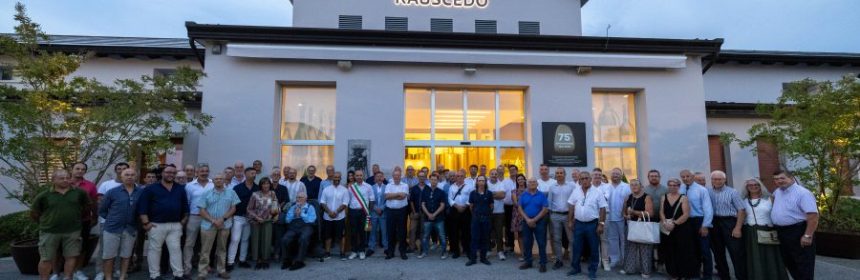
On Saturday 1st August, Cantina Rauscedo opened its doors to celebrate its 75th anniversary. The evening brought together members, employees, institutional representatives and guests to celebrate the cooperative’s journey and look ahead to the coming years with renewed momentum. The event marked the beginning of a programme of initiatives dedicated to the anniversary, which will continue throughout 2026.
The evening was hosted by Simon Staffler, an expert wine taster and a familiar face of Falstaff Italia, who welcomed guests and introduced a celebratory video specially created for the anniversary: a visual journey through the winery’s 75-year history, from its foundation in 1951 to the present day.
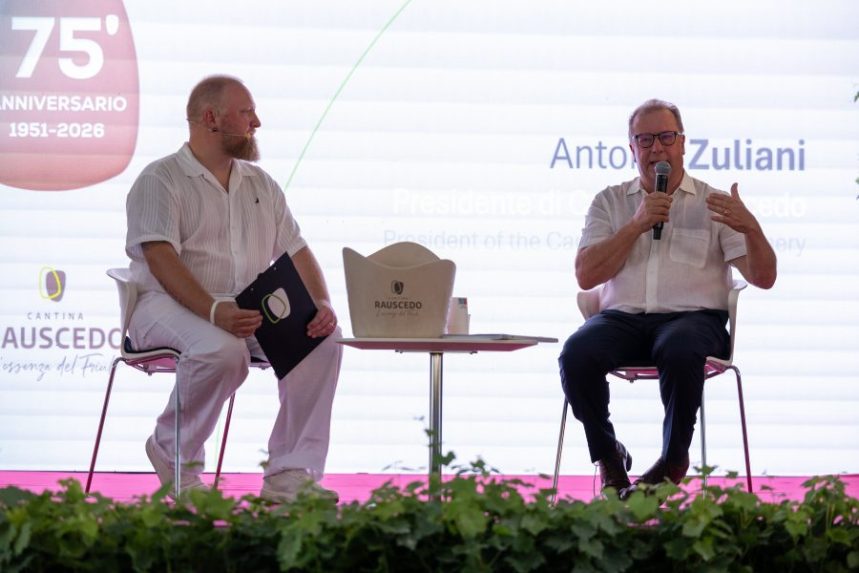
The spotlight then turned to Cantina Rauscedo President Antonio Zuliani, who presented the cooperative’s first Sustainability Report, a document that demonstrates the company’s commitment to making the value it generates for its members and the local area increasingly measurable and transparent.
“The renewal process we have embarked on is built around one fundamental principle: quality,” said Antonio Zuliani. “For this reason, we have strengthened our production structure by bringing in highly qualified new professionals who work alongside our long-standing staff, the people who have played a central role in the company’s growth over the years. At the same time, we have invested in the innovation of our production facilities and winery, with the aim of continuously improving the processes involved in grape handling and transformation. This commitment also extends to our members, whom we support through ongoing professional development, enabling them to fully express the value of the territory and further strengthen the identity of our wines. Only through continuous improvement can we consolidate the trust of our existing customers and win over new ones.”
Next to speak was General Manager Flavio Geretto, appointed to lead the cooperative just a few months ago and already a tangible sign of the new direction undertaken by Cantina Rauscedo. He presented the company’s future projects and outlined its development strategy for the coming years: a path that builds on the cooperative’s history while embracing an increasingly international and contemporary vision for the brand.
The 75th anniversary coincides with a period of profound renewal for the cooperative’s image, involving its headquarters, hospitality areas and brand positioning. The process aims to strengthen Cantina Rauscedo’s identity by highlighting its history while embracing an international and contemporary outlook.
During his address, Geretto also unveiled two commemorative magnums created especially for the anniversary – one Refosco and one Sauvignon, two varieties that are emblematic of Friuli’s wine heritage. Both feature a specially designed label celebrating Cantina Rauscedo’s 75th anniversary and were subsequently shared with guests during the evening.
“Our 75th anniversary is a moment of reflection and awareness. We are proud of the journey that has brought us this far, but even more determined to build what we will become tomorrow. This confidence is rooted in an heritage that, over the past few months, I have come to know and appreciate even more deeply: a membership base with strong ties to the cooperative, a forward-looking governance structure, and a team whose technical, agronomic and oenological expertise ranks among the most highly qualified in Italy,” added Geretto.
“The renovation of our headquarters is the first tangible sign of a broader project to enhance the image of the winery and the values of our community, because we believe that every major transformation must begin with its roots. We want to strengthen Cantina Rauscedo as a recognisable brand, one that can be shared and communicated internationally and showcase the value of Friuli and its wine heritage to the world. We are also preparing to embrace the important opportunity presented by Pordenone becoming Italian Capital of Culture in 2027, convinced that wine can be one of the most authentic ambassadors of our territory. We have a 75-year history behind us that gives us solid foundations; ahead lies the challenge of continuing to play a leading role in a rapidly changing wine world, where we increasingly compete with businesses of ever greater scale.
“In this context, collaboration is not an option but the surest path to creating shared value for our members, our territory and the entire supply chain. We do not see this anniversary as a destination, but as a responsibility we are taking on for the future of the winery and for those who will follow us. It is a challenge we intend to face with clear projects, consistent investment and a shared vision developed together with our members, our employees and our territory.”
The deep connection between Cantina Rauscedo and its local community was further underlined by the numerous institutional contributions throughout the evening. A video message from Francesco Lollobrigida, Italy’s Minister of Agriculture, Food Sovereignty and Forestry, conveyed his congratulations to the Friulian cooperative on reaching this important milestone, followed by a message from Massimiliano Fedriga, President of the Autonomous Region of Friuli-Venezia Giulia.
The evening also featured contributions from MEP Alessandro Ciriani and Stefano Zannier, Regional Councillor for Agri-food, Forestry and Fisheries Resources of the Autonomous Region of Friuli-Venezia Giulia, who reiterated the institutions’ appreciation for Cantina Rauscedo’s role in the regional and national wine landscape. The series of institutional addresses concluded with Michele Leon, Mayor of San Giorgio della Richinvelda, who brought greetings from the local community that has hosted the cooperative for 75 years.
The celebrations continued with the unveiling of a new work of art, discovered in the presence of artist Giorgio Celiberti, who explained its meaning and its connection with the history and territory of the cooperative. The moment was marked by a commemorative photograph with the company’s employees.
Guests were then invited on a guided tour of the winery, offering an opportunity to discover first-hand the spaces and processes that have given life to Cantina Rauscedo’s wines for 75 years. The celebrations continued with a convivial buffet and a DJ set by Nico Bignucolo, who entertained guests and members late into the evening with music and cocktails, bringing the anniversary celebrations to a fitting close.
With this event, Cantina Rauscedo paid tribute to a journey built over more than seven decades of cooperation, sharing with its members, institutions and local community a vision for the years ahead. The aim is to continue creating value for its members, promoting the territory and strengthening its role as a leading name in Friulian wine and among the outstanding producers of the Italian wine landscape.
The evening marked the first of a series of events accompanying the 75th anniversary celebrations throughout 2026. The next appointment is scheduled for 7 October, when Cantina Rauscedo will host a conference dedicated to the future of the wine industry. The event will provide an opportunity to continue, together with members, institutions and the local community, the discussion and reflection initiated with this first anniversary event.
Two Barolo Riserva wines that showcase the freshness and depth of the Bussia terroir over time.
Parusso, a winery located in Monforte d’Alba and run by siblings Marco and Tiziana Parusso, is offering a journey back in time this year with the release of its 2016 Barolo Riserva DOCG Bussia ‘Vigna Rocche’ and ‘Vigna Munie’, which have just been introduced to the market.
The Riserve Rocche and Munie come from the vineyards of the same name within Bussia, one of Barolo’s oldest and most prestigious MGAs (Additional Geographical Indications). While both sites enjoy excellent exposure, each has a distinct. The Rocche vineyard benefits from a gentle south-eastern exposure and exceptionally fine limestone soil, which are reflected in the wine’s elegant, vertical palate. Munie, by contrast, faces south-west in a warmer area, where soils, rich in sandstone, white marl and silt, produce a full-bodied, enveloping Barolo.
“If you could touch them, they’d feel like silk and baby cashmere, respectively,” smiles Marco Parusso. Both wines embody Parusso’s unmistakable style, the result of more than forty years of research, imagination and love for this corner of the Langhe.
“Every bunch of grapes carries the truest and deepest imprint of the terroir,” says the winemaker. “Each one reflects the identity of the vineyard parcel it comes from. When I harvest it at optimal ripeness, the bunch brings into the cellar all the ‘information’ – as I like to call it – that it has gathered throughout the year. My task is to translate them as faithfully as possible into the glass, capturing a unique combination of colour, tannins, emotion and, of course, fruit, which is the quality I strive above all to highlight in my wines.”
Parusso’s Riservas are produced only in the finest vintages, and 2016 is one of them. A temperate climate and below-average temperatures allowed the grapes to ripen slowly and fully, resulting in a vintage of rare balance.
The Nebbiolo grapes from both vineyards were carefully hand-harvested and placed in small ventilated crates – on 12 October 2016 for Rocche and on 13 October 2016 for Munie. After a few days’ rest, the bunches (together with their stems) entered the winery, where they underwent gentle pressing followed by a long maceration. While the Parusso team closely monitored maceration times and temperatures, alcoholic fermentation took place spontaneously with indigenous yeasts and without the addition of sulphites. Both the 2016 Rocche and Munie were then aged for 26 months in small oak barrels in contact with their indigenous yeasts, before spending a further seven years ageing in bottle at a constant temperature of 15°C.
A testament to the Parusso family’s dedication to artisanal winemaking, the 2016 Barolo Riserva DOCG Bussia “Vigna Rocche” and “Vigna Munie” are now available in the finest wine shops in limited quantities: just 1,900 bottles and 150 magnums of “Vigna Rocche” 2016, and 3,615 bottles, 200 magnums, 40 jeroboams and 20 mathusalems of “Vigna Munie” 2016.
*
The Parusso winery is located in Monforte d’Alba, in the Bussia area, one of the region’s largest and most important crus, and is currently run by siblings Marco and Tiziana. Across the 23 hectares of vineyards, planted predominantly with Nebbiolo, Marco has been pursuing his vision of Barolo and wine for over 40 years. The producer’s philosophy centres on the bunch of grapes, the fruit of the land and human care. Each bunch is treated with the utmost attention, as it is the guardian of a heritage, unique to each year, of history and terroir. From this mindset emerges a range of vibrant and unmistakable wines which, like works of art, offer a simultaneous and objective interpretation of their territory of origin. In the Barolo collection, Perarmando interprets the vintage with a horizontal approach; Mosconi, Mariondino and Bussia are the three crus. From Bussia, the estate’s symbol, come two exquisite Barolo Riserva wines that give voice to Vigna Rocche and Vigna Munie. The range of reds is completed by the Langhe DOC Nebbiolo and the Barbera d’Alba DOC, which are also available with screw caps from this year onwards. Parusso also produces ‘Rovella’, a 100% Sauvignon Blanc (from vines over 20 years old) and two Metodo Classico Extra Brut wines, made entirely from Nebbiolo grapes and aged on the lees for 48 and 100 months respectively.
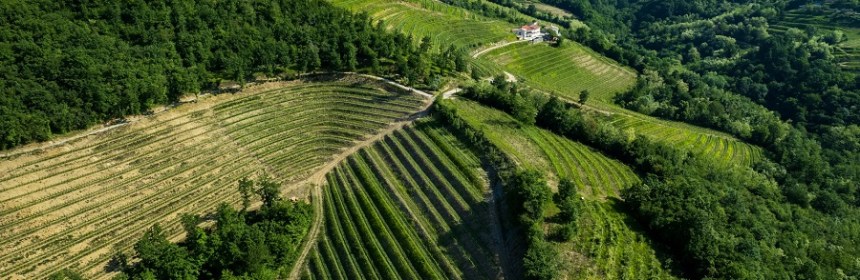
Tenuta Stella is located in Collio, an extraordinary area for viticulture. It is situated in the highest part of Collio, on a hill offering spectacular views not only of the terraced vineyards, but of the whole of Friuli. Beyond the tops of the rows of vines, the eye is lost in the horizon and on clear days you can even see the sea from here.
As stated in the estate’s philosophy: “We are not only wine producers but cultivators of life in this territory of unique native vines, capable of expressing fascinating and never predictable wines that excite you every time you taste them.”
We tasted:
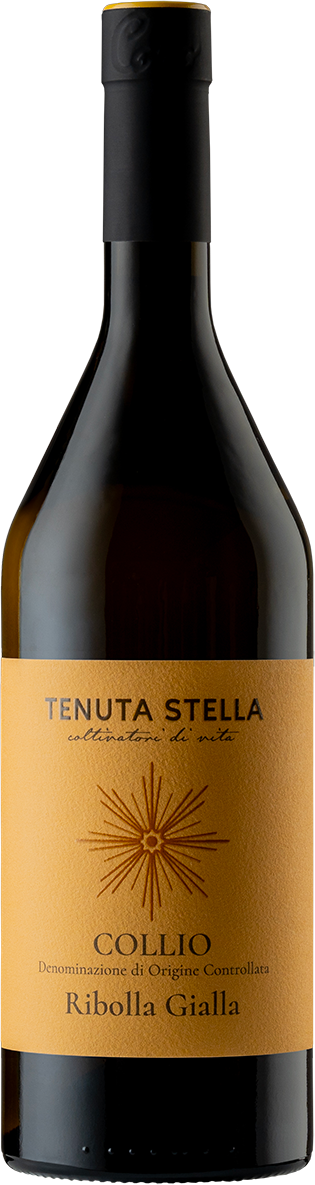
Ribolla Gialla 2023 DOCCollio
It is a golden yellow wine with brilliant reflections. The nose reveals delicate floral notes, apple and peach, ending with spicy hints of vanilla, liquorice and saffron. On the palate, the acidity is noticeable with a distinct sensation of freshness and tartness typical of this grape variety, ending with a dry and clean finish. It is certainly a wine with structure and great personality, like this borderland.
At the table, it is excellent served with first courses or grilled fish, shellfish and cold cuts. It is also ideal with mature cheeses, preferably goat’s milk. Finally, it is excellent with legume soups in both winter and summer.
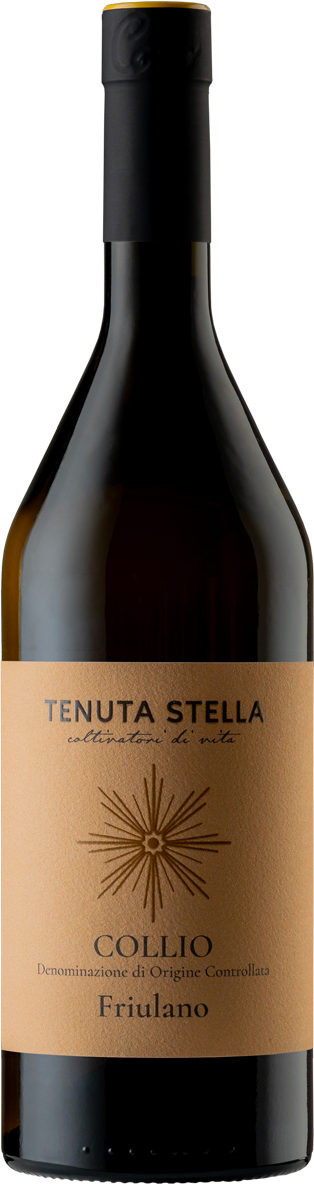
Friulano 2023 DOC Collio
Produced with Tocai Friulano grapes, it has a straw yellow colour with golden reflections. The aromas are floral and fruity with a hint of citrus. On the palate, it is structured, fresh and persistent, delicate and savoury.
It is an ideal wine for both aperitifs and meals. It pairs well with raw fish appetisers, fried fish and steamed fish. It is also excellent with ham and fresh cheeses.
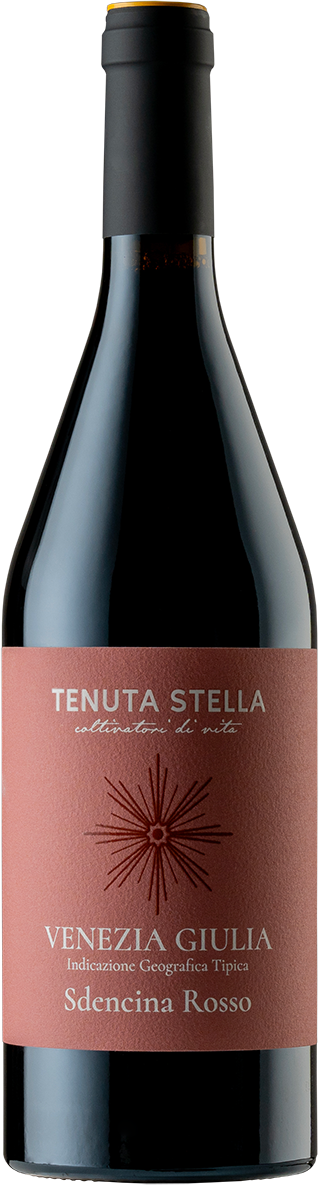
Sdencina Rosso 2021 IGT Venezia Giulia
Produced with Pignolo, Tazzelenghe, Merlot, Refosco dal Peduncolo Rosso and Schioppettino grapes, fermented spontaneously.
This wine has a bright, intense ruby red colour. The bouquet is rich in fruity notes, red fruits, undergrowth and cherry, and spices. On the palate, it is characterised by good body and structure, with significant tannins. A red wine with character.
Ideal with red meat dishes, such as sliced or roasted meat, it also goes well with game and a simple platter of cold cuts. Throughout the meal, it can also be paired with particularly flavourful dishes such as pappardelle with duck ragù or mushroom soup.
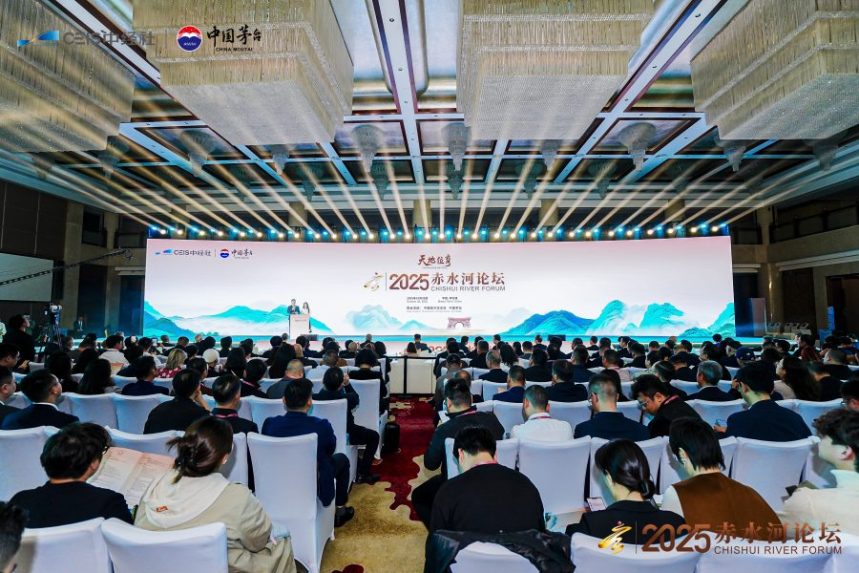
During the Chishui River 2025 Forum held recently in Guizhou Province, south-western China, a global declaration on fine wines and spirits from the Chishui River was released.This declaration is an exhortation to wine and spirits producers to respect nature and safeguard the environment, uphold quality and pass on culture, promote rational and healthy alcohol consumption, take responsibility and serve society.Furthermore, during the Forum, it became clear that wind energy and wine and spirits producers need to pursue technological empowerment and integrated development, promoting openness, inclusiveness and mutual respect, encouraging exchanges and mutual learning for coexistence and shared prosperity.
Global Fine Wines & Liquors Declaration of Chishui River
In our shared pursuit of promoting exchanges, mutual learning, coexistence and common prosperity in the global wine and liquor sector, fulfilling social responsibilities, building consensus for development, and advancing the industry’s progress, we hereby jointly issue this declaration on the banks of the Chishui River:
I. Respect nature and safeguard ecology
Respect and protect water sources, climate, raw materials and other brewing resources, adopt green and sustainable production methods, and safeguard the ecological balance.
II. Uphold quality and inherit culture
Adhere to innovation based on inheritance, improve the full-chain quality management system, achieve outstanding quality with craftsmanship, and pass on the intangible cultural heritage and classic techniques contained therein.
III. Advocate rational and healthy consumption
Strengthen public guidance, advocate moderate drinking, carry out responsible marketing, and foster a civilized, healthy and enjoyable drinking culture.
IV. Fulfill responsibilities and serve society
Integrate ESG principles into the entire development process, and contribute to a more harmonious social environment through public welfare practices and a sustainable ecological system.
V. Pursue technological empowerment and integrated development
Proactively embrace modern science and technology, advance digital-intelligent transformation, enhance product stability and style diversity, and provide consumers with high-quality and diversified options.
VI. Cultivate innovative experiences and enrich connotations
Explore the spiritual value and historical depth of drinking culture, and create drinking experiences that are ritually rich, culturally meaningful, and interactive.
VII. Foster openness, inclusiveness and mutual respect
Respect the historical origins, etiquette and brewing techniques of all alcoholic beverages around the world, honor the cultural customs of all parties, and use these drinks as a bridge to enhance understanding and jointly safeguard the rich landscape and spiritual core of global drinking culture.
VIII. Promote exchanges and mutual learning for coexistence and common prosperity
Establish a regular and diversified international dialogue mechanism, organize activities such as cross-border tastings, exchange visits, and cultural forums, promote mutual learning through exchanges, and achieve coexistence through integration.
Let’s take the Chishui River as the starting point, unite our efforts, and forge ahead with unwavering determination to jointly fulfill our commitments and create a sustainable and prosperous future for the global beverage alcohol industry.
• Contribution by Prof. Andrei Chevelev on “Symbiosis between Heaven and Earth”
Across civilizations, “Heaven and Earth” have symbolized the order of nature and the destiny of humankind. To live in symbiosis with them means to recognize that human prosperity depends on ecological balance, and that our cultural traditions are themselves born from the landscapes, climates, and resources that sustain us.
In Chinese thought, this harmony is expressed through the ideal of the unity of nature and humanity. In many ways, this concept resonates deeply with UNESCO’s vision of sustainable development and cultural diversity — that our material progress must be guided by respect for both the natural and the cultural ecosystems that nurture human creativity Looking from the West, we are convinced that the Chinese culture is firmly based on the tea. However, with all our respect for remarkable Chinese tea, we clearly understand that it would not bring together so many outstanding people far from the capital. So, the conclusion is clear- Maotai is this unique and magic instrument which has been a key to Chinese traditions and a historic window to the world.
Beyond its taste, Moutai is an emblem of harmony:
• Harmony between man and nature, through respect for natural rhythms and local ecology;
• Harmony between tradition and innovation, as ancient techniques are preserved while modern standards of sustainability are embraced;
• Harmony between people and nations, as Moutai has become a symbol of cultural dialogue — a bridge between China and the world.
In 2021, Moutai was included in the national list of intangible cultural heritage — not just as a beverage, but as a cultural ecosystem that embodies the Chinese philosophy of “Heaven–Earth–Human” unity. This idea of harmony through alcohol culture is not unique to China; it is a shared human story.
In Japan, for example, the brewing of sake follows a sacred rhythm linked to rice cultivation, water purity, and seasonal festivals. The brewers’ dedication reflects the Shinto belief that natural elements — mountains, rivers, grains — possess a divine spirit. Sake-making, therefore, becomes a form of worship — an act of gratitude to nature. UNESCO recognized this living tradition as an element of intangible cultural heritage, illustrating how ancient wisdom can guide sustainable practices even today.
In France, the wine-growing landscapes of Burgundy and Champagne tell a similar story. These regions, also recognized by UNESCO, demonstrate how generations of vintners have cultivated a landscape that balances agricultural productivity with environmental preservation. Vineyards are not only economic assets; they are cultural landscapes, living testimonies to the mutual respect between people and the earth.
These examples — from Moutai to Vodka and Sake and to French Wine — remind us that cultural heritage and sustainability are inseparable. When we protect living traditions, we also protect the environments that sustain them. When we value heritage, we encourage responsible production, ecological stewardship, and intergenerational transmission of knowledge. In the words of UNESCO, “Cultural diversity is as necessary for humankind as biodiversity is for nature.” Now, I would like to say something as a recent winner of the title “Guardian of National Culture” established by Renmin Ribao, People’s Daily.
What you are doing here, has an official name – safeguarding the Cultural Heritage.
And more precisely – Intangible Cultural Heritage. Because liquor making, especially in the case of Maotai, it is a “know-how” transmitted through generations and centuries. It is an out-of-time sign of the Chinese cultural identity. Every Chinese in every corner of our planet while tasting Maotai will remember his country, his family, his friends. Wine, whisky, cognac, vodka, or Maotai- each of them reflects a philosophy, a way of life, and a vision of beauty. This is why today’s dialogue is not simply about beverages. It is about understanding each other through what we create, through what we share.
It is about our common values.
A year ago, I was privileged to attend personally in Beijing the speech by President Xi Jinping on the occasion of the 75th anniversary of the establishment of the People’s Republic of China. The President said: “Humanity lives on the same planet, and people of all countries share a common future”. These words are exactly about what we make and what we give. This approach invites us to see traditional industries — including liquor-making — as laboratories of sustainability, where ancient knowledge and modern science can cooperate for the common good. The Moutai Forum offers precisely that: a platform where policymakers, entrepreneurs, and scholars can exchange ideas on how to integrate cultural heritage preservation into sustainable development strategies.
Imagine partnerships between the liquor-producing regions of the world — China’s Moutai town, Japan’s sake breweries, France’s vineyards — to share best practices in water conservation, renewable energy, waste reduction, and heritage education. Such initiatives would not only strengthen industries but also build a global alliance for cultural and ecological harmony. We were asked to think about the Generation Z and its specific choices. Frankly speaking, all of us are not thinking in these X, Y or Z age categories and I was surprized to know that all of my three children belong to this Generation Z.
Since then, I am trying to understand what is characteristic for them. Decoding Generation Z consumption is not just about understanding a generation. It is about decoding the next decade of growth and creativity. And this generation redefines what consumption means. Moreover, this generation Z will strongly influence the next one. The letter Z chosen for the current young generation, symbolizes an end of one tradition and a birth of another. They say that the next generation will bear the name “Alpha” and the circle will restart moving.
Born between the late 1990s and early 2010, Generation Z has grown up in a hyperconnected world: – digital, diverse, and driven by values rather than possessions. They have witnessed economic crises, climate anxiety, social activism, and the rise of authenticity as a currency. For them, drinking is not about intoxication, – it is about expression. It is social, symbolic, and increasingly selective. For previous generations, luxury meant exclusivity. For Generation Z, luxury means personal relevance. They care less about the logo on the bottle, and more about the story behind it: – the craft, the sustainability, the transparency.
As a European, I must confess: the first time I tasted Maotai, I was intrigued. It was unlike anything I had known before. It was not only a flavour – it was an experience. Behind its complex aroma, I could sense centuries of tradition, patience, and harmony. Maotai is not merely a drink – it is the embodiment of Chinese craftsmanship, philosophy and cultural pride. It reflects the Chinese belief that time, balance, and respect for nature are the essence of perfection. In Europe we also have our “spirits”: cognac from France, vodka from Russia – each born from local landscapes, climate and centuries of mastery. They too, tell stories of human creativity and connection to the land. But what unites all these traditions – East and West – is something deeper: the celebration of life, of friendship, and of the art of sharing. When we bring these traditions together – the refined precision of Maotai and the inventive artistry of Western liquors – we discover a beautiful harmony. We discover that the East and the West are not opposite, but partners in the same great human story. The President talked exactly about it. To cultivate the symbiosis between Heaven and Earth is to recognize that every drop of spirit — whether Moutai, vodka, sake or wine — carries within it a message of coexistence. It tells us that culture begins in the soil, matures in human hands, and blossoms in shared celebration. If we can preserve that harmony — between people and nature, between tradition and progress, between China and the world — then we will truly honor the legacy of Heaven and Earth. In a sense, every cultural dialogue is like distillation: through patience, respect, and openness, we create something pure.
Message of the Mongolian Ammbassador
Contribution of H.E. Sinisa Berjan, Ambassador of Bosnia and Herzegovina to China
We gather in the beautiful Maotai Town of China not only to discuss strategies for the development of the global liquor industry but also to use wine as a medium to promote dialogue between civilizations and connection between hearts and minds. On behalf of Bosnia and Herzegovina, I would like to extend our warm congratulations on the successful opening of this forum!
Bosnia and Herzegovina and China have long maintained friendly relations. In recent years, under the strategic guidance of our two heads of state, exchanges and cooperation between our two countries in the fields of politics, economy, trade, and culture have been continuously deepened. The relationship between our two countries has become a model of friendly cooperation between large and small nations and a fine example of developing countries joining hands to achieve modernization.
Wine is a common cultural language of humanity. In Bosnia and Herzegovina, we have a long tradition of wine-making and customs of warm hospitality. In China, the millennia-old liquor culture is imbued with the philosophical wisdom of “Harmony between Heaven and Man.” The theme of today’s forum, “Interweaving Harmony,” precisely encapsulates this wisdom – it advocates harmony and mutual prosperity for all things, which aligns perfectly with the pursuit of sustainable development in the global liquor industry.
Currently, the world liquor industry is facing the contemporary challenges of transformation and innovation. From ecological production to digital transformation, from cultural heritage to market expansion, we need more open vision and a more inclusive mindset. Bosnia and Herzegovina firmly believes that the diversity of civilizations is like the varieties of grapes – each flavor deserves respect, and every terroir is worth protecting. We also look forward to deepening cooperation with China and global liquor enterprises to build bridges in technology, trade, and culture.
Lastly, I would like to thank China Economic Information Service and Kweichow Moutai for initiating and organizing this forum. I also pay tribute to all friends who have contributed to cultural exchanges and industrial cooperation between China and the rest of the world. May we raise our glasses not only to savor the fine liquor but also to witness the blend of friendship and wisdom.
Contribution by Marco Leporati Managing Director Savino Del Bene Cina on The common view between China and Italy
In the past centuries the exchange between China and Italy has been continuous just few moments
When the Roman soldiers arrived in Gansu region ans some coin has been discovered
When Marco Polo did the long trip around China and he was surprised to find the first paper money printed in Hangzhou area.
When the Chinese emissaries from emperor arrived in Naples and Florence around the XV Century
In Beijing in China world art Museum in the circular room with the bas relief
Among the most important chinese persons contribute to development of China there are Marco Polo and Matteo Ricci
Regarding Opera the famous Opera Turandot with the music of Giacomo Puccini has some refrain took inspiration from chinese song
Also the food and beverage have some similarities.
China have 8 cuisines with a variety of thousands of dishes and a history of part of them.
The pasta or noodles, some way to cook the rice some bread like pizza make our two countries close. Regarding this issue I would like to entry more deeply in the common way to cook but unfortunately the time is limited. Italy because of the historical domination has collected a variety of dishes always related to the domination and population. In the specific topic of this conference we can observe that geographic features can offer for wine and liquor the same way to produce and to consume.
One common issue is the terroir and the same latitude. Here it is the kingdom of Moutai, drink with one thousand tears history. Italy is a kingdom of Grappa and Wine of course the row material is different: Maotai from cereals fermentation, grappa from pomace fermentation (skin seeds from grape previously used for wine production but for both products we have sou of the people. How to combine liquor, wine and fashion of lifestyle? It is possible because from my point of view we need to combine our tradition with the experiential. The last Italy-China fashion hold in Milan during the Milan fashion show in last September forging a new era of sino-italian fashion collaboration.
We know many Chinese designers and creators are using Italy like an incubator to create a new trend of fashion, also in this case, with tradition and future vision.
Confucio said:
If your plan is for one year sow the rice
If your plan is for the years plant the trees
If your plan is for 100 years educate the children
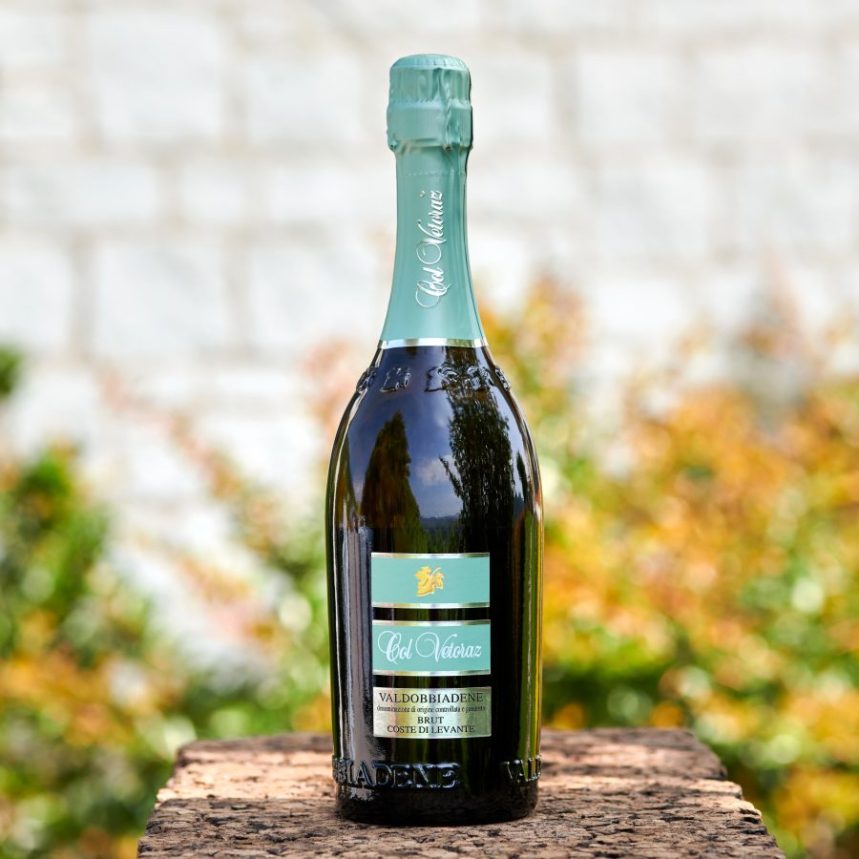
We are in the Prosecco area with the three new Valdobbiadene DOCG wines Coste di Levante, Ponente and Mezzodì. With evocative names paying homage to the hills from which they originate, these wines are made from a careful selection of 100% glera grapes grown on the “coste”, the more or less steep hillsides facing east, west and south.
‘The Valdobbiadene DOCG Col Vetoraz wines,’ explains CEO and oenologist Loris Dall’Acqua, ‘are siblings from the same Mother Earth, namely the foothill system that winds its way from east to west, parallel to Monte Cesen, ideal for imparting good acidity and a good aromatic profile.’
Coste di Levante Brut
The nose reveals notes of lemon and aniseed. On the palate, it has good volume and body.
This wine has great aromatic consistency, reminiscent of acacia citrus fruits and the fruitiness of white peach, pear and apple. It remains a very elegant wine, thanks above all to its very fine effervescence and good liveliness and persistence. Ideal with aperitifs and dishes based on shellfish, fish and white meats.
Coste di Ponente Extra Dry
This Extra Dry wine is produced from carefully selected grapes grown on the west-facing hillsides of Valdobbiadene.
It is a harmonious, elegant wine with a slight residual sweetness. The nose is fruity with hints of peach, pear, rose and honey. It pairs well with light dishes such as ricotta and spinach ravioli on a cream of Taleggio cheese or pappardelle with honey mushrooms, chestnuts and ricotta.
Millesimato Dry Coste di Mezzodì
We are in the hills facing south, growing citrus fruits, lemons and mandarins.
It is persuasive, elegant and complex on the palate, with a fine perlage, notes of freshness with liquorice and aromatic herbs, and a persistent finish that confirms its typical characteristics. It is an ideal wine to finish a meal, paired with panettone and homemade citrus cakes, or at other times of the day.
Kalterersee Classico Superiore DOC celebratesthis season’s joie de vivre.
A grape variety classic to the Alto Adige and increasingly planted and appreciated, the Schiava found its ideal habitat on the hillslopes around Lake Caldaro, and its quality here has won for it the designation Kalterersee Classico Superiore DOC.
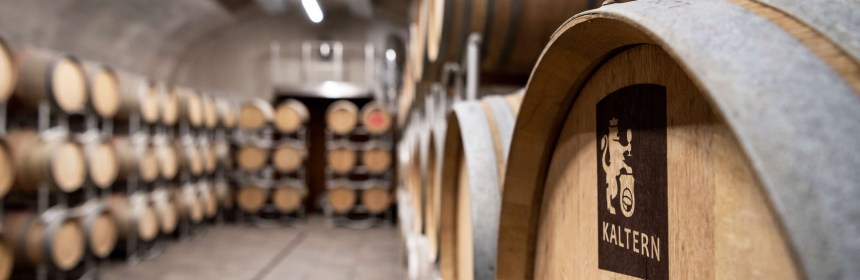
Cantina Kaltern, boasting 590 member-growers cultivating 440 hectares of vineyards, is Alto Adige’s largest and most dynamic cooperative winery. Eloquent interpreter of the environmental equilibrium that the lake and its microclimate gifts to the local vineyards, it is the acknowledged ambassador of the Schiava, an intriguing, energy-laden variety that yields vibrant wines with supple tannins and lively drinkability that makes them delicious partners to a wide range of dishes. It is no wonder, then, that Kaltern’s Kalterersees are known as “brilliantly versatile,” loved by the younger generations who with uninhibited ease enjoy them at happy hour, with formal dinners, and convivial, spur-of-the-moment get-togethers.
Served cool at 12-14°C, the shimmering red Kalterersee Classico Superiore is the classic way to celebrate that summertime joie de vivre, according to Thomas Scarizuola, Kellermeister of Cantina Kaltern.
The winery presents wine-lovers with three distinctive styles of Kalterersee, all on the market with the new vintages: Kalterersee DOC in the Classica line, Leuchtenberg among the Selezioni, and, finally, portfolio leader Kalterersee Classico Superiore DOCQuintessenz.
Kalterersee Classico SuperioreDOC 2023, part of the Classica line, is the perfect entry portal to the Kaltern Schiava universe. This shimmering, light-bodied red brings its fans immediately to the lakeshore: “It is the purest expression of both the grape variety and of the terroir represented by surrounds of the lake,” explains Scarizuola.
LeuchtenbergKalterersee Classico Superiore DOC makes its debuton the market with the 2023 vintage. Full-bodied and almost electric in its energy, yet elegantly floral and with a full-flavoured finish, it perfectly embodies the genius loci of its terroir. “Here is a Selezione that is bursting with character, wondrously complex, yet pure pleasure to drink. It is made from the finest, hand-harvested grapes, ripened on low-cropped legacy vines in our historic vineyards,” commented Kaltern winemaker Scarizuola.
The very acme of quality achievable with the Schiava is represented by Kalterersee Classico Superiore DOC 2022, in the Quintessenz line. True icons of the winery’s winemaking philosophy, “the Quintessenz wines,” explained Scarizuola, “are made exclusively from the finest grapes we can raise in our best-quality vineyards, with vineyard yields far below those allowed by DOC production codes.” Elegance, finesse, and structure are the hallmarks of this Kalterersee, contributing to making it a thoroughly contemporary wine amazing its fans with its energy and thrust.
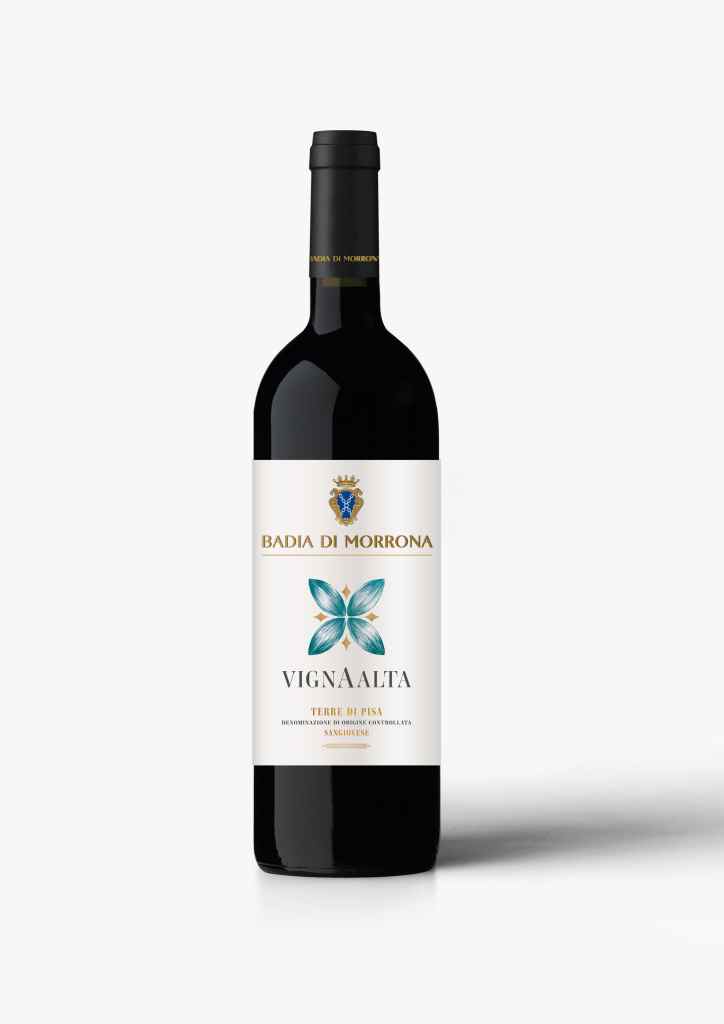
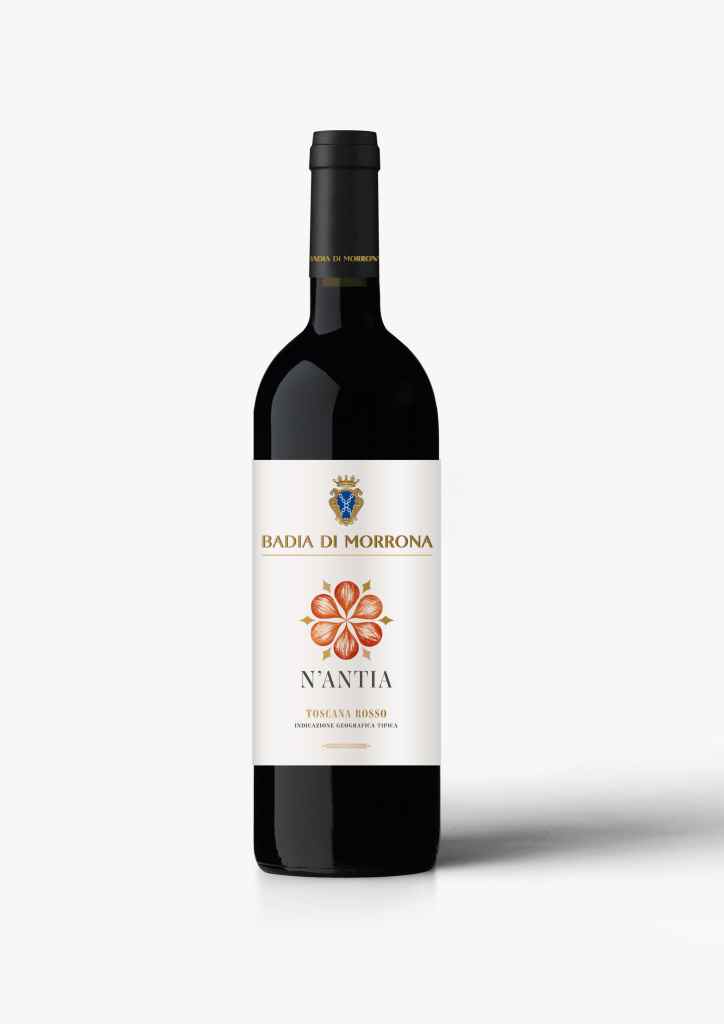
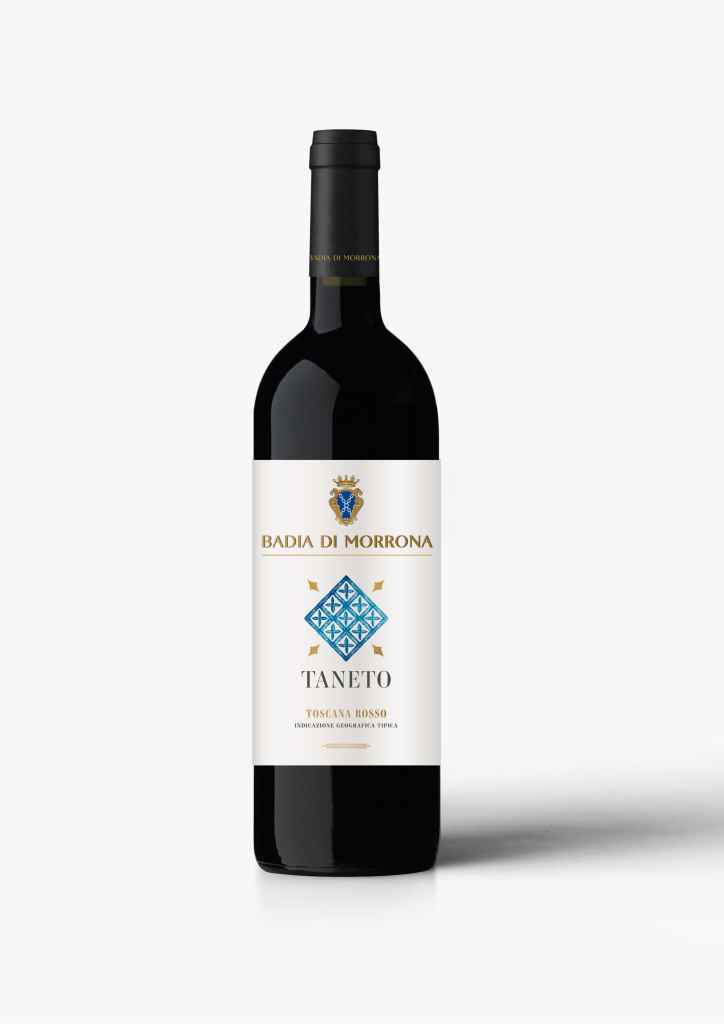
Sangiovese VIGNAALTA, Bordeaux blend N’ANTIA, and the young Syrah TANETO
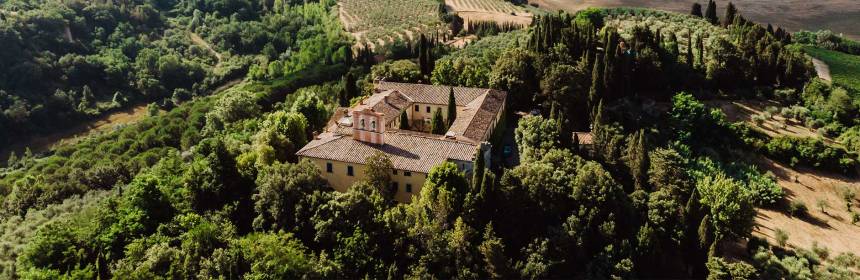
Between Pisa and Volterra, in the sensuously-contoured hills that stretch as far as Terricciola, lies Badia di Morrona, owned by the Conti Gaslini Alberti family since 1939. Theirs is the credit of intuiting that this particular growing area, with its beneficial climate and distinctive geological matrix, would offer an ideal terroir for both Sangiovese and international grape varieties.
“My father always believed,” explained Filippo Gaslini Alberti, who today directs the family estate, “that Sangiovese, Cabernet, Merlot, and Syrah as well, were all necessary and complementary grapes if the full winemaking potential of Badia di Morrona were to be realised. Over the years, study of the estate terroir has enabled us to better understand which areas to dedicate to the individual grape varieties, with the result that today we are proud to have crafted three wines that interpret, each with its own distinctive voice, the original timbre of this modest corner of Tuscany.”
VIGNAALTA and N’ANTIA are Badia di Morrona’s two historic crus, a monovarietal Sangiovese and classic Bordeaux blend, respectively. “Commitment to Tuscany’s royal grape but openness as well to international noble grapes north of the Alps” were essential components of Conte Duccio Gaslini Alberti’s vision and philosophy, as well as that of the winery today. TANETO, which debuted in the early 2000s, is the latest and most creative interpretation of Badia di Morrona. “Its leading grape, Syrah, succeeds in its expression of its terroir.”
These three reds are today the most impressive ambassadors of a wine estate fully aware of its own history, sensitive to the challenges presented by the future, and, above all, enamoured of its growing area, a terroir still little known yet of stunning beauty and impressive winemaking qualities.
VIGNAALTA,Terre di Pisa DOC, is the estate’s most aristocratic Sangiovese and proud denomination leader. It is produced from only the finest-quality grapes from the vineyard of the same name, which, as its name implies, covers Badia di Morrona’s highest hill. The 8-hectare parcel, caressed by constant breezes, is rooted in sandy soils rich in fossil coral, testimony of an ancient seabed. From the first sip it reveals a Sangiovese that is vibrant and elegant.
N’ANTIA Toscana Rosso IGT is a blend of Cabernet Sauvignon, Cabernet Franc, and Merlot from a single parcel of the estate’s oldest vineyards—over 35 years old. These striking “wooden sculptures” enjoy a clay soil with abundant travertine fragments and yield a wine of profound, forceful character.
TANETO Toscana Rosso IGT is a Syrah-based blend from vineyards planted in soils particularly rich in fossil shells. They contribute to TANETO’s marked minerality, which in turn perfectly complements Syrah’s classic spiciness.
The grapes, harvested exclusively by hand, are quickly brought to the semi-underground, energy-self-sufficient cellar. Following fermentation in stainless steel, the three wines then take different paths. VIGNAALTA spends two years in large oak ovals, while N’ANTIA and TANETO rest in standard oak barrels for 15 and 12 months, respectively. Finally, all three refine their qualities in traditional concrete vats before bottling.
This late autumn, VIGNAALTA 2019 and N’ANTIA 2020 along with TANETO 2021 land in both the Italian and international markets.
*
Badia di Morrona is located in Terricciola, between Pisa and Volterra. The heart of the estate is the ancient monastery, Badia di Morrona, dating back to 1000 AD. The iconic grape is Sangiovese, planted in more than half of the 110 hectares of vineyards owned by the estate, with the remainder in Vermentino, Chardonnay, Viognier, Merlot, Syrah, and Cabernet. This viticultural wealth yields a well-integrated collection of wines, which boasts coveted crus such as VIGNAALTA and N’ANTIA, of Sangiovese and Bordeaux varieties respectively, and TANETO, the quintessence of Badia di Morrona’s Syrah. The Chianti denomination is well-represented of course, with I SODI DEL PARETAIO in both standard and Riserva versions, and the estate offers also other more everyday labels. The wine portfolio is compellingly complemented by a welcoming hospitality programme: distributed throughout the estate are large, meticulously-restructured farm residences that are perfect departure points for leisurely exploring this still little-known world in Tuscany.
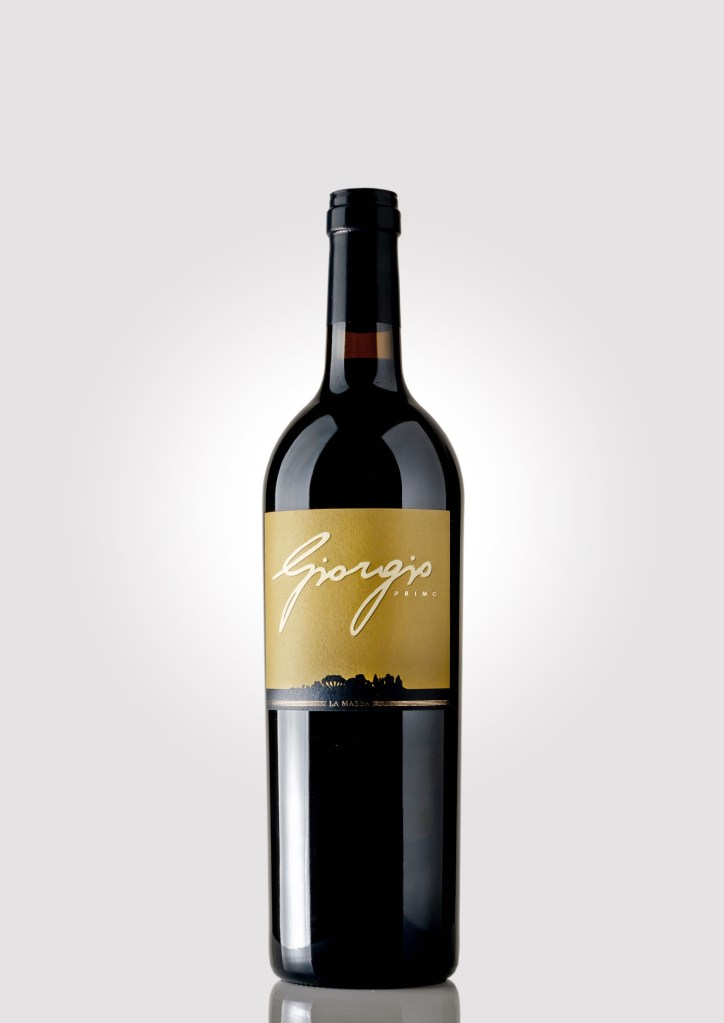
Tenuta La Massa is pleased to announce that this coming September will see the launch of Giorgio Primo 2019 on the prestigious Place de Bordeaux, an achievement quite apropos, since the estate’s winegrowing philosophy has always reflected a French style and an international spirit. “A position on the Place de Bordeaux for our estate’s iconic wine, the quintessence of our winemaking approach, is an opportunity to distribute into markets worldwide and represents the fulfilment of a dream,” commented estate founder Giampaolo Motta.
Tenuta La Massa is the story of one-man’s search for a terroir on a par with his passions for viticulture and winemaking. In Motta’s case, they were formed in France then definitively rooted in Italy, in Chianti’s Conca d’Oro in Panzano where he found, in 1992, his terra electa, where he grows the vines that make up the superb portfolio of Tenuta La Massa. Motta’s vision to produce an iconic wine and bring it to the Place de Bordeaux is to come true, giving the opportunity of gaining wider recognition for Giorgio Primo on the international ultra-premium wine stage. “La Place de Bordeaux is, by universal acknowledgement, the most prestigious marketplace and distribution network for world-class wines, with particular emphasis on rarities and wines coveted by collectors,” continued Motta. “It is supported by more than 300 négociants, who sell to more than 170 countries across the globe.”
The first Tenuta La Massa wine to be distributed on Place de Bordeaux will be Giorgio Primo. This cuvée of Cabernet Sauvignon, Merlot, and Petit Verdot is the culmination of continuous, painstaking efforts to achieve perfection, both in vineyard management and in winemaking practices.
Barre & Touton, long-established courtiers of the Place De Bordeaux, are convinced that the world’s finest wines have their place on La Place. To manage that segment, Barre & Touton established a branch, “Les Vins d’Ailleurs”, directed by Laurent Dufau, dedicated specifically to iconic wines from outside of Bordeaux.
The launch of Giorgio Primo 2019 will be coordinated by Barre & Touton “Les Vins d’Ailleurs” and offered through a select group of négociants: La Bordelaise des Grands Vins, Crus et Domaines de France, Maison Descaves, Dubos, Joanne Rare Wines & Millesima.
“We are delighted to be able to represent Giorgio Primo and the winemaking philosophy of Tenuta La Massa,” stated Dufau. “We are honoured to accompany Tenuta La Massa on this new adventure and to offer their wines to the world through Place de Bordeaux.”
Giorgio Primo 2019, the fruit of years of study of the complex local terroir, is a blend of 55% Cabernet Sauvignon, 40% Merlot, and 5% Petit Verdot, which creates a complex, symphony of aromas in the glass. The vines are planted in schist clay, galestro marl and limestone creating distinctive wines that are a true reflection of the terroir.
The 2019 growing year was characterised by normal weather and by groundwaterreserves that filled over the winter and spring, thus enabling the vines to cope with the summer heat.
A warm summer with some rainfall, and a normal ripening curve, plus cooler temperatures during the harvest in late September, preserving the grapes’ crisp, elegant aromatics. “That courageous decision to await peak ripeness, the outstanding combination of temperatures and rainfall, and the excellent management of the macerations and maturations in oak,” commented Giampaolo Motta, “meant that we have delivered beautifully balanced wines with exceptional polyphenol concentrations. Both elegance and power, which combines with a superb and savoury finish, the generous gift of our soils.” A wine, that reflects the land and the interpretation of man.
***
In 1992, Giampaolo Motta, Neapolitan by birth but Tuscan by adoption, encountered La Massa, and that moment formed an indissoluble bond between the man and his terroir. The estate, lying in the magnificent Conca d’Oro of Panzano, in the heart of Chianti Classico, boasts 25 hectares of southwest-facing vineyards. In the 1990s, he initiated a lengthy vineyard restoration project and in-depth terroir research, in an effort to give shape to his dream through his wines: Giorgio Primo, Carla 6, and La Massa. The viticultural and oenological pathways La Massa adopted “break” with traditional Tuscan practices, and the sapient hand of the winemaker ensures that the wines convey the interpretive force of the estate soils. La Massa, the first wine produced, is representative of the emphatic character of a rugged area like Panzano, but at the same time it displays the elegant oenological personality of its creator-winemaker. Next is Carla 6, dedicated to daughter Carla and made with grapes from vineyard parcel 6; a monovarietal Sangiovese, it pays tribute to the grape that embodies Tuscany. Giorgio Primo, named after his grandfather & his son, is a cuvée of Cabernet Sauvignon, Merlot, and Petit Verdot that synthesises the estate as well as its uninterrupted, near-obsessive striving for perfection, both in the vineyards and in the winecellar.
Mediterranean elegance, balance and freshness. These are the hallmarks of Poggio alle Gazze dell’Ornellaia, and the 2021 vintage – on the market since March – is not an exception. A Cuvée based on Sauvignon Blanc with small percentages of Vermentino, Viogner and Verdicchio, Poggio alle Gazze dell’Ornellaia enriches the mosaic of the wines of the Tuscan coast with its own personal point of view.
Brilliant, delicately sunny and also deeply identifying with the terroir of the estate, Poggio alle Gazze dell’Ornellaia 2021 “is complex and seductive, sporting a riot of citrus notes, exotic fruits, white flowers, accompanied also by scents of cut grass and asparagus,” explains the winemaker Olga Fusari, “the taste closes in a long savory and mineral finish, which well represents the territory in which it was born.”
An exciting sip that tells the constant dialogue between territory, man and a climate that is always particularly benevolent here. Indeed, 2021 began with a mild, rainy winter and a regular spring. Ideal conditions to easily cope with the hot and dry summer (especially in August) as it often is on the Bolgheri coast. Constant breezes from the sea and temperature fluctuations between day and night accompanied the perfect ripening of the grapes, which were harvested in the very early hours of the morning starting on August 18 for Sauvignon Blanc, followed by Viogner and Verdicchio and ending in the second week of September with Vermentino. After a slow and soft pressing of the bunches and an alcoholic fermentation of no more than 22°C, the wine went through a cellar process divided between wood, cement and steel, followed by aging in the bottle for about a year.
Today Poggio alle Gazze dell’Ornellaia 2021, tells with style and confidence an exemplary vintage and a coast that is a symbol in the world of harmony and beauty.