Tag Archives: featured

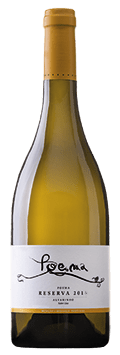
Poema Reserva 2015

Inspired by history and the incomparable beauty of the landscape born the brand Poema to take the family legacy further, respecting the past and always looking into the future.

Every year a limited and numbered edition of Poema in Albariño cradle in Portugal is produced. We are in a magical place on the bank of Minho River, where the family lived peacefully in communion with nature since the seventeenth century.

Like their ancestors, the family work the land with the Alvarinho grape variety.
In 2000 was made a restructuring of vineyards undertaken by their predecessors Hermínio and Maria de Fátima – awarded by the French Ministry of Agriculture in 2003, with the medal of Chevalier de l’Ordre du Mérite Agricole and invaluable source of strength and knowledge.

Located in the northern most part of Portugal, the beauty of the countryside scenery.

Quinta do Louridal is located in Monção-Melgaço region considered the birthplace of the Alvarinho grape variety in Portugal.  Vineyards in amphitheatre shape are protected by the mountains, sheltered by the granite soils and spoilt by long sun exposure topped by a soft breeze from the Minho River.
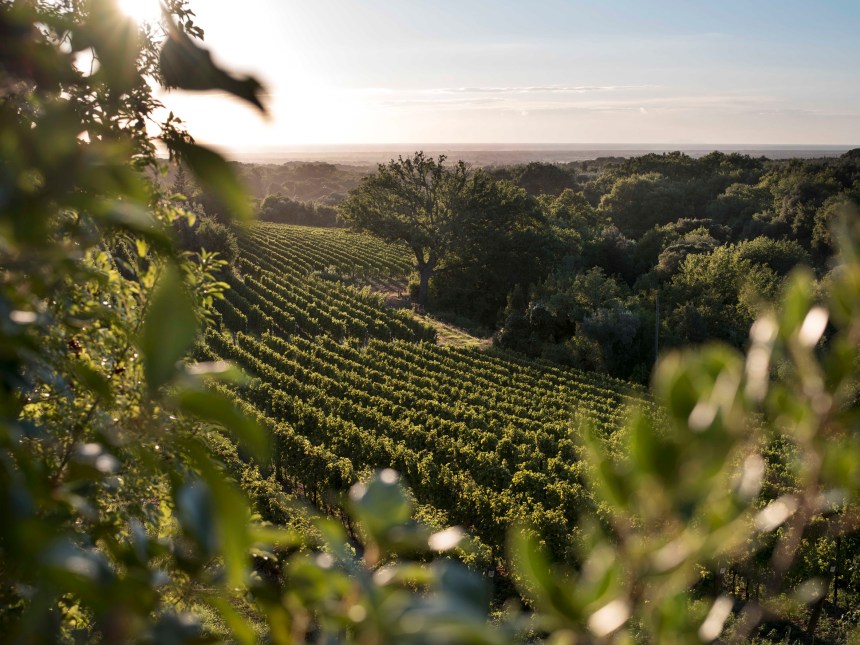
This region, in the Minho River Valley, has a microclimate marked by the transition from an Atlantic to a Continental climate. Hot, dry summers with cool nights and cold humid winters.

We tasted: Poema Reserva 2015

This wine produced from Alvarinho grape variety, is very fresh with a stray yellow color and delicaate sparkling. In the mouth is very mineral wih orange and pineapple aromas. The taste is persistent and balanced, result of the prolonged stage in fine lees.

Pairing food

Ideal with fish, seafood, white meats, ham and soft cheeses.

This wine can be stored for several years to drink with pleasure in good company.

ORNELLAIA TOUR & TASTING: a Journey through Emotion

Travelling along the Viale dei Cipressi, one first catches sight of Bolgheri’s roofline and the Tyrrhenian Sea behind it. Then, just a few more minutes and the gates of Ornellaia greet its visitors on their adventure to discover the famous Bolgheri Superiore DOC. Now that the weather has warmed up a bit, it is in fact the ideal time to plan a trip along the Tuscan coast, exploring its villages, and above all to understand where and how one of the Italy’s true treasures emerge: Ornellaia, a wine that has succeeded in positioning itself at the top of international wine charts in only 30 years.

The wine experience starts in the vineyards, on a discovery tour of the different micro-zones, the soil composition of the vineyards, and how the vines are trained. Following the path of the grapes, the journey continues into the cellar, where visitors can see where the wines “take shape” and also admire the art installations that from 2009 to today, one each year, have enriched the Ornellaia collection, thanks to the Vendemmia d’Artista art project.

Even before entering the cellar, visitors can gaze upon some artworks out in the open air: “Happily Ever After” by Ghada Amer and Reza Farkhondeh, “Splash” by John Armleder, and Yutaka Sone’s interpretation of L’Eleganza. Once visitors enter the cellar they are struck by the explosion of colours of Luigi Ontani’s installation, followed by those of Zhang Huan, Rebecca Horn, Michelangelo Pistoletto and others along the way. Descending into the heart of the cellar is increasingly exciting: the oak barrels are imposing, and in the air – in a perfect silence –  you can almost smell the wine.
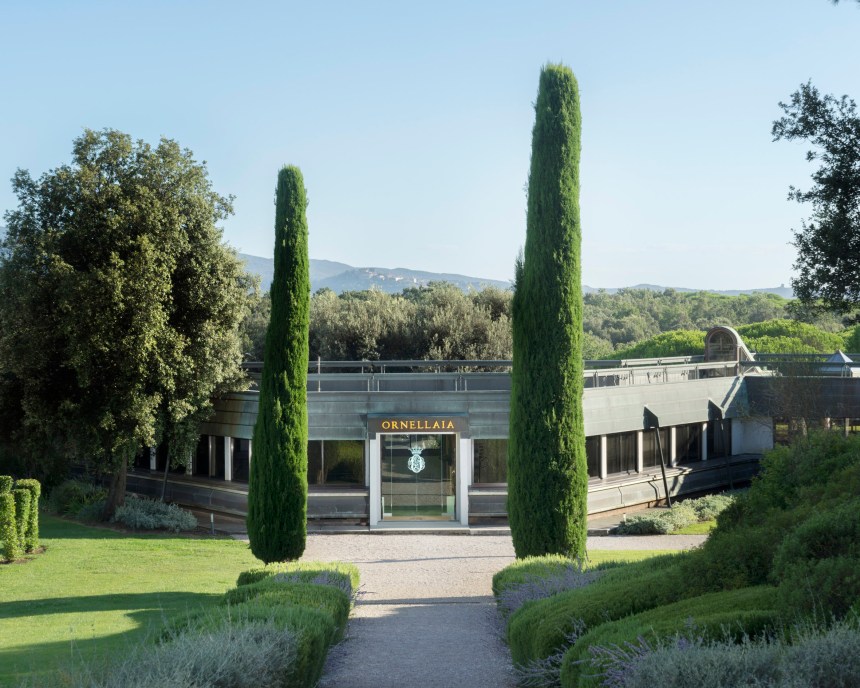
At the end of the tour, finally, a tasting of the entire range of the current vintage. Wines include Le Volte dell’Ornellaia, Le Serre Nuove dell’Ornellaia, and Ornellaia. But there’s more. Ornellaia has saved a truly exclusive surprise for its guests: a tasting of “Variazioni in Rosso dell’Ornellaia”, a cuvée that can only be tasted and bought at the estate. With this limited-production Tuscan IGT, Ornellaia expresses the individuality of each vintage through a particularly distinctive grape variety that the winemaker highlights in the blend. An inimitable tasting experience.

The “Tour & Tasting by Ornellaia” is available with advance booking. For info and prices: hospitality@ornellaia.it

Le Volte dell’Ornellaia 2017

Great satisfactions from a challenging vintage

For over 25 years now, Le Volte dell’Ornellaia has shone as the most youthful expression of Ornellaia’s wine production; its generous, Mediterranean character combines with a firm structure and multi-layered complexity to offer, year after year, immediate, joyous pleasure.

The 2017 version has just arrived on retail shelves across the globe, the interpretation of a vintage that those near Bolgheri’s iconic Viale de Cipressi will remember as a hot, dry season.

A mild winter brought a slightly-early budbreak, whose progress was favoured by warm, temperate spring, of the kind that only the Mediterranean coast can gift. April was a more restless month, with some unexpected winter-like conditions, without, however, doing any damage to shoot growth. May seemed to usher in summer; its uninterrupted sun slowed vine growth, but flowering continued unabated. July and August were true to form, refreshed by the providentially-cool night-time temperatures typical of this area.

The harvest started early, on 24 August, and concluded in the final week of September. Towards mid-month, a few rain showers helped lower temperatures, creating, in fact, ideal conditions for finishing the harvest on a high note.

As is our custom, fermentation was performed in small steel tanks, a technique that preserves the characteristics of the varietal components (largely Merlot). The final wine was matured 10 months, part in oak barrels previously used for Ornellaia, part in concrete vats, with the objective of achieving a perfect balance between structure and fruit.

“The result of a particularly hot, dry year,” remarked Winemaker Olga Fusari, “Le Volte dell’ Ornellaia 2017 is characterised by its usual deep ruby red colour. An appealing bouquet of ripe red berryfruit and spices is sustained on the palate by crisp acidity and an open, enveloping tannic structure.”


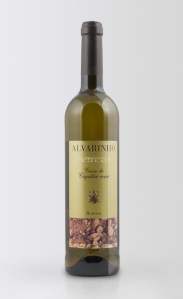
Casa da Tojeira: Vinho Verde Branco Alvarinho


Casa da Tojeira is a beautiful manor house built in 17th century of a property in the Peneda-Gerês National park, combines luxurious modern amenities with the old days charm.

Casa da Tojeira produces the famous wine with the same name.

Nature lovers can explore the 20 hectares of the farm and enjoy a variety of leisure activities such as bicycle rides, swimming, horse riding or fishing.

We tatsed:Vinho Verde Branco Alvarinho/Trajadura Tojeira DOC
Vinification: The grapes are harvested by hand and destemmed followed by a soft pressing in order to preserve the characteristics aromas. After defecation by cold, the must is inoculated with selected yeasts. The fermentation takes place in stainless steel vats at controlled temperature of between 14-16ºC.

This wine has a Citrine colour, the aroma is elegant, with notes of tropical fruits, citrus and stone fruit and light floral. In the mouth is balanced and complex, with fresh acidity, engaging and persistent finish.

Pairing food: this wine is ideal accompany seafood dishes, oily fish and white meats.

THE MASSETO WINERY UNVEILED

HyperFocal: 0

An architectural masterpiece quarried from the blue clay


Carved deep into the ancient blue clay that underpins the vineyard, the Masseto winery is a physical and symbolic tribute to the Estate’s history and rapid evolution from intuition about the hidden potential of a vineyard site, to internationally acclaimed wine.

‘The Winery is a tribute to the past, present and future of Masseto. It celebrates the incredible story of a wine that was never meant to exist,’ said Masseto CEO, Giovanni Geddes da Filicaja. ‘Years of planning and effort have been dedicated to building the right home for Masseto. One that consolidates three decades of experience, where every aspect has been designed to meet the winemaking team’s highly detailed requirements.

Technical facilities in the subterranean building, reminiscent of a sacred temple, have been stripped back to low-impact basics. ‘Nothing is missing, and there is no more than necessary,’ said Masseto Estate Director, Axel Heinz. He stressed that winemaking at Masseto, which balances austerity, modernity and tradition, will remain unchanged. ‘Our wine making is about reducing the process, reducing intervention, with a ‘less is more’ philosophy.’

Designed by architects Hikaru Mori and Maurizio Zito of the ZitoMori Studio, the building represents and reinforces Masseto’s discreet but powerful identity. Above ground, only the low lines of the grape reception area and the restored Masseto House emerge from the hill.
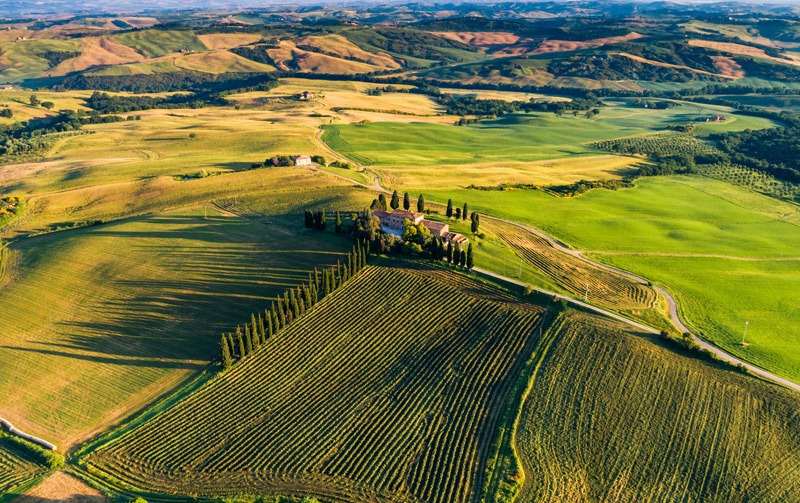
Built to incorporate a gravity flow winemaking process, and benefiting from the blue clay’s natural insulation, the structure is symbiotic with the hills and vineyard that surround it. The architects called their underground design concept, The Quarry. ‘To represent the effort required to produce the wine made here, we created a series of spaces – not by construction, but by extraction from the hill’s monolithic mass. The diverse internal volumes, heights and levels are reminiscent of a gold mine as it follows seams of precious metal to the core,’ said Japanese-born architect Hikaru Mori.

Cast-in-place concrete was used for the winery’s architectural framework. Inside, clean lines of glass and steel predominate, balanced by rows of oak barrels. Textured and scored surfaces throughout are a reminder of the extractive construction process, while openings in the walls frame vertical profiles of the vineyard’s inimitable blue clay terroir.

At the very heart of the structure lies the Estate’s wine vault, Masseto Caveau. Bottles of every vintage since 1986 are preserved here, in perfect cellaring conditions, each suspended in its own stainless-steel mesh cradle. There could be no better physical manifestation of the Estate’s history.

The 2018 vintage is the first to be vinified in the Winery, by recently appointed cellar master, Eleonora Marconi.

Masseto, located on the Tuscan coast close to the small village of Bolgheri, is a wine that was never meant to exist. The potential of the slope where the vineyard now sits was finally seen in the 1980’s, when, against all odds, advice and local tradition, the first vines were planted. Intuition paid off. The blue clay, cooling coastal breezes and abundant refracted light from the Tyrrhenian Sea all contribute to Masseto’s intriguing combination of power, elegance and complexity. Masseto has received international acclaim since its birth in 1986. The Estate is controlled by the Frescobaldi Family Group.


Supertuscan: internationally Tuscan wines

The origin of Supertuscan goes back to the last forty years: these wines were originated from the strong wish of their producers to express a renewal and an international character.
At the end of the Sixties the Marquis Incisa della Rocchetta, with the help of the ingenious enologist Giacomo Tachis, decided to experiment new methods by producing the Sassicaia, a red wine obtained from Cabernet, Sauvignon and Franc grapes, which were cultivated only in the Castagneto Carducci area (now area of the DOC Bolgheri Sassicaia) and refined in French barrique

They had analysed the soil and cleared up that its feautures were very similar to those of the Graves area, near Bordeaux, so they knew that it was not very suitable for Sangiovese, but perfect to cultivate international grapes of a very high quality.
In this way, a new concept of Tuscan wine was born, that is to say a great red wine, longlived and structured, that keeps in itself the Tuscan terroir:

a distinctive and influential wine, able to graft into the souls of the most obstinately French Cabernet, Franc, Syrah and Merlot, making them powerful and strongly able to express the Tuscan soil, by enriching them in their bouquets with scents of underbrush and balsamic herbs and refining them with violet and white flowers fragrances.
These new and more modern wines, received a lukewarm welcome in Italy, while they received great appreciation on the foreign markets from the very beginning, in particular in the USA, where the market was guided by skilful wine influencers and wine tasters such as Robert Parker, who first called them “Supertuscan” and James Suckling, well known for his publications on Wine Spectator.

Nowadays the wines that use Cabernet, Merlot or Syrah grapes, or even only Sangiovese grapes, are included into the Supertuscan category: they have some definite feautures in common, as the full-bodied taste, the longevity and the strong structure, but each one has got its own soul, history and a territory to narrate. In fact, these wines distinguish themselves by being expressions of a creative enology, (not so limited by the disciplinary rules anymore) and also the “children” of a new generation of enologists; they are able to interpret the perfect interaction between the features of a territory and the philosophy of a winery and make us meet it again in our glass.
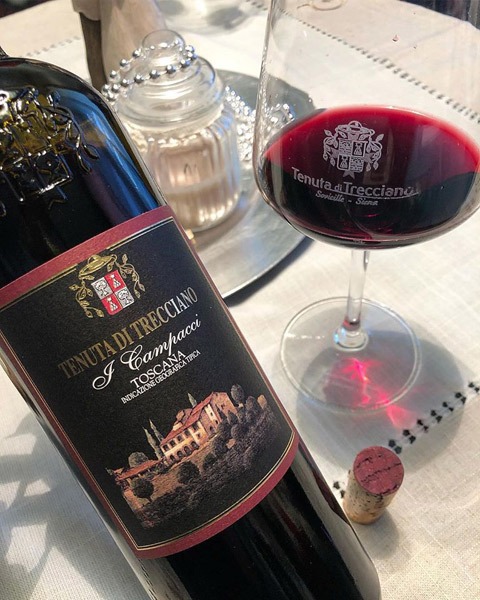
Exactly as our I Campacci, obtained only with the grapes coming from our small Merlot vineyard.

A crù with great appeal and sensuality, that expresses the international feautures of these varieties (the spiced and jam elements, potential and structure) and the philosophy of our Estate (freshness, richness and strong in tannin because of its aging). It is produced every year in about 6000 bottles, it is a great meditation wine and suitable for a long aging.

Ornellaia, interpreter par excellence of Italian wines,wins Vinitaly’s 2019 International Prize


Another award of notable prestige joins the myriad honours won in recent years by Ornellaia, the Bolgheri-based producer whose stunning, world-class wines have kept the international spotlight focused on the immense quality possible on the Tuscan coast. The award cites “this Made in Italy sector leader, with its rich portfolio of universally-coveted wines that are the envy of the entire wine world,” a tribute that was officially made in the presence of a prestigious audience composed of wine producers, opinion-leaders, journalists, and wine sector professionals.


This tribute is simply the latest milestone in the impressive record that Ornellaia has steadily created for itself from its beginnings, gaining an international reputation that has brought it to the very pinnacle of world-wide success. Its position is further strengthened this year by the distribution of the iconic Ornellaia Bolgheri Superiore through the Place de Bordeaux network in order to ensure more consistent distribution in markets it has more recently entered–Asia, Africa, South America–, while the long-established markets of Europe and North America will continue to be addressed by the winery’s traditional distribution channels.


The fruit of the unique and uncompromising quality of Ornellaia’s production has been its astounding evolution and current world ranking, a position that has been strengthened over its history by the far-sighted strategic decisions of CEO Giovanni Geddes de Filicaja, whose goal has always been to further raise its intrinsic value and image. He has pursued that goal from the very start, as he stated in his speech of acceptance: “Would you like to know how we grew? My goal was clear from the beginning: increase value by investing in the highest quality—the absolute finest team, wines, and communications.


Our corner of Tuscany has also become an open-air museum, thanks to the art installations of our Vendemmia d’Artista initiative, which for ten years now has attracted internationally-famed artists who have personally interpreted the distinctive characteristic of each individual going year. The latest vintage to be so recognised was the inimitable 2016, named‚ La Tensione‘ (Tension).

TENUTA MASSELINA WRITES A NEW STORY


Recovered an ancient barn: made a barrel room, a refining room for classic method sparkling wine and new spaces for tastings. A project that talks about high quality wine and wine tourism for the entire territory of Romagna. Organic vineyards and structure with Casaclima standard.

Tenuta Masselina is the winery owned by Terre Cevico. It rises on the hills of Castelbolognese in the heart of the Serra su terroir sub-area among the most vocated of Romagna in the production of Sangiovese. In its 16 hectares of organic vineyard, there are native vines such as Albana, Sangiovese, Trebbiano and Grechetto Gentile (Pignoletto).

Masselina is an estate with a strong territorial identity that becomes a story and experience through visits to the winery and paths in the vineyard, tastings and events. Here you can breathe the work of the fields, the beauty of nature, being well and, of course, the aroma of great wines. Tenuta Masselina is a symbol and paradigm of sustainability, the real one told through facts and not by proclamations.

In these days the Mipaaft has formalized the guidelines for the enotourist activity and from this point of view the proposal of Masselina is in perfect harmony with the provision. The investment made, in fact, is placed in the wake of a strategy that tends to enhance wine also through experiential and tourist routes.

The new structure is entirely built with the standards of Casaclima and is surrounded by 16 hectares of entirely organic vineyards and 6 of woods. For hot water and heating, the heat captured by 14 geothermal wells is used and a large part of the electricity is generated by photovoltaic panels.

The bottaia was also built, a room for the production of the classic method sparkling wine and a space dedicated to wines in the amphorae. An important investment, which saw the architectural recovery of a classic Romagna hay barn.

“High quality wine, with important positions, also needs to be told, tasted and lived at the place of production – says Marco Nannetti, President of Terre Cevico – A project that therefore aims to develop strong and structured synergies and connections in Romagna with the sectors of tourism, culture and gastronomy. We want to further contribute to the recognition of the added value it deserves in Italy and in the world of wine. ”

So the wine tourist can go to the estate to taste the wines, visit the vineyards and the cellar. It will also be possible to use the services by booking using the special link from the website http://www.masselina.it.

At Vinitaly, this project was launched in great style, which is added as a fundamental piece to the mosaic of Romagna oenology.

Tenuta di Trinoro interprets the 2016 vintage and translates it into a masterpiece


The 2016 growing season, quite well-balanced, with mild and sometimes cool weather, is difficult to describe, much less to embody in the bottle, but at Tenuta di Trinoro it is precisely in seasons like this that knowing how to wait “results in incredible wines.”

For over 20 years now, this wine estate, located in the Val d’Orcia, an enchanted and utterly unique corner of earth, has been harvesting “à la carte”–picking the grapes from its 16 vineyards just at the moment when each is optimally ripe. All the vineyards, a mosaic of Cabernet Franc, Cabernet Sauvignon, Merlot, and Petit Verdot, are planted at very high densities in the estate’s clay soils. 

The 2016 harvest started on 24 September, and the memory is still vivid: “Exciting-quality Merlot is still coming into the cellar, on 27 and 29, and we did the last load on a very long 30 September (…) On the first days of October it rained lightly on the Cabernet Franc, but the vineyards dried out, and then the moon rose, bright and clear.” “By 12 October, the valley was a sea of dark grapes, and the moon advanced majestically like a banner leading the wine styles into the world of luxury.”

Later, benchmark producer Andrea Franchetti took this complex of grape varieties and characters and fashioned this res nova, the perduring estate wine in its latest edition. “In the 2016 vintage, I wanted to express the season’s delicate character; putting aside all the other vats, I chose two of Merlot and two of Cabernet Franc, in equal parts.” 

Right now, the 2016 vintage Tenuta di Trinoro, produced in 6,000 bottles, is setting off on its journey throughout the world. Its favoured market is England, where for avid collectors it conjures up the dream and experience of Tuscany, but it is sought-after in the German-speaking world as well, in America, and obviously in Italy too, where it is found in the finest wine-shops and restaurants. The price is not at an every-day level, but sublime emotions are not always within easy reach.


***


Tenuta di Trinoro is located at Sarteano, at the beginning of the Val d’Orcia, in southeast Tuscany. The vineyards, divided into 16 separate parcels lying between 450-600 metres’ elevation. Tenuta di Trinoro has always been the winery’s iconic wine. The portfolio also includes Palazzi, a powerful Merlot-interpretation and Le Cupole, a younger, more accessible version, from the estate’s younger vineyards; recently also three crus from three separate vineyard parcels of Cabernet Franc have become part of the Tenuta di Trinoro’s wine collection, i.e. Campo di Tenaglia, Campo di Magnacosta and Campo di Camagi.

The Maremma yields a jewel called Le Pupille

Elisabetta Geppetti’s trail-blazing idea of producing a great Syrah in Tuscany’s coastal Maremma area began to take shape as early as the year 2000, when she planted two vineyards to that noble variety at Fattoria Le Pupille. Years of quality selection in the vineyards followed, then vinifications from 2012 on, all of which amply confirmed that the path she had chosen was correct. The final fruit was Le Pupille, a wine that embodied a yet-unexplored aspect of the Maremma’s winemaking potential and expressed at the same time the elegance and fascination of two women intimately linked to each other. Elisabetta Geppetti has been joined, since 2011, by her daughter Clara Gentili, who displays the very same level of passion and, it would seem, far-sightedness as her mother.

A four-handed accomplishment_Le Pupille was also the result of innovative winemaking practices. “My mother and I decided, together with winemaking consultant Luca D’Attoma,” explains Clara, “to vinify each of the two vineyards differently, the grapes from one in large oak tonneaux, the others in large terracotta jars hand-made in Tuscany.” 

“It was all quite an emotional project,” added Elizabeth, “and one that our entire family embraced, since, as we love to tell, we all personally destemmed the grapes by hand after the harvest.” And that 2015 harvest yielded wonderful fruit in the two vineyards that unite to produce Le Pupille.    

The Vigna del Palo and fermentation in tonneaux_Planted in 2000, this 1.5-hectare vineyard faces east, which allows the grapes to benefit from the less-intense morning light and to avoid the impact of the hotter hours of the day. Thanks to a rather light leaf-thinning during the 2015 season, cluster development was gradual and consistent, and at harvest-time, in the last week of August, the grapes were sweet and aroma-rich, with fairly refined tannins. A 25-day fermentation followed, in open-topped 500-litre oak tonneaux, with careful punch-downs twice a day to maximise aroma extraction, then the wine macerated on the skins an additional 25 days.       

The Vigna di Pian di Fiora and fermentation in jars_This small vineyard, barely half a hectare, was planted in 2002. Its particularly cool, dry climate was further accentuated in 2015 by breezes along the valley floor, and the result was a pronounced florality and dense tannins in the grapes. Fermentation in 500-litre terracotta jars preserved varietal fidelity and heightened the grapes’ floral notes. Fermentation began spontaneously, but it was carefully controlled, and the subsequent maceration continued for some eight months, until May 2016, when the wine was finally drawn off and racked at low temperature.     


The final blend of the separately-fermented lots matured in new 300-litre French oak barrels for some 10 months, was bottled in March 2017, then received a further 22 months’ bottle-ageing.  

The result of this refined process is a Le Pupille of pronounced crispness and elegance, with an intriguing stylistic link to its trans-Alpine cousin. Its complex bouquet boasts wild black berryfruit, spice, and a subtle toastiness. Le Pupille 2015 was produced in a limited edition of 3,000 750ml bottles.    

« Older Entries Recent Entries »