Category Archives: A WINE ESTATE UNVEILED

The Grillo from Feudo Maccari
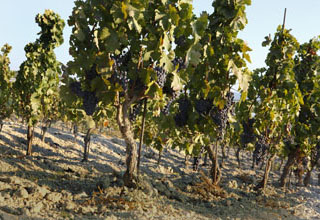
thumb_nerodavolaWe are in Noto, Sicily, land rich of history which has seen the passage of different peoples and cultures from the Romans to the Greeks to the Arabs but also the Normans the Aragonese. It is also the “Baroque” capital thanks to its ancient cathedral.

That’s the place where Feudo Maccari lies which covers about 1,000 tumuli, (old unit of the island of Sicily for which one mound is equal to 1,744 square meters) of which about 450 vines, divided into three bodies scattered on hills caressed night and day by the sea breeze. The landscape is characterized by carob trees, olive and almond trees in bloom where sprout almost by magic, the characteristic plant sapling of Nero d’Avola.

The challenge of Feudo Maccari points to climb the quality even on white, or rather a big classic white the Sicilianvino_grillo Grillo.

We tasted the Grillo 2015 Feudo Maccari

The Grillo is a classic wine of the island oenology. A versatile wine grown with the system sapling. The wine is made without skins. Immediately it presented with its typical straw and golden yellow color. The nose almond blossom and citrus fruits are the masters. In the mouth is savory fresh and well balanced.
At the table the Grillo guides us towards seafood plates from seafood to appetizers to first. Excellent also with grilled fish.
 

Calmarossa, wine with a “volcanic” character

Santa Maria la Nave is an Etna properties with native vines grown by “artisans” local, oenologists and with indigenous yeasts: united by respect for local values and territory.

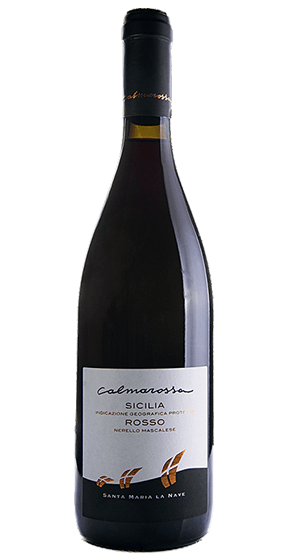
calmarossa-sicilia-doc-rossoThe small family farm Santa Maria la Nave is a heroic vineyard, because it is located at 1100 m. on Mount Etna, the active volcano highest in Europe. This is the closest vineyard to the Etna crater. Thanks to that, the Mulone family can enjoy volcanic eruptions as natural fertilizers and therefore produce completely natural and organic wines.

The history of this wine start at the early ‘80s. The Mulone family bought a small land in the municipality of Viagrande, where there was an old bush-trained vineyard of Nerello Mascalese and Nerello Cappuccio. Over the years they started experimenting the production of a wine from selected grapes of Nerello Mascalese and Nerello Cappuccio, grown in ancient Etnean vineyards.

This is Calmarossa, a wine that represents the relationship with these vine varieties. Characterized by Ruby red color with purple reflections, it has floral and fruity notes, slightly toasted, underbrush and vanilla scents and slight hints of cinnamon. His structure is Harmonic and persistent, with a refined acidity and a balanced tannin that reminds us of its longevity potential.

In gastronomy is perfect with red meat and mature cheeses.

hb

Costantino wines: wine between mythology and tradition

arianeroCostantino wines lies in the Sicilian hinterland dotted with mythological stories whose protagonists were Minos, Theseus, the god Dionysus. We are in Partinico at about thirty kilometers from Palermo, where Costantino winery was founded in 1960 by Papa’ Onofrio said “Nonò”, a true Sicilian love with his land. Driven by this passion, “Nono” day after day gave form to that which a company was for him the realization of that dream the place to grow and learn to life.
Today the third generation and the zeal and passion for the land and its products is the same as always. Develop, through the cultivation of fruit, flavors, scents, genuineness, authenticity of the products of Sicily in the tradition that distinguishes it: this is the ambition of Constantine wines.

The land covers 55 hectar of land planted with vines at a height above sea level from 250 to 600m. In the 55 hectares of land have been selected the best varieties of native grapes (Nero d’Avola, Catarratto, grecanico, unusual, Muller Thurgau, cricket) and international grape varieties (Merlot, Syrah, Cabernet Sauvignon,Petit Verdot, Chardonnay). Cultivation has a carefully crafted using much labor and a few mechanical means.
In the cellar, the innovation and the traditional techniques are perfectly integrated, in order to ensure the highest quality and authenticity of the final product.

We tasted:

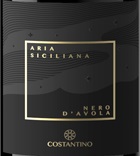
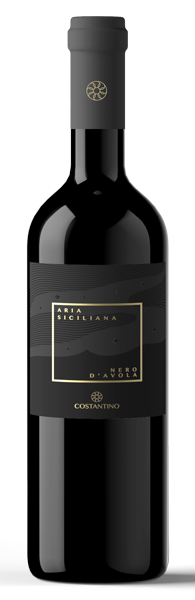
Aria Siciliana Nero d’Avola 2013arianero2

A Nero d’Avola 100%, obtained by manual harvest in the second decade of September. The wine is made with fermentation and maceration at a controlled temperature for 10-12 days. It presents a very intense red color. The nose stand out ripe fruit, red berry but also spices. In the mouth surprises by strong well-balanced structure with the roundness persistence. In the kitchen, the pairings are all Sicilian: Pork rolls with sweet and sour onions and “caponata”. Definitly a great Sicilian wine.

Siddùra wines in Sardinia #Siddùra #wine #Sardinia


10724088_1011801435550406_749096968_n

Siddùra is an area in the heart of Gallura, in Sardinia. This place is near to Luogosanto, a picturesque medieval hamlet with about 1900 habitants and it is situated at 320 meters on the sea level.

In this territory there is an important winery called “Società Agricola Siddùra SRL” that produces unique and characteristic wines of Sardinia. Siddùra is placed in a natural paradise with secular cork woods and a wild landscape rich of fragrant scents of Mediterranean vegetation.

It is a land where hills protect vegetation from winter winds and sea breezes temper the summer heat. The territories of Siddùra vineyards are a combination of granite, clay and sand and the most of them are dry.

The winery produces three different white wines and four red ones. Maìa, Spèra and Bèru are made with “Vermentino” that is the vine with white grapes most widespread in Sardinia. The taste is very intense, sapid and mineral with a straw-yellow color.

The red wines are: E’rema, Bàcco, Fòla and Tìros. There are two types of vine with red grapes “Cannonau” and “Cagnulari”, the first one has a color not too intense so it is able to create fruity wines. However, “Cagnaluri” germinates late and  its wines have a red intense color with a pronounced acidity.


Nett: a tradition based on innovation! #Palatinate #wine #Germany

images

“Each wine and each vintage has its own personality, its own character and its own history.”

The winery is placed in the wine hamlet called Duttweiler, that is in the heart of the magnificent region Palatina where we can admire the typical Mediterranean landscapes.

The winery was created in 1838 and today the Nett family is arrived at its fifth generation and it continues the wine production in the respect of tradition, with the utilization of new innovative techniques.

The Nett philosophy is work in respect of nature and it is properly this to give different times of work. The biggest challenge is to emphasize potentiality, individuality and the qualities of each vineyard in the Nett territory.

In their wine cellars where tradition meets innovation in a harmonious and equilibrate way, there is the tranquility to give wine the pleasure of time. All that starts with the soft pressing of grapes and with fermentation until the sweet aging of fresh wine through bottling.

Tradition also means innovation!
As the historic ancestor Heinz Bergdolt-Reif has done at the beginning of his job career, in 2011 the winery created the Horsepower, a new work method. In fact, Nett manages some of its best vineyards exclusively through the work of horses because this traditional method softens ground allowing it to breath.

This guarantees a superior quality for grapes and gives wine an unique character.

A fantastic wine we tasted from this wine estate:

Riesling Trocken Pfalz 2013: among all wines produced by the Nett winery, we prefer the Riesling Trocken because it is really a dry wine, very long with a fantastic aging potential.

Weingut Herbert Pazen wine estate #germany #moselleriver #wine

Zeltingen-Rachtig-Schleuse


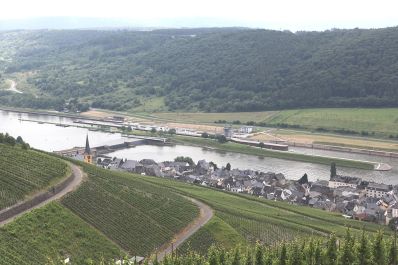
Weingut Herbert Pazen winery is placed in Zeltingen-Rachtig, a small town in Germany. Its vineyards are settled along the famous Moselle river.

The beautiful Moselle valley region extends in north eastern France, south western Germany and eastern Luxembourg. The surrounding area has developed a strong tourist industry, thanks to its exceptional natural landscape.

 All wines produced are multifaceted and have various fruity and spicy flavors. Riesling grape is the most important variety of the region.

The wide range of wines includes:

  • Herbert Pazen, Riesling Kabinett, exotic fruity tones,
  • Herbert Pazen Secco, semi sparkling and dry wine
  • Feinster Apfelbrand, pure apple brandy.


Weingut Herbert Pazen winery website: http://www.herbert-pazen.de/index.php?p=1000

Valentina Gagliano

In the heart of Chianti: la Castellina winery #chianti #tuscany #wine

La castellina Rugiada

If you are looking for an enjoyable and relaxing holiday, immerse yourself in the peaceful and uncontaminated nature of “La Ferrozzola” guest house, in the heart of Chianti, in Tuscany. Not too far from that, in the historic centre of the medieval village of Castellina, there are the wonderful Hotel “Palazzo Squarcialupi”, full of elegant rooms and old paintings, and the family farm, excellent synthesis of history and nature.

The winery has its origins from the past properties of the noble Squarcialupi family. Today, the farm belongs to the Bojola-Targioni, Monica Targioni and her husband Tommaso Bojola have been restored the property and took care of vineyards with great passion and devotion over the years. The farm is exactly settled in the amazing Palazzo Squarcialupi, with its cellars and shop, where family organizes wine tours to discover cellars and taste wine, as well as workshops about family and farm history.

The farm produces red, white and rosé wines, grappa, extra virgin olive oil and the traditional Vinsanto, typical Italian dessert wine. These wines are multifaceted, with particular blend of flavors, wild fruit scents and nuances of spices.

The most sought wine is the Chianti Classico, with its intense ruby color.

We were very pleased to taste the white wine called “Rugiada”. It is made up of 50% of Chardonnay grape and 50% of Malvasia del Chianti. All grapes are hand harvested. With its characteristic intense straw-yellow hue, this wine is lightly aromatic of powerful tropical fruits notes and fresh white flowers nose.

A balanced wine with a lovely almond aftertaste. It needs to be seasoned for six/eight months, poured into appropriate French oak barrels.

Fine accompaniments: pasta, risotto, fish, poultry.

La Castellina website: http://www.lacastellina.it/index_en.asp

Valentina Gagliano

Scheiblhofer collection #wine #austria #burgenland

Scheiblhofer wein

The Scheiblhofer is one the largest wineries in Andau village in Burgenland, the easternmost State of Austria. In this exclusive area, where the sun shines bright, a wide range of excellent wines are produced. High temperature and rich soil are the ideal conditions for an abundant growth of exceptional ripe grapes.

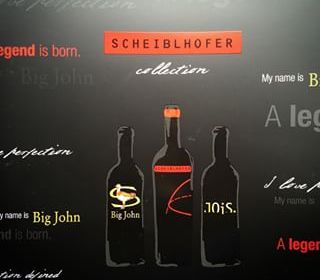
The Scheiblhofer collection is very unique. They are full-bodied wines, characterized by high aroma and splendid tasting. The three most representative collections of the company are: Big John, Perfection and Jois, a singular trilogy in Burgenland.

Big Joh is the legendary pioneer red wine. It is a dense ruby red, famous for the mixture of fruit scents and delicious aroma of caramel, powerful tannin and with oak roasted flavor. Its label is inimitable; there is a great bustard in it, a representative image for Andau community, as it is the only place in the world where great bustards are native. We tasted Big John, a blend of zweigelt, cabernet sauvignon and pinot noir it and loved it immediately for its strong nose, its bold character and its long aftertaste.

Perfection collection includes Shiraz, Legends, Merlot, Cabernet Sauvignon, Pinot Noir, all dark ruby reds, full-bodied varieties perfect to be paired with red meat.

Jois is a 30 year old vine. The typical cherry fruit with the combination of strong acidity makes the wine refreshing and explosive at the same time.

You can send an online request to visit the winery and have the opportunity to taste its sumptuous wines. Moreover, if you are a wine lover and want to stay more, the newly built guest house will be ready to give you a very warm welcome.

Scheiblhofer winery website:  https://www.scheiblhofer.at/en/startseite.html

Valentina Gagliano

Bisol, excellence from ground to glass

filosofia02The Bisol family has a wine growing tradition in the prestigious area of the Hill “Cartizze”.
The year 1542 is an important historical landmark that marks the emergence of viticulture and winemaking family Bisol: Eliseo Bisol gives life to a small and flourishing trade.
But was DesiderioJeio” to his friends, who after World War II sets the company to experiment new techniques on their own vineyards, a prerequisite to produce wines of the highest level. As recalled Antonio Bisol, current president of the company, “My father Desiderio was always trying to buy the best plots, the most expensive and steep, so difficult to work with, but whose slope and composition were ideal for the breeding of Glera, demonstrating extreme sensitivity to product quality. “

Forefront of tradition

The vineyards of the farm Bisol are spread over 20 farms nestled among the steep hills to go to Coneglianostoria05 Valdobbiadene, the best areas of the Denomination.
A highly fragmented territory studded with small and possessions, so that the average extent of each property is just over one hectare.

Bisol is one of the few companies that directly manage the entire production chain, the careful choice of the land until bottling. This helps ensure the utmost quality performance, since each stage determines the final quality of the product, and requires a constant and strict control.
To note the farm run on the summit area of ​​Cartizze hill: an area that winds up a steep hilly ridge, at an altitude of 300 meters above sea level, and enjoys wonderful sun exposure, as well as continuous ventilation that together with the sandy nature of the soil makes it an area of ​​rare value.

The territory, its added value

Even today, as before, the company does the quality of the territory his greatest pride and its added value.
So effectively summarizes Gianluca Bisol, general manager: “We work with passion to Conegliano have the same prestige as Reims, Valdobbiadene the same charm as Epernay and Prosecco the same fame of Champagne”. A care that we find in the vineyards, where Bisol governs carefully each stage of the production chain, from breeding to the sale of the vine, from grape to the glass.
But why choose Prosecco? First, because it is a very pleasant wine, which refers to Italy: fresh, light and not too much alcohol. In addition it comes from a native grape variety, one that can not be in other countries. Moreover, in the international market bubbles – historically dominated by champagne – the most affordable price combined with high quality, represent a very interesting alternative.

phpthumb_generated_thumbnailWe tasted

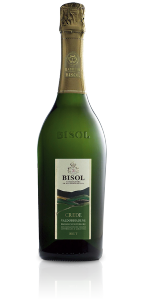
  • Crede Valdobbiadene Prosecco Superiore DOCG brut, a brut sparkling wine composed of Glera grapes, Verdiso and Pinot Blanc. “Crede”, comes from the name of the clay soils with subsurface sandstone that give fruity. It has a bright color, yellow with light green highlights. The sparkle is made up of a myriad of minute and persistent bubbles. The nose gives off all the scents of the countryside, hay, grass, fruity. The mouth has hints of apple and pear and a good degree of flavor. Ideal for cocktail receptions and in particular the Bellini (famous cocktail made up of peach pulp and prosecco).phpthumb_generated_thumbnailpng

  • Jeio Valdobbiadene Brut, It is produced with selected grapes from the hills of Conegliano, terroir hence its mineralogist and dry, and those of Valdobbiadene, which give crispness, acidity and freshness. It composed of Glera and parts Verdiso and, to a lesser extent, Pinot Blanc and Chardonnay. It has a pale yellow color and a perlage of extraordinarily fine. The nose is fresh and fruity. Ideal for all meals and cocktails.

  • belstarBelstar prosecco DOC, “Belstar” is a way to call a vineyard, just outside of the production area of historic Prosecco. It ‘a sparkling wine from fruity and floral bouquet, enhanced during production in the cellar from the soft pressing and the protection of the must by the action of oxygen. A Prosecco of extreme finesse and elegance, thanks to the extreme care during maceration and pressing and slow fermentation.

Cantina Menti Giovanni, biodynamic quality

The hills of Gambellara were cultivated with vines Schiava “a palo secco” since the time of Ezzelino da Romano (sec. XIII) and produced a famous sweet white wine on the slopes of the castle of San Marco and Montesello. The Schiava vines was for at least two to three centuries the predominant grape variety of the foothill areas of feudal lands of Trissino and Sarego.

Family business that has its roots in the territory since the nineteenth century in Gambellara in the province of Vicenza, the cellar Menti Giovanni handles about 7.5 hectares of vineyards planted with Garganega and Durella, sites in the classic Gambellara hills. These grapes produce dry white wines, sparkling white and sparkling, and sweet white wines from resin fruits.

rivaarsiglia20131-142x500From the care of the vineyard to the bottling process (sparkling wine included), everything is done by Giovanni and his son Stefano. We speak of vineyards treated with the biodynamic method and in cellar are preferred spontaneous yeast and not used oenological invasive, to better maintain the characterization of the terroir of the vineyards.

We tasted

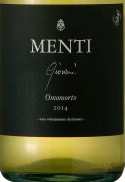
  • Omomorto Sui Lieviti 2014, this wine presents a blend of 98.5% Durella and 1.5% Garganega. The vintage is done by hand in early October. Fermentation takes place entirely with natural yeastsomomorto-2014-158x500 and temperature control. The wine is intense yellow color with a fruity and Buquet , great with seasoned cheese.
  • Riva Arsiglia 2013, wine from 100% Garganega grapes. After harvesting carried in crates, the grapes to the cellar are loaded in whole press and pressed at 0.6 bar. Fermentation takes place entirely with natural yeasts and temperature control. Subsequently, the wine stays in tank with its lees for at least a year. Bottled without stabilization. It has a dull yellow. The nose gives off hints of pear and vanilla. Ideal accompanied with pasta dishes, ham, and cheeses.
« Older Entries Recent Entries »