The Argentinian artist Tomás Saraceno interprets the 12th edition of Vendemmia d’Artista
“Vintage 2017 was certainly one of extremes, in which frosts, sun and drought certainly captured the imagination. Despite the fact it was a challenging year for the team in the vineyards and for us winemakers, I am very happy with the high quality and character of this vintage. We have chosen the word “Solare” (which in English translates as “Radiant”) to describe Ornellaia 2017 because it expresses its positive qualities,” explains Axel Heinz, Estate Director of the Bolgheri winery. “To preserve the strong and opulent personality of this wine, we had to apply the upmost care and attention from the vineyard to cellar – more so than in a normal vintage. This careful management of the grapes, starting with an early harvest, has resulted in a harmonious wine in which scents of black berries and liquorice prevail alongside velvety tannins typical of warm vintages. In short I would say that Ornellaia 2017 is sumptuously Mediterranean”.
In line with these words from Axel Heinz, this year’s Vendemmia d’Artista project turns its attention to our planet and the star that illuminates it. The artist chosen to interpret the character of “Solare” is the visionary Tomás Saraceno, known worldwide for his interactive installations that, in this age of ecological upheaval, propose new, more sustainable ways to live.
For Ornellaia, sustainability has always played an important role. The estate itself is a harmonious ecosystem with internal checks and balances that expresses the characteristics of each single plot and its unique terroir. Sustainable viticulture, defined by the conservation and enrichment of our terrain and the landscape in general, is essential to Ornellaia’s production philosophy. Through minimal intervention, we encourage the plant’s spontaneous tendency towards equilibrium. Precision viticulture addresses the specific needs of each parcel, whereas low-impact intervention stimulates the plant’s natural defenses.
Ornellaia 2017 Solare was produced in a year with above-average temperatures, with early budbreak and a sharp dip in temperatures in April that fortunately did not influence the vegetative growth cycle. The proximity of the Bolgheri DOC to the Mediterranean Sea played a decisive role and meant that we avoided the spring frosts that struck other parts of Italy. We then moved from one extreme to another with a dry heat spell that lasted from May until nearly the harvest. Luckily, hot and dry summer days were followed by much cooler nights which contributed to the development of Ornellaia 2017’s olfactory complexity.
Inspired by the radiant nature of Ornellaia 2017, Tomás Saraceno looked to the connection between the Sun and the Earth, inviting greater care and attention to the most important source of our planet’s energy. This is the concept behind the artwork developed for the estate and transposed to the unique Salmanazar. PNEUMA 4.21×10⁵ recalls an atomic structure composed of glass spheres which, like clouds, create a suspended city whose form and size are in constant evolution – an expansion of traditional concepts of borders and territories. The suspended sculpture’s forms, as imagined by Saraceno, would be able to float without fossil fuels, powered only by the sun.
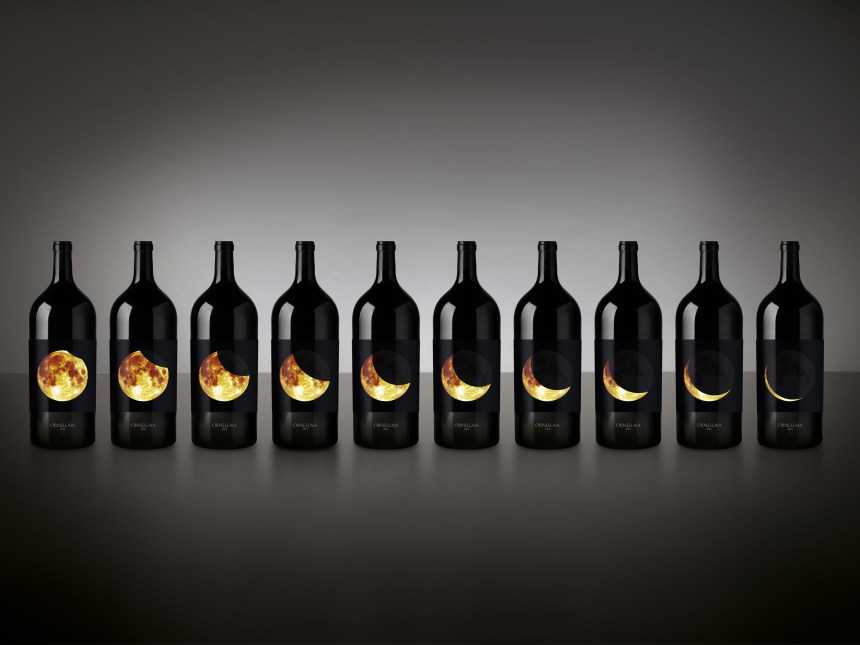
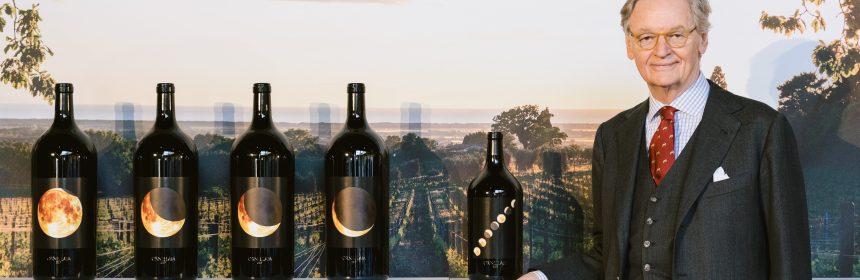
Alongside the installation for the estate and the Salmanazar, the artist has also customized 110 large-format bottles and designed a special thermochromic label for the 750ml format, through which he invites us to reflect on the impact that the human behaviour has on the environment.
As with every year, the 100 double magnums will be sold to avid collectors around the world meanwhile the unique Salmanazar and the 6 litre Imperials will only be available for sale through an online auction, hosted by Sotheby’s, the profits of which will be donated exclusively to the Solomon R. Guggenheim Foundation’s “Mind’s Eye” program.
“Sotheby’s Wine is delighted to continue our long-term partnership with Ornellaia supporting the 12th edition of their Vendemmia d’Artista project. The 12 lot online auction of the 2017 “Solare” vintage, illustrated by Tomás Saraceno and including many experiences, will open on Sotheby’s online platform, where clients can easily bid through the Sotheby’s app. Similar to last year, we anticipate these lots will attract a truly global roster of bidders who wish to buy these exclusive bottles and enjoy unique experiences.” Jamie Ritchie, Worldwide Head of Sotheby’s Wine.
“Since the inception of Vendemmia d’Artista in 2009, we continue to have the pleasure of supporting leading cultural foundations through celebrating the unique character of Ornellaia,” says Giovanni Geddes da Filicaja, CEO. “In 2019, we embarked on a three-year partnership with the Solomon R. Guggenheim Foundation in New York, which in the first year raised $312,000 for the project through auction at Sotheby’s. The connection between art and wine remains a passion for many people, ourselves included; we hope that in the years to come we will be able to contribute just as much, if not more, to the Mind’s Eye program through which the Guggenheim assists blind and low vision persons to experience art.”
Donations from the Ornellaia Vendemmia d’Artista auction will make it possible to advance superb educational programs at the museums in the Guggenheim constellation.
“We offer our sincere appreciation to Ornellaia for their longstanding involvement with the visual arts and their ongoing support of our Mind’s Eye program,” stated Richard Armstrong, Director of the Solomon R. Guggenheim Museum and Foundation. “With the generosity of Ornellaia, we are able to expand the programs that allow us to promote an understanding and appreciation of modern and contemporary art to audiences of all abilities.”
The artist Tomás Saraceno will open the Vendemmia d’Artista online auction during the annual event organised by Ornellaia at the Solomon R. Guggenheim Museum in New York on April 30, 2020.
The profits will be announced and donated to the Mind’s Eye program on May 15 when the auction will close on Sotheby’s website, the long-time partner of Ornellaia Vendemmia d’Artista project.

 Benuara
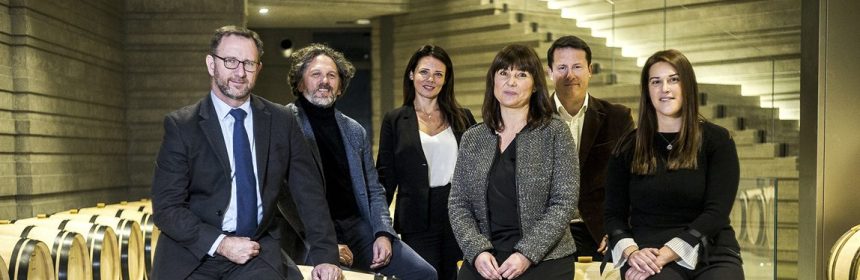

 For Chiara Lungarotti, managing director of the group: “Art and wine are a union that has always characterized Lungarotti’s identity, starting with the Foundation’s commitment to the Museums of Torgiano, dedicated to the millenary culture of oil and wine, to collaborations with contemporary artists. A contamination that, together with our wines, allows us to export the history and culture of Umbria and the Mediterranean to the world”.