Tag Archives: featured

Ornellaia has successfully closed the 15th charity auction dedicated to the Vendemmia d’Artista 2020 La Proporzione project

Profits from the lots go to the Mind’s Eye project by the Solomon R. Guggenheim Foundation

The annual charity auction organised by Sotheby’s ended on 21 September with the sale of 12 exclusive lots during the 15th edition of Vendemmia d’Artista.

Double Magnums, Imperials and a sole 9-litre Salmanazar went under the hammer at the auction, accentuated by the artistic labels designed by Joseph Kosuth, who was invited to interpret the vintage’s character, “La Proporzione” (Proportion). All the bottles help to support, as has been the case since 2019, the “Mind’s Eye” project by the Solomon R. Guggenheim Foundation, aimed at enabling accessibility to art for the blind and people with low vision. This year, Ornellaia has donated 300,000 dollars in favour of the program.

Giovanni Geddes da Filicaja, CEO of Ornellaia, comments: “We are proud to meet with such success among wine and art enthusiasts. Vendemmia d’Artista has become an essential event for collectors, conveying quality, beauty and solidarity.”

This is the fifth year that Ornellaia has donated the profits from the Vendemmia d’Artista project to the “Mind’s Eye” program while the Bolgheri-based winery has collected and donated more than 2.5 million euro to a range of international museums since the start of the project.

Charity auction for rare bottles of Vendemmia d’Artista Ornellaia 2020 “La Proporzione”

The online auction organised by Sotheby’s will be held from 7 to 21 September 2023. The proceeds will support the Solomon R. Guggenheim Foundationin New York, Venice and Bilbao

Organised by Sotheby’s, the annual charity auction of bottles from the 15th edition of Vendemmia d’Artista will return online from 7 to 21 September.

Double magnums, imperials and the only 9-litre salmanazar will be among the 12 lots. All the bottles are embellished with labels designed by the American artist Joseph Kosuth, who was invited to interpret this edition’s character, namely “La Proporzione” (Proportion).

The auction will provide collectors with the opportunity to secure lots of high artistic and wine significance, while doing a generous gesture. As in previous years since 2019, all profits will go to the Solomon R. Guggenheim Foundation’s “Mind’s Eye” program, which welcomes and enhances access to the arts for visitors who are blind or have low vision. “We are proud to support this initiative,” comments Giovanni Geddes da Filicaja, CEO of Ornellaia. “Like in art, appreciation of fine wines requires total involvement of the senses. Furthermore, for us, partnering with the Guggenheim Foundation is a way of giving back to the community some of the extraordinary goodwill that nature has bestowed upon us.” These unique bottles are precious for three reasons: their contents, their works of art on the labels and, last but not least, their goal of increasing access to the arts for all visitors.

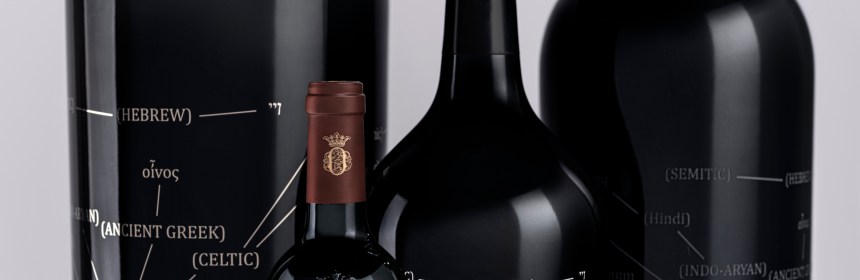
In 2020, nature and humanity combined to craft a perfect ‘proportion’ of elegance, power and complexity. In order to interpret this correspondence, the leading American conceptual artist and theorist Joseph Kosuth created a set of works based on the word “wine” and a quote from Vitruvius’s De Architectura (3.1.3). The 750ml bottle features the English version of the phrase engraved on the paper. For the 100 double magnums, the etymology of the word “wine” is embossed on the bottle, while each of the unique 10 imperials sees the etymology engraved onto the glass. One branch is accentuated in white and the quote from Vitruvius is translated in the highlighted language or one of its modern descendants: Albanian, Serbo-Croatian, Latin, Italian, Hindi, Hebrew, Modern Greek, Irish, German and Armenian. For the salmanazar, the etymology and quote from Vitruvius below are in English and the highlighting applied to the bottle is in platinum.

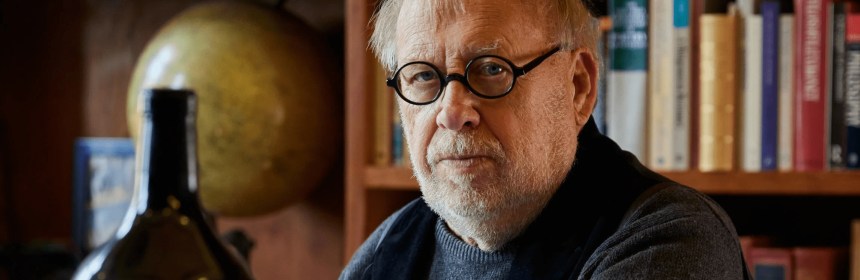
Joseph Kosuth: “I believe that language is an important part of experiencing everything and that these experiences shape us in a certain way linguistically. The architecture of experience through language was obviously always at work and I believe that Vitruvius was a major resource in understanding a concept like proportion. Proportion is not only visible equilibrium among the elements, but also equilibrium of all the elements that make it a perfect entity of what it represents for the world, thus also shaping it as conception.”

Tasca d’Almerita presents the new season of Capofaro Locanda & Malvasia on the island of Salina

A series of unique activities including celestial explorations, vineyard walks and culinary experiences overlooking the sea to give guests an immersion in the most authentic and exclusive Sicily.

The light of the lighthouse, just rekindled, is ready to illuminate Care’s: the Ethical Chefs Days, the sustainable food project scheduled in Salina from 25 to 27 May.
Gabriele Camiolo, chef of Capofaro Locanda & Malvasia, will be among the protagonists of the event to promote an approach to cooking that is attentive to the territory, people and resources.

Tasca d’Almerita, the historic Sicilian winery known internationally for the quality of its wines and for its responsible footprint on the environment and territory, announces the re-opening of the season of Capofaro Locanda & Malvasia, located on the Island of Salina, the greenest and most authentic of the Aeolian Islands.

Capofaro Locanda & Malvasia is a project of high Mediterranean hospitality born from the union of nature, volcano, land and sea, realised within the Tenuta Capofaro, one of the five wine estates of the Tasca d’Almerita family. This is home to ‘Anfiteatro’, a historic vineyard of Malvasia, a golden grape, the noblest fruit of the Aeolian Islands, which, dried in the shade, yields the famous local wine, dry or sweet.

Surrounded by 4.5 hectares of vineyard and characterised by a typical Aeolian architecture with white plaster and minimalist style, the Locanda represents the highest expression of hospitality in the archipelago, with a total of 27 rooms, each one different from the other, but all with private terraces from which to catch a glimpse of the outlines of Stromboli and Panarea. Since 2017, moreover, thanks to a major renovation and enhancement project strongly desired by the Tasca d’Almerita family, six new exclusive rooms have been built inside the Capofaro lighthouse, a piece of Salina’s history that has watched over the spectacular sea and promontory since the mid-19th century.

Capofaro passionately recounts the aromas and flavours concentrated by the sun, sea and volcanic soil of Salina through his restaurant, with respect for tradition and a calibrated contemporary sensibility. Immersion in a wine-related ecosystem is the basis of menus where dishes dialogue with Tasca d’Almerita labels and estates.
The Sicilian chef Gabriele Camiolo, together with his brigade, is ready to inaugurate the summer season by offering diners an authentic culinary experience composed of seasonal dishes with local products that respect the environment and have a very short supply chain. Seventy per cent of the ingredients used in the kitchen come from the estates’ vegetable gardens, such as the wheat used to make pasta and especially bread, a genuine product par excellence, awarded by the 2018 Gambero Rosso Restaurant Guide as Italy’s ‘best bread on the table’.

Chef Camiolo’s cuisine is based on listening to the territory to bring to the forefront the part that remains outside the kitchen space; it is a story that begins much earlier, in the months of research on the territory, in the dialogue with producers, in the exchange of knowledge, in the interaction with different landscapes. Gabriele Camiolo’s cuisine goes beyond cooking, it is understood as a set of practices and knowledge of which other people are part.
His idea of sustainability in the kitchen is clear: to understand the raw material in all its potential, to express it in a way that leaves no trace, i.e. waste.
His workhorses, such as the barbecue carrot with wild herbs and spiced almond cream, or the dentex alla mugnaia and Malvasia leaf, or the Aeolian tiramisu, are the fruit of studies and research that have made the Capofaro Locanda & Malvasia an indisputable destination for lovers of haute cuisine.

THE WINE EXPERIENCE

The Anfiteatro vineyard, a verdant and scenic basin in the heart of the Estate, provides a natural backdrop to one of the most exciting Wine Bars in the Mediterranean.
The tasting of more than 50 labels by the glass of great wines from Sicily and the rest of the world is one of the moments of wine learning and conviviality, to be experienced while immersed in the vineyard ecosystem.
To make the wine experience at Capofaro even more complete and unforgettable, tasting routes have been devised, including between the rows of vines accompanied by the sommelier, and knowledge of the different expressions of Malvasia and Tasca d’Almerita production, with matching appetisers prepared by chef Gabriele Camiolo and his brigade.

Tenuta La Massa Giorgio Primo 2019 joins the prestigious Place de Bordeaux

Tenuta La Massa is pleased to announce that this coming September will see the launch of Giorgio Primo 2019 on the prestigious Place de Bordeaux, an achievement quite apropos, since the estate’s winegrowing philosophy has always reflected a French style and an international spirit. “A position on the Place de Bordeaux for our estate’s iconic wine, the quintessence of our winemaking approach, is an opportunity to distribute into markets worldwide and represents the fulfilment of a dream,” commented estate founder Giampaolo Motta. 

Tenuta La Massa is the story of one-man’s search for a terroir on a par with his passions for viticulture and winemaking. In Motta’s case, they were formed in France then definitively rooted in Italy, in Chianti’s Conca d’Oro in Panzano where he found, in 1992, his terra electa, where he grows the vines that make up the superb portfolio of Tenuta La Massa. Motta’s vision to produce an iconic wine and bring it to the Place de Bordeaux is to come true, giving the opportunity of gaining wider recognition for Giorgio Primo on the international ultra-premium wine stage. “La Place de Bordeaux is, by universal acknowledgement, the most prestigious marketplace and distribution network for world-class wines, with particular emphasis on rarities and wines coveted by collectors,” continued Motta. “It is supported by more than 300 négociants, who sell to more than 170 countries across the globe.” 

The first Tenuta La Massa wine to be distributed on Place de Bordeaux will be Giorgio Primo. This cuvée of Cabernet Sauvignon, Merlot, and Petit Verdot is the culmination of continuous, painstaking efforts to achieve perfection, both in vineyard management and in winemaking practices. 

Barre & Touton, long-established courtiers of the Place De Bordeaux, are convinced that the world’s finest wines have their place on La Place. To manage that segment, Barre & Touton established a branch, “Les Vins d’Ailleurs”, directed by Laurent Dufau, dedicated specifically to iconic wines from outside of Bordeaux. 

The launch of Giorgio Primo 2019 will be coordinated by Barre & Touton “Les Vins d’Ailleurs” and offered through a select group of négociants: La Bordelaise des Grands Vins, Crus et Domaines de France, Maison Descaves, Dubos, Joanne Rare Wines & Millesima. 

“We are delighted to be able to represent Giorgio Primo and the winemaking philosophy of Tenuta La Massa,” stated Dufau. “We are honoured to accompany Tenuta La Massa on this new adventure and to offer their wines to the world through Place de Bordeaux.” 

Giorgio Primo 2019, the fruit of years of study of the complex local terroir, is a blend of 55% Cabernet Sauvignon, 40% Merlot, and 5% Petit Verdot, which creates a complex, symphony of aromas in the glass. The vines are planted in schist clay, galestro marl and limestone creating distinctive wines that are a true reflection of the terroir. 

The 2019 growing year was characterised by normal weather and by groundwaterreserves that filled over the winter and spring, thus enabling the vines to cope with the summer heat. 

A warm summer with some rainfall, and a normal ripening curve, plus cooler temperatures during the harvest in late September, preserving the grapes’ crisp, elegant aromatics. “That courageous decision to await peak ripeness, the outstanding combination of temperatures and rainfall, and the excellent management of the macerations and maturations in oak,” commented Giampaolo Motta, “meant that we have delivered beautifully balanced wines with exceptional polyphenol concentrations. Both elegance and power, which combines with a superb and savoury finish, the generous gift of our soils.”
A wine, that reflects the land and the interpretation of man. 

***

In 1992, Giampaolo Motta, Neapolitan by birth but Tuscan by adoption, encountered La Massa, and that moment formed an indissoluble bond between the man and his terroir. The estate, lying in the magnificent Conca d’Oro of Panzano, in the heart of Chianti Classico, boasts 25 hectares of southwest-facing vineyards. In the 1990s, he initiated a lengthy vineyard restoration project and in-depth terroir research, in an effort to give shape to his dream through his wines: Giorgio Primo, Carla 6, and La Massa. The viticultural and oenological pathways La Massa adopted “break” with traditional Tuscan practices, and the sapient hand of the winemaker ensures that the wines convey the interpretive force of the estate soils. La Massa, the first wine produced, is representative of the emphatic character of a rugged area like Panzano, but at the same time it displays the elegant oenological personality of its creator-winemaker. Next is Carla 6, dedicated to daughter Carla and made with grapes from vineyard parcel 6; a monovarietal Sangiovese, it pays tribute to the grape that embodies Tuscany. Giorgio Primo, named after his grandfather & his son, is a cuvée of Cabernet Sauvignon, Merlot, and Petit Verdot that synthesises the estate as well as its uninterrupted, near-obsessive striving for perfection, both in the vineyards and in the winecellar. 

I Sodi del Paretaio by Badia di Morrona

Badia di Morrona’s classic expression of its terroir in its Chianti 2022 and Chianti Riserva 2020 versions 

I Sodi del Paretaio and I Sodi del Paretaio Riserva are the standard-bearer Chiantis of Badia di Morrona, representing a lateral overview of the vineyards in this historic estate in Terricciola. Here, in Pisa’s eastern hill country, the Gaslini Alberti family cultivates about 110 hectares of vineyard, and I Sodi del Paretaio, in both the standard current-vintage and the Riserva versions, are pleasant and comprehensive interpretations of their entire valley terroir.

Both versions’ sovereign grape is Sangiovese, grown in vineyards continuously groomed by winds from the nearby Tyrrhenian Sea that both keep the vines dry and temper the summer’s heat. The vineyards are planted deep into clay-based soils that also show alternations of sandstone, rock, grey schist, river cobbles, fossil shells, and alberese marl.

Chianti I Sodi del Paretaio 2022,a cuvée of Sangiovese with small amounts of Cabernet Sauvignon, Merlot, and Syrah, interprets the hallmarks of a particularly hot dry growing year. These weather conditions affected crop quantity but not grape quality, since the Badia di Morrona viticultural team managed the weather challenges through painstaking ground-working and expert agronomic practices, with the result that berry development was optimal, with good concentrations and aromatic precursors. Complementing their efforts were rains in mid-August and significant day-night temperature variations.

Blend-leader Sangiovese was harvested in mid-September. Fermentation in stainless steel tanks and a subsequent 10-month maturation in traditional concrete vats helped to preserve the nice fruit aromas classic to this wine.

On the other hand, the 100% Sangiovese Chianti I Sodi del Paretaio Riserva 2020 was the offspring of an overall balanced year. The early pace of the growth cycle was partly offset by rains in the final 15-20 days of the season that supplied water to the Sangiovese and somewhat slowed ripening. Harvest took place around 25 September, with the fruit perfectly sound and healthy. 18 months in 44hl French oak ovals and a brief stay in concrete vats before bottling resulted in a Riserva boasting a smooth, enfolding suite of tannins.

I Sodi del Paretaio 2022 and I Sodi del Paretaio Riserva 2020 are debuting on the market this year with a new label. The graphic motifs that have always made these wines standout visually have been updated in a minimalist key, more in tune with the striving for elegance and expressiveness that, season after season, inspires the wine estate.

*

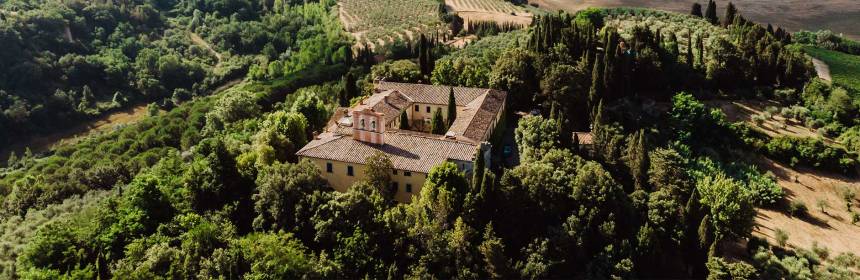
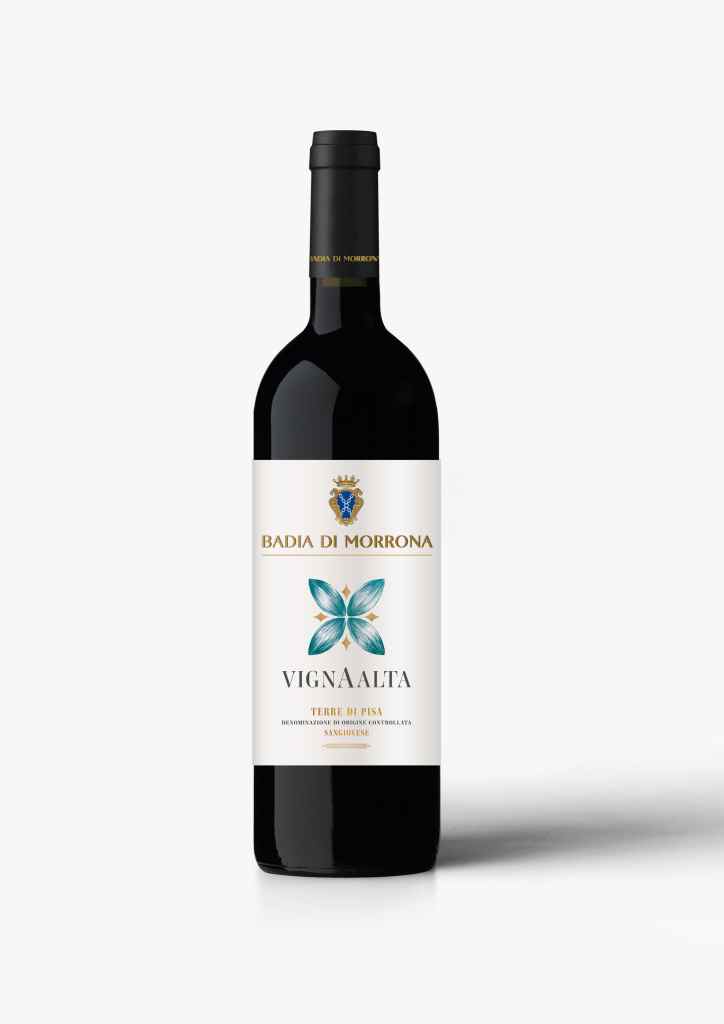
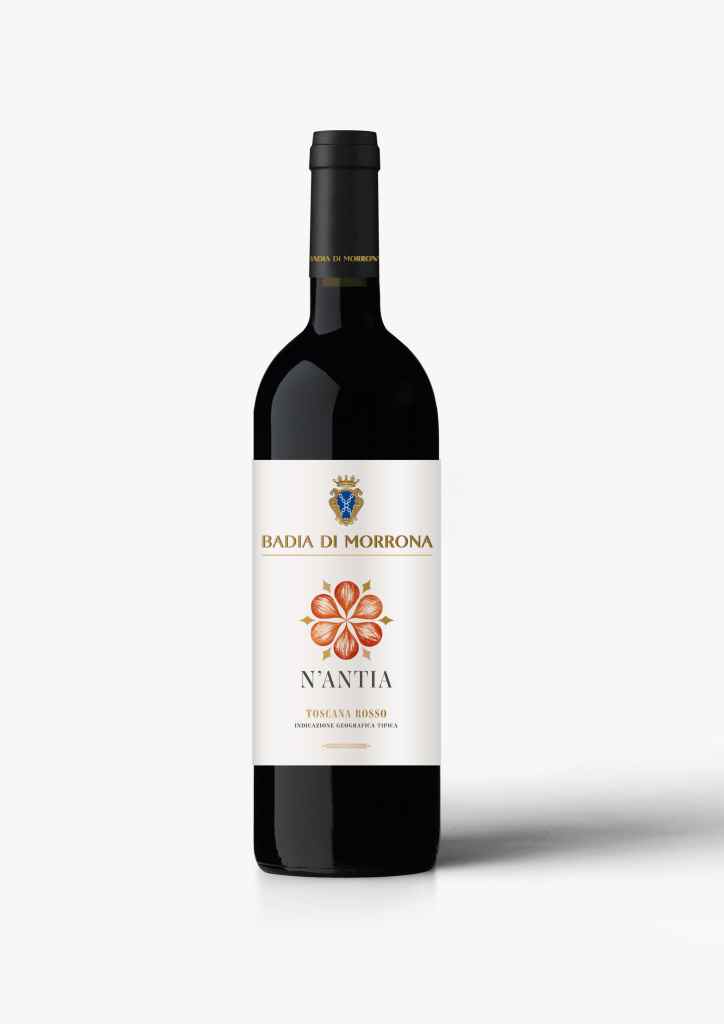
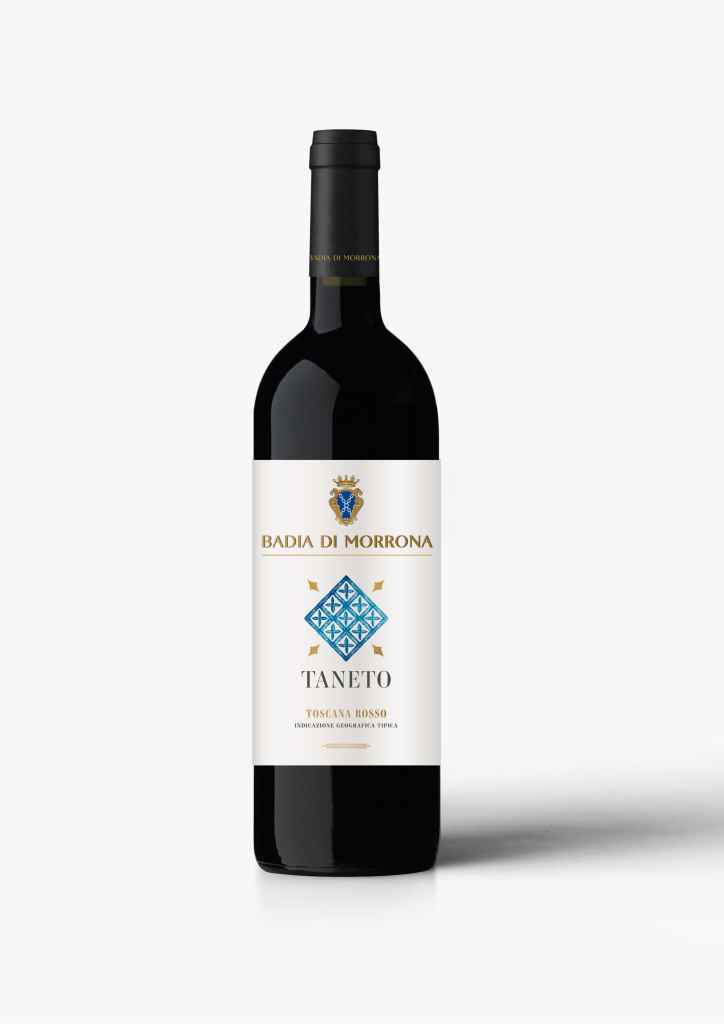
Badia di Morrona, located in Terricciola, between Pisa and Volterra, has been owned by the Conti Gaslini Alberti family for almost a century. The heart of the estate is the ancient monastery, Badia di Morrona. The iconic grape is Sangiovese, planted in more than half of the vineyards, with the remainder in Vermentino, Chardonnay, Viognier, Merlot, Syrah, and Cabernet. This viticultural wealth yields a well-integrated collection of wines, which boasts coveted crus such as VignaAlta and N’Antia, of Sangiovese and Bordeaux varieties respectively, and Taneto, the quintessence of Badia di Morrona’s Syrah. The Chianti denomination is well-represented of course, with I Sodi del Paretaio in both standard and Riserva versions. The wine portfolio is compellingly complemented by a welcoming hospitality programme: distributed throughout the estate are large, meticulously-restructured farm residences that are perfect departure points for leisurely exploring this still little-known world in Tuscany.

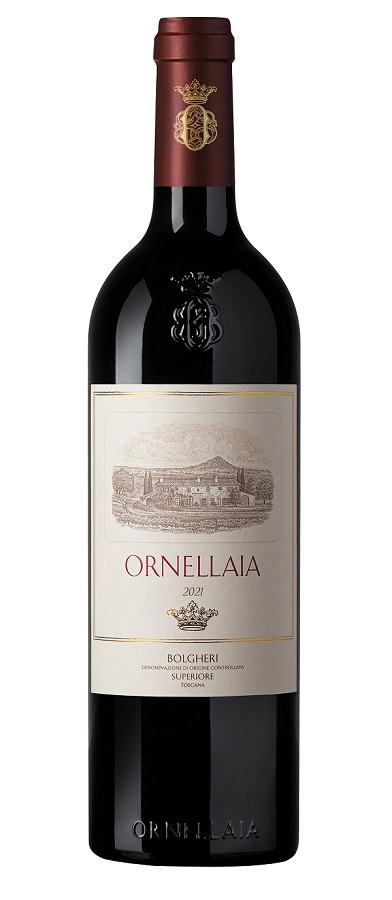
Poggio alle Gazze dell’Ornellaia:2021 vintage is on the market

Mediterranean elegance, balance and freshness. These are the hallmarks of Poggio alle Gazze dell’Ornellaia, and the 2021 vintage – on the market since March – is not an exception. A Cuvée based on Sauvignon Blanc with small percentages of Vermentino, Viogner and Verdicchio, Poggio alle Gazze dell’Ornellaia enriches the mosaic of the wines of the Tuscan coast with its own personal point of view.

Brilliant, delicately sunny and also deeply identifying with the terroir of the estate, Poggio alle Gazze dell’Ornellaia 2021 “is complex and seductive, sporting a riot of citrus notes, exotic fruits, white flowers, accompanied also by scents of cut grass and asparagus,” explains the winemaker Olga Fusari, “the taste closes in a long savory and mineral finish, which well represents the territory in which it was born.”

An exciting sip that tells the constant dialogue between territory, man and a climate that is always particularly benevolent here.  Indeed, 2021 began with a mild, rainy winter and a regular spring. Ideal conditions to easily cope with the hot and dry summer (especially in August) as it often is on the Bolgheri coast. Constant breezes from the sea and temperature fluctuations between day and night accompanied the perfect ripening of the grapes, which were harvested in the very early hours of the morning starting on August 18 for Sauvignon Blanc, followed by Viogner and Verdicchio and ending in the second week of September with Vermentino. After a slow and soft pressing of the bunches and an alcoholic fermentation of no more than 22°C, the wine went through a cellar process divided between wood, cement and steel, followed by aging in the bottle for about a year.

Today Poggio alle Gazze dell’Ornellaia 2021, tells with style and confidence an exemplary vintage and a coast that is a symbol in the world of harmony and beauty.

New record set for Masseto

A sale of wines released directly from the Masseto Caveau surpasses the high estimate to bring a grand total of €376,625

Nebuchadnezzar of the 2010 vintage sells for a record €56,250

Sotheby’s sale of wines released from the Masseto Caveau concluded yesterday, having achieved an outstanding total of €376,625 with all 46 lots finding buyers and selling for prices above their high estimates. The announcement of the auction in March created much excitement and anticipation among wine collectors, and by the time the first day of bidding on 12 April drew to a close, the sale was already 100% sold. As the lots began to close yesterday, a flurry of bids resulted in a final total far beyond a pre-sale estimate in the region of €200,000, with collectors across Europe, the Americas and Asia competing to purchase one or more of the extremely limited number of 132 bottles on offer in varying formats. The sale was led by a nebuchadnezzar of the 2010 vintage, which sold for €56,250, tripling its estimate and establishing a new record for any bottle of Masseto at auction.

Amayès Aouli, Sotheby’s Head of Wine, Europe, said: “These standout results, not least the record price for the nebuchadnezzar, are testament to the quality of the wine produced by Masseto and the unprecedented opportunity to acquire bottles directly from the Masseto Caveau. We saw bids coming in from all over the world, with competition among both established collectors and buyers new to Sotheby’s. It has been a pleasure to partner with this iconic estate for such a special occasion and to bring their wines to as wide an audience as possible.”

Giovanni Geddes, CEO Masseto says: “We are truly proud of the results that went beyond our expectations. We would like to thank all wine collectors and buyers for their enthusiasm showed towards our wines. This is the best recognition Masseto can receive. We would like to thank Sotheby’s as well for their professionalism and passion during this collaboration.”


Axel Heinz, Estate Director concludes: “It is an honor to know that the work of our team is highly esteemed internationally. We are very pleased that these wines will be kept and also enjoyed by collectors who appreciate their identity, history and uniqueness.”

For this special sale, Sotheby’s joined forces with Masseto earlier this year to select vintages directly from the most secret space in the winery’s cellar carved deep beneath the vineyard above – a stunningly designed location where bottles of every Masseto vintage rest in perfect conditions, each protected in its very own steel cradle. The contents of the auction spanned three decades, including 35 cases containing the 2006, 2010 and 2011 vintages, as well as magnums, double magnums, imperials and a single nebuchadnezzar. Among the top lots were two imperials of the 2001 and 2016 vintages, which sold for €15,000 each.

All the bottles from the Masseto Caveau were presented for sale in numbered cases handcrafted in oak and containing a certificate of origin signed by Axel Heinz, Estate Director. Furthermore, every bottle came to auction with a Prooftag®, attesting to the wine’s authenticity, including the date when the bottle left the Caveau stated on the front label: April 2023. In addition, Caveau features on every capsule as well as on the seals of guarantee that close the wooden cases, a singular confirmation of watertight provenance.

Masseto has gained a unique place in the pantheon of collectible wines, to become one of the most valuable, coveted wines in all of Italy and beyond. The estate is located on a magical hillside on the Tuscan Coast where unique, individual, complex, compelling yet elegant wines are being produced, with each vintage having the specific personality of Masseto, but always showing a different facet.

Full results available here.

AXEL HEINZ to leave Bolgheri for France

Axel Heinz, Estate Director of Ornellaia and Masseto, announces that his time in Bolgheri will draw to a close in Summer 2023 when he will return to France.

Axel Heinz came to Bolgheri in 2005 and his professionalism and expertise have assisted the company, enabling vintage after vintage to communicate the impressive expressions of the terroir belonging to both estates.

For me, it has been an incredible honour to contribute to the success of Ornellaia and Masseto in these years and I’d like to thank Giovanni Geddes and the Frescobaldi family for this invaluable journey,” remarks Axel Heinz. “I have had the chance to manage these astonishing vineyards and two innovative wineries, which have allowed us to bottle the fruits from a terroir that expresses all the elegance of the Mediterranean. Now the moment has come to return to France. Bolgheri, Ornellaia and Masseto will always remain in my heart and Italy, after all these years, has become my third home, after Germany where I was born and France, where I have lived for most of my life.”

Axel Heinz has decided to take on new professional challenges in France after more than 17 years of working with Ornellaia and Masseto,” comments CEO Giovanni Geddes. “These years have been ones of massive development and success, also thanks to Axel’s professionalism and technical, communicative and human abilities, who I thank for the results achieved. The excellence of Ornellaia and Masseto comes from the benevolence of Nature and the passion and experience of an outstanding team.” The President of Marchesi Frescobaldi, Lamberto Frescobaldi, also thanksAxel Heinz and reassures that, “a strong team will remain at Ornellaia and Masseto, which has worked side by side with Axel for many productive years”.

Henry Borzi

125 Years of Castello di Querceto

La Corte 2019: Interpreter of the past and present

The origins of Castello di Querceto, with its crenellated tower, date back to the Middle Ages, but the milestone being celebrated by the François family this year is an impressive 125 years as wine producers.

It was in 1897, in fact, in Dudda, in the commune of Greve in Chianti, that Carlo François purchased Castello di Querceto. Even then, estate-grown wine was being made within its venerable cellars from the surrounding vineyards, and Carlo, immediately recognising the innate quality of its Sangiovese, began to make a monovarietal from a small vineyard parcel of particular promise. That was the ancestor of La Corte, and a few bottles, dated 1904, still survive. A few years later, in 1924, Castello di Querceto became a founding producer of the Consorzio Chianti Classico.

The estate’s modern history, however, begins with Alessandro François, and his pioneering concept of the Chianti Classico cru. Since the 1970s, he has been minutely studying every individual plot on the estate, and, confirming the ground-breaking intuitions of his grandfather, he determined that the qualities of that very same parcel merited his first single-vineyard wine. La Corte thus debuted officially in 1978 as an IGT Toscana, produced from that 3.4-hectare vineyard lying at an elevation of 450 metres, planted with a south-southwest-facing exposure in sandy soils.     

Over the following decades, other singular expressions enriched the collection, and Castello di Querceto became a benchmark for the entire denomination, a growing area for which Alessandro and his wife Antonietta have been ambassadors literally across five continents, exporting their wines to over 50 countries. Today, Simone and Lia François work side by side with their father in managing the wine estate, as do their respective spouses Stefania and Marco, sharing responsibility for hospitality, administration, and export. 

Over the years, research at the Castello has proceeded uninterrupted. The introduction of precision viticulture has proved decisive, as well as minimal intervention in the winemaking process; both testify to the philosophy of striving to highlight the distinctive characteristics of each individual vineyard parcel. 

The historic La Corte cru fully embodies this approach. With the 2017 vintage, it became a Chianti Classico Gran Selezione, thus joining the other prestigious cru, Il Picchio, which has been a Gran Selezione since 2011. “Both of these Sangiovese wines have always so impressed us that they deserved to bear the denomination’s highest quality designation,” commented Simone François.

“At 125 years from the founding of Castello di Querceto,” added Alessandro François, “La Corte continues to gift us a vibrant, comprehensive, and eloquent expression of our terroir. It amply demonstrates the incredible qualities of this growing area, as well as of the denomination that we are so proud to be a part of.”

Chianti Classico Gran Selezione La Corte 2019, released just recently on the market, is the fruit of a growing season which proved well-balanced and of impressive quality. Generous rainfall in the spring filled groundwater reserves that helped the vines cope with a dry summer. The heat was not excessive, however, thanks to Castello di Querceto’s elevation and to significant day-night temperature differences. Finally, very favourable weather in September and October allowed the winery to push back the start of harvest. The results were ideally-ripe clusters that yielded a taught, clean-edged, pleasurable Sangiovese.    

“All in all, a perfect vintage for our celebration of such an important anniversary,” concluded Simone François, fourth generation of a family fiercely proud of its traditions, and one whose long history gives it the ability to see far into its future.

*

The winery, along with its agriturism and luxuriant park, lies in Dudda, in a small valley in the hills high above Greve, in north-central Tuscany. Here, the François family grow their wines in some 65 hectares of estate vineyards, subdivided into 26 individual parcels planted in Cretaceous-Eocene polychrome schists. In addition to the Chianti Classico line, led by the two Gran Selezione crus, La Corte and Il Picchio, the portfolio boasts various IGT crus, Il Cignale, Il Querciolaia, Il Sole di Alessandro (Cabernet Sauvignon), and QueRceto Romantic, an elegant blend of Petit Verdot, Merlot, and Syrah.

Citizenship in the contemporary world and responsibility to the local environment and to future generations require a commitment to sustainability, and thus Castello di Querceto has been a certified participant in the Italian government’s ViVa program since 2022.    

Henry Borzi

Vintage 2022 a year of contradicting weather: the winemakers display versatility and resilience to achieve an expression of the finest quality

The 2022 harvest has ended and now we can review a year of unusual weather contradictions. Axel Heinz, Ornellaia’s Estate Director, describes the vintage as a continual challenge that required the expressive abilities of mankind to adapt to the working processes. A vintage that was always on the edge, where disaster was constantly on the horizon, but where in the end various weather events balanced out the negative effects, enabling the winemakers to find a nuanced expression of the finest quality through mental nimbleness and resilience.”

A climatic analysis shows how the 2022 vintage began as usual without prognosticating any issues, with winter temperatures within the norm and a cool spring with a slightly delayed budbreak on the vines. The conditions inverted in May, with temperatures exceeding 30°C and a dearth of rain for 75 consecutive days, truly testing the growth, flowering and veraison of the vines.

The harvest started early on 9 August with the first bunches of Sauvignon Blanc, but was immediately interrupted by the arrival of the much-awaited summer storms, which again disrupted the conditions that had distinguished the year thus far. The abundant rainfall instigated a turning point, eliminating the water stress and reactivating the ripening process. A cool and sunny September brought near-perfect conditions to ripen the Cabernet Franc and Cabernet Sauvignon.

Interpreting the unusual weather contradictions in the vineyard and in the cellar required certain measures to achieve a fine expression, such as night harvesting of the earliest white grapes in order to preserve the freshness and aromas; the use of a refrigerating room to keep the temperature of the grapes low; and the meticulous discarding of dried grapes as well as ones that had remained green after the veraison. Experimentation on the winemaking front also occurred with the addition of the use of amphorae alongside barriques and tonneaux.

“The hallmark of a hot vintage is clear in the wines,” explains Axel Heinz. “The wines are ample and bodied, yet balanced by a beautiful acidity and precise aromas. The Sauvignon Blanc shows its exotic side with tropical fruit aromas, while the Viognier and Vermentino display prolonged floral notes. Less concentrated than usual and struggling to free the skin content, the Merlot required longer static maceration to obtain an enjoyable density, doing away with rustic tannins. On the contrary, the Cabernets demonstrated deep and layered hues, even in the first few days of maceration, developing a traditional aromatic profile with signature notes of cassis for the Cabernet Sauvignon and spiced violet nuances for the Cabernet Franc. The aromatic freshness is surprising, dotted with menthol and balsamic overtones, as well as plush tannins, all of which provide an exceptional basis for long, harmonious ageing.

Now comes the final challenge of 2022: “The blending, when we will need to find the right balance between the various parts to express the many virtues that 2022 yielded to those who listened to nature with respect and dedication through the struggles,” concludes Axel Heinz.

Michele Zanardi

« Older Entries Recent Entries »