Category Archives: Italian wines

ORNELLAIA, THE 2019 HARVEST HAS BEGUN
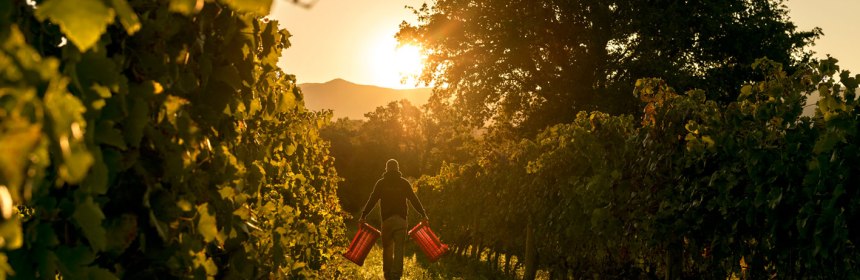
The harvest began at the Bolgheri estate with the youngest Sauvignon Blanc vineyards. A late year, but it promises to be high quality.


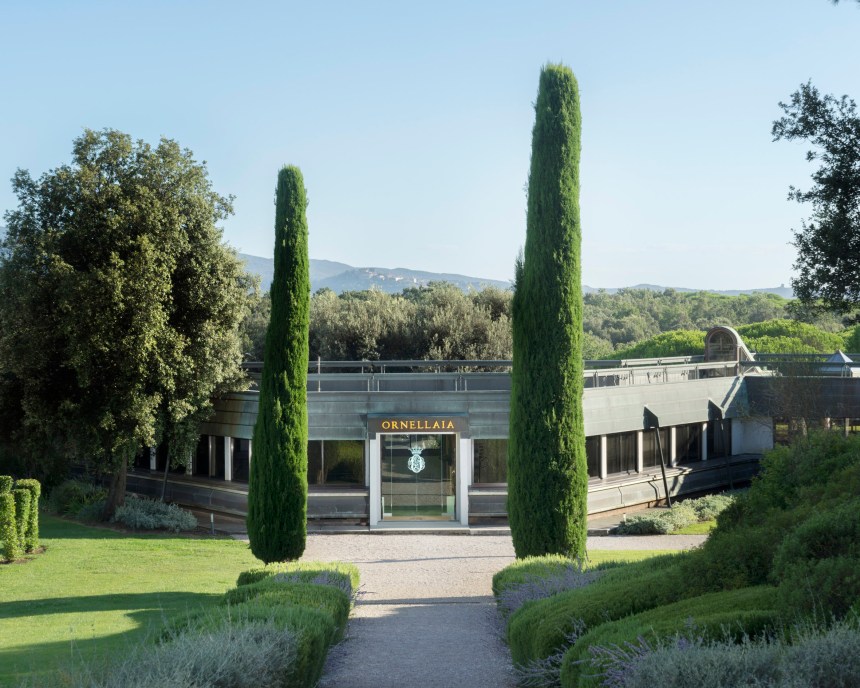
The 34th harvest of Ornellaia began last Monday and, as usual, the first grapes to be picked were the youngest Sauvignon Blanc vineyards, while for the reds we will have to wait until the beginning of September.

The Estate Director Axel Heinz commented: “Up to today, the weather of the 2019 growing year has been a ‘roller coaster’. After a particularly cool spring, the start of growth was delayed for over a week, and this delay continued until the flowering, in the first days of June. Immediately afterwards came a very hot June and July, among the warmest and driest in recent history, with substantial rains at the end of the month that interrupted the long period of drought. Veraison has since completed in all the vineyards and harvest has begun“.

He continued: “It is still early to make a prognosis on the vintage’s quality level, and the weather conditions of the second half of August and the month of September will certainly have an effect. Meanwhile, we can confirm that this harvest is a late one; we started with the younger Sauvignon Blanc vineyards that go into production this year, while for the other whites we will begin harvesting between the last week of August and the first of September. We will wait until the beginning of September to harvest the reds, between the first and second week, but everything bodes wonderfully”.


At Ornellaia, enthusiasm for the harvest is quite visible, once picking started with the Sauvignon Blanc, an important variety for the winery and part of Ornellaia Bianco and Poggio alle Gazze dell’Ornellaia, the two white wines produced by the estate with the same attention to quality as the well-known red wines.


We realized more and more that there’s space for intriguing whites if you are selective and choose the right sites,” confirmed Heinz.

In 2002, production of the single-variety Sauvignon Blanc “Poggio alle Gazze” ceased altogether. However, Axel Heinz’s intuition upon arrival in 2005 led to a change of heart with respect to the estate’s white wines, and the first vintage of the new “Poggio alle Gazze dell’Ornellaia” was released in 2010 (2008 vintage). Several years of continuous research and development led to the launch of Ornellaia Bianco (2013 vintage).

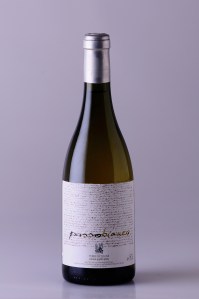
 Passopisciaro, Mount Etna Passorosso and Passobianco 2017


“The 2017 growing season was exceptionally hot, even on Mount Etna,” commented Andrea Franchetti, the oenologist who was one of just a handful of pioneers to recognise the winemaking potential of the volcano’s utterly unique soils and climate. His research led him to select 26 hectares of terraced vineyards that today constitute the Passopisciaro wine estate. “Nonetheless,” he continued, ”that intense heat, which continued unabated into September, with diurnal temperature fluctuations less marked than usual, had no negative impact at all on wine quality; rather, the marriage of the site’s unique conditions of sunlight, elevation and volcanic soils retained its determining influence and yielded wines of powerful character.”      


Passorosso 2017

Passorosso 2017, 100% Nerello Mascalese, is an eloquent interpretation of its Etna home, and in particular of the villages of Malpasso, Guardiola, Santo Spirito, Favazza, and Arcuria, lying at elevations of 500 to 1100 feet. Soils in the highest zones are composed of large-size gravel, while those lower down are deeper and finer-grained, derived from ancient lava flows. In 2017, ripening in the vineyards was slow and gradual, and harvest arrived slightly early, between 20 and 29 October. Following fermentation in steel, Passorosso concluded malolactic in large oak ovals, where it matured over some 18 months. The wine boasts an ultra-crisp acidity and earthy minerality, impressive structure and body, and restrained alcohol.   


Passobianco 2017

The all-Chardonnay Passobianco 2017 is grown in four hectares at an elevation of 850-1000 metres, where the steep terraces in the Guardiola district offer loose, deep soils of lava derivation with high mineral content. During the 2017 season, the Chardonnay vines required spray irrigation at night to ward off heat stress, and harvest came early, between 13 and 30 August, bringing yields that were lower than normal but with concentrated fruit. The must fermented 20 days at around 23°C in steel, then Passobianco matured for 10 months in both concrete vats and large oak ovals. Today, it is crisp and zesty, with its prominent tropical fruit promising significant longevity.       

***

When Andrea Franchetti met Mount Etna, the offspring of the encounter was Passopisciaro. In 2000, Franchetti began to reconstitute the terraced vineyards of Nerello Mascalese, successively planting new vineyards at densities of 12,000 vines per hectare and then restructuring a building, at 800 metres’ elevation, that would eventually become the Passopisciaro winecellar. Thus began Etna’s winemaking renaissance. Andrea Franchetti was likewise the proponent of the concept of the “vini di Contrada,” or wines reflecting the various individual districts, which today is celebrated by the international-level event “Le Contrade dell’Etna” that focuses on the Nerello grape.

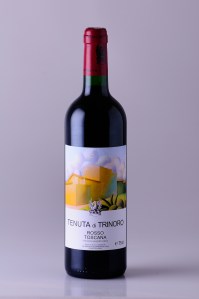
Today, the Passopisciaro estate relies on 26 hectares of vineyards distributed over the north flank of Etna; most are planted to Nerello Mascalese, often un-grafted vines 80-100 years old, but there are Petit Verdot, Cesanese di Affile, and Chardonnay as well. Eight wines are produced. In addition to Passorosso and Passobianco, the portfolio boasts five crus: the contrade of Chiappemacine, Porcaria, Guardiola, Sciaranuova, and Rampante, plus the prestigious Franchetti, a marriage of Petit Verdot and Cesanese d’Affile. Andrea Franchetti is the owner of Tenuta di Trinoro as well, located at Sarteano (Val D’Orcia) in Tuscany, famous for its Bordeaux blend wine of the same name.

Début of Tenuta di Trinoro vintage 2017, flanked by a new Bianco

2017 was a challenging growing year. Even a unique environmental niche such as the Val d’Orcia had to confront, like the rest of Italy, three months of intense summer heat, made more severe by a lack of groundwater reserves, the result of the previous relatively dry winter. But the Tenuta di Trinoro team was successful in meeting the challenge, demonstrating determined, expert vineyard management that put into practice every tenet of the production philosophy of Andrea Franchetti, winery founder and creator of wines unique for their concentration, depth, and complexity.   


Thanks to the lengthy, hot season, there was certainly no lack of concentration in the fruit. At harvest, begun 27 September and concluded 13 October, the berries were small, with thick skins and little juice, and their wines emerged near-opaque, black, and concentrated. It required waiting some months before they could be evaluated properly and a final blend assembled, which privileged Cabernet Franc, at 69%, assisted by 23% Merlot and 8% Cabernet Sauvignon.   

Tenuta di Trinoro 2017 is full-bodied with fine depth, “and dense-packed, silky tannins; the palate showcases well-ripened plum and blueberry, with wild herb and iron-like impressions,” explained Franchetti. Some years of bottle-ageing will allow it to achieve full expression and “to lose those slight vegetal notes that, of course, are classic to the two Cabernets.”    

2017 also marks the debut—at least to the markets – of the Tenuta’s Bianco, a one-of-a-kind, 100% Semillon that grows in a tiny, sandy-soil parcel at an elevation of 630 metres and with a very tight, 1 x 1 metre layout. The pronounced aromatic qualities classic to the variety are nicely balanced in the grapes by a forward crispness and acidity, producing a wine that is concentrated yet taut, displaying great depth and promising significant cellarability.  


Tenuta di Trinoro. Located near Sarteano, at the entrance to the Val d’Orcia, in southeast Tuscany, the estate boasts 16 vineyard parcels, totaling some 25 hectares, planted at elevations of 450-650 metres. Tenuta di Trinoro is a Bordeaux-style cuvée that has always been the estate’s keystone wine. Its portfolio also includes Le Cupole, a younger and more accessible wine from the estate vineyards; I Campi, from three parcels of Cabernet Franc; the all-Merlot Palazzi; and, debuting with the 2017 vintage, Bianco di Trinoro.      

Veneroso Terre di Pisa from Tenuta di Ghizzano

The “Tenuta di Ghizzano” (Ghizzano Estate) is one of the oldest farms in the area and also one of the most innovative. Today it is made up of about 350 hectares of which 20 dedicated to vines, 20 to olives, 150 hectares of cereal and the remaining 150 is made up of woods and poplar groves.

The family settled in Ghizzano towards the end of the 14th century. The winery and oli mill are both situated right next to the tower built in 1370 by Venerosi Pesciolini ancestors. Grapes and Olives, and the production of wine and oil, have been at the heart of family’s activities and have encompassed the whole of the Estate as it is today. Ghizzano is a small hilltop village, about 200m above sea level, not far from the Tuscan coast.. The landscape is gentle and the climate mild, thanks to the sea breeze, and without extreme temperatures or great risk of springtime frosts. The land has an interesting makeup.

We tasted: Veneroso doc Terre di Pisa 2015

Il Veneroso, the historical and most representative wine of the estate, was named after Veneroso Venerosi who was the first to dedicate his passion to the land and wine-making. The intuition and courage that Pierfrancesco showed in his ambitions for the Estate have been fully repaid over time.  This wine is produced by 70% Sangiovese e 30% Cabernet Sauvignon.

This wine has a ruby red, lively and bright color. We found notes of cherry and blackberry jam, mint, chocolate and tobacco blend on slightly spicy, mineral and smoked traces. It has rare complexity, excellent acidity and dense and very fine tannins. In the mouth has long persistence of ripe fruit, it is a full-bodied wine of great softness and elegance with a well supported shoulder.

Food pairing: It is a red wine that is enhanced with particularly seasoned meats, but also with a mushroom sauce and seasoned cheese.


MASSETINO A ‘SECOND VIN’ BORN AFTER THE SELECTION MADE FOR MASSETO


Massetino 2017 the ‘second vin’ of Masseto will make its début in October 2019 and will be available to selected accounts in Italy and the US during its first vintage release.


“Massetino comes from a strict selection from the estate vineyards made during blending” says Axel Heinz, Estate Director.


The 2017 vintage was hot and dry, requiring a very accurate selection. Less Masseto was produced, so it was considered the right moment to bottle Massetino. 


Giovanni Geddes, CEO Masseto comments: ‘It seems to be a natural development for the Masseto Estate to produce a ‘second vin’ and the 2017 vintage proved to be the right time to do it.  It is an exciting moment for the Masseto Estate and the new winery provides us with the right environment to pursue this new project’.


2017 will be remembered as one of the hottest and driest vintages in recent history. Due to an unusually mild winter with temperatures 3°C above average, budbreak occurred two weeks earlier than usual. Apart from a brief period of cold weather towards the end of April, the entire growing season was dominated by warm and dry weather, leading to a reduced development of the canopy.

As a result, Massetino 2017 represents the characteristics of this vintage: dark in colour with rich and ripe aromatics, dominated by ripe plums and blackberries. The palate is broad and rich, with a remarkable freshness and firmness of structure. 


Only a very limited number of bottles have been produced in this first vintage and distribution has therefore been concentrated to selected accounts in Italy and in the US.

Fresh toasts to Col Vetoraz’s summer, where harmony is at home


The welcome wine par excellence knows how to adapt to every season of the year but you know, in summer it more easily recalls the desire for liveliness, joy, lightness and sharing in friendship. And what summer would it be without exchanging toasts and smiles? Col Vetoraz puts his answer in the glasses giving for the most beautiful season of the year so much lively freshness, but without forgetting the notes of elegance and harmony that have always been the distinctive feature of his sparkling wines.

In line with the desire for pleasantness typical of these months of the year, among the labels of the company from Santo Stefano di Valdobbiadene we specially choose two wines at the antipodes in terms of taste; Valdobbiadene DOCG Brut for dry palates and Valdobbiadene DOCG Extra Dry for those who prefer more sweet tones.

The first is obtained from grapes from the hillside vineyards exposed to the west where ripening is ideal to produce this specific type, suitable for palates that prefer dry, intense and dry taste without sharpness but at the same time gives delicate aromas. It can be enjoyed on fish starters, mixed fried fish, aged cheeses, even processed vegetables, first courses with seafood and baked fish dishes. The second, friendly that immediately invites you to taste is the true prince of aperitifs. It is obtained thanks to a careful selection of the grapes that grow in the exclusive area of ​​Valdobbiadene, has a balanced taste and elegant tones whose moderate residual sugar contributes to obtaining a great harmony of the whole. The delicately fruity aromas recall the rose, the acacia flower, the delicate vine flower, the white peach, the pear, and a slight citrus fruit. It can also be paired with meats, croutons, fresh cheeses, salmon canapés or smoked sturgeon, or with pasta dishes such as cold or legume soups or with raw fish, lobster, scampi and seafood salads accompanied with side dishes. potatoes and herbs.

Always at the forefront of the most accredited wine competitions, here are the awards obtained in the last period by the company’s wines. The International Wine and Spirit Competition 2019 awarded the Silver Medal to Valdobbiadene DOCG Superiore di Cartizze with 92 points and Valdobbiadene DOCG ‘Dosaggio Zero’ with 90 points while the Bronze Medal at Valdobbiadene DOCG Brut 2018, at Valdobbiadene DOCG Extra Dry 2018 and Valdobbiadene DOCG Dry Millesimato 2018. A Bronze Medal at Valdobbiadene DOCG Extra Dry was received at the International Wine Challenge 2019.
There are instead five Silver Medals awarded by the XIII International Wine Competition “Città del Vino”, Forum Spumanti (formerly Mayor’s Selection) to all five types of sparkling wine.

Le Volte dell’Ornellaia 2017

Great satisfactions from a challenging vintage

For over 25 years now, Le Volte dell’Ornellaia has shone as the most youthful expression of Ornellaia’s wine production; its generous, Mediterranean character combines with a firm structure and multi-layered complexity to offer, year after year, immediate, joyous pleasure.

The 2017 version has just arrived on retail shelves across the globe, the interpretation of a vintage that those near Bolgheri’s iconic Viale de Cipressi will remember as a hot, dry season.

A mild winter brought a slightly-early budbreak, whose progress was favoured by warm, temperate spring, of the kind that only the Mediterranean coast can gift. April was a more restless month, with some unexpected winter-like conditions, without, however, doing any damage to shoot growth. May seemed to usher in summer; its uninterrupted sun slowed vine growth, but flowering continued unabated. July and August were true to form, refreshed by the providentially-cool night-time temperatures typical of this area.

The harvest started early, on 24 August, and concluded in the final week of September. Towards mid-month, a few rain showers helped lower temperatures, creating, in fact, ideal conditions for finishing the harvest on a high note.
As is our custom, fermentation was performed in small steel tanks, a technique that preserves the characteristics of the varietal components (largely Merlot). The final wine was matured 10 months, part in oak barrels previously used for Ornellaia, part in concrete vats, with the objective of achieving a perfect balance between structure and fruit.

“The result of a particularly hot, dry year,” remarked Winemaker Olga Fusari, “Le Volte dell’ Ornellaia 2017 is characterised by its usual deep ruby red colour. An appealing bouquet of ripe red berryfruit and spices is sustained on the palate by crisp acidity and an open, enveloping tannic structure.”


Supertuscan: internationally Tuscan wines

The origin of Supertuscan goes back to the last forty years: these wines were originated from the strong wish of their producers to express a renewal and an international character.
At the end of the Sixties the Marquis Incisa della Rocchetta, with the help of the ingenious enologist Giacomo Tachis, decided to experiment new methods by producing the Sassicaia, a red wine obtained from Cabernet, Sauvignon and Franc grapes, which were cultivated only in the Castagneto Carducci area (now area of the DOC Bolgheri Sassicaia) and refined in French barrique

They had analysed the soil and cleared up that its feautures were very similar to those of the Graves area, near Bordeaux, so they knew that it was not very suitable for Sangiovese, but perfect to cultivate international grapes of a very high quality.
In this way, a new concept of Tuscan wine was born, that is to say a great red wine, longlived and structured, that keeps in itself the Tuscan terroir:

a distinctive and influential wine, able to graft into the souls of the most obstinately French Cabernet, Franc, Syrah and Merlot, making them powerful and strongly able to express the Tuscan soil, by enriching them in their bouquets with scents of underbrush and balsamic herbs and refining them with violet and white flowers fragrances.
These new and more modern wines, received a lukewarm welcome in Italy, while they received great appreciation on the foreign markets from the very beginning, in particular in the USA, where the market was guided by skilful wine influencers and wine tasters such as Robert Parker, who first called them “Supertuscan” and James Suckling, well known for his publications on Wine Spectator.

Nowadays the wines that use Cabernet, Merlot or Syrah grapes, or even only Sangiovese grapes, are included into the Supertuscan category: they have some definite feautures in common, as the full-bodied taste, the longevity and the strong structure, but each one has got its own soul, history and a territory to narrate. In fact, these wines distinguish themselves by being expressions of a creative enology, (not so limited by the disciplinary rules anymore) and also the “children” of a new generation of enologists; they are able to interpret the perfect interaction between the features of a territory and the philosophy of a winery and make us meet it again in our glass.
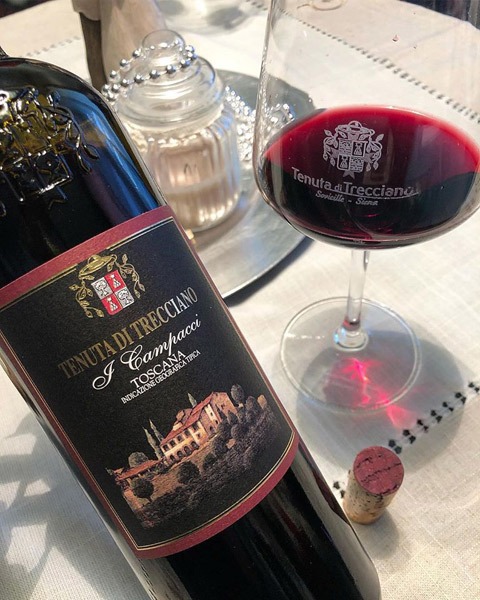
Exactly as our I Campacci, obtained only with the grapes coming from our small Merlot vineyard.

A crù with great appeal and sensuality, that expresses the international feautures of these varieties (the spiced and jam elements, potential and structure) and the philosophy of our Estate (freshness, richness and strong in tannin because of its aging). It is produced every year in about 6000 bottles, it is a great meditation wine and suitable for a long aging.

TENUTA MASSELINA WRITES A NEW STORY


Recovered an ancient barn: made a barrel room, a refining room for classic method sparkling wine and new spaces for tastings. A project that talks about high quality wine and wine tourism for the entire territory of Romagna. Organic vineyards and structure with Casaclima standard.

Tenuta Masselina is the winery owned by Terre Cevico. It rises on the hills of Castelbolognese in the heart of the Serra su terroir sub-area among the most vocated of Romagna in the production of Sangiovese. In its 16 hectares of organic vineyard, there are native vines such as Albana, Sangiovese, Trebbiano and Grechetto Gentile (Pignoletto).

Masselina is an estate with a strong territorial identity that becomes a story and experience through visits to the winery and paths in the vineyard, tastings and events. Here you can breathe the work of the fields, the beauty of nature, being well and, of course, the aroma of great wines. Tenuta Masselina is a symbol and paradigm of sustainability, the real one told through facts and not by proclamations.

In these days the Mipaaft has formalized the guidelines for the enotourist activity and from this point of view the proposal of Masselina is in perfect harmony with the provision. The investment made, in fact, is placed in the wake of a strategy that tends to enhance wine also through experiential and tourist routes.

The new structure is entirely built with the standards of Casaclima and is surrounded by 16 hectares of entirely organic vineyards and 6 of woods. For hot water and heating, the heat captured by 14 geothermal wells is used and a large part of the electricity is generated by photovoltaic panels.

The bottaia was also built, a room for the production of the classic method sparkling wine and a space dedicated to wines in the amphorae. An important investment, which saw the architectural recovery of a classic Romagna hay barn.

“High quality wine, with important positions, also needs to be told, tasted and lived at the place of production – says Marco Nannetti, President of Terre Cevico – A project that therefore aims to develop strong and structured synergies and connections in Romagna with the sectors of tourism, culture and gastronomy. We want to further contribute to the recognition of the added value it deserves in Italy and in the world of wine. ”

So the wine tourist can go to the estate to taste the wines, visit the vineyards and the cellar. It will also be possible to use the services by booking using the special link from the website http://www.masselina.it.

At Vinitaly, this project was launched in great style, which is added as a fundamental piece to the mosaic of Romagna oenology.

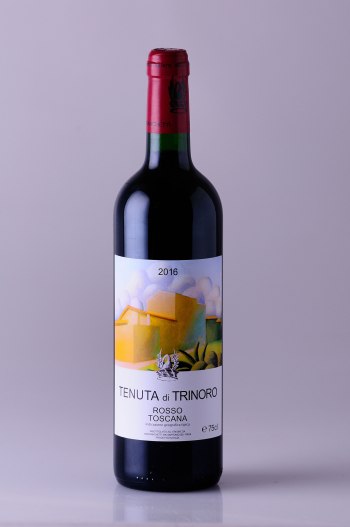
Tenuta di Trinoro interprets the 2016 vintage and translates it into a masterpiece


The 2016 growing season, quite well-balanced, with mild and sometimes cool weather, is difficult to describe, much less to embody in the bottle, but at Tenuta di Trinoro it is precisely in seasons like this that knowing how to wait “results in incredible wines.”

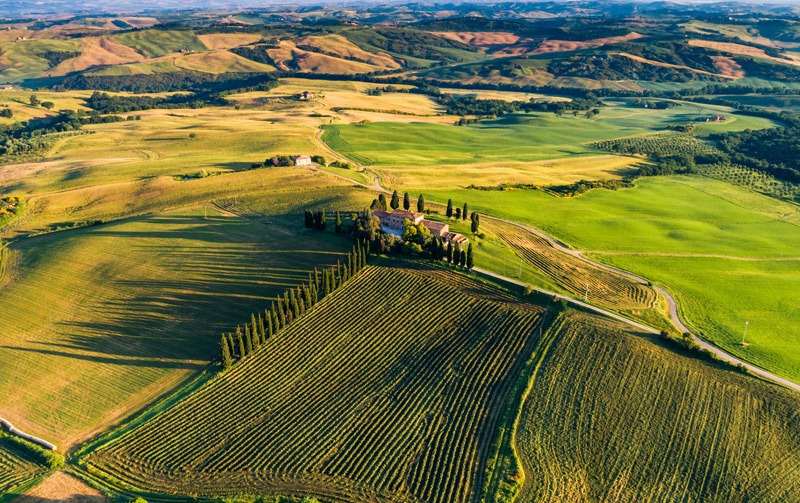
For over 20 years now, this wine estate, located in the Val d’Orcia, an enchanted and utterly unique corner of earth, has been harvesting “à la carte”–picking the grapes from its 16 vineyards just at the moment when each is optimally ripe. All the vineyards, a mosaic of Cabernet Franc, Cabernet Sauvignon, Merlot, and Petit Verdot, are planted at very high densities in the estate’s clay soils. 

The 2016 harvest started on 24 September, and the memory is still vivid: “Exciting-quality Merlot is still coming into the cellar, on 27 and 29, and we did the last load on a very long 30 September (…) On the first days of October it rained lightly on the Cabernet Franc, but the vineyards dried out, and then the moon rose, bright and clear.” “By 12 October, the valley was a sea of dark grapes, and the moon advanced majestically like a banner leading the wine styles into the world of luxury.”

Later, benchmark producer Andrea Franchetti took this complex of grape varieties and characters and fashioned this res nova, the perduring estate wine in its latest edition. “In the 2016 vintage, I wanted to express the season’s delicate character; putting aside all the other vats, I chose two of Merlot and two of Cabernet Franc, in equal parts.” 

Right now, the 2016 vintage Tenuta di Trinoro, produced in 6,000 bottles, is setting off on its journey throughout the world. Its favoured market is England, where for avid collectors it conjures up the dream and experience of Tuscany, but it is sought-after in the German-speaking world as well, in America, and obviously in Italy too, where it is found in the finest wine-shops and restaurants. The price is not at an every-day level, but sublime emotions are not always within easy reach.


***


Tenuta di Trinoro is located at Sarteano, at the beginning of the Val d’Orcia, in southeast Tuscany. The vineyards, divided into 16 separate parcels lying between 450-600 metres’ elevation. Tenuta di Trinoro has always been the winery’s iconic wine. The portfolio also includes Palazzi, a powerful Merlot-interpretation and Le Cupole, a younger, more accessible version, from the estate’s younger vineyards; recently also three crus from three separate vineyard parcels of Cabernet Franc have become part of the Tenuta di Trinoro’s wine collection, i.e. Campo di Tenaglia, Campo di Magnacosta and Campo di Camagi.

« Older Entries Recent Entries »