Category Archives: A WINE ESTATE UNVEILED

Castello di Querceto 120 years history of wine

Entering Castello di Querceto, one’s gaze is immediately caught by a late 18th-century photo of some François family’s ancestors. The images are a bit time-scarred, but those piercing eyes, even 120 years on, leave no doubt about the reasons why this family, still today owners of this wine estate, has become one of the leading lights in Chianti Classico, driven by their desire to offer wine-lovers authentic expressions of classic Tuscan grape varieties.    

Starting in the early 1900s, with their first all-Sangiovese vineyards, through 1924, when they and a select group of 32 other producers founded Consorzio del Vino Chianti Classico, and right up to the present moment, Castello di Querceto has always, through its wines, spoken to the world in an intensely family and personal fashion.   

The interpretation of the cru vineyards and the identification of grape selections that best represent the estate have always been, since the 1970s, Alessandro François’ objectives, and he has succeeded in winning recognition across the globe for Castello di Querceto as one of Chianti Classico’s best-known producers. Today, in fact, 90% of its production is exported to over 50 countries, a marketing achievement of which Alessandro and Antonietta François are justly proud.    

2017 ushers in Castello di Querceto’s commemoration of its 120 years of winemaking, and it is celebrating that milestone by uncorking two of its iconic wines–both obviously monovarietal Sangioveses. The first, La Corte IGT Colli della Toscana Centrale, was the winery’s first cru, and some early-1900s vintages of it are still lying in collectors’ cellars. The second, Chianti Classico Gran Selezione DOCG Il Picchio, is the quintessential expression of the best vineyards in the south-eastern part of the estate. 

“There will be no special commemorative label for either wine,” states François; “the wines themselves are perfectly capable of recounting our history.” And in fact, these two interpreters of the wine estate’s philosophy prefer to reveal themselves directly in the glass: La Corte through its elegance, its fruit and subtle hint of balsam, Il Picchio with its structure and impressive length, heightened by herbaceous and floral notes and a touch of chocolate.   

Raising a glass of Castello di Querceto is a full-immersion into the history of Chianti Classico. 


Siddura, nine wines to tell an island

Siddura winery founded in 2008 from the fusion of the experience of a German industrialist and the profound knowledge of the territory and market of Massimo Ruggero, Siddura CEO.
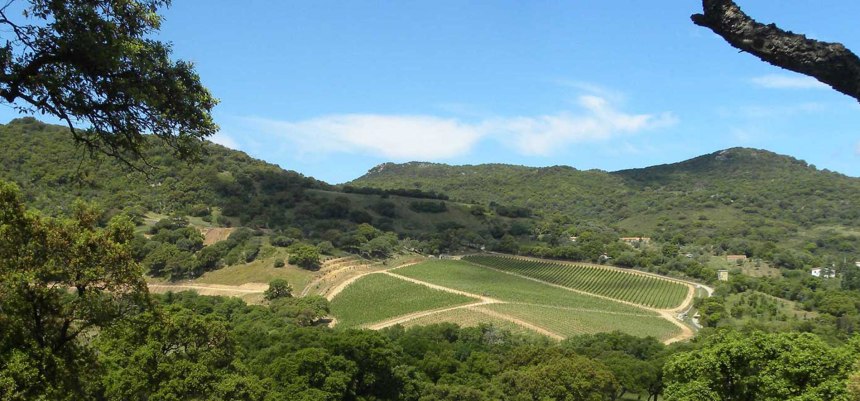
Located in the little village of Luogosanto in Sardinia, it has in the “Terroir” the strong feature of the winery. The estate is immersed in a valley surrounded by granite, protected by the mighty winds of maestrale and caressed by the sea breeze.

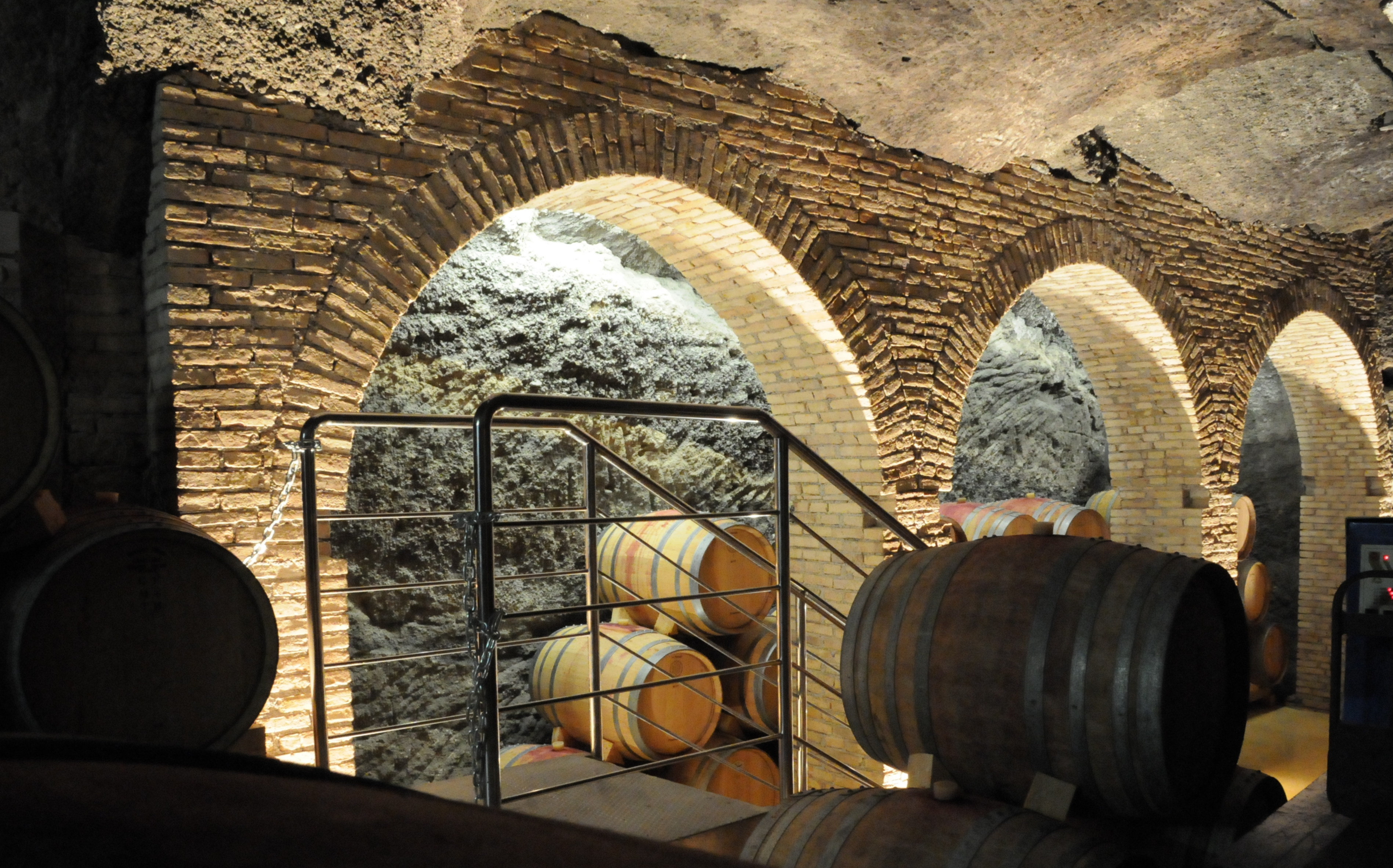
The union of climatic factors and the specificity of the granite soil degradation give the wines a particular minerality. The cellar was born around its fulcrum: a fully-buried amphitheater building that exploits the geothermal potential of the site and boasts an innovative control system for the fermentation of individual tanks.

Here, the entire production chain, from grape to bottle, takes place, privileging spontaneous fermentations and using the most diverse types of containers from concrete tanks to barrels.
The estate stretches for two hundred acres and the grounds are a mixture of granite, sand and clay. They are loose soil, often arid, ideal for viticulture.

Sardinia in purity” is the Siddura philosophy, which has made it possible to produce a line with eight high quality wines. The company’s goal is to produce wines that identify with the terroir from which they come from. Production therefore provides limited harvests to ensure maximum quality, selective handmade harvest, micro-wine making and aging in the best oak barrels built in France.
In five years, Siddura wines have conquered over 450 medals in the most renowned national and international wine competitions.

To point out a revolutionary concept of Siddura; the innovative winemaking of white wines as if they were red, that is to create a long-lasting Vermentino that improves after a year of aging.

Siddura wines

1) SPÈRA Vermentino di Gallura DOCG in purity, about 13 °.

2) MAIA A Vermentino di Gallura coming from another squad of our vineyard, always in purity DOCG.

3) BERU Extreme processing, French vinification, small Chardonnay cut on Vermentino’s mass.

4) ÈREMA red sardine grapes, vinified in long fermentation a Cannonau Doc.

5) BÀCCO Cagnulari in purity, historical grape of Sardinia recently rediscovered by the great international oenologists.

6) FOLA Cannonau in purity DOC.

7) TIROS It is the Sardinian super Tuscan, a base of Sangiovese and Cabernet sauvignon as the great wines of Tuscany.

8) NÙALI Moscato di Sardegna DOC Passito.

9) NUDO rose’

Venissa, the wine of Venice

(c) Mattia Mionetto

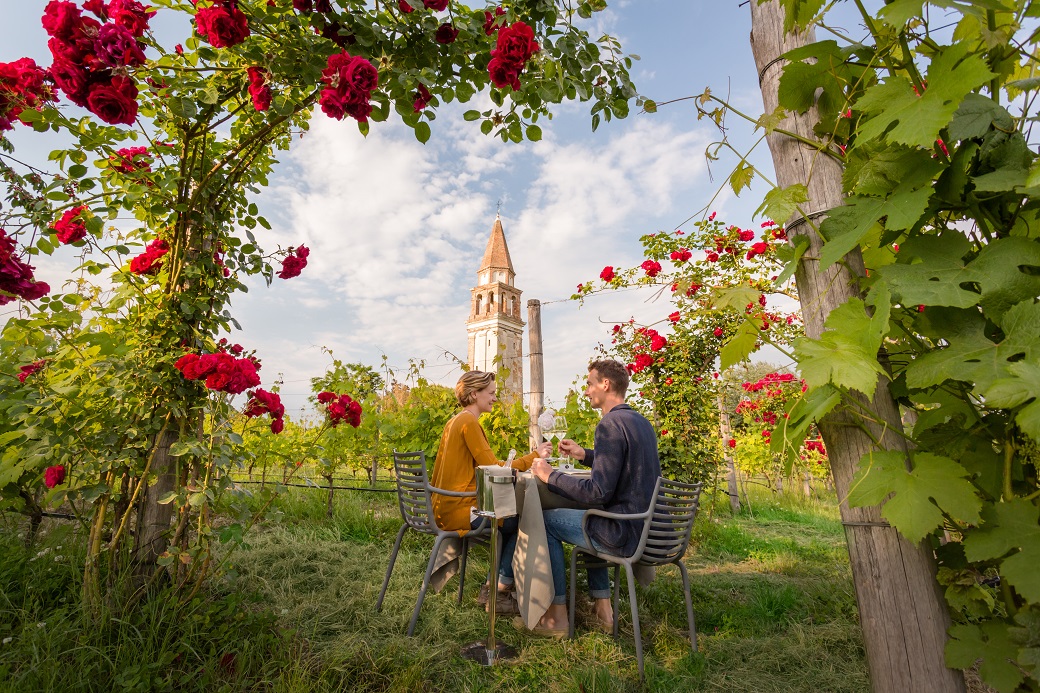
The Venissa Estate lies on Mazzorbo, one of the three islands of Native Venice, an archipelago of nature, colors, flavors, and art that also includes Burano and Torcello.

While accompanying several customers on a trip to Torcello, I noticed an old grapevine in a private garden beside the Cathedral of Santa Maria Assunta. I managed to persuade the owner to send me some of the grapes when they had matured. The crates arrived full of lovely, thick-skinned grapes with a brilliant golden color. It was the famous Dorona, also known as the golden grape, well-loved by the Venetians and served during the banquets of the Doges and then lost to history.” – Gianluca Bisol. Venissa’s story began by chance and resulted in an incredible discovery: some of the very last grapevines in Venice, the final trace of a winegrowing culture that was destroyed by the flood of 1966.

(c) Mattia Mionetto

It is a winemaking story that goes back more than 2000 years to 1100, when vineyards could be found in Piazza San Marco but whose ultimate destiny was to be cut down to make space for the great Venetian palazzos that the world admires today. There were many islands in the Venetian Lagoon where wine was produced until fifty years ago, especially on the islands of Mazzorbo, Burano, and Torcello, otherwise known as Native Venice. The Dorona di Venezia is a native white-skinned variety that adapted well to the high waters and the particular conditions of this unique terroir, and Gianluca Bisol discovered 88 vine plants in 2002 in the gardens and remaining vineyards of Venice.

After the first microvinifications were carried out, Gianluca Bisol and his colleagues decided to replant the variety, which, in the lagoon, produces a nectar that cannot be found anywhere else in the world. The ideal location turned out to be the island of Mazzorbo on the Scarpa Volo estate, which had been a walled vineyard and winery for centuries until the great flood of 1966. It is here that the Bisol family decided to replant 4000 vine plants of Dorona (less than 1 hectare) that produces just shy of 4000 bottles per year. Vinification is carried out by Desiderio Bisol and Roberto Cipresso, a renowned enologist with a passion for viticultural history. Cipresso calls for a long maceration on the skins, a practice once used by farmers, to obtain a white wine with the structure and longevity of a red. From the skins, the Venissa wine extracts the flavors and unique aromas typical of this inimitable terroir: notes of salt, honey, wormwood, and white peach.

Venissa has been a pioneer in bringing wine back to the lagoon, whose reputation is quickly spreading among international wine lovers as an ideal and unique place for viticulture. After Venissa came Rosso Venissa, a red wine produced from Merlot and Carmenere from a 50-year-old vineyard located on the island of Santa Cristina.

Both are wines that immediately drew the interest of wine connoisseurs. The first vintage of Rosso Venissa, the 2011 harvest, was awarded 93 points by the prestigious Italian Veronelli guide, while the 2010 vintage of Venissa was named one of the top 100 Italian wines by the highly respected Gatti Massobrio guide.


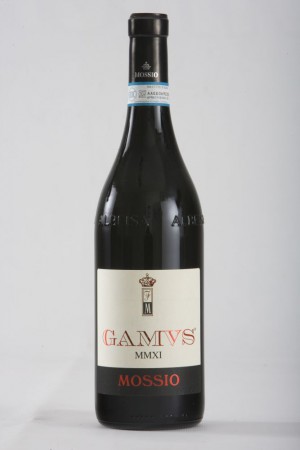
Gamvs MMXXII Dolcetto d’Alba Superiore

Passion for wine, an indissoluble passion for the Mossio family. Valerio and Remo, supported by Michele, their grandson, are personally committed to produce Dolcetto d’Alba, Bricco Caramelli and Piano delli Perdoni; Barbera, Nebbiolo and Langhe Rosso, the result of a happy union between Nebbiolo, Barbera and Dolcetto, “Gamvs”, Dolcetto d’Alba Superiore (premium quality) and “Le Margherite”, a passito (dessert) wine.
Mossio – the synonym of a hard working family, whose members on one hand have specific roles and on the other hand are committed towards the same goal: wine quality.

The Langa and Roero wine and food heritage, a knowledge conscious of the passing of time and seasons in autumn, is caused by the bouquet of wine and the flavor of the white truffle of Alba; in spring and summer the cooking innovates with appetizers made with vegetables, meat and the first courses are characterized by “tajarin” (home-made noodles) and “agnolotti del plin” (home-made stuffed pasta)…We don’t leave out the Fassone meat, the cheeses and also the desserts with their unmistakable taste of “Tonda e Gentile” (round and gentle) hazelnut from the Langhe.

resized_gamvs-300x450

We tasted: Gamus MMXXIII  Dolcetto d’Alba Superiore 2013

The name of this wine is due to the recovery of a white marble slab. The colour is deep ruby red with violet reflections. The nose is intense with hints of plum, blackberry and red fruits on a spicy background. In the mouth is enveloping, soft and full, with a sweet finish but not too much, well balanced with tannins typical of the grape dolcetto. Ideal for dishes with meat game, ham and seasoned cheese.

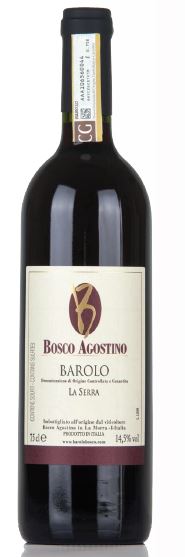
Barolo la Serra by Bosco Agostino wine estate

The Bosco Agostino farm is run as a family business with one goal: achieve grapes of the maximum quality to be transformed into a wine with personality rendering it special and unique.

The total vined surface area of the farm is currently at about 4 hectares divided between Nebbiolo, Barbera and Dolcetto. All vineyards are property of and found exclusively within the confines of the Comune of La Morra.

captureThe company is dedicated to the production of the four wines most characteristic to the area: Barolo, Dolcetto d’Alba, Barbera d’Alba and Langhe Nebbiolo.

We tasted: Barolo la Serra 2011

A historical cru of La Morra. The vineyard faces southeast at an altitude of about 400 meters. The soil is tufaceous (limestone) and calcareous (clay/chalk). The esposition and soil composition endow this wine with both structure and tannins suitable for a long aging. During the aging the wine is held in barriques and tonneaux for about 6-7 months before transfer to botti.

The bouquet will definitly surprise you! It  presents complex aromas of berry marmalade and brandied cherries, with detectable spicey notes. For the food pairing is perfect with red meat, arrosti, wild games and seasoned cheese.


Brunello di Montalcino 2011, Tenute Silvio Nardi

Tenute Silvio Nardi, thanks to its expansive size, encompasses a wide variety of aspects and soils. The Nardi vineyards amount to fully 50 hectares planted to Sangiovese for Brunello, one of the largest vineyard holdings in the entire denomination.

The Brunello di Montalcino Silvio Nardi, enfolds two growing areas (Casale del Bosco and Manachiara), two different hillslopes (both the west slope of Montalcino and the east slope), and a multitude of soils, aspects, and elevations, which only the most painstaking mapping can interpret and exploit.  The Manachiara “clear morning” Vineyard continues to be the focus of widespread interest. The southeast exposure affords its vines sunlight right from the earliest morning. The Poggia Doria vineyard receives its share of attention, with its dark, volcanic soil and abundant rock, loved by the vines, since only this plant’s roots can penetrate deep in search of water.

The winemaking process then brings out of the fruit all of the qualities that derive from the vineyard. Multiple fermentation tanks allow separate fermentations for each individual vineyard parcel, keeping the lots separate until the final blend; the lots are kept separate even during the maturation process in small oak barrels and larger casks and  finally, comes the final blending.

brunello-nardiWe tasted: Brunello di Montalcino 2011

“Pure- Noble” Sangiovese wine. A wine for which blending translates to capturing different notes from different terroirs where softness arrives by gentle aging.

A “Pure- Noble” 100% Sangiovese. This wine has intense ruby red colour. The nose is clean, sophisticated, intense and complex AROMAS, rich in evolved overtones, with hints of anise, ripe wild berries and a light touch of vanilla. In the mouth is warm with supple tannins, great structure, good length and considerable aging capacity. Ideal for pasta with wild boar sauce and game meat dishes.

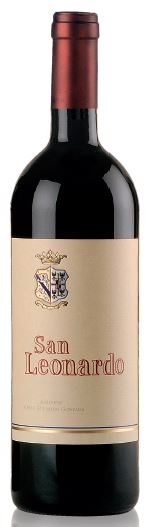
San Leonardo 2011 a “warm northern character”

The winery lies in the southern portion of the Trentino region, just a few steps from the border with the Veneto, in what was once a fief of the Church, but today is a small hamlet synonymous with one of treasures that contributed to the creation of Italy’s wine culture.

The vineyards, 25 hectares in all are sited at a relatively low elevation of 150 metres, Merlot is planted in gravel-rich soils that were once the bed of a branch of the Adige.

captureOnly red-wine grapes are cultivated in the vineyards behind Tenuta San Leonardo’s ancient stone walls; they produce four wines, San Leonardo, Villa Gresti, Terre di San Leonardo, and Carmenère. Ten hectares are dedicated to growing white-wine grapes, planted in the Val Cembra, whose soils and climate ensure grapes with distinctive crispness and minerality.

What sets San Leonardo apart from other wines and gives it an inimitable uniqueness is its terroir, that “warm northern character” of its growing area, which allows no over-opulence or excessive alcohol, but rather infuses the wine with a judicious natural balance.

We tasted :  San Leonardo 2011

San Leonardo is a skilful blend of wines from different grapes that are fermented and aged separately: Cabernet Sauvignon, Cabernet Franc, Carmenere and Merlot. The maturation is made in early months in cement tanks are followed by 18-24 months in new and pre-used barriques.

The colour is Intense ruby red with garnet highlights. On the nose is of remarkable

intensity which layers bell peppers and wild berries over a background note of vanilla. The palate is full, warm and impressively rounded, with intense aromatics that linger on the palate. Reagrding the food pairing is perfect with red meat dishes, poultry, roasts, braised or stewed meats, game and mature cheeses.

Mosnel, Parose’ Rose’ pas dose’ Millesimato 2011

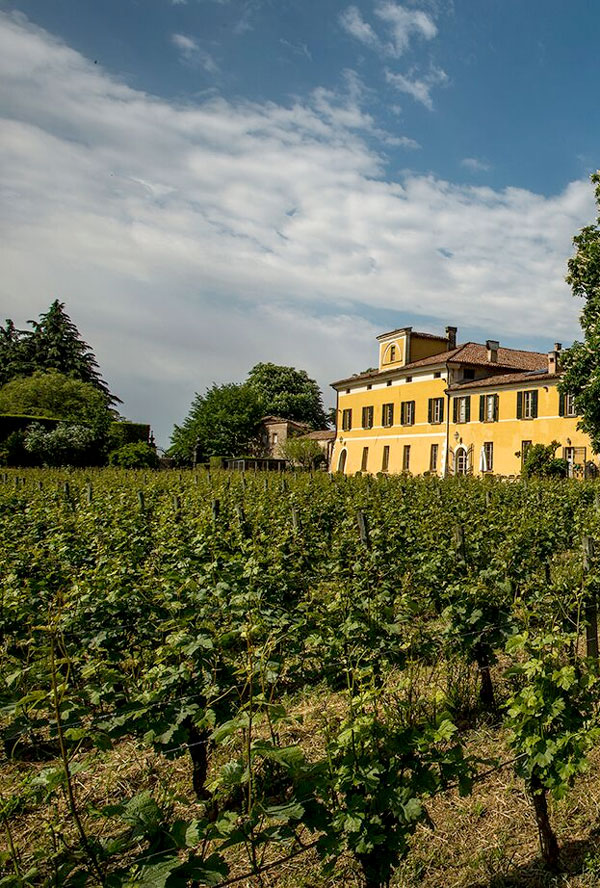
origini-proprietaIn the heart of Franciacorta, in Camignone, lies the historic villa with its sixteenth-century cellars and the adjoining lands, evidence of the long winemaking tradition “Mosnel”, the dialect name of Celtic origin meaning stony, heap of stones; on which stands the Company.

All 38 hectares of land are Mosnel properties and cultivation, is conducted with organic methods.

All the vineyards have spur cordon systems or Guyot, with a density between 4000 and 8000 plants per hectare. Hand picking into small boxes, soft pressing and fermentation control then further contribute to obtain the recognized quality of Mosnel Franciacorta.

adadasdasdWe tasted: Parose’ Rose’ pas dose’ Millesimato 2011

The fruit and the elegant touch of Chardonnay melding into the decisive personality of Pinot Noir, is the impressive harmony displayed by Parosé. This wine is composed by 70% Pinot Noir – 30% Chardonnay grape varieties.

The aroma releases orange peel, rhubarb, and redcurrant, rose petals, shot through with a vein of pink pepper. In the mouth, a slight hint of tannin serves as an intriguing foil to the appealing crispness of the fruit, imparting a touch of youthful vigour to the wine. Supple and seductive, clean-edged and crisp, boasting a lengthy, sapid finish hinting of citrus, mixed nuts, and dried fruit, Parosé is truly a gourmet companion for every occasion.

Chianti Ruffina DOCG Riserva 2013

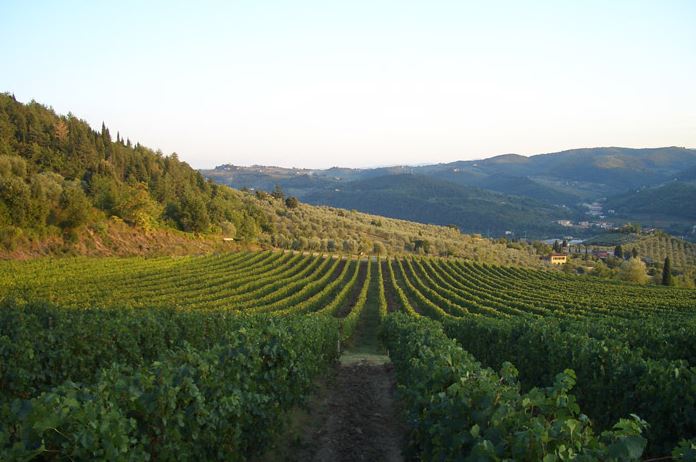
captureWe are only ten miles from the border of the province of Florence, right on the edge of the wine-production zone of Chianti Rùfina, the smallest and oldest sub-zone in the great family of Chianti zones. On one side lie the famous city of Florence and the valley of the Arno River with its warmer microclimate; on the other, the long valley that follows the course of the Sieve River, with the vineyards of the Chianti Rùfina appellation becoming ever more numerous.

The real history of I Veroni, like many other corners of Tuscany, is its feudal past, which began with a watchtower that was later incorporated into the sixteenth-century estate of the noble Tuscan family of Gatteschi. I Veroni possesses a total of 70 hectares of land, 20 of which is dedicated to vineyards and about 30 to olive groves.

The primary grape variety grown at I Veroni is of course Sangiovese, dditionally there are 2 hectares of the Canaiolo, Colorino, Malvasia and Trebbiano varieties, and small plantings of Merlot, Petit Verdot and Syrah.

Three wines fully express the philosophy and passion of the company: I Veroni Chianti Rùfina, Riserva, and Vin Santo.

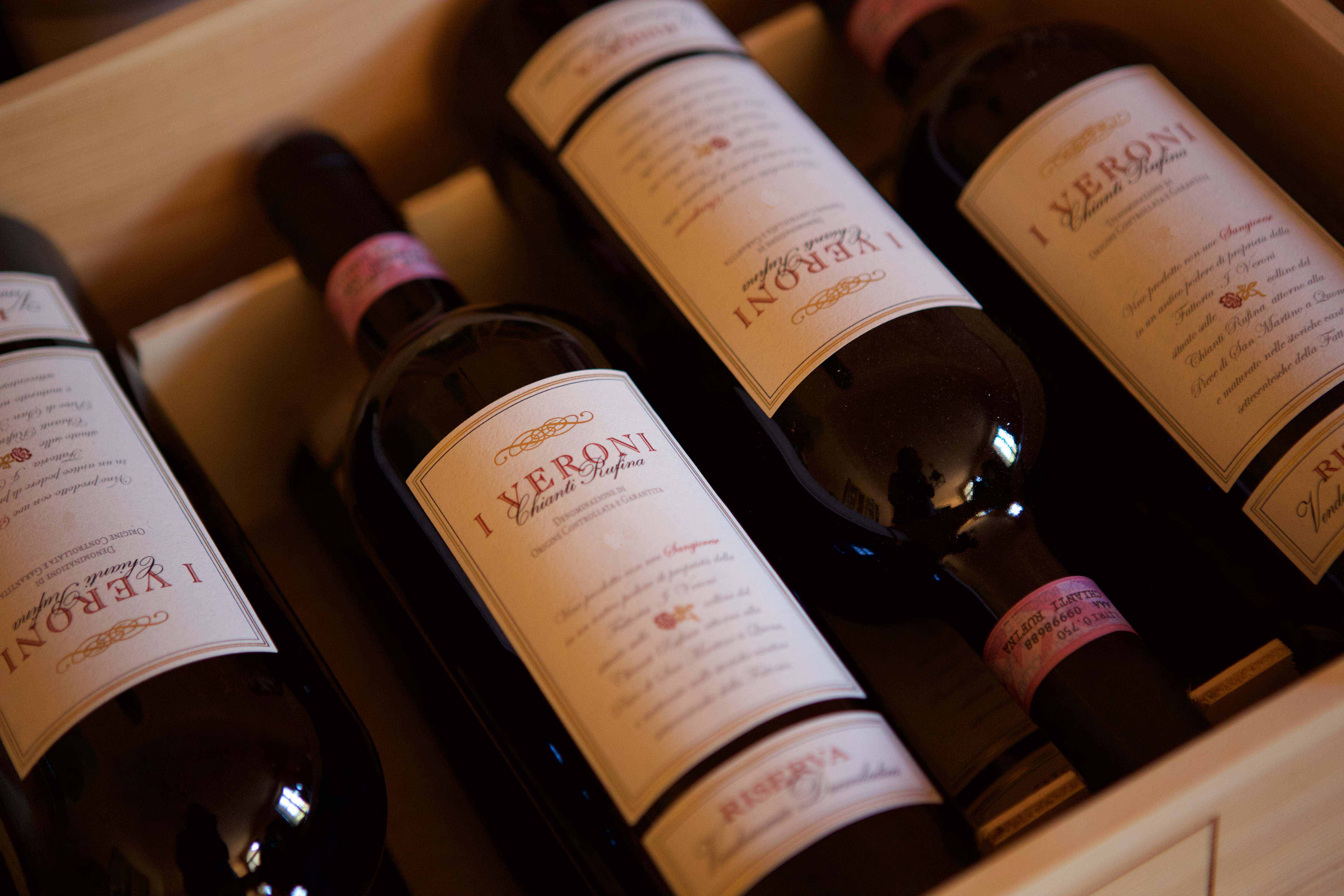
i-veroni_chianti-rufina-riservaWe tasted: I Veroni Chianti Ruffina DOCG Riserva 2013

The impressive all-Sangiovese vineyard of St. Martin in Quona produces I Veroni Riserva. A 100% San Giovese grapes. The grapes are fermented in Oaks vats with ambient yeasts, followed by malolactic in 20hl oak ovals and maturation for 16-18 months in 500l French oak casks. The wine then receives a further ageing in the bottle for at least 10 months.

This wine has deep, luminous and purple-red. The nose is composed of black berryfruit, spice, liquorice taste of tobacco leaf and hint of oak. The palate presents a decided body with structure   well-integrated tannins, concluding with a long-lingering finish. For the food pairing is ideal with red meats, wild game, and aged cheeses.

Basilisco, wine with timeless tradition

basilisco_cantina-1Visiting Vùlture, in the province of Potenza, on the border of Irpinia and northern Puglia, seems to the eye an enormous vulture seems to dominate its surrounding towns, among them the small hamlet of the little village of Barile, with its houses huddled up against each other. In this area, and in particular at Barile, perched at elevations that already feel mountain-like, and with its black volcanic soils, the Aglianico grape has found an ideal habitat to express fully its complexity and power.

The winery’s primary wine bears an important name, Basiliskos. Meaning “little king” in Greek, it was the title in the 13th century for the Governor of Basilicata, “Terra del Re” (Land of the King), then under Byzantine rule. Going to create Basilisco are grapes from the Storico vineyard and the first quality-selection from the other estate Agliano vineyards, a total of 4 hectares, which barely yield 50 quintals per hectare.

bottiglia-basiliscoThe winery was established in the early 1990s, so it can boast a couple of decades and more of experience. These vines, and the remainder of the estate vineyards, with a total of 24 hectares planted just to the area’s “royal” grape, variety, yield Aglianico del Vulture.

We tasted: Basilisco

A wine produced from Aglianico del Vulture DOC from a volcanic, tuffaceous, clayey soil. The ageing is of 12 – 15 months in French oak barriques. It is a a very structered and powerful wine, ruby-red coloured with deep-purple nuances. It has a complex balsamic aroma with scent of soft fruits, plums, blackberries and cherries. It is definitely elegant and with a long textural finish.

« Older Entries Recent Entries »