Ornellaia’s 2026 Harvest: An Exercise in Listening to the Vines
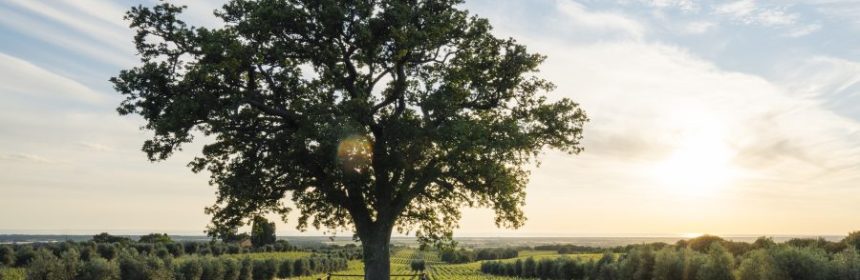
Early and surprising: the 2026 harvest at Ornellaia was an exercise in balance, shaped by the ability of both the vines and people to adapt to the evolution of the vintage.
Between November and February, around 250 mm of rainfall replenished the soils’ water reserves, proving fundamental in the months that followed. An dry and warm spring was interrupted only by some rainfall and cooler temperatures in May. June brought the return of sunshine and high temperatures. As summer began, the technical team found themselves facing potentially complex conditions for the vines. Yet it was precisely during these weeks that the technical team observed remarkable and widespread resilience, supported by the winter rainfall but especially, by the tenacious character of the estate’s old vines, which, according to Balsimelli, “responded to the conditions of this vintage very well.” The ability of Ornellaia’s soils to retain water, the age of the vines and the team’s constant work on soil and canopy management helped prevent vine stress. This allowed the vineyards to reach August in excellent condition, when two timely periods of rainfall arrived just when they were most needed. “The right amount [of rainfall] at exactly the right time – a combination that allowed Ornellaia’s vineyards to enter the ripening phase in the best possible conditions” said Balsimelli.
The harvest began on 10 August with the white varieties. “Such an early start did not compromise quality: the white varieties have produced wines of great freshness, brightness and aromatic intensity,” confirms Balsimelli.
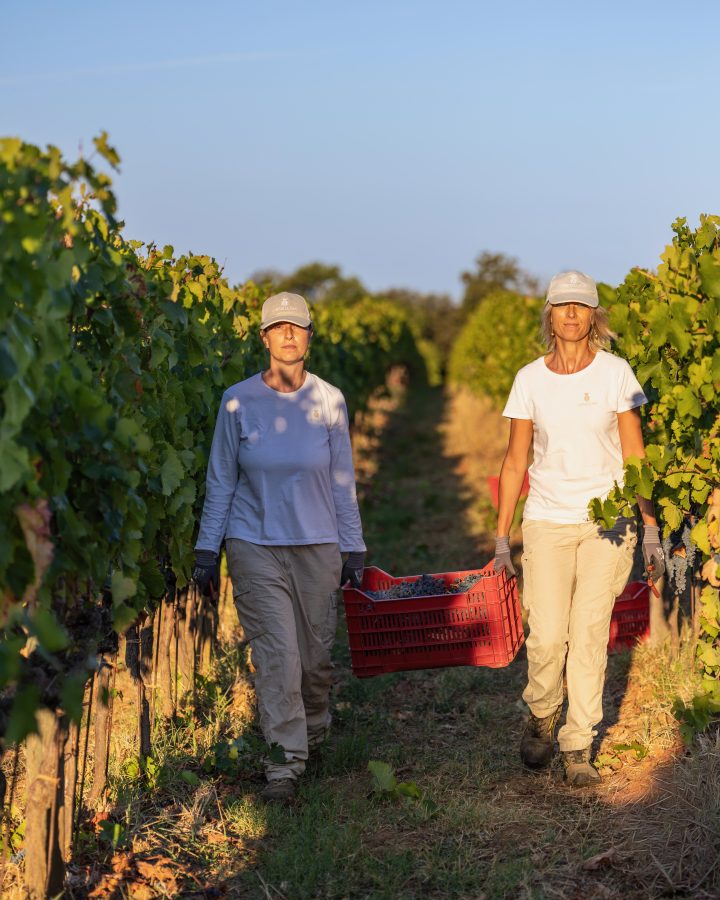
The red varieties followed, beginning with the first Merlot on 24 August. From then on, harvesting continued steadily, following the ripening of each individual vineyard parcel.
September marked a change in the vintage. Rainfall between 10 and 11 September coincided with a clear shift in weather conditions. Nights became noticeably cooler, the days clear and bright, and temperatures never exceeded 28°C. This created ideal conditions for Cabernet Sauvignon and Cabernet Franc to gradually complete their phenolic and aromatic ripening.
“Today, in the cellar, the wines show concentration and a clear aromatic expression. The Merlots are intense and unexpectedly vibrant; the Cabernet Francs show creaminess and elegance, while the Cabernet Sauvignons express depth, savouriness and structure,” Balsimelli summarises.
The harvest came to an end on 23 September. It was a vintage that began early and which required patience, when knowing to wait proved just as important as knowing when to act.
“This harvest reminded us that we cannot rely on predetermined patternsand that, when faced with increasingly complex climatic conditions, our vineyards have the ability to find their own balance”, concludes Balsimelli.

