Tag Archives: featured

Florence Born, World Bound:Introducing Yeter and Same Sky, the First Wines from Arsenio

Some roots are inherited, others are chosen.

Arsen Khachaturyants’ story is one shaped by movement. Of Armenian heritage, born in Spain in 2000, he studied in New York, London, Bordeaux. Growing up across borders, languages and cultures inspired a desire to create something enduring, without ever giving up the freedom to look beyond.

That vision took shape in Arsenio, a wine project established across three Tuscan terroirs: the hills around Florence, Olena and Volterra.

“For me, putting down roots doesn’t have to mean standing still,” says Arsen Khachaturyants. “It means building something with depth and continuity. Tuscany is where this journey began, but Arsenio was created with the curiosity and freedom to keep exploring.”

In 2020, with the guidance of renowned consultants Marco Simonit and Alberto Antonini, the first 10 hectares of vineyards were planted and have since been farmed organically. Traditional Tuscan grape varieties—Sangiovese, Mammolo, Colorino, Pugnitello and Canaiolo—grow alongside Cabernet Sauvignon and Cabernet Franc.

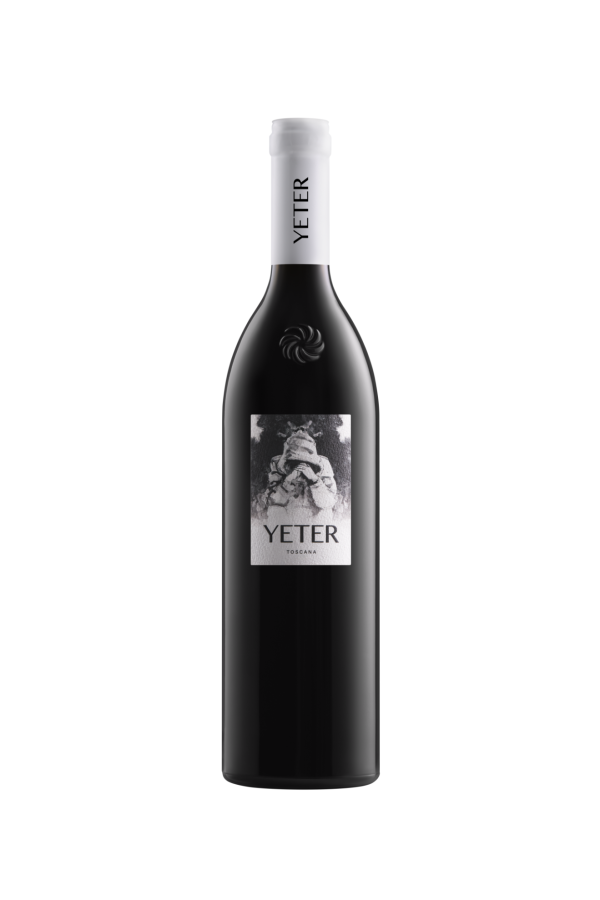
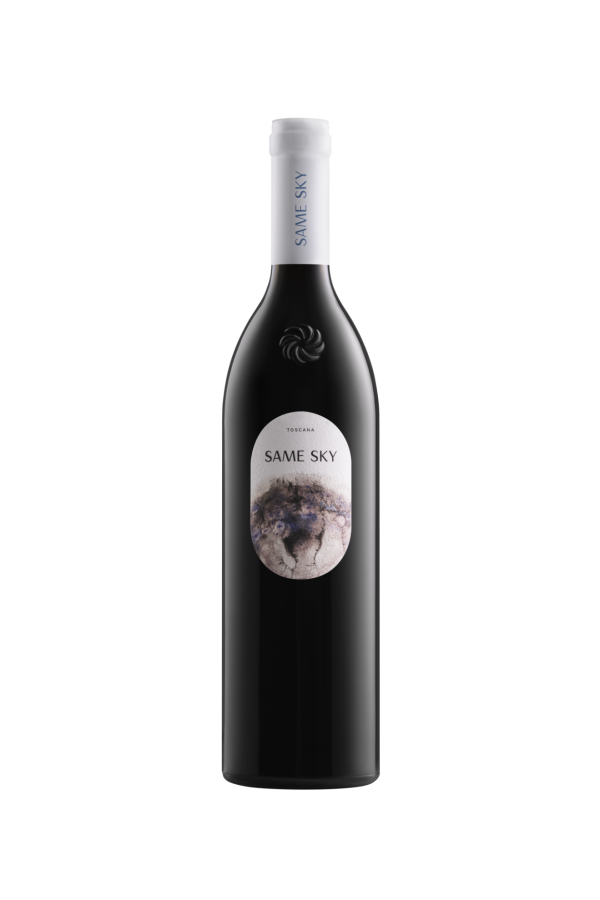
The 2024 vintage marks the project’s debut with its first two wines: Yeter and Same Sky. Both will be released in September 2026 in extremely limited quantities for Italy and selected international markets.

Yeter 2024 is the most intimate expression of the project. A blend of seven grape varieties grown on the hills overlooking Florence, at 300 metres above sea level and just a few kilometres from the city’s historic centre, it brings together traditional and international grape varieties in a deeply personal interpretation of place. Its name carries distant echoes, evoking a sense of transcendence.

Same Sky 2024 was born from a simple intuition: different vineyards, one sky, one shared philosophy. A wine inspired by freedom. Its first release is a blend from the vineyards of Florence and Volterra, combining Sangiovese, Cabernet Franc, Cabernet Sauvignon, Mammolo and Pugnitello.

Still in his twenties, Arsen combines analytical discipline, professional kitchen experience and a deep respect for the land. The award-winning ORA extra-virgin olive oil established his reputation for precision and uncompromising quality. He now carries that same philosophy into wine, blending innovation and environmental responsibility, ambition and patience, memory and vision.

“I want to speak to my generation, but not only to them. I want to reach everyone who is curious about the future of viticulture. That’s why learning and experience are my greatest allies,” says the winemaker. “As Isaac Newton famously wrote, ‘If I have seen further, it is by standing on the shoulders of giants.’”

His words reveal a profound respect for history and tradition, while expressing a determination to develop a personal vision that continues to evolve.

The Labels

Every bottle of Arsenio bears, embossed on the glass, the eight-rayed Armenian sun, an ancient and evocative symbol.

The labels were conceived to capture a moment and an emotion.

On Yeter, Arsen is portrayed as a young man of today, lost in thought—a figure reflecting on himself while fully aware of the world’s complexity and chaos. The intention is for anyone to recognise something of themselves in the figure, experiencing the wine as though stepping into the story. Same Sky takes a more abstract approach. Its rounded label echoes the project’s sense of universality: one planet to care for, and one shared sky beneath which we all live, free from prejudice and without boundaries.

Ynse Boonstra

“HARVEST NOTES”:  VOICES FROM THE WINE REGIONS ON THE 2026 GRAPE HARVEST 

From Lombardy to Sicily, passing through Piedmont and Umbria, early assessments of the 2026 harvest point to strong quality prospects, while more definitive data on volumes are still awaited 

The 2026 grape harvest is now in full swing and, as picking progresses across Italy’s wine-growing regions, the first assessments of the vintage are beginning to emerge. While the picture is still evolving and marked by differences related to climate conditions, grape varieties and ripening timelines, the initial outlook highlights particularly encouraging expectations from a quality standpoint. 

From north to south, the first impressions gathered from consortia and industry operators paint different pictures, all sharing the need to wait until harvest operations are completed before delivering a comprehensive evaluation of the vintage. 

In Monferrato and the Asti area, indications for the 2026 harvest outline a particularly positive scenario, both in terms of quality and production volumes. 

“The 2026 harvest shows overall positive characteristics. Despite a season marked by variable weather conditions, the data collected so far indicate an excellent harvest in terms of both quantity and quality. Initial estimates suggest balanced production and very promising quality prospects, once again confirming the viticultural value of the Monferrato and Asti area,” comments Filippo Mobrici, President of the Consorzio Barbera d’Asti e Vini del Monferrato. 

In Upper Piedmont, in the Novara area, the situation is more complex: 

“As far as the Novara area is concerned, the season was unfortunately marked by the severe hailstorm of August 7, which affected a large portion of the territory, particularly the areas of Ghemme, Sizzano and Fara. The event caused significant damage, especially from a quantitative standpoint, reducing production in many vineyards,” states Andrea Fontana, President of the Consorzio Tutela Nebbioli Alto Piemonte.

“In the other areas, however,” he continues,“the outlook is decidedly positive. September has brought particularly favorable conditions, with significant day-night temperature variations supporting optimal grape ripening. Crop loads are satisfactory and of good quality. Despite a moderate water deficit during the summer, we can expect a harvest capable of producing wines of great structure, balance and elegance, with excellent quality prospects throughout the territory.”

Moving to Lombardy, in Valtènesi and the Riviera del Garda Classico area, harvesting began a few days earlier than last year. 

“The 2026 harvest in Valtènesi and the Riviera del Garda Classico began several days earlier than in 2025. Initial impressions from the vineyards are very positive and point to a highly encouraging quality profile. The grapes are healthy, balanced and have achieved excellent ripeness levels. Despite a slight reduction in quantities compared to initial expectations, due to high seasonal temperatures and some weather events that affected the area, we expect wines capable of fully expressing the character of Valtènesi. It is still too early for definitive conclusions, but the start of the harvest suggests the conditions for a highly interesting vintage,” comments Paolo Pasini, President of the Consorzio Valtènesi. 

Also in Lombardy, in Oltrepò Pavese, the harvest has so far confirmed a positive trend. 

“The harvest is progressing very well. Picking for sparkling wine base grapes has been completed, with very high quality results, while harvesting for rosé grapes is still underway. Some issues have occurred in the eastern part of the territory due to recent hailstorms, but it is still too early to quantify their impact. Overall, however, the harvest is proving positive,” notes Riccardo Binda, Director of the Consorzio Tutela Vini Oltrepò Pavese. 

In Emilia-Romagna, around Castelvetro, the season is characterized by a very early harvest, although picking is still ongoing for some varieties. 

“The 2026 harvest is certainly one of the most challenging of recent years. It has been, and at the same time has not been, because while it started exceptionally early due to the scorching summer temperatures, harvesting is still widely underway, especially for Lambrusco Grasparossa, which will be the last variety to be picked. Low acidity and high pH levels will put wineries to the test, but our cellar masters and winemakers will, as always, know how to handle the grapes in the best way possible. We expect excellent wines with strong personality, capable of reflecting and enhancing the work carried out both in the vineyards and in the cellar,” underlines Alberto Pozzuoli of the Consorzio Castelvetro VITA. 

In Umbria, harvesting started around two weeks earlier than usual. 

“In Umbria,” explains Massimo Sepiacci, President of Umbria Top,“the harvest began approximately two weeks ahead of schedule, and we are currently in the middle of the picking season. The year was characterized by drought and prolonged heat, leading to lower yields and smaller berries, resulting in reduced production volumes. From a quality perspective, however, our initial impressions are very positive and give us confidence in the outcome of the harvest.”

Harvest time is also becoming increasingly important from a tourism perspective. Harvest activities now take place during a period that has gained growing significance within wine tourism, attracting visitors eager to experience grape picking firsthand. 

“Harvest season,” says Giovanni Dubini, President of Movimento Turismo del Vino Umbria,“has become an increasingly sought-after wine tourism experience. More and more visitors choose to visit wineries during harvest time to see firsthand the work behind wine production and enjoy an authentic experience at the heart of wine estates. This trend is part of a broader transformation in tourism, with the season becoming progressively longer and autumn establishing itself as an ideal period for experiential travel. Harvest season is therefore also an opportunity to attract visitors to wineries during a time of year that was previously less affected by tourism flows.”

The harvest journey then reaches Sicily, where grape picking extends over a particularly long period and varies significantly across the island. 

“Having started in western Sicily,” says Alessio Planeta, President of the Consorzio di Tutela Vini DOC Sicilia,“the 2026 harvest has gradually taken shape and color. It is now progressing across the entire island and will conclude, after approximately 90 days, in the highest vineyards of northeastern Sicily. It is a journey through an extraordinary diversity of soils, altitudes and grape varieties, involving producers of different histories and sizes, united by their ability to interpret the season’s conditions and guide each vineyard toward its best expression.”

The overall picture is positive from a quality standpoint, with encouraging expectations across much of the region. As for production volumes, it is still too early for definitive estimates. Data emerging in the coming weeks will allow for a more accurate assessment. Initial indications nonetheless suggest a reduction in output, with differing situations across the island. This variability reflects the complexity of Sicily’s vineyard landscape and calls for caution before drawing overall quantitative conclusions about the 2026 harvest.

In the Vittoria area, in southeastern Sicily, spring rainfall helped build good water reserves in the sandy-calcareous soils, enabling vineyards to better withstand the high summer temperatures, with peaks above 40°C and minimum temperatures consistently above seasonal averages. 

“Weather conditions accelerated grape ripening and required careful canopy management. Estimates for the 2026 harvest indicate a slight reduction in yields, accompanied by high aromatic and phenolic concentration in the grapes. The expected quality is excellent: the outstanding sanitary condition of the fruit, together with the good level of natural acidity preserved by the vines, provides ideal conditions for both freshness and ageing potential in the wines,” concludes Silvio Balloni, President of the Regional Wine Enoteca of Sicily, South-East Branch.

Ynse Boonstra

A FIVE-MILLION-YEAR-OLD SEA RESURFACES IN TALOSA’S HISTORIC CELLAR 

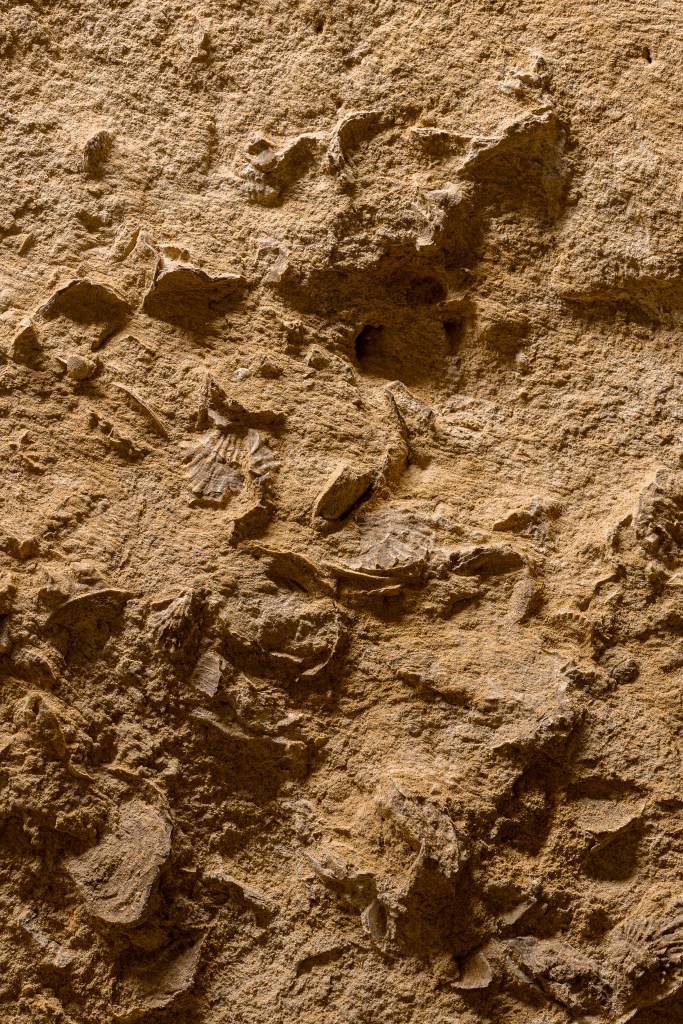
In Montepulciano, a Pliocene fossil bed is visible in the underground tunnels of the Historic Cellar. These are the same marine sediments that formed the soils in which Filai Lunghi Vino Nobile di Montepulciano DOCG originates

Almost one hundred kilometers from the sea, in the heart of Montepulciano, traces of an ancient sea that disappeared millions of years ago are still visible today. An extensive fossil bed dating to the Pliocene—the geological era when much of Tuscany lay beneath the sea—is visible in the underground tunnels of Talosa’s Historic Cellar, beneath the 16th-century Palazzo Tarugi and Palazzo Sinatti. 

Along the route to the tasting room, excavated into the hill on which Montepulciano stands, fossilized shells, bivalve remains, and traces of ancient marine organisms are clearly visible. 

They offer tangible evidence of a time between approximately 5.3 and 2.6 million years ago, when this territory laid beneath a shallow sea. These fossils, however, reveal more than Tuscany’s geological past. The same matrix of marine sand and clay forms the foundation of Talosa’s 33 hectares of vineyards in Pietrose, situated at elevations ranging from 330 to 400 meters above sea level. Marine fossils are frequently found in these Sangiovese vineyards, confirming the Pliocene origin of the soils that shape the identity of Vino Nobile di Montepulciano. 

These moderately fertile soils help mitigate the effects of climatic variations and produce well-structured wines with vibrant acidity and a sensory profile reminiscent of sour cherry and violet. The Consorzio del Vino Nobile di Montepulciano recognizes these characteristics as distinctive features of the appellation. 

Talosa attributes these qualities to the particular location of its vineyards, situated where the clay and sand components of the Pietrose cru meet. “The Montepulciano territory still bears the marks of the sea that shaped it: we see them when excavating beneath the cellar and find them again in the composition of our soils,” explains Edoardo Mottini Jacorossi, CEO of Talosa. “For our family, which has worked this land since 1972, understanding the geological origins of the soils is part of the same approach that guides us when selecting clones, determining the orientation of the vine rows and defining the most appropriate aging regime for each vineyard.”  

Talosa fossils in the historic winery

Among the estate’s wines, Filai Lunghi Vino Nobile di Montepulciano DOCG most directly expresses this connection with the territory. First produced in 2007, it comes from three predominantly sandy vineyards. According to Talosa’s winemaking interpretation, the marine soils contribute to the wine’s distinctive savory texture and lingering finish. In recent vintages, a progressively savory, iodine-like character emerges on the finish, a quality that can be traced back to the marine sands into which the vines extend their roots. Fossils are also one of the most evocative and unexpected features of a visit to the Historic Cellar, which opened to visitors in 2010 following meticulous conservation work. The route passes through underground chambers housing large oak casks and continues to the tasting room, inaugurated in 2021 and located beside an Etruscan tomb dating from the fifth century BC. Visitors are thus taken on a journey through different eras in Montepulciano’s history: the geological age represented by the marine fossils, the Etruscan period embodied by the tomb, and the Renaissance reflected in the palazzi that now house the cellar. 

This journey connects the territory’s origins with the work carried out in the vineyards and cellar today. The fossils preserved in the tunnels of the Historic Cellar tell a story that began millions of years before Vino Nobile di Montepulciano was born. This story continues today in Talosa’s vineyards and in the wines born from these soils. 

Talosa 

The Jacorossi family has owned Talosa since 1972. It was among the first estates in Montepulciano to embark on a quality-driven path that helped elevate Vino Nobile di Montepulciano to the highest levels of Tuscan and Italian winemaking. Over the years, the winery has grown into an estate renowned for outstanding-quality wines. Talosa’s vineyards extend across 33 hectares in Pietrose, one of the most evocative areas of the Montepulciano cru, at elevations ranging from 330 to 400 meters above sea level and with a south-westerly aspect. Talosa’s oldest aging cellar is located in Montepulciano’s historic center, beneath Palazzo Tarugi and Palazzo Sinatti, built during the early decades of the 16th century opposite Montepulciano Cathedral. Entering Talosa’s Historic Cellar transports visitors back to the Italian Renaissance. Built entirely of brick, its tunnels unfold through a succession of vaulted chambers and niches housing the large casks used to age the wines. 

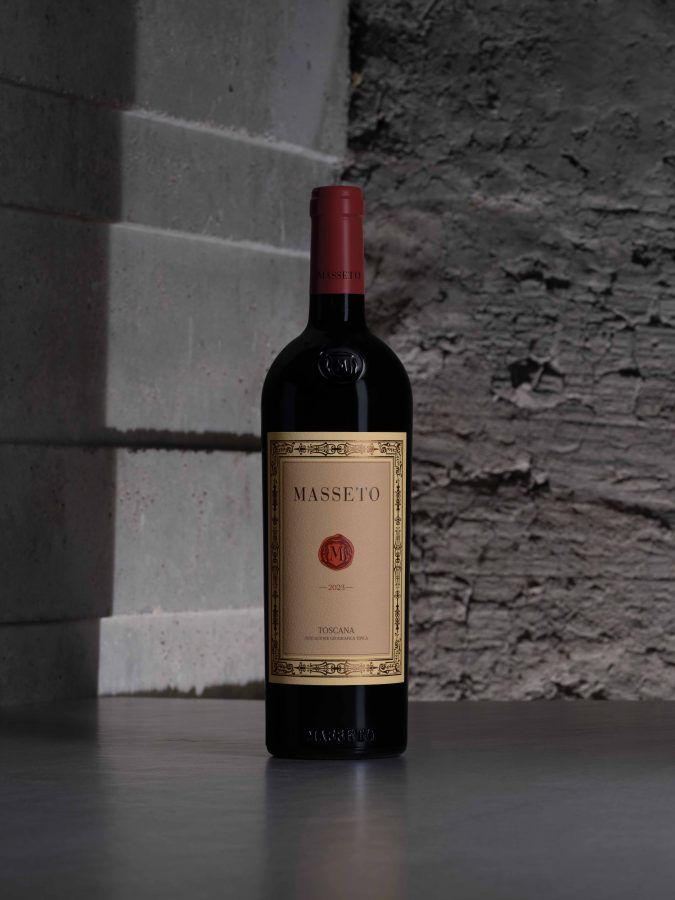
Masseto reveals the 2023 vintage. The vibrant balance of the 2023 vintage.

Since 1986, Masseto has been produced from a single vineyard facing the Tyrrhenian Sea, where the vines sink their roots into Pliocene blue clay. These rare soils, together with the coastal breezes, light of Bolgheri and meticulous care from vineyard to cellar shape the wine vintage after vintage.

Masseto 2023 vintage will be released to market on 1 October.

In the diary kept by Masseto, the story of the 2023 vintage begins with a mild winter and a normal start to the growing season. Spring rains replenished water reserves while requiring the vineyard team to carry out careful selection. “Nature set us a challenge, which we embraced it, turning it into value.” explains Marco Balsimelli, Technical Director of Masseto.

The summer was bright and sunny with no extreme peaks in temperature. The water reserves accumulated in the spring accompanied the grapes towards slow, gradual ripening, encouraging concentration and balance. Rain returned at the end of August, followed by cool nights in September. These were all invaluable conditions for developing aromatic complexity and preserving acidity and freshness, while maintaining a balance between phenolic and technological ripeness. “It was a vintage full of vitality and satisfaction.” adds Balsimelli.

The harvest began on September 6 and concluded on October 5. Each parcel was harvested by hand, with the bunches carefully placed in 15-kilogram crates. The grapes only have a short journey to make. The Masseto winery is carved directly into the vineyard itself, with just a few minutes separating the vines from the winemaking process. Upon arrival, the bunches were destemmed and the grapes gently crushed before being transferred by gravity into concrete vats.

Each parcel does its own journey. Malolactic fermentation takes place in oak barriques, 80 percent of which are new, where the ageing process begins. “Each parcel has its own voice” continues Balsimelli. “We vinify them separately so that each can fully express itself. Only when the time comes to blend do these different characters come together and become Masseto.” After a total of 24 months in barriques, Masseto is bottled before returning to the quietude of the cellar, where it continues to age until the time comes for the wine to be released into the world.

Masseto 2023 fills the glass with a vibrant ruby red. On the nose, it opens with dark, juicy fruit, gradually giving way to black pepper, tobacco and graphite notes. On the palate, the wine shows depth and elegance, a signature style that has long defined Masseto. The tannins are smooth, while the acidity brings lift and freshness. “Masseto 2023 is vibrant and balanced. A wine that already speaks with clarity and has a long future ahead,” concludes the Technical Director.

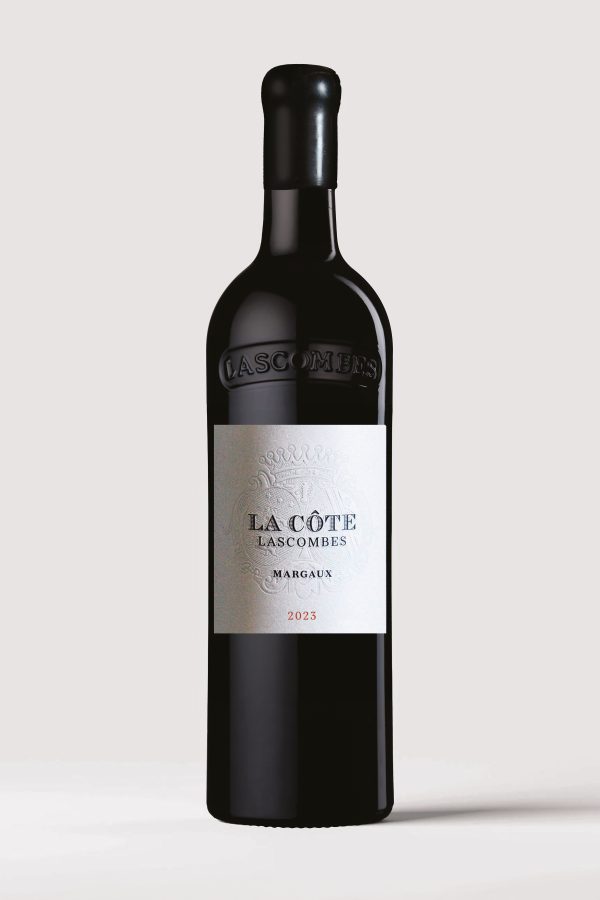
La Côte 2023. 100% Merlot from Château Lascombes

Château Lascombes has always expressed the identity of Margaux through the art of assemblage or blending. This tradition is the philosophy behind the estate’s Grand Vin, a historic interpretation of the terroir and the domaine’s signature wine. Today, alongside this wine, La Côte Lascombes provides a complementary perspective: a cuvée crafted from a single vineyard, expressing the character of an individual grape variety.

“Like many of the Médoc’s most famous vineyards, La Côte also overlooks the Gironde. Here, however, the soil is marked by the presence of precious veins of blue clay, a rare characteristic that allows Merlot to express itself at its best,” says Axel Heinz, CEO and winemaker at Lascombes.

The wine comes from a five-hectare plot planted exclusively with Merlot, with vines that are now over forty years old. It’s a historic vineyard that, thanks to its unique soil and climate profile, now finds an independent voice in La Côte.

The veins of blue clay, the limestone, and the influence of the Gironde River give shape to La Côte’s identity. The result is a 100% Merlot that interprets Château Lascombes’ terroir from a plot-specific perspective, combining the tradition of blending with a fresh take on the vineyard.

“The blue clay has the function of water retention and gradually releases liquid to the vines, preserving freshness even during the most challenging phases of the growing season. As it expands and contracts, it creates micro-cracks that promote root development. The limestone, on the other hand, provides tension, saline energy, and a precise mineral texture. Together, these elements give the Merlot depth, balance, and a maturity that is always underpinned by freshness,” explains Axel Heinz.

La Côte gets closer to properly expressing its identity with the 2023 vintage, the first to be fully overseen by the team led by Axel Heinz throughout the entire growing cycle. The 2023 growing season started early and was marked by challenging weather conditions: “After uniform flowering, careful and continuous work was needed in the vineyard to manage the ripening of the grapes. The grapes were hand-picked, in several stages, according to the ripeness of each plot, from 19 – 24 September. Selection was rigorous, first in the vineyard and then in the cellar: we chose to use only the fruit most faithful to the character of La Côte, complementing the natural body of the Merlot without weighing it down, and allowing precision, linearity, and energy to emerge fully,” says Delphine Barboux, Technical Director at Lascombes.

The same approach was applied to the winemaking process. Maceration, lasting 25–30 days, was accompanied by daily tastings, with the aim of preserving the fruit’s integrity and the silky texture of the tannins. Subsequent ageing lasted for 18–20 months in French oak barrels – 60% of which were new – and in amphorae.

“The first vintage confirmed the potential of this project. With the second, we are beginning to distinguish more clearly between the effects of the vintage and the effects of the terroir. This is where the voice of La Côte comes through so strongly,” concludes Axel Heinz.

CONNESSO makes its debut. Only Sangiovese. Only Magnum. Pure Val d’Orcia.

CONNESSO is the new 100% Sangiovese from Arillo in Terrabianca.

It is born at Colle Brezza, in the Val d’Orcia, and makes its debut with the 2022 vintage in just 1,900 bottles, exclusively numbered Magnums. Its name tells the story of a profound connection: between what was, what is and what will be. Between the ancient sea and the land of today, geological memory and the life of the vineyard, nature and human endeavour.

The memory of the sea, preserved in the earth

Millions of years ago, these hills were covered by the sea. Today, they are vineyards. During a walk through the rows of vines at Colle Brezza, a large fossil shell, perfectly intact in its form, emerged from the soil: tangible evidence of that distant past still preserved in the soils of the Val d’Orcia. From this discovery comes the story of CONNESSO: a wine that connects past and present, nature and time, territory and people. The natural ridges of the shell have also become the graphic motif of the label: a kind of map of time, made up of layers, curves and pathways, transferring onto the bottle the memory of the land from which the wine originates.

Colle Brezza: a microcosm in balance

CONNESSO is born at Colle Brezza, the third vertex of Arillo in Terrabianca’s “Tuscan Theorem”.

The estate’s symbol derives from an ancient sign carved into local stone: four quadrants converging towards a centre which, in its contemporary reinterpretation, evoke the four elements — earth, air, fire and water — and their balance.

“It is not simply about producing wine in different places, but about interpreting each territory as an autonomous expression of identity, energy and landscape culture while, at the same time, doing so through a single vision. Radda in Chianti, Maremma and Val d’Orcia represent three complementary souls of a project founded on rigour, elegance and essentiality,” explains Adriana Burkard, who, together with her husband Urs, created the Arillo in Terrabianca project.

Two parcels, two exposures

CONNESSO takes shape from two parcels situated at 450 metres above sea level: one facing east, the other south. The vines sink their roots into clay-loam soils rich in fossils, evidence of the ancient sea that covered these lands millions of years ago. Constant winds, significant temperature variations, soils rich in microbial life and widespread biodiversity throughout the vineyard help define the ecosystem of Colle Brezza, where viticulture follows the principles of biodynamics.

“Across our estates, and particularly at Colle Brezza, we pay great attention to biodiversity, soil vitality and respect for ecosystems,” says Adriana Burkard. “Our philosophy is simple: give respect to receive excellence.”

Harvest and winemaking

The 2022 harvest took place on a single day, 23 September, at the end of a season characterised by limited rainfall and marked temperature variations between day and night.

“It was a regular vintage,” recalls winemaker Vieri Vannoni. “Rainfall was scarce, but the vines responded well, also thanks to very careful soil management, with the ground always covered by vegetation and green manure. The grapes reached maturity gradually, supported by the temperature variations typical of the area.”

Following vinification in stainless steel, CONNESSO matured for 24 months in 30-hl French oak casks, an ageing process designed to accompany its evolution while preserving its freshness and identity. In the glass, it reveals a Sangiovese with a vertical structure, silky tannins and a complex texture. Ripe red fruit meets notes of black pepper, sweet spices and delicate balsamic nuances. On the palate, freshness and savouriness accompany ripe, well-integrated tannins, leading to a long and persistent finish.

Only Magnum: time as part of the wine

The decision to produce CONNESSO exclusively in numbered Magnums is an integral part of the project. A format that allows the wine to evolve more slowly while, at the same time, naturally encouraging sharing. CONNESSO is thus conceived as a wine made for time and for people: not to be rushed, but to endure and to be shared. In an increasingly interactive world, CONNESSO brings connection back to its most authentic dimension: the land, time, the rhythms of nature and the people with whom we share a table.

***

Arillo in Terrabianca is a winery that brings together culture, innovation and a profound respect for the land. The estate extends across three Tuscan territories of outstanding winemaking vocation – Chianti Classico, Maremma and Val d’Orcia – which together form the “Tuscan Theorem”, a synthesis of three distinct identities interpreted through a shared vision. “Only by respecting ourselves and the environment can we create authentic products and bring to life visions capable of enduring over time,” say owners Adriana and Urs Burkard. This philosophy guides every decision made by the winery and will find a new expression in 2027 with the opening of its flagship winery designed by Mario Botta, complemented by a dedicated dining space, an art gallery and an experiential hospitality project. A place conceived to bring visitors closer to the culture of wine and to the landscape from which it originates.

From soil to wine: the energy of the soils at Caiarossa

Clay, limestone, sand and volcanic formations: in Riparbella, the diversity of the terroir takes shape in the wines and inspires a philosophy founded on a balance between nature and viticulture. At Caiarossa, wine identity begins with the land. In the hills of Riparbella, just a few kilometres from the Tyrrhenian Sea, clay, limestone, sand, gravel, iron and volcanic formations alternate across a complex landscape, further shaped by differences in altitude, exposure and ventilation. It is this diversity of conditions that gives the estate one of its defining characteristics: the ability to read the different expressions of the terroir and translate them into wines with a distinct identity.

Caiarossa extends across approximately 110 hectares, including woodland, flowering meadows and olive groves, of which 40 hectares are planted with vines. The vineyards lie at altitudes ranging from 120 to 350 metres above sea level, surrounded by Mediterranean scrub and influenced by sea breezes and the characteristic light of the Tuscan coast.

The study of soil composition, microclimate and the orientation of individual vineyard sites has enabled the estate to identify 59 individual parcels, determining for each the variety, from among the 10 cultivated – six red and four white – best suited to express its potential. Each parcel is therefore monitored and managed throughout the year according to its own characteristics, without reducing its complexity to a uniform model.

The vineyards are divided into three main areas, each with its own distinctive characteristics. Podere Serra all’Olio is the historic heart of Caiarossa and home to the winery. Its soils are predominantly clay-based, with gravel, limestone and iron also present.

Further south, not far from the Cecina River, Le Lame has a different geological profile. Here, predominantly sandy and calcareous soils are exposed to breezes coming from inland.

Nocolino, on the slopes of Poggio di Nocola, reaches 350 metres above sea level and is the estate’s highest vineyard. Facing directly towards the sea and constantly ventilated, it is characterised by marl, schist and mineral-rich soils of volcanic origin.

It is precisely from the study of soil heterogeneity and the micro-parcellation of the vineyards that Caiarossa’s blending philosophy has evolved: an approach that seeks harmony and balance by bringing together the different expressions of the terroir and transforming them into wines with a strong sense of identity.

The clearest expression of this vision is Caiarossa IGT Toscana Rosso, the estate’s flagship wine, created through the blending of all the red varieties cultivated on the estate: Cabernet Franc and Syrah, together with Cabernet Sauvignon, Merlot, Sangiovese and Petit Verdot. Each variety is vinified separately and interpreted according to its specific characteristics. The diversity of grape varieties and terroirs combine to make it the broadest expression of the complexity and freshness of the Tuscan Coast. Fine, harmonious and complex in character, it is aged in barriques for at least 14 months.

Aria di Caiarossa IGT Toscana Rosso, meanwhile, focuses on the Nocolino vineyard and its Mediterranean character, with a selection of Syrah, Cabernet Sauvignon, Cabernet Franc and Merlot. The result is a wine with a velvety, deep and vibrant structure, aged for approximately 13 months in barriques, mainly second- and third-use.

Pergolaia IGT Toscana Rosso offers a contemporary interpretation of Sangiovese, Tuscany’s signature grape variety, complemented by a small proportion of Cabernet Sauvignon, Cabernet Franc and Merlot. The blend is aged for 12 months in large wooden casks. The wine combines softness, minerality and depth.

Following the same philosophy, Pergolaia Bianco IGT Toscana Bianco is made from a selection of Vermentino grapes with Chardonnay and Viognier. Fresh and vibrant, it evokes the summers of the Tuscan coast and is fermented and aged in stainless steel and concrete.

The selection of calcareous and sandy soils is showcased in Caiarossa Bianco IGT Toscana Bianco, produced in limited quantities from Chardonnay, Viognier and Vermentino. The grapes are hand-harvested in the early morning hours and gently pressed. Fermentation and ageing take place separately: Chardonnay is fermented and aged in barriques to develop depth and softness, while Viognier and Vermentino are handled in concrete or amphora to preserve their freshness and aromatic intensity. The result is a balanced, fine and mineral wine, with fruity and floral notes.

This attention to the distinctive characteristics of each terroir is also reflected during harvest. The grapes from each individual parcel are hand-harvested separately, at the point of ripeness considered ideal, and remain separate in the winery as well. The availability of fermentation vats of different sizes makes it possible to vinify each parcel individually, adapting the winemaking process to the specific characteristics of the grapes and preserving their identity through to the blending stage, when the technical team builds the final blends.

“Our work is primarily about listening: to the vineyard, the vintage, each individual parcel and each variety,” explains Francesco Villa, Technical Director at Caiarossa. “Our approach to viticulture and winemaking reflects our connection with Bordeaux culture, but here at Caiarossa it is shaped by the sea, the light and the Mediterranean climate. What we seek is balance: precision without rigidity, and expression without excess.”

Once vinification is complete, the wines are tasted and assessed to determine the individual labels, each offering a different interpretation of the estate’s vineyards and grape varieties, before following their separate ageing paths.

A plurality of identities united by a common vision: that of the Jelgersma family, which brings together close observation of the land, respect expressed through biodynamic practices, and a search for balance between people and nature, complexity and freshness, precision and naturalness.

Climate Change and Quality in the Glass:Montalbera announces its 2026 red wines night harvest

The Piedmont winery combines ethical sustainability with winemaking precision: cooler nighttime temperatures help preserve the rich aromatic profile of its native grape varieties while ensuring safer working conditions for vineyard crews

Montalbera, one of Piedmont’s leading wine estates with vineyards across Monferrato and the Langhe, has officially announced that its 2026 red wines night harvest will begin on 6 September.

What began in 2023 as an experimental response to climate change has now become a cornerstone of the winery’s production philosophy, bringing together the highest expression of its native grape varieties—first and foremost Ruchè di Castagnole Monferrato DOCG—with greater energy efficiency and a strong commitment to employee wellbeing. 

“Climate change is forcing us to rethink the rules of the game and adapt more quickly than ever before,” says Franco Morando, General Manager of Montalbera. “Every harvest reflects an entire year of dedication, yet it is during the night that its most precious moment unfolds. Harvesting in the cooler hours allows us to bring grapes to the winery with their aromas, freshness and identity fully preserved. It is a choice that combines experience, respect for nature and people, and an uncompromising pursuit of quality.”

The star of the evening will be Ruchè di Castagnole Monferrato DOCG Riserva Il Fondatore, the winery’s flagship wine and the ultimate expression of Montalbera’s heritage, vision and identity. The night will also mark the start of the harvest for Piemonte DOC Viognier. 

Harvesting after sunset is a deliberate decision aimed at preserving the integrity and elegance of every berry, safeguarding its organoleptic qualities and ensuring that the fruit reaches the winery in optimal condition for vinification. The harvest is carried out entirely by hand and supported by a meticulously planned logistics operation, including mobile lighting systems installed along the vineyard rows. This approach guarantees maximum safety and comfort for vineyard workers while complying with the latest agricultural labour regulations. 

From a winemaking perspective, night harvesting offers a significant advantage in preserving grape quality. Delivering fruit to the winery at naturally cool temperatures prevents unwanted spontaneous fermentation during transport while maintaining the structural integrity of the berries. The cool night air also protects the grapes’ delicate and complex aromatic profile, preserving the floral and spicy notes that have become hallmarks of Montalbera’s wines and contributed to their international acclaim. 

With this strategic decision for the 2026 vintage, the Morando family once again confirms Montalbera’s pioneering approach—successfully combining the scale and strength of a market leader with the meticulous attention to detail traditionally reserved for every single bunch of grapes. 

CANTINA RAUSCEDO CELEBRATES ITS 75TH ANNIVERSARY  AND LOOKS AHEAD TO A NEW CHAPTER

From its first Sustainability Report and anniversary wines to the upcoming year of Pordenone as Italian Capital of Culture 2027, the Friulian cooperative celebrates a major milestone in the presence of institutional representatives and embarks on a new phase of renewal.

On Saturday 1st August, Cantina Rauscedo opened its doors to celebrate its 75th anniversary. The evening brought together members, employees, institutional representatives and guests to celebrate the cooperative’s journey and look ahead to the coming years with renewed momentum. The event marked the beginning of a programme of initiatives dedicated to the anniversary, which will continue throughout 2026.

The evening was hosted by Simon Staffler, an expert wine taster and a familiar face of Falstaff Italia, who welcomed guests and introduced a celebratory video specially created for the anniversary: a visual journey through the winery’s 75-year history, from its foundation in 1951 to the present day. 

The spotlight then turned to Cantina Rauscedo President Antonio Zuliani, who presented the cooperative’s first Sustainability Report, a document that demonstrates the company’s commitment to making the value it generates for its members and the local area increasingly measurable and transparent. 

“The renewal process we have embarked on is built around one fundamental principle: quality,” said Antonio Zuliani. “For this reason, we have strengthened our production structure by bringing in highly qualified new professionals who work alongside our long-standing staff, the people who have played a central role in the company’s growth over the years. At the same time, we have invested in the innovation of our production facilities and winery, with the aim of continuously improving the processes involved in grape handling and transformation. This commitment also extends to our members, whom we support through ongoing professional development, enabling them to fully express the value of the territory and further strengthen the identity of our wines. Only through continuous improvement can we consolidate the trust of our existing customers and win over new ones.”

Next to speak was General Manager Flavio Geretto, appointed to lead the cooperative just a few months ago and already a tangible sign of the new direction undertaken by Cantina Rauscedo. He presented the company’s future projects and outlined its development strategy for the coming years: a path that builds on the cooperative’s history while embracing an increasingly international and contemporary vision for the brand. 

cantina-rauscedo-from-the-left-simon-staffler-and-president-antonio-zuliani

The 75th anniversary coincides with a period of profound renewal for the cooperative’s image, involving its headquarters, hospitality areas and brand positioning. The process aims to strengthen Cantina Rauscedo’s identity by highlighting its history while embracing an international and contemporary outlook. 

During his address, Geretto also unveiled two commemorative magnums created especially for the anniversary – one Refosco and one Sauvignon, two varieties that are emblematic of Friuli’s wine heritage. Both feature a specially designed label celebrating Cantina Rauscedo’s 75th anniversary and were subsequently shared with guests during the evening. 

“Our 75th anniversary is a moment of reflection and awareness. We are proud of the journey that has brought us this far, but even more determined to build what we will become tomorrow. This confidence is rooted in an heritage that, over the past few months, I have come to know and appreciate even more deeply: a membership base with strong ties to the cooperative, a forward-looking governance structure, and a team whose technical, agronomic and oenological expertise ranks among the most highly qualified in Italy,” added Geretto. 

“The renovation of our headquarters is the first tangible sign of a broader project to enhance the image of the winery and the values of our community, because we believe that every major transformation must begin with its roots. We want to strengthen Cantina Rauscedo as a recognisable brand, one that can be shared and communicated internationally and showcase the value of Friuli and its wine heritage to the world. We are also preparing to embrace the important opportunity presented by Pordenone becoming Italian Capital of Culture in 2027, convinced that wine can be one of the most authentic ambassadors of our territory. We have a 75-year history behind us that gives us solid foundations; ahead lies the challenge of continuing to play a leading role in a rapidly changing wine world, where we increasingly compete with businesses of ever greater scale.

“In this context, collaboration is not an option but the surest path to creating shared value for our members, our territory and the entire supply chain. We do not see this anniversary as a destination, but as a responsibility we are taking on for the future of the winery and for those who will follow us. It is a challenge we intend to face with clear projects, consistent investment and a shared vision developed together with our members, our employees and our territory.”

The deep connection between Cantina Rauscedo and its local community was further underlined by the numerous institutional contributions throughout the evening. A video message from Francesco Lollobrigida, Italy’s Minister of Agriculture, Food Sovereignty and Forestry, conveyed his congratulations to the Friulian cooperative on reaching this important milestone, followed by a message from Massimiliano Fedriga, President of the Autonomous Region of Friuli-Venezia Giulia. 

The evening also featured contributions from MEP Alessandro Ciriani and Stefano Zannier, Regional Councillor for Agri-food, Forestry and Fisheries Resources of the Autonomous Region of Friuli-Venezia Giulia, who reiterated the institutions’ appreciation for Cantina Rauscedo’s role in the regional and national wine landscape. The series of institutional addresses concluded with Michele Leon, Mayor of San Giorgio della Richinvelda, who brought greetings from the local community that has hosted the cooperative for 75 years. 

The celebrations continued with the unveiling of a new work of art, discovered in the presence of artist Giorgio Celiberti, who explained its meaning and its connection with the history and territory of the cooperative. The moment was marked by a commemorative photograph with the company’s employees. 

Guests were then invited on a guided tour of the winery, offering an opportunity to discover first-hand the spaces and processes that have given life to Cantina Rauscedo’s wines for 75 years. The celebrations continued with a convivial buffet and a DJ set by Nico Bignucolo, who entertained guests and members late into the evening with music and cocktails, bringing the anniversary celebrations to a fitting close. 

With this event, Cantina Rauscedo paid tribute to a journey built over more than seven decades of cooperation, sharing with its members, institutions and local community a vision for the years ahead. The aim is to continue creating value for its members, promoting the territory and strengthening its role as a leading name in Friulian wine and among the outstanding producers of the Italian wine landscape. 

The evening marked the first of a series of events accompanying the 75th anniversary celebrations throughout 2026. The next appointment is scheduled for 7 October, when Cantina Rauscedo will host a conference dedicated to the future of the wine industry. The event will provide an opportunity to continue, together with members, institutions and the local community, the discussion and reflection initiated with this first anniversary event. 

QuerceRosa: Castello di Querceto’s first rosé

The historic Castello di Querceto estate in Greve in Chianti introduces its first rosé: QuerceRosa Colli della Toscana Centrale IGT 2025, a fresh, vibrant and distinctive new expression of the estate’s high-altitude vineyards.

“QuerceRosa emerged from our desire to showcase the identity of our high-altitude vineyards through a different lens, interpreting Sangiovese and Syrah as a rosé,” says Simone François, who now leads the family estate. “The ancient oak tree overlooking the castle has always been a symbol of Querceto. For QuerceRosa, we imagined it in bloom with roses, a playful image that reflects the wine’s youthful, contemporary and dreamlike spirit.”

QuerceRosa comes from carefully selected vineyard parcels on the hills of Dudda, between 350 and 500 metres above sea level. These high-altitude vineyards benefit from a consistently cool climate that has long shaped the elegance, freshness and remarkable ageing potential for which Castello di Querceto’s wines are known.

The 2025 growing season was marked by alternating periods of rainfall and sunshine. After a warmer-than-average spring, temperatures gradually settled into a more balanced pattern, allowing the grapes to ripen evenly. The Sangiovese (75%) and Syrah (25%) chosen for QuerceRosa were harvested in early September. Carefully managed skin contact during pressing, particularly for the Syrah, gave the wine its distinctive deep cherry-pink colour. The two grape varieties were vinified separately in stainless steel tanks at 15 °C, allowing each variety to retain and express its aromatic identity.

“Our goal was to create a rosé with an intense colour, generous fruit and a style that is unmistakably Chianti,” explains Simone François.

In the glass, QuerceRosa displays a bright, intense cherry-pink hue. The bouquet opens with notes of ripe strawberry and other summer red berries, while the palate is lively, savoury and supported by vibrant acidity. “From the very beginning, we believed in this wine’s ability to evolve over time,” François concludes.“That is why we chose a dark glass bottle, offering greater protection from light and helping preserve its freshness and aromatic precision.”

QuerceRosa Colli della Toscana Centrale IGT 2025 will be available shortly.

Best served at 12 °C, it pairs beautifully with summer barbecues, Mediterranean cuisine and lightly spiced dishes. A rosé made for sharing.

« Older Entries