Sustainability, experiences and new languages. This is what Vinitaly 2025 left us with.
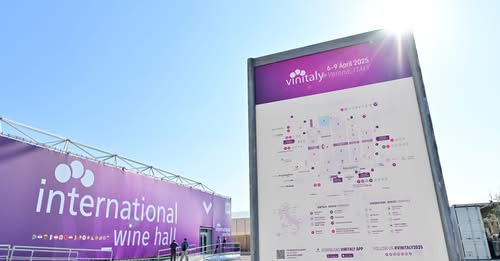
Credits: Vinitaly 2025
The 57th edition of Vinitaly ended a few days ago and, as every year, the Verona trade fair was much more than just a trade fair: it was a true barometer of the health and developments of the Italian wine sector. With over 4,000 exhibitors and nearly 100,000 visitors, the 2025 edition confirmed its role as a global platform, but it is the trends that emerged in the pavilions that show us where the world of wine is heading. Here are the five trends that dominated the scene.
Key trends for the 2025 edition
One of the major new features of this edition was the prominence given to non-alcoholic and low-alcohol wines (NoLo). For the first time, the show dedicated a space to this rapidly expanding segment, with a special wine bar and technical conferences.
Two major events punctuated the programme: ‘Zero alcohol and market expectations’ (8 April) and ‘0.0 technology: comparative production and innovation’ (9 April), organised in collaboration with the Italian Wine Union. This theme aroused keen interest, confirming that the phenomenon of moderation in alcohol consumption, already well established in Anglo-Saxon countries, is now gaining ground in Italy.
Among the innovations presented, the SEEP ‘Just grapes’ project attracted particular attention: 0% alcohol beverages made exclusively from grapes, without additives, illustrating the new possibilities offered by dealcoholisation techniques.
Wine tourism, a new playground
Vinitaly 2025 also marked the launch of ‘Vinitaly Tourism’, a format entirely dedicated to promoting wine tourism experiences in Italian wineries. On 9 April, speed dates brought together producers and tour operators specialising in food and wine tourism.
This initiative responds to growing demand: according to Roberta Garibaldi, who presented the seventh edition of her report on food and wine tourism in Italy, there is still considerable potential for development in this sector, which attracts millions of foreign visitors every year.
The protagonists in the glass: indigenous grape varieties and new appellations
Of course, wines remained at the heart of the fair. Among the wineries, there was a strong trend towards promoting indigenous grape varieties and exploring regional wines. San Felice presented P#327, a new Brunello di Montalcino made from a single plot of Sangiovese, while Tenuta J. Hofstätter focused on a Pinot Noir wine.
In terms of appellations, Morellino di Scansano announced the arrival of the ‘Superiore’ designation, which will characterise low-yield, long-aged wines, marking a new step forward in the quality pyramid. There was no shortage of curiosities, such as the first Amarone di Valpolicella Vermouth presented by Ca’ Rugate, demonstrating that creativity in the cellars knows no bounds.
In conclusion, Vinitaly 2025 gave us the image of a sector in full swing, capable of looking to the future without fear of questioning itself. Between legislative challenges (such as American customs duties, still looming in the background), new languages and a growing focus on sustainability and experience, Italian wine is asserting itself as a living product, capable of evolving while remaining true to its most authentic soul.
Marcella Caimi
 Vineyards Magazine