Tag Archives: Vinitaly

UMBRIA TOP AT VINITALY 2026:“STYLES OF THE VINE”
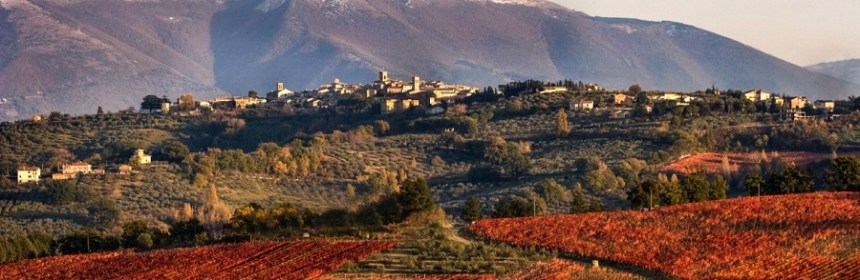
The collective of Umbrian wineries will be present at the event with 45 exhibitors and an immersive concept dedicated to highlighting the value of Umbrian culture.
The new Pavilion D will host a programme of more than 40 events, offering a full exploration of the region’s wine scene through experiences, voices and styles that define its character
.

An evocative and deeply identity driven concept: “Stili di Vite” is the core theme that conveys the graphic and symbolic essence of Umbria Top’s presence at Vinitaly 2026, the cooperative that brings together the finest Umbrian wine appellations from 12 to 15 April at the Verona Fair.

A project that goes beyond a simple trade exhibition and becomes a collective narrative of Umbrian culture, shaped by history, spirituality and contemporary life, of which wine is a powerful ambassador. The theme chosen for 2026 fits into a year of significant change and offers the opportunity to show the world how Umbrian wine is born from a system of values rooted in collaboration, identity and a sense of belonging. In this vision, style is not an aesthetic element but a cultural substance. It is the strength found in every grape cluster, in every production choice and in every bottle, becoming the distinctive mark of the Umbria of wine.

This year once again institutions, organisations and ambassadors that contribute through their work to promoting and enhancing the uniqueness of the region will be present. These include the Department for the PNRR, for agricultural and agri food policies, for mountain areas and inland areas, for parks and lakes, for tourism and sport, the Chamber of Commerce of Umbria and Promocamera Umbria, Assogal Umbria with its five Gal (Local Action Groups), and 3A Parco Tecnologico Agroalimentare dell’Umbria (the Agri Food Technology Park of Umbria).

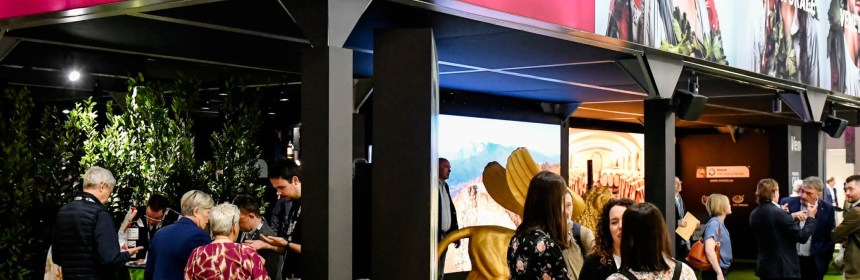
The design and graphics of the Umbria Top exhibition space and of the new D pavilion that hosts the cooperative, both created by the designer Carlo Guttadauro, express a vision of space conceived as an immersive environment. Landscape imagery, portraits of prominent regional figures, tactile details and authorial words come together to shape an atmosphere that is both energising and contemplative.
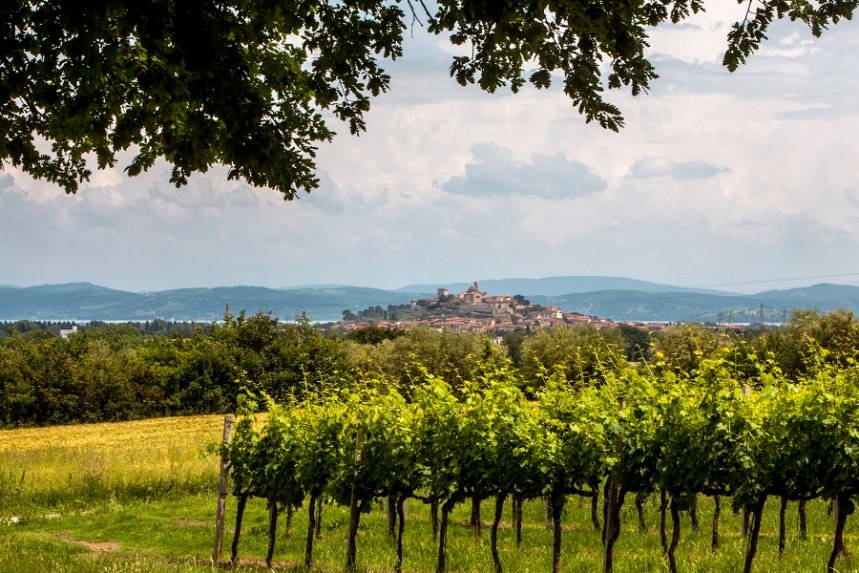
The concept finds a powerful visual expression inside the pavilion, where the graphic “leporello” guides visitors along the entire perimeter of the exhibition space. The narrative unfolds through the fusion of different visual languages. Classical elements, rooted in painting and inspired by the artistic heritage of Umbria, intertwine with contemporary signs, creating a harmonious dialogue between past and present.

“For Umbria” states Simona Meloni, Regional Councillor for Agricultural and Agri food Policies “this is the edition of courageous choices and we have truly tried to go the extra mile, even in relation to the debates that arose around the location of the stand, ultimately deciding to participate independently. We have focused on the identity of our region, with our productions, our excellences, all our territories and with renewed leadership roles, while also remembering the eighth centenary of the death of Saint Francis to reaffirm Umbria as a land of peace and spirituality. We embraced the theme Stili di Vite to acknowledge the work of the people and all those who have elevated Umbrian wine. For this reason, on Monday 13th April we will honour extraordinary figures of the Umbria of wine, paying tribute to pioneers such as Arnaldo Caprai, Maria Grazia Lungarotti, Leonardo Zanchi and Luigi Barberani, who have recently passed away. Wine, like the agricultural sector as a whole, is going through a very difficult and complex moment. It was beginning to recover after Covid but now recent events that are disrupting geopolitics, such as the cost of raw materials and diesel, are putting severe strain on a sector already weakened by climate events. Yet we do not want to give up. We want to strongly demonstrate the presence and commitment of our institutions. We are also preparing new tenders for the OCM wine programme, for which we will provide some details shortly before Vinitaly, because we want to stand beside those who continue to invest in the world of wine, those who continue to build enterprises and those who remain committed to viticulture.”

“This is our seventeenth Vinitaly as Umbria Top and each time this event gathers energies and projects that are able to support the sector in its collective promotion” comments Massimo Sepiacci, President of Umbria Top Wines. “Moving from the historic Pavilion 2 to Pavilion D, where we will occupy as much as one thousand seven hundred square metres, is a new challenge in a period that is not easy for wine anywhere in the world. Nevertheless” continues Sepiacci “we believe that all the conditions are in place for an edition of outstanding quality for our region”.

“Stili di Vite” states Gioia Bacoccoli, coordinator of Umbria Top “takes shape as a layered narrative capable of offering multiple levels of interpretation. The vine represents first and foremost daily work, agricultural expertise and the continuity of the winemaking tradition. At the same time, the theme evokes the Umbrian way of life, characterised by balance, care, restraint and authenticity, values that become a model to be shared and promoted. Alongside this dimension lies a human and narrative one. The ‘lives’ are also those of the producers, the entrepreneurs and the figures who have contributed to building the prestige of Umbrian wine, as well as of the Umbrians who over time have left their mark on the world, from spirituality to art, from agriculture to culture.”

This narrative includes symbolic figures that strengthen the connection between territory, culture and vision. Oenological tradition finds a significant reference point in Zeffirino Faina, a key figure in the qualitative renewal of Umbrian wine, who played a decisive role in enhancing the reputation of Orvieto and of the entire region. Alongside him, the artistic dimension is embodied by Pietro Vannucci, known as Perugino, whose harmonious and luminous painting becomes a visual metaphor for the balance that also characterises the Umbrian landscape and its culture.

The project is further enriched by a strong symbolic dimension that evokes the deep spirituality of the region. The rose of Saint Rita becomes a symbol of hope and resilience, expressing how beauty can emerge from hardship, while the lily of Saint Clare conveys purity, essentiality and trust, values that also resonate with the production philosophy of Umbrian wineries. Alongside these symbols stands the figure of Saint Benedict of Norcia, with his vision of harmony between work and spirituality, and above all that of Saint Francis of Assisi, whose eight hundredth anniversary of death is being commemorated. His message of unity between humanity and nature, expressed in the Canticle of the Creatures, becomes the interpretative key of the entire project, restoring to wine its most authentic value: that of being an expression of nature and of a respectful relationship with it.

The presence of the 45 companies and the rich programme of events reinforce this collective vision, in which wine becomes a shared language and a means of connection with professionals, buyers and an international audience.

Co exhibitors in the Umbria area at the 2026 edition are: Agricola Mevante, Azienda Agricola Meazzi, Benedetti and Grigi, Blasi Cantina, Bocale, Cantina Baldassarri, Cantina Custodi, Cantina Semonte, Cantina Vetunna, Cantine Battisti, Cantine Etiche with Ruffo della Scaletta, Tenuta dei Mori, Santoiolo e Collespino Tenimenti, Castello di Corbara, Chiorri, Colle Uncinano, Consorzio di Tutela Vini Montefalco, Consorzio di Tutela Vini Torgiano, Consorzio di Tutela Vini Trasimeno, Di Filippo, Dionigi, Duca della Corgna Cantina del Trasimeno, Fattoria Le Poggette, Feudi Spada, Fongoli, Guerrini, La Madeleine, La Veneranda, Le Cimate, Moretti Omero, Morettini, Perticaia, Pucciarella, Rocca dei Fabbri, Roccafiore, Scacciadiavoli, Tenuta Bellafonte, Tenuta Casale Milli, Tenuta Il Botto, Tenuta Casale Milli, Terre Margaritelli, Terra Sapori Umbri, Todini, Tudernum and Valdangius. Also taking part are Assoprol, Movimento Turismo Vino Umbria and the Coordinamento Strade del Vino e dell’Olio dell’Umbria.

Throughout the duration of the event, the programme includes tastings, meetings and opportunities for discussion with professionals, buyers and wine enthusiasts, organised with the support of the Region of Umbria, the Department for Agricultural and Agri-food Policies, Tourism and the PNRR, the Chamber of Commerce of Umbria and Promocamera Umbria, Assogal Umbria with its five Gal (Local Action Groups), and 3A Parco Tecnologico Agroalimentare dell’Umbria (the Agri Food Technology Park of Umbria). Numerous tastings and in depth sessions will take place, creating a schedule of events designed to highlight the productions, stories, projects and people of Umbrian wine.

The new pavilion will also offer a lounge area reserved for content creators and influencers visiting the Fair. In Umbria they will find a kind of “social press room”, coordinated by wine communicator Luca dalla Regina.

The stand will be completed by two functional areas: the Tasting Area, dedicated to tastings and technical sessions, and the Events Area, intended for institutional appointments. A continuous programme of both wine and food experiences will accompany visitors and professionals throughout all four days of the fair.
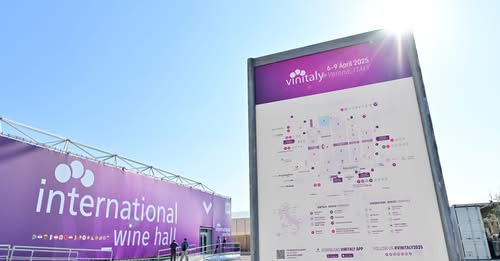
Sustainability, experiences and new languages. This is what Vinitaly 2025 left us with.

Credits: Vinitaly 2025

The 57th edition of Vinitaly ended a few days ago and, as every year, the Verona trade fair was much more than just a trade fair: it was a true barometer of the health and developments of the Italian wine sector. With over 4,000 exhibitors and nearly 100,000 visitors, the 2025 edition confirmed its role as a global platform, but it is the trends that emerged in the pavilions that show us where the world of wine is heading. Here are the five trends that dominated the scene.

Key trends for the 2025 edition

One of the major new features of this edition was the prominence given to non-alcoholic and low-alcohol wines (NoLo). For the first time, the show dedicated a space to this rapidly expanding segment, with a special wine bar and technical conferences.

Two major events punctuated the programme: ‘Zero alcohol and market expectations’ (8 April) and ‘0.0 technology: comparative production and innovation’ (9 April), organised in collaboration with the Italian Wine Union. This theme aroused keen interest, confirming that the phenomenon of moderation in alcohol consumption, already well established in Anglo-Saxon countries, is now gaining ground in Italy.

Among the innovations presented, the SEEP ‘Just grapes’ project attracted particular attention: 0% alcohol beverages made exclusively from grapes, without additives, illustrating the new possibilities offered by dealcoholisation techniques.

Wine tourism, a new playground

Vinitaly 2025 also marked the launch of ‘Vinitaly Tourism’, a format entirely dedicated to promoting wine tourism experiences in Italian wineries. On 9 April, speed dates brought together producers and tour operators specialising in food and wine tourism.

This initiative responds to growing demand: according to Roberta Garibaldi, who presented the seventh edition of her report on food and wine tourism in Italy, there is still considerable potential for development in this sector, which attracts millions of foreign visitors every year.

The protagonists in the glass: indigenous grape varieties and new appellations

Of course, wines remained at the heart of the fair. Among the wineries, there was a strong trend towards promoting indigenous grape varieties and exploring regional wines. San Felice presented P#327, a new Brunello di Montalcino made from a single plot of Sangiovese, while Tenuta J. Hofstätter focused on a Pinot Noir wine.

In terms of appellations, Morellino di Scansano announced the arrival of the ‘Superiore’ designation, which will characterise low-yield, long-aged wines, marking a new step forward in the quality pyramid. There was no shortage of curiosities, such as the first Amarone di Valpolicella Vermouth presented by Ca’ Rugate, demonstrating that creativity in the cellars knows no bounds.

In conclusion, Vinitaly 2025 gave us the image of a sector in full swing, capable of looking to the future without fear of questioning itself. Between legislative challenges (such as American customs duties, still looming in the background), new languages and a growing focus on sustainability and experience, Italian wine is asserting itself as a living product, capable of evolving while remaining true to its most authentic soul.

Marcella Caimi

Wine & Vinitaly: without wine Italy would lose 1.1% of gdp and annual revenue for the country of 45.2 billion euros

Taking wine out of the equation in Italy would be equivalent, in terms of GDP, to cancelling almost all Italian sport, including football. This claim was made by Veronafiere which, together with the Uiv-Vinitaly Observatory, presented the results of the project today on the eve of the 1st National Made in Italy Day at the start of the wine event: If you take away wine from Italy A plunge into a half empty glass.”

The project, conceived in the light of frequent attacks targeting the “national drink”, includes an economic impact analysis commissioned from Prometeia and a focus by the Uiv-Vinitaly Observatory on three of the many symbolic territories with wine-making drive: Barolo, Montalcino and Etna. The results of the impact analysis confirm and quantify the economic contribution assured by the sector: should the wine supply chain “disappear”, 303,000 people would have to find another job and the country would lose an asset capable of generating (from direct, indirect and allied impact) annual production worth 45.2 billion euros and added value of 17.4 billion euros. A shock for Italy & Co. equal to 1.1% of GDP (sport, according to estimates by Istituto Credito Sportivo, is worth 1.3%). In this day after context, we would lose an economic multiplier capable of generating a contribution of 2.4 euros of production (and 0.9 of added value) for every 1 euro of expenditure set in motion by the wine industry. Lastly, every 62,000 euros of value generated by the supply chain ensure one job.

Without wine, as can be seen from Prometeia’s analysis, the balance of trade of the agro-food sector would drop by 58% (from +12.3 to +5.1 billion euros in 2023), but even if the perimeter is widened beyond the food sector, it is very clear that Made in Italy would lose a vital factor for success. Last year, wine took second place in the positive balance of trade generated by Italian flag-bearers, behind jewellery/goldsmiths – which unlike wine benefited from a significant “price effect” – and ahead of leather goods, clothing, packaging machinery and footwear. Wine tourism makes a substantial contribution to the overall economic impact of the wine supply chain which, while making a marginal contribution to the tourist economy of large cities, is often fundamental (even over and above strictly economic aspects) for many small towns and rural communities with a wine-growing vocation. According to the findings of the Cities of Wine Association, ever year wine tourism involves around 15 million people (including travellers and excursionists) with daily budgets (124 euros) 13% higher than those of average tourists, for total expenditure of 2.6 billion euros. Starting from these data, the impact analysis highlights how losing this component would cause the loss of 15% of the overall added value generated by the wine supply chain.

These are the immediate, tangible economic impacts. In a closing section, Prometeia then analysed the global interest in Italian wine in qualitative terms through a web sentiment analysis. This highlighted from the search volumes over the last 12 months extracted from Google trends that wine – after pizza and pasta – ranks third in the world among the food products most associated with Made in Italy.

BAROLO, ETNA & MONTALCINO: THREE TERRITORIES SYMBOLISING ITALIAN WINE TRADITIONS

THE CONTRIBUTION IN LOCAL AREAS IS WORTH UP TO 10 TIMES THE VALUE OF THE BOTTLE

The slopes of a volcano, a medieval village and the most famous hills in Piedmont. Wine is the trait d’union between the Etna, Langhe and Montalcino areas – territories blessed by socio-economic development with a minimum common oenological denominator whereby every bottle of wine produced and consumed locally is capable of generating impact (direct, indirect and allied) that can be quantified as 117 euros per bottle for Montalcino, 109 euros for Barolo and 82 euros for Etna. A return of wealth into these area which, in just one year, corresponds to approximately 153, 131 and 123 million euros respectively – making them emblematic case studies of a multiplier effect attributable to a sector found all over Italy. The study carried out by the Uiv-Vinitaly Wine Observatory as part of the project “If you take wine away from Italy. A plunge into a half empty glass” was presented at the Veronafiere Show on the eve of the National Made in Italy Day. Montalcino, Barolo and Etna stand out not only for average prices per hectare and production yields well above regional values: in the last decade they have also managed to ensure higher growth in per capita income, by generating work and employment.

Inasmuch, in the Tuscan village where one hectare of Brunello vineyard is worth almost 8 times an equal plot in other parts of Tuscany (1 million euros compared to 129 thousand), the per capita income is much higher than the regional average and has grown over the last 10 years by 37.9%, compared to a national average of 11.1%. This is also seen in the Barolo wine district (with the highest land value), where the average per capita income, applying the same values as Montalcino, has grown by 23.7%. The booster effect for Etna may be evident yet is still detectable, standing at 12.6% over the decade compared to the average in Sicily of 9.9%. It is precisely here, on the slopes of the volcano, that land values 5 times higher than the regional average have encouraged young generations to return to their grandparents’ fields, despite the difficulties of mountain wine-growing, with 2,000 hours of work per year for the bush-trained terraced hectares, for a total of 250,000 working days per year. This drive over the last 10 years has seen a 70% increase in vineyard areas (1,550 hectares, with average plots of less than one hectare for half the producers) and quadrupled bottled volumes (almost 6 million bottles in 2023).

These territories, with their pertinent protection consortia, have been able to identify in the virtuous relationship with wine – also a faithful guardian of the landscape against building and commercial speculation – an identifying vocation which finds its maximum (and most profitable) expression in wine tourism. According to the findings of the Uiv-Vinitaly Observatory, Montalcino – with just over 5,000 inhabitants and 16% of the workforce employed in the hospitality field – has around 80,000 official tourists – a huge flow met by more than 300 accommodation facilities and 3,000 bed places. The small town of Barolo – around 700 inhabitants – welcomes 20% of the 90,000 tourists who arrive in the area delimited by the Barolo DOCG regulations (11 towns), and has posted growth of 60% compared to pre-Covid values. In Etna, over and above the already magnetic charm of the volcano, wine has added a touch of masterly craftsmanship, helping to profile a more highly qualified and refined tourism, especially from abroad – so much so that today around 60% of the 150 companies in the wine supply chain also organise guided tours and tastings.

COMMENTS

Lollobrigida: “Italy without wine would be a poorer country.” Bricolo: “Wine helps create value even outside its own sector. It is a duty of Vinitaly to highlight these concepts.” Danese: “Wine is a component of the country’s identity. Vinitaly aims to be the global testimonial for Italian wine-making.”

The Minister of Agriculture and Food Sovereignty, Francesco Lollobrigida, added: “Wine is one of Italy’s most significant strategic products. This is also highlighted by the data in the Uiv-Vinitaly and Prometeia Observatory Reports which emphasise how the wine sector is such an important driving force for Made in Italy around the world. Events such as the OIV International Wine Conference, hosted this year in Franciacorta and Verona, not to mention Vinitaly, are useful opportunities for underlining how Italy is once again the beating heart of the entire European and global wine sector. Without wine, Italy would be a poorer nation, not only in cultural and environmental terms, but even on an economic level, since the wine sector is a strategic asset for employment and Italian exports. Wine is a valuable asset that must be protected in terms of its integrity and quality. Our task, alongside entrepreneurs, is to make it increasingly better and attractive. The Meloni Government immediately understood the importance of this sector and associated supply chains. This why it stands at the centre of its agenda, to promote it and make it increasingly competitive and recognizable around the world. This the right way ahead and for this reason we will continue in this direction.”

Federico Bricolo, President of VeronaFiere, said: “Thinking about an Italy without wine was not a simple undertaking, not the least numbers alone are not enough to demonstrate the damage of a hypothetical loss of a part of Italy’s DNA. Yet we were determined to turn on the spotlights, not the least on the occasion of the National Made in Italy Day, because wine is a socio-economic heritage that must be defended and protected. This is demonstrated by the focus on flagship denominations – Barolo, Etna and Montalcino – which like many others confirm the extent to which a wine-driven economy is capable of generating value even outside its immediate sector. By way of example, wine leads the way for all other agro-food products: as highlighted by the research, every percentage point of growth achieved by wine on a new market corresponds, two years later, to a similar growth for other food products. Vinitaly acknowledged its duty to reiterate these concepts on behalf of a supply chain that has placed its trust in its reference fair right from the outset.”

Maurizio Danese, Managing Director of Veronafiere, said: “The impact study we presented today clearly demonstrates that wine is a fundamental resource for the Country System: calculating in terms of subtraction, without wine Italy would not lose ‘only’ 1.1% of its GDP. Since the “value” of wine is much greater than its economic contribution: wine is part of Italy’s identity and is perceived as such abroad. An intangible yet equally qualifying asset of the Italian lifestyle and its values to which Vinitaly seeks to promote by being a sounding board. Vinitaly helps drive for the business of companies around the world yet also seeks to be a global testimonial of wine, its rural territories and culture, as symbolic elements of Made in Italy”.

Marcella Caimi

VINITALY 2015: MORE INTERNATIONAL BUYERS THAN EVER

150,000 visitors. More than 2,600 journalists from 46 countries. Revival on the domestic market with Horeca and retail operators.

Vinitaly2015_FotoEnnevi_255A7192_20150322The whole world at Vinitaly, with professionals from 140 countries – 20 up compared to 2014. “The result achieves the goal that we h:ad set ourselves. Thanks to an increase of 34% in investments dedicated to incoming promotions and cooperation with the Ministry of Economic Development, the Italian Trade Agency-ICE and the Ministry for Agricultural, Food and Forestry Policies, we further boosted the already high involvement of foreign buyers,” said Ettore Riello, President of Veronafiere.

Total visitors came to about 150,000, but compared to the past there were more from the Far East, especially Thailand, Vietnam, Singapore and Malaysia. Mexico and Africa also grew, with interesting new entries such as Cameroon and Mozambique. Even North Africa performed well, with a recovery by of Egypt, Tunisia and Morocco both for wine and olive oil at Sol&Agrifood.

“The huge US and Canadian markets alone account for 20% of international visitors totalling 55,000 people. German-speaking countries – Germany, Switzerland, Austria – confirmed their status as the most important with 25% of overall attendance; the United Kingdom took third place with 10%, followed in numerical terms by buyers from Scandinavian countries and Benelux,” said Giovanni Mantovani, CEO & Director General. We have seen considerable satisfaction among exhibitors as regards Vinitaly’s capacity year and year to improve the number of foreign buyers and the quality of visitors, maintaining a high number of contacts, so much so that several leading private-sector companies have already signed three-year renewals for coming editions.”

This is also thanks to new visitor profiling system adopted this year, with further refinement of visitor target selection and registration of all persons entering the show: this will create a database of extraordinary value for future marketing initiatives and international development.

The top ten countries saw impressive growth by France, ahead of Japan, while China, Hong Kong and Taiwan took eighth place. Russia came in ninth, the only country going against trends – the outcome of the current difficult geopolitical situation. The list closes with Brazil in tenth place.
Attendance from other European Union countries also improved, in particular from Poland and Romania.

This edition of Vinitaly also saw the return of a degree of optimism on the domestic market, with operators arriving from all over Italy.
The event was attended by more than 2,600 journalists from 46 countries.

Massimo Paccagnella


Photo Credits: Vinitaly 2015 – Foto Ennevi

Vinitaly 2015, a model for wine promotion between business and product culture #business #vinitaly #wine #italy

vinitaly
 «Today we can present a fundamental appointment for the Italian system since Vinitaly represents the entirety of Italy’s wine experience all over the world. Verona will provide an occasion to take stock of what has been done by the Government to simplify bureaucracy and promote the internationalisation of companies, as well as to launch new objectives going beyond Expo 2015, including the consolidated law on wine, with a focus on reorganization of the sector».
The press conference presenting the 49th Vinitaly (22-25 March 2015) held yesterday in Rome at the Auditorium Via Veneto so heard Agriculture Minister Maurizio Martina re-launch the Government’s commitment to support Italian wine and the validity of the collaboration with Veronafiere to implement economic development policies and promote Made in Italy on international markets.
«We are aware of the role acknowledged to us by companies and institutions», – said Ettore Riello, President of Veronafiere, – «as a platform of services for business internationalisation. It is with this commitment that we are working to achieve the goal launched last year by Prime Minister Matteo Renzi during his visit to Vinitaly to increase wine exports by 50% by 2020».
«In keeping with the b2b identity of the exhibition,» explained Giovanni Mantovani, CEO & Director General of Veronafiere, «Vinitaly 2015 will bring to fruition the intense incoming activities we have created and enhanced with the important support of the Ministry for Economic Development and the Italian Trade Agency–ICE – as well as the Ministry of Agriculture. Joining forces in this way has enabled us to involve buyers and delegations of selected operators from around the world, with an increase of 34% in the financial investment compared to last year»
2014 was a difficult year for various international situations but the sentiment of companies is positive – as emerges from a Vinitaly survey involving 30 of Italy’s most important wine realities. This is a “scientifically unrepresentative” but undoubtedly significant panel in terms of business dynamism and overall turnover coming to approximately 2 billion euros. It appears that 2014 saw growth in revenue by Italian wine cellars of 5% compared to 2013 and, importantly, 55% expresses confidence for 2015; 35% in these first two months of the year has already achieved positive feedback and 5% envisage a very positive year. «We have learnt that it is difficult to make forecasts in times such as these and that numbers change quickly, especially in the light of sudden and unpredictable changes in international geo-political frameworks that can have direct effects on the sector, yet there is no doubt,» as Mantovani concluded, that the Italian wine sector is highlighting all its liveliness and capacity for growth».
vinitaly2
The 49th Vinitaly has been specifically designed to help producers and operators expand currently emerging opportunities and also create new ones. B2b meetings have been organised between buyers, guest delegations and exhibitors within the scope of the International Buyers Lounge. A major convention – requested by tutelage consortia, wine-makers and other realities in the sector – will analyse ITTP talks (Transatlantic Trade and Investment Partnership with the United States). This will be joined by focus meetings discussing Hong Kong, China, USA, Russia, Brazil and Australia.
Confidence in the quality of initiatives at Vinitaly is confirmed by figures consolidating attendance by more than 4,000 exhibitors and display area bookings of more than 91,000 square metres – which leap to 100,000 with Sol&Agrifood and Enolitech, respectively the quality agro-food event (with the section dedicated to olive oil organised in collaboration with Unaprol) and the technical show for wine and olive oil production systems scheduled at the same time.
Major events during Vinitaly include OperaWine scheduled on 21 March in collaboration with the authoritative American magazine Wine Spectator and, 16-20 March in Verona, the first certification course for specialists in Italian wine. This is an innovative initiative set in motion by VIA-Vinitaly International Academy (the Vinitaly International educational project with the scientific direction of Ian D’Agata), which, after a final exam, will issue two types of certificate: Italian Wine Ambassador (IWA) and Italian Wine Expert (IWE). Fifty highly professional candidates from the sector (managers of several major international hotel chains, journalists, Masters of Wine) will take part from China, United States, Australia, Austria, Brazil, Canada, Korea, France, Germany, Hong Kong, Netherlands, Russia, Singapore, United Kingdom and Ukraine. VIA is also organising three Master Classes+ during Vinitaly, not only involving Italian wines. Collaboration with Ismea includes a convention on craft wines, another great wealth in Italian wine-making.
Vinitaly will also host the official presentation of Vino – A taste of Italy – the Wine Pavilion set up inside the Italy Pavilion at the Universal Exposition in Milan, organized by Veronafiere-Vinitaly on the invitation of the Ministry of Agriculture, Padiglione Italia and Expo 2015 SpA. «I am indeed extremely grateful for the work carried out by Veronafiere.» – said Minister Martina at the end of the Press Conference, – «as well as its efforts as the country prepares for Expo 2015».
Antonio Gala


VINITALY 2013, A GREAT SUCCES WITH +6% OF VISITORS

Vinitaly closed the doors with attendance of 148,000 visitors as +6% (53,000 international). Vinitaly 2013 strengthened its position as the leading international wine business exhibition. Top quality operators during the four-day event in Verona were able to contact more than 4,200 exhibitors from over 20 countries.

vinitaly 2 038The upward trend was evident right from the first day – and final facts and figures clearly confirm this impression.
“We achieved attendance of 148 thousand people, including 53 thousand international from XX countries: this is an important result for one of the major ‘Made in Italy’ sectors – one that still drives the country’s balance of trade as well as providing employment and income in local areas as well as holding high the image of Italy world-wide. A 6% increase in the total visitors rewards more than 4,200 exhibitors from more than 20 countries investing in Vinitaly, thereby clearly acknowledging the international centrality of the exhibition,” said the President of Veronafiere, Ettore Riello


“This increase of 10% in international involvement over 2012,” added 
Giovanni Mantovani, CEO & Director General of Veronafiere, “was equally accompanied by the high quality of visitors. Visitors increasingly include specialised international operators and buyers not only from traditional markets but also from emerging countries, where there is growing interest in Italian wine, such as China and Russia.”
Even more journalists attended the event: 2,643 from 47 countries compared to 2,494 from 42 nations in 2012. 

The international market


A fundamental contribution to such success was the incoming promotional activity implemented Veronafiere through Vinitaly International and its representatives in 60 countries, which made it possible to welcome trade delegations from all continents to Verona, as well as the agreement with 
ICE – the Italian Agency for International Promotion and Internationalisation of Italian Companies.
OperaWine is one of these events: while dedicated to foreign buyers, it also has a strongly focus on the US market thanks to collaboration Wine Spectator. Moreover, three focus events were dedicated to China this year alongside attendance at the show by an official delegation from the Ministry of Commerce of the People’s Republic of China.
Already a showcase for wine all over the world, with 
OperaWineExpo Vinitaly in Verona will also become the most important wine event in the calendar of scheduled events in Italy for the Milan Expo in 2015, thanks to understanding defined with Giuseppe Sala, CEO of Expo 2015.

During the event, Sace ( the organisation for the development, competitiveness and internationalisation of Italian companies ) presented the latest export report and the guide to high-potential markets 2013-2016 for the wine sector, with a focus on the Veneto. Simest and its CEO Massimo D’Aiuto, on the other hand, outlined a project for promoting Italian “Moscato” wine on foreign markets.
Vinitaly was also the location chosen by 
UnicreditColdirettiCia and Confagricoltura to sign the agreement ensuring the support for the wine sector and the presentation of “UniCredit International for Wine” – a project that provides wine-sector SMEs a dedicated series of services to support exports.

The 2014 edition is already firmly in mind (scheduled 6-9 April): it will welcome the debut of VinitalyBio, a new section of the exhibition dedicated to certified organic wines organised in partnership with FederBio.

Henry Borzi