Tag Archives: featured

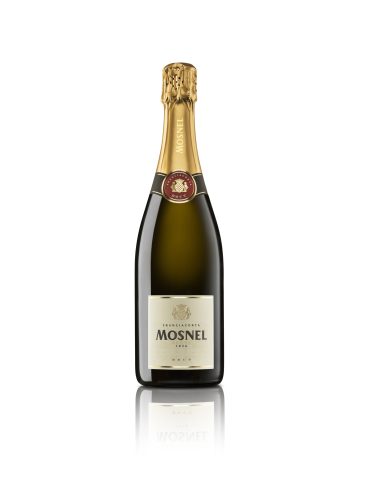
Mosnel, Franciacorta Brut

The 44th cuvée embodying stylistic consistency,vision and a deep connection with the land

In Franciacorta, there is plenty of wine to talk about and many other bottlings that, year after year, tell their own story due to their consistent style, longevity and unmistakable character. This is certainly the case for Franciacorta Brut Mosnel, the family’s first Franciacorta, dating back to 1979 and since then the messenger of a long story of elegance and a deep connection with the land.

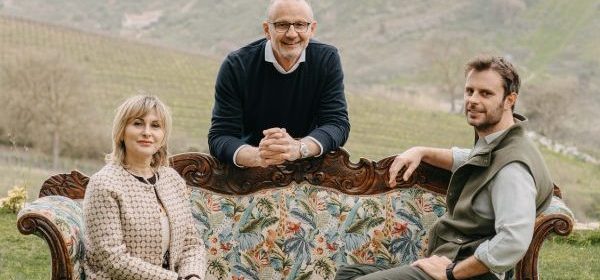
Franciacorta Brut Mosnel embodies the philosophy of the Barzanò family and a winery that produces Franciacorta through dedication, proportion and a real agricultural spirit. “We have always worked to communicate our connection with the land through the quality and enjoyment in the wine,” explains Giulio Barzanò, who leads the family-run business with his sister, Lucia.

Mosnel, a long-established winery in the appellation, was one of the first to believe in organic grape growing and preserving local identity. The winery consists of 42 hectares under vine and, although Chardonnay remains the main varietal, Pinot Bianco has always been a trademark of the house style.

This 44th edition is made from Chardonnay, Pinot Bianco (naturally), Pinot Nero and, for the first time, a touch of Erbamat, a native grape from the Brescia area that was recently reintroduced into the production regulations and that grows in a hectare of vineyards. “Including Erbamat in the cuvée of our Brut goes far beyond experimentation,” continues Giulio Barzano. “This grape is known for its standout acidity and neutral aromas. It brings a natural freshness to the base, reinforces the local identity of Franciacorta and helps to combat the effects of climate change.

Approximately 30% of the base wine ferments and ages in barriques and spends 30 months on the lees, considerably longer than the 18 months required by the production regulations. This duration enables the wine to acquire complexity and depth, while keeping its energy intact. “The outcome is a very precise and fine Franciacorta, in which the elderflower and hawthorn nuances blend with citrus, white and yellow fruit, herbs and almonds. The perlage is subtle and velvety, while the wine is balanced and refreshing to taste, in addition to having a taut and enduring finish. This is a wine that isn’t searching for the spotlight. Instead its true nature is revealed naturally, like everything with authentic roots.”

Accompanying this story in a bottle, throughout the spring and summer, Mosnel continues to extend a warm welcome to the winery with an events lineup featuring wine, the local area and social moments through vertical tastings, vineyard walks and picnics, as well as new seasonal formats aimed at offering a true immersive experience that respects the rhythm of nature. 

All experiences are booked in advance. The full programme is available at https://visit.mosnel.com

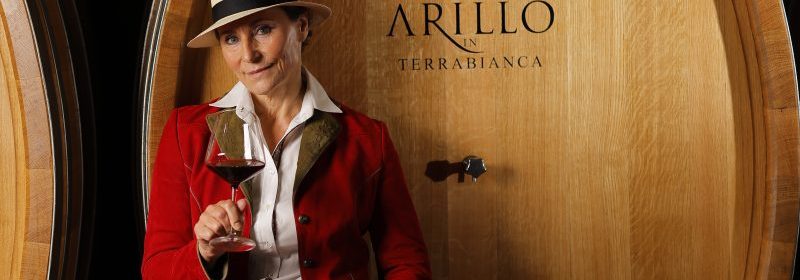
Arillo in Terrabianca “Vigna Terrabianca” Chianti Classico Gran Selezione 2020

A single hectare of Sangiovese wedged between vine-rows and patches of woods, planted in whitish soil so distinctive as to give its name to both the cru and the entire winery. “Vigna Terrabianca” is, in fact, the name of the Chianti Classico Gran Selezione produced by Arillo in Terrabianca, the at-once youthful and historic wine estate in Chianti Classico that now expanded into the Maremma and Val d’Orcia as well.

Arillo in Terrabianca was founded in 2019 by Urs and Adriana Burkard. In the growing area of Chianti Classico, more precisely in Radda in Chianti, the estate cultivates 12.5 hectares of vines whose roots sink into cool soils containing a significant proportion of clay and pebbles — galestro and alberese. “This place has always been known as ‘Terrabianca’ because of the sulphur eruptions that leave whitish spots in the vineyards,” explains Adriana Burkard. “Inspired by the profound respect we have for the authentic identity of our local sites, we decided to preserve the toponym and dedicate it to our most representative Chianti Classico.”

The Gran Selezione “Vigna Terrabianca” is the result of a strong desire to give a voice to the estate’s most historical, rocky, and steep vineyard parcel, with south-facing vines over 40 years old lying at an elevation of 378 metres.

The agronomy team devotes significant time and attention to this parcel throughout the whole growing season, while nature protects it with a beneficent climate. The year 2020 was marked by a cold and dry winter, which gave way to an ideal spring of warm, breezy days. Summer was sun-blessed, but this area experienced such wide day-night temperature differences that the vines coped easily with a torrid August. The Vigna Terrabianca grapes reached their peak ripeness in October, and the clusters were picked and brought to the cellar on October 9th.

Following a meticulous quality selection, the precious Sangiovese grapes from Vigna Terrabianca were fermented at controlled temperatures in stainless steel tanks. The newly fermented wine then matured for 20 months in 5-hl French oak tonneaux, partly new and partly once-used, before undergoing an additional year of bottle ageing prior to release.

The palate of this Gran Selezione stands out for its dense tannic suite and delicate citrus notes that enhance its precision and overall harmony. To celebrate the cru’s expressive forcefulness, the “Vigna Terrabianca” bottle bears a label that displays a sculpture by the South African artist Dylan Lewis, renowned for his sculptures exploring the relationship between human being and nature. This sculpture, a shamanic male figure among the most iconic of his oeuvre, has now joined the Arillo in Terrabianca collection, rising at the foot of the vineyard as a symbol of its intimate bond with its surrounding environment and of the need to re-establish a forgotten equilibrium.

“Beauty and art belong to nature just as much as wine culture,” stated Adriana Burkard. “They constitute a unitary, integrated system. We want our wines to convey that living in harmony with nature is not only possible, but essential for achieving true excellence.”

Only 2,313 0.75 liter bottles and 24 magnums of Chianti Classico DOCG Gran Selezione Vigna Terrabianca 2020 were produced, each individually numbered. The wine is available at select fine wine shops in Italy, Switzerland, and the United States.

South African Wines: A Journey Through the Land of Diversity and Quality

If there’s one thing wine teaches us, it’s that every bottle tells a story. And when it comes to South African wines, that story is particularly captivating. South Africa, with its unique blend of climate, geography, and winemaking tradition, is emerging as one of the most fascinating and dynamic regions in the global wine landscape. But what makes these wines so special? And why should we start paying more attention to this remarkable wine-producing country?

South Africa is not only a land of breathtaking landscapes, but also a land of contrasts, where biodiversity is truly extraordinary. Its wine regions stretch along the coast, from the Western Cape to inland areas, and the variety of soils and microclimates offers winemakers a broad range of possibilities.

The famous “Cape Doctor”—the wind blowing in from the Atlantic Ocean—is one of the key climatic elements that defines South African viticulture. On the one hand, it helps to keep temperatures cool, but on the other, it presents challenges in the vineyard. Yet, as in any great story, these challenges are met with creativity and passion, resulting in the production of some truly remarkable wines.

South Africa has a long winemaking tradition that dates back to 1659, when Jan van Riebeeck, founder of the Cape Colony, planted the first vines. Today, the country is one of the world’s largest wine producers, and it’s also a place where experimentation is part of daily life.

Among South Africa’s most emblematic grape varieties is undoubtedly Pinotage, a cross between Pinot Noir and Cinsault, created in 1925 by Professor Abraham Perold. This unique grape gives rise to full-bodied red wines marked by bold black fruit notes, along with more complex smoky and earthy undertones. Loved by some and criticized by others, Pinotage has become a symbol of South African wine—much like Chianti for Italy or Malbec for Argentina. Modern expressions are well-balanced and often offer surprising elegance and structure.

Alongside Pinotage, another variety gaining attention is Chenin Blanc. Although originally from France, this grape has found a second home in South Africa, where it expresses itself with freshness and energy, making it incredibly versatile. From dry, mineral styles to richer and rounder expressions, South African Chenin Blanc is building a strong reputation, especially due to its adaptability to different styles and terroirs. It’s a wine that can be fruity yet complex—ideal for a wide range of food pairings.

While South Africa is known for its native grapes, international varieties like Merlot and Cabernet Sauvignon still play a major role. The cooler climates along the coast and in inland regions allow for slow, steady ripening, giving wines refined tannic structure and good acidity. These South African interpretations are often marked by ripe red fruit, subtle spice, and excellent aging potential.

In recent years, South African producers have also started experimenting with international grapes like Sangiovese and Syrah. Some of the more adventurous winemakers, inspired by the Italian Supertuscans, are blending native and international varieties to create cuvées with strong character and personality.

Another aspect that sets South African wines apart is the growing commitment to sustainability. The country’s viticulture sector is investing heavily in responsible agricultural practices, such as biodynamic techniques, water resource management, and biodiversity preservation. The increased environmental awareness is also backed by certifications like Integrated Production of Wine (IPW), which guarantees environmentally friendly wine production.

South Africa’s wine areas, especially the Cape of Good Hope region, have long been central to environmental conservation projects. Beyond winemaking, the country is home to an incredible variety of flora and fauna, and more and more producers are working to protect this natural heritage.

Although South African wines are increasingly appreciated and present in international markets, wine is truly a part of everyday life at home. South African families love their wine and view it as an essential part of daily living. Winery visits and tastings are common experiences, and wine regions such as Stellenbosch, Constantia, and Paarl have become major wine tourism destinations. The hospitality in the cellars is warm and authentic, offering visitors the chance to dive into the local wine culture while tasting some of the country’s most renowned labels.

South African wines are not only an intriguing choice for those looking to explore new wine experiences, but they are also a testament to how viticulture can adapt and thrive in a complex and diverse environment. From Pinotage to Chenin Blanc, and from Bordeaux-style reds to bold blends, South Africa offers a range of wines that can please every palate—from the curious beginner to the seasoned connoisseur.

If you haven’t yet had the chance to explore the wines of this extraordinary land, now is the time. Quality is rising, passion is palpable, and every bottle is a new discovery. As a wine lover, South Africa is a chapter worth reading—and sipping—carefully.

Personally, I had the pleasure of being guided on this new oenological journey by Fabio Albani of Afriwines, the main importer of South African wines in Italy. For those looking to explore new experiences: www.vinisudafrica.it.

Marco Lucentini

Making Wine Today: An Art of Passion, Challenges, and Bureaucracy

Producing wine today is not just a matter of passion and tradition. It is an activity that requires technical expertise, managerial skills, strategic vision, and above all, great resilience to the daily challenges that go far beyond the vineyard. From vine cultivation to the bottle that reaches the table, the journey is long, arduous, and often underestimated.

The first obstacle is nature itself. Climate change is revolutionizing viticulture. Prolonged droughts, late frosts, sudden hailstorms, and heat waves make every season unpredictable. Added to this is the spread of new diseases and pests, requiring constant and costly interventions. Furthermore, vineyard work requires specialized labor, which is difficult to find and retain. Agricultural labor regulations, rightly strict, entail fixed costs and obligations that not all small producers can easily sustain.

Even when the grapes are perfect, turning them into wine is anything but simple. Beyond the technical care required in the cellar, producers must comply with a myriad of regulations: labeling, traceability, certifications, electronic records, health authorizations, environmental constraints. Every mistake can result in fines or sales blocks. And making “a good wine” is no longer enough. Modern consumers are informed, demanding, looking for authenticity but also innovation. This means that producers must balance tradition and technology without losing the identity of their territory.

Italian wine is loved worldwide, but precisely because of this, competition is fierce. The market is flooded with thousands of labels, from industry giants to small winemakers. Standing out is a real challenge, especially when focusing on quality. Margins are tightening: costs increase, but prices often do not. Large retailers impose rigid conditions, and many buyers want the best at the lowest price. The risk is that quality will no longer be rewarded and small producers will be squeezed out.

Today, a good winemaker must also be a good communicator. Managing websites, social media, newsletters, events, tastings, and collaborations with restaurateurs and influencers has become crucial. Telling the story behind the wine is essential, but it’s a continuous commitment that requires time, skills, and resources. Knowing how to narrate one’s journey, values, and land is not easy, especially for those more accustomed to working with their hands than with words. Yet, communication is precisely what makes the difference between a bottle that remains in the cellar and one that conquers the market.

Finally, the bitterest chapter: taxes. The tax burden on wine in Italy is among the highest in Europe, and it does not just involve VAT or excise duties. Producers must face costs related to income tax, social security contributions, property taxes on land, and fees for accountants and consultants. For those producing small quantities, all this risks becoming unsustainable.

Making wine today is an extraordinary profession, but also an extremely complex one. Those who do it, often with dedication and personal sacrifices, are not just seeking financial returns but striving to preserve a unique cultural and territorial heritage. Supporting these producers means recognizing the value behind every bottle—not just a product, but a story of effort, passion, and resilience.

Marco Lucentini

Isole e Olena Chianti Classico 2022

Artisanal and pioneering, elegant and anti-conformist: Isole e Olena’s Chianti Classico classically embodies all these qualities, amply confirmed by its 2022 vintage.

“Our Chianti Classico exhibits a continuously dynamic equilibrium”, comments Isole e Olena Technical Director Emanuele Reolon. “Its fulcrum always remains tradition, which we see as a privileged observation point from which to interpret the future. In addition, however, each new vintage constitutes an advance over preceding vintages in reflecting its origins in our roots, memory, and the terroir itself”.  

From its debut in 1969, Isole e Olena Chianti Classico, predominantly Sangiovese with a small amount of Canaiolo, has been the beating heart of this San Donato in Poggio-based wine estate and proud ambassador of its denomination and winegrowing heritage.

With a vision centred on the human, its close bond with nature and its innate flair for unblinkered thinking, Isole e Olena has always been ahead of its time, as well an example of a distinctive yet terroir-faithful Chianti Classico. 

That identity was on rich display in the 2022 growing year, whose stages developed with admirable rhythm. Ushering in the season was a nicely-balanced spring with well-spaced rains, cool nights, and warm, breezy days, which favoured a rapid, textbook-perfect flowering and fruit-set. Temperatures gradually rose from mid-June until mid-August, when welcome rains brought relief to the vines and set up conditions for an early harvest. Harvesters found clean, sound clusters at peak ripeness.

The must fermented in steel, then the wine matured for 12 months in large oak ovals, followed by 6 additional months in the bottle before release.

“Thanks to our history, our values, and our legacy, Isole e Olena’s journey continues today towards a new genesis, without ever compromising its style and quality, eloquent proof that it is perfectly possible to be a pioneer and innovator while at the same time serving as a guarantor of tradition”, concluded Emanuele Reolon.

Marcella Caimi

Ornellaia Announces Release of the 2022 Vintage

“La Determinazione” (“Determination”in English) is the character selected to describe the 2022 vintage.

“La Determinazione”  is the character selected to describe the 2022 vintage, which saw both the technical team and the vines excel during a year of unusual contradictions in the weather. It is a result born out of resilience in a nuanced and stylish expression from the winery.

The 2022 vintage proved to be the driest in the last four years from February to June as well as one of the hottest between May and September. Rainfall arrived later in August and September, an aspect that was important for this vintage of two extremes. The dry conditions resulted in slower growth, which led to low yield and smaller, more concentrated grapes, while the rain towards the end of the vegetative cycle restored the correct balance. The technical team carried out a strict selection in the vineyard, in addition to double sorting upon the arrival of the grapes in the cellar.

“Just the right concentration and character distinguish this vintage,” remarks Marco Balsimelli, Technical Director. “All of the positive attributes of the sun are felt alongside a convincing freshness. The conditions were interpreted best by the Petit Verdot, which features in a slightly higher percentage in this year’s blend. Linear and forthright in style, Ornellaia 2022 again demonstrates vibrancy and elegance, characteristic of the terroir we have here at Ornellaia.” 

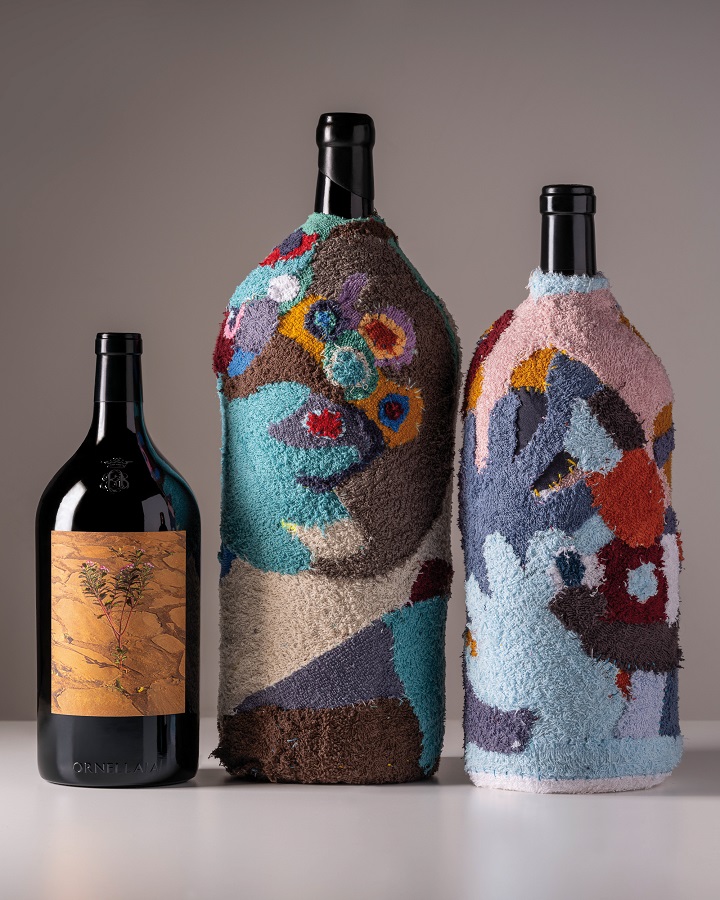
Internationally renowned Cameroonian artist Pascale Marthine Tayou was chosen to interpret the vintage character for the 17th edition of the Vendemmia d’Artista project. For the 750ml labels, his vision for Ornellaia 2022 “La Determinazione” is a design based on concentric circles formed by a series of signs of different colors. These represent the energy generated by the union of many individual elements when they form a single whole. One artistic label will be included in each case of six 750ml bottles of the vintage.

Ornellaia 2022 is set to make its debut on the market on April 1.

Marcella Caimi

Siepi 2022, thirty years of a Tuscan icon

An icon does not emerge out of the blue. Rather, it is the fruit of a unique hic et nunc: an extraordinary vineyard, a one-of-a-kind wine, and the spark of an intuition that unexpectedly takes flight. All of this is Siepi.

“Siepi is the quintessential union between our family’s winemaking traditions and the revolution unleashed by our father’s vision”, explained Filippo and Francesco Mazzei. “We have proudly made his far-seeing gift our own, and today we are delighted to celebrate the 30 vintages of a wine that is like our own brother: we have watched it grow and evolve, and we have had the honour of being at its side on the path that has led to its becoming the ambassador to the world of Tuscan winemaking”.

1992 saw the selection of Sangiovese and Merlot as the protagonists of the Siepi cuvée. The marriage of these two varieties achieves a perfect equilibrium between firm structure and stylish elegance, while ensuring that the blend speaks with an authentic Chianti voice.

“The vineyard has been in the family’s hands since 1435 and was mentioned by name in Madonna Esmeralda’s dowry. And yet it has always enjoyed independent status, like some precious jewel”, commented Filippo and Francesco. “There had to be a reason for its standing out so clearly. There was, and still is”.

Siepi is above all the concentrated expression in a bottle of a breathtakingly beautiful corner of earth. This vineyard-island, lying at elevations ranging between 220-310 metres in Castellina in Chianti, is surrounded by protecting woodlands. Its complex soils, a combination of limestone, local Alberese marl, and Pliocene clays, all lying on a thick bed of rock, make possible a capillary drainage providing the vines with a perfectly-balanced water supply. The Galestro allows the grapes to achieve incredibly nuanced aromatics and an impressive, firm structure, delivering a blend of unexpected delicacy and surprising longevity.   

“The 2022 growing season, Siepi’s 30th, started off with a mild winter and little rainfall”, explained Gionata Pulignani, Castello di Fonterutoli agronomist and winemaker. “Temperatures in the spring rose gradually, encouraging consistent canopy growth, while the hot conditions in the summer caused the skins to thicken considerably, which in turn provided what the grapes required to complete the ripening process”.  

“Siepi has taught us to look beyond the obvious, to dare, to experiment, and to launch ourselves confidently into the future”, concluded Filippo and Francesco.

Adorned with a label that commemorates its 30th anniversary, Siepi 2022 will be available in the finest wine shops and on the wine lists of top international restaurants starting from September.

Masseto, the fullest expression for the 2021 vintage

The harvest at Masseto, a name that conjures up a wine, a vineyard and an estate, finished yesterday. While the just-picked bunches rest in the concrete tanks for the first stage in their long journey to become wine, down in the Caveau bottles of the 2021 vintage are beginning to set off around the world as ambassadors of the Mediterranean magic that can be discerned in the vibrant and intoxicating aromas.

In the glass, Masseto 2021, elegant and enticing as ever, fills the mouth with a certain corpulence and endurance. 

The vineyard has interpreted 2021 with personality,” explains Marco Balsimelli, Production Director of Masseto “adding a range of emotions to a vintage that has proven to be beautiful and balanced, also due to the spring water reserves that helped the vines during the long summer months of sun and dry weather.

After all, the uniqueness of Masseto derives from the distinctive soil, in which blue Pliocene clay veins resurfaced from the sea meet the water needs in the vineyard. “Again, this year, the soil stopped the vines from enduring too much water stress and helped them to grow concentrated berries with potentially high levels of quality,” confirms Balsimelli.

Masseto 2021 is a wine that knows how to wow, ever present during tasting, dry on the finish, and the fullest expression.”

We are thankful for this rich and powerful vintage,” confirms Lamberto Frescobaldi, President of Marchesi Frescobaldi, to which Masseto belongs. “We played our part by looking after each micro-parcel individually in this vineyard. All the same, without the complicity of nature, the sun and constant sea breezes from the Tyrrhenian, humans would be unable to create such harmony.”

Once harvested and selected, the grapes are gathered in the cellar carved deep into the hillside and designed to be at one with the surrounding clay. The smooth grey surfaces create a feeling of suspension as the bunches benefit from optimal conditions and technology, beauty and silence to be turned into bottles of rare prestige.

This is the 35th edition of Masseto. From September onwards, the 2021 vintage will be distributed in Italy and all around the world.

The red grape harvest is underway at Ornellaia

The sun has just started to light up the vineyard and the harvesting teams are already busily gathering the first few bunches that will become the estate’s reds. One by one, the bunches are placed in 15-kilogram crates and, in under an hour, they will be escorted to the cellar, where they will be selected for a second time on the sorting table before passing through the optical sorter and embarking on their journey to become part of the Ornellaia legacy.

The harvest is always a wonderful and crucial time,” remarks Marco Balsimelli, Production Director at Ornellaia, “but every time of the year is important in the vineyard. 2024 has been both positive and challenging. Between March and June, frequent rainfall replenished the water reserves, while every vineyard parcel required constant care, which naturally is what we gave them.”

The summer arrived suddenly at the end of June, giving Bolgheri two months of sunshine and dry weather, which provided optimal conditions for the vines. “The arrival of the hot weather enabled us to reverse a difficult situation, laying the foundations for a fantastic vintage. In mid July and early August especially, we had 20 days of very intense heat,” explains Balsimelli. “This context of slight water stress allowed the vegetative growth to stop and saw the beginning of the actual ripening process with a concentration of sugar, aromas and polyphenols.”

Completing the perfect summer, the microclimate at Ornellaia ensured cool breezy nights for the vineyards with temperatures between 19 and 22 degrees Celsius. Lastly, on August 15, the Italian midsummer holiday, between 10 and 20 millimetres of rain brought relief to the vines. “It was timely because the rain restarted the ripening, giving the grapes just the right profile.

Lamberto Frescobaldi, President of Frescobaldi, to which Ornellaia belongs, is delighted by the end result. “The grapes were perfectly healthy and ripe upon picking. The Sauvignon Blanc grapes, which were harvested on separate occasions between 12 and 30 August, are already fermenting in the cellar, and now it’s time to continue with the other white grapes as well as our red grapes. Meticulous attention to detail and a dedication to the vineyards – more than 700 hours of manual labour per hectare every years – rewards us with the admirable equilibrium of the vines that never fail to convey the profoundly unique terroir of Ornellaia in sync with the vintage.”

Given that first parcels of Merlot began to be picked in the last few days, the harvest is expected to continue until early October, culminating in the final bunches of Cabernet Sauvignon.

I SODI DEL PARETAIO RISERVA 2021

Badia di Morrona’s silk-smooth Sangiovese

To truly experience the pleasantness conveyed by the Sangiovese grown by Badia di Morrona, an estate that languidly extends over the hills of Pisa, all one has to do is uncork a bottle of I SODI DEL PARETAIO Chianti Riserva. 

Fragrant notes of ripe berryfruit and wild herbs pour out, while a velvety tannic weave and sea-brine finish convey a light-hearted feeling, and its firm body and intense sip beautifully heighten the flavours of traditional dishes.  

The multi-layered complexity of this winery’s standard-bearer is due to its broad, comprehensive reflection of the vineyard exposures and diversity of the estate soils. 

Badia di Morrona grows its wines on 110 hectares of vineyards, more than half of which are dedicated to Tuscany’s sovereign grape variety. The vines, surrounded by woods of cypress, holm and pedunculate oaks, ascend the gently-rolling hills between the towns of Terricciola and Casciana Terme Lari.

Contributing to its uniqueness as a “geological treasure” are its soils, predominantly rock-poor clay alternating with sand, stones, friable grey rock, river cobbles, and alberese marl, as well as fossils, evidence of the ancient presence of the sea, and even slabs of travertine thrusting up to the surface.   

In 2021, the winemaking team produced I SODI Riserva in only a limited quantity due to the challenging initial period of the growing year, but the quality of the grapes turned out to be quite impressive. 

The weather in late September and early October brought good day-night temperature differentials, which allowed the Sangiovese to achieve optimal sugar and phenolic levels, and the grapes arrived in the cellar sound and healthy.  

I SODI DEL PARETAIO Chianti Riserva ferments in steel, then spends 18 months in large 44hl French oak ovals; it is bottled following a brief stay in concrete vats.  

I SODI DEL PARETAIO Chianti Riserva 2021 is being released in Italy and markets abroad.

« Older Entries Recent Entries »