Tag Archives: Chianti Classico

Ipsus 2021, rigour and poetry

Born as a visionary project, Ipsus has swiftly become a distinctive voice within the world of Chianti Classico, the emblem of a Sangiovese cru “noble by nature”. With the 2021 vintage, this Gran Selezione once again confirms its place among the most radiant and authentic expressions of the appellation.

Ipsus is an independent wine that reflects its terroir with unadulterated clarity, the expression of an exceptional place and a clear idea: to let the pure character of Sangiovese speak for itself.

wine, still life, interior photography

Ipsus requires, in the truest sense of the word, an open dialogue with the land,” says Giovanni Mazzei,custodian of Ipsus. “It is guided not by time but by place”.

At Podere Il Caggio, in Castellina in Chianti, Sangiovese vines take root in clay-schist and calcareous marl soils rich in Alberese stone, facing south-east to south-west at elevations between 310 and 361 metres. This unique habitat lends Ipsus its refined tannic structure, mineral depth and unmistakable sense of place, qualities that, since the inaugural 2015 vintage, have captivated collectors and wine lovers worldwide.

At Il Caggio, Sangiovese is vinified from a small 6.5-hectare vineyard, embraced by a mosaic of woods, olive trees and dry-stone walls.

Ipsus is a wine of precision and instinct,” continues Giovanni. “Since the very first harvest, I have been fascinated by the natural balance this terroir imparts to its fruit. That is why we practise a respectful, biodiversity-driven viticulture – green manuring, conservative methods – always with the sole purpose of nurturing the vineyard’s own voice.”

The 2021 vintage was characterised by a harsh, dry winter followed by a cool spring with moderate rainfall that nourished the soil without excess. The hot, windy summer brought marked diurnal temperature shifts, enriching the grapes with aromatic complexity and freshness. Ideal conditions in September ensured a brief yet flawless harvest, carried out between the 28th and 29th. “The grapes arrived at the winery in perfect condition, with ripe tannins and thick, deeply coloured skins,” explains Gionata Pulignani, head of the technical team. “We immediately knew that this would be an exceptional harvest, destined to produce an intense, deep and vibrant Ipsus.”

Ipsus bears the symbol of a roe deer, strong and elegant, deliberately preserving a wild spirit and a distinctly contemporary vision. The 2021 edition was limited to 6,450 bottles, 400 magnums and 80 jeroboams.

***

Ipsus is a Chianti Classico Gran Selezione created in 2015 by the Mazzei family, Tuscan winemakers for over 600 years, at their Podere Il Caggio estate. Giovanni Mazzei is the face and driving force behind the project. Ipsus is free, precious, and vital, like its symbol: a young roe deer depicted on the silk paper in which each bottle is wrapped. A 100% Sangiovese of remarkable expressiveness, it stands proud in its performance and selective in its distribution.
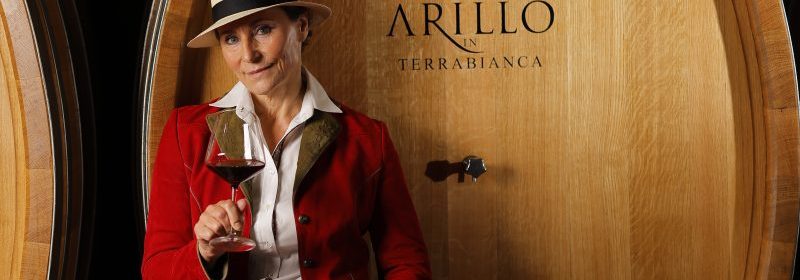
Arillo in Terrabianca “Vigna Terrabianca” Chianti Classico Gran Selezione 2020

A single hectare of Sangiovese wedged between vine-rows and patches of woods, planted in whitish soil so distinctive as to give its name to both the cru and the entire winery. “Vigna Terrabianca” is, in fact, the name of the Chianti Classico Gran Selezione produced by Arillo in Terrabianca, the at-once youthful and historic wine estate in Chianti Classico that now expanded into the Maremma and Val d’Orcia as well.

Arillo in Terrabianca was founded in 2019 by Urs and Adriana Burkard. In the growing area of Chianti Classico, more precisely in Radda in Chianti, the estate cultivates 12.5 hectares of vines whose roots sink into cool soils containing a significant proportion of clay and pebbles — galestro and alberese. “This place has always been known as ‘Terrabianca’ because of the sulphur eruptions that leave whitish spots in the vineyards,” explains Adriana Burkard. “Inspired by the profound respect we have for the authentic identity of our local sites, we decided to preserve the toponym and dedicate it to our most representative Chianti Classico.”

The Gran Selezione “Vigna Terrabianca” is the result of a strong desire to give a voice to the estate’s most historical, rocky, and steep vineyard parcel, with south-facing vines over 40 years old lying at an elevation of 378 metres.

The agronomy team devotes significant time and attention to this parcel throughout the whole growing season, while nature protects it with a beneficent climate. The year 2020 was marked by a cold and dry winter, which gave way to an ideal spring of warm, breezy days. Summer was sun-blessed, but this area experienced such wide day-night temperature differences that the vines coped easily with a torrid August. The Vigna Terrabianca grapes reached their peak ripeness in October, and the clusters were picked and brought to the cellar on October 9th.

Following a meticulous quality selection, the precious Sangiovese grapes from Vigna Terrabianca were fermented at controlled temperatures in stainless steel tanks. The newly fermented wine then matured for 20 months in 5-hl French oak tonneaux, partly new and partly once-used, before undergoing an additional year of bottle ageing prior to release.

The palate of this Gran Selezione stands out for its dense tannic suite and delicate citrus notes that enhance its precision and overall harmony. To celebrate the cru’s expressive forcefulness, the “Vigna Terrabianca” bottle bears a label that displays a sculpture by the South African artist Dylan Lewis, renowned for his sculptures exploring the relationship between human being and nature. This sculpture, a shamanic male figure among the most iconic of his oeuvre, has now joined the Arillo in Terrabianca collection, rising at the foot of the vineyard as a symbol of its intimate bond with its surrounding environment and of the need to re-establish a forgotten equilibrium.

“Beauty and art belong to nature just as much as wine culture,” stated Adriana Burkard. “They constitute a unitary, integrated system. We want our wines to convey that living in harmony with nature is not only possible, but essential for achieving true excellence.”

Only 2,313 0.75 liter bottles and 24 magnums of Chianti Classico DOCG Gran Selezione Vigna Terrabianca 2020 were produced, each individually numbered. The wine is available at select fine wine shops in Italy, Switzerland, and the United States.

Chianti Classico 2020 and Riserva 2019

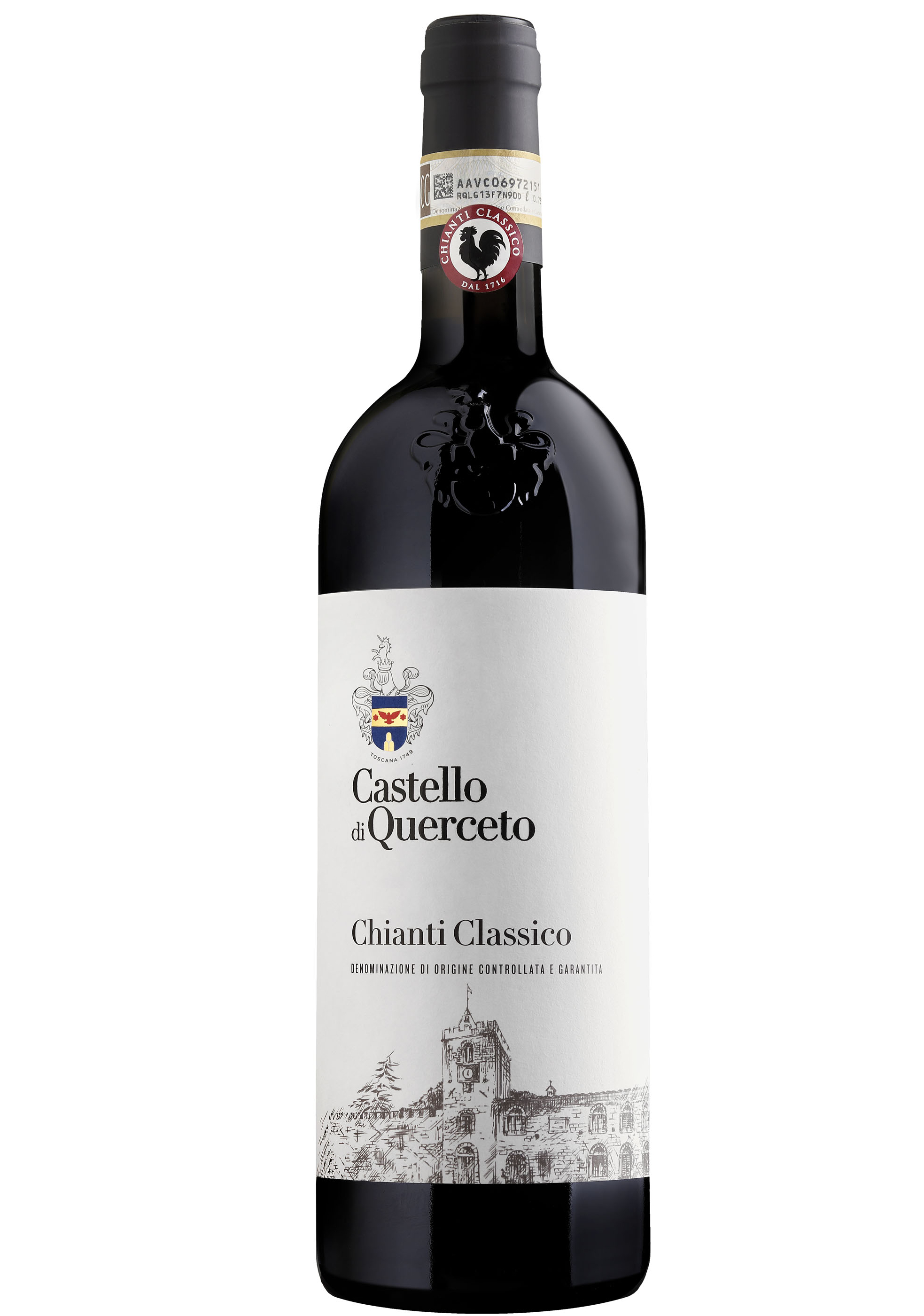
Eloquent expressions of a distinctive terroir: Castello di Querceto

At Castello di Querceto, the growing conditions of 2020 and 2019 allowed us, more than in recent seasons, to fashion wines that were eloquently expressive of the terroir of this historic wine estate and in particular wines that displayed the vibrant crispness and depth classic to this distinctive spot lying at elevations of over 400 metres on the highest hills of Greve in Chianti.

Chianti Classico 2020 is fruit of a growing season that was hot but with below-average night-time temperatures. Plentiful rainfall in May and June fortunately topped up groundwater reserves to enable the vines to cope with summer conditions, but it was the day-night temperature ranges that brought the clusters to optimal ripeness and aromatic development. The crop came in slightly less than the norm, but the resultant wines, carefully vinified for 8 months in steel and concrete, have emerged with exceptional structure and acidity.

As for Chianti Classico Riserva, the 2019 growing year was more gradual and balanced. A fairly dry June delayed veraison some two weeks, beyond mid-August, in fact, but the rains, limited though they were, kept conditions to the historical norm, so that cluster development was thoroughly satisfactory. Gorgeous weather in September and October allowed us to push back the start of harvest, and the high quality of the Sangiovese reflected that gift. The wine fermented and macerated in steel some two weeks, followed by 12 months’ maturation in large oak ovals. The overall result is an elegant, intense expression of Castello di Querceto that presages many sensory surprises over the years to come.     

“Thanks to the zonation studies carried out since the 1970s,” stated Castello di Querceto producer Alessandro François, “we now have an in-depth understanding of the characteristics and expressive properties of our vineyards. They lie at elevations higher than the Chianti average, and the soils are rich in polychrome schists, manganese and iron, and earth-alkaline metals. All these factors play an important role in ensuring lively acidities and supple tannins in our wines, qualities emblematic of Castello di Querceto and evident in both these expressions of Chianti Classico and Chianti Classico Riserva.”

To these gifts of nature must be added the François family’s intimate familiarity with its estate Sangiovese, after a full 125 years of experience, plus the near-obsessive attention by the Castello di Querceto team in vineyard and winemaking cellar, both guarantees of authentic, classic Chianti Classico wines, each an impressive marriage of aristocratic austerity and excellent structure.

“We strive, constantly and ever more sensitively, to infuse into our wines the entire wealth of our experience and passion, since each of our wines is an ambassador to the world of our winemaking philosophy and of our terroir here at Castello di Querceto,” concludes Simone François, who supports his father Alessandro in directing the winery.

*

Castello di Querceto, property of the François family and one of the founders of the Consorzio del Vino Chianti Classico in 1924, lies in a small valley in the high hills in Greve in Chianti. The estate, with its agriturism, Castello, and luxuriant park, includes 65 hectares of vineyards. The denomination wine, Chianti Classico, the long-standing estate standard-bearer, is produced in a number of interpretations: standard and Riserva, and two Gran Selezione crus, Il Picchio and La Corte. The portfolio contains a number of IGT crus, the fruit of zonation studies carried out by Alessandro François.

DIEVOLE OF #TUSCANY

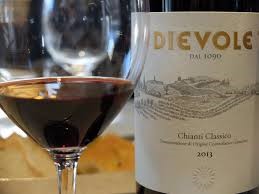
dasThe root of the name “Dievole” dates back from centuries in 1090, traces are mentioned in earliest documents and mean in medieval Latin “Dio vuole” (God willing)…

Tuscany is of course from generations to generation a welcoming and valuable region, its beauty never changed making it a little paradise on earth. On the agritourism level “Dievole” is a place with a deep identity, a domain producing oil and wine but where you can also spent your holidays at the residence. The Chef of the restaurant will fill you with the delights of the region. Dievole is a domain of about 600 hectares in the Chianti Classico territory located at about 12 km of Siena. Where time moves at two speeds: one slow, perceived in silence and read in the trees surrounding the hamlet and one that’s vibrant and active. In fact, behind the clear geometry of the vineyards and the imperturbable calm that surrounds olive trees: it’s a constant dialogue between man and nature. sereefd

Respect is the philosophy of the house as well for history past, but also for the more recent one, for the territory – the land, the vines, the olive trees – and especially for all the men and women who work at Dievole with enthusiasm and dedication. The team at Dievole decided to focus on the Sangiovese, the King grape of Tuscany, which represent 80% of the planted grapes at the Dievole vineyards and following the winemaker of the estate Alberto Antonini: “Our goal, is to improve and then maintain the balance of the plant with its environment and allow the vine to better interpret the identity of the terroir”. It is in the historical cellars of the domain that the company organises evocative tastings: at the discoveries of Chianti Classico, Chianti Classico Riserva, Vino Santo… In a landscape like Tuscany that is dotted with olive trees, extra virgin olive oil is also part of the company’s values, and Dievole has charged oleologist Marco Scanu to develop its production. The perfection to a 360° view at Dievole is: hills, farmhouses, cypress trees and vineyards, in the best Tuscan tradition translated to beauty,craftsmanship and tradition. A whole world to be discovered…

dfdfseThe Villa was a former home of the Sienese nobility and overlooks the valley for breathtaking views. Dievole is welcoming you for relax and romantic journey in a peaceful nest.  The complex is literally surrounded by vineyards, olive trees and is integrated into the wine making process. So that the Villa, the Cantina and the Dievole offices become a small village with their ceramic tiles, stone windowsills and old style facade, perfectly situated in the Tuscan landscape. The residence includes the historic Villa, a few farmhouses, the stable (now the breakfast room), a lounge bar and an Enoteca with its cellar door. In total, the Villa offers 27 suites and double rooms spread over five sites, divided between the villa and four completely restored farmhouses. Life at the Villa Dievole spent like in a dream and most of the time out in the open air: every week a barbecue evening is organised, but you can also go to the restaurant of the property. Where the Chef Monica Filipinska is inspired by the surrounding environment and therefore by harmony, nature and freshness. She prepare with passion traditional Tuscan recipes with ingredients of local producers and from the domain. If you will be thrilled by her kitchen, Monica doesn’t keep her recipes so long secret and you can follow one of her mini Tuscan cooking classes. To go straight from theory to practice and be part of this true Dievole Renaissance painting.

http://www.dievole.it/en/


Olivier Bulto

LET’S DISCOVER CHIANTI WITH POGGIO BONELLI

Poggio Bonelli wine estate is present on the market with two products: the Chianti Classico – 65,000 bottles, made from 90% Sangiovese and 10% Merlotand Colorino.

1357845760_4812_150

Anotherflagship wine of Poggio Bonelli is the Tramonto d’Oca. 33,000 botlles  are produced andwe have the following grapes varieties: 85% sangiovese and 15% merlot. The wine has a deep ruby red color, with hints of vanilla, blackberry, blackcurrant. The mouth is bold and well balanced, with soft tannins. This is a particular wine, different from the other three. It is more velvety, delicate, almost aristocratic, should better suit to the womans ‘ palates.

Poggio Bonelli, in addition to being an excellent wine cellar is also a farm, a “masseria” with beautiful rooms immersed in Tuscan countryside. Don’t forget the restaurant, where the wise Mrs. Edda cook prepares excellent tuscan dishes in combination with the wines mentioned above. 


Marco Lucentini