Category Archives: TASTED FOR YOU

Bisol, excellence from ground to glass

filosofia02The Bisol family has a wine growing tradition in the prestigious area of the Hill “Cartizze”.
The year 1542 is an important historical landmark that marks the emergence of viticulture and winemaking family Bisol: Eliseo Bisol gives life to a small and flourishing trade.
But was DesiderioJeio” to his friends, who after World War II sets the company to experiment new techniques on their own vineyards, a prerequisite to produce wines of the highest level. As recalled Antonio Bisol, current president of the company, “My father Desiderio was always trying to buy the best plots, the most expensive and steep, so difficult to work with, but whose slope and composition were ideal for the breeding of Glera, demonstrating extreme sensitivity to product quality. “

Forefront of tradition

The vineyards of the farm Bisol are spread over 20 farms nestled among the steep hills to go to Coneglianostoria05 Valdobbiadene, the best areas of the Denomination.
A highly fragmented territory studded with small and possessions, so that the average extent of each property is just over one hectare.

Bisol is one of the few companies that directly manage the entire production chain, the careful choice of the land until bottling. This helps ensure the utmost quality performance, since each stage determines the final quality of the product, and requires a constant and strict control.
To note the farm run on the summit area of ​​Cartizze hill: an area that winds up a steep hilly ridge, at an altitude of 300 meters above sea level, and enjoys wonderful sun exposure, as well as continuous ventilation that together with the sandy nature of the soil makes it an area of ​​rare value.

The territory, its added value

Even today, as before, the company does the quality of the territory his greatest pride and its added value.
So effectively summarizes Gianluca Bisol, general manager: “We work with passion to Conegliano have the same prestige as Reims, Valdobbiadene the same charm as Epernay and Prosecco the same fame of Champagne”. A care that we find in the vineyards, where Bisol governs carefully each stage of the production chain, from breeding to the sale of the vine, from grape to the glass.
But why choose Prosecco? First, because it is a very pleasant wine, which refers to Italy: fresh, light and not too much alcohol. In addition it comes from a native grape variety, one that can not be in other countries. Moreover, in the international market bubbles – historically dominated by champagne – the most affordable price combined with high quality, represent a very interesting alternative.
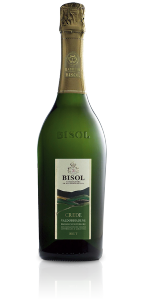
phpthumb_generated_thumbnailWe tasted

  • Crede Valdobbiadene Prosecco Superiore DOCG brut, a brut sparkling wine composed of Glera grapes, Verdiso and Pinot Blanc. “Crede”, comes from the name of the clay soils with subsurface sandstone that give fruity. It has a bright color, yellow with light green highlights. The sparkle is made up of a myriad of minute and persistent bubbles. The nose gives off all the scents of the countryside, hay, grass, fruity. The mouth has hints of apple and pear and a good degree of flavor. Ideal for cocktail receptions and in particular the Bellini (famous cocktail made up of peach pulp and prosecco).phpthumb_generated_thumbnailpng

  • Jeio Valdobbiadene Brut, It is produced with selected grapes from the hills of Conegliano, terroir hence its mineralogist and dry, and those of Valdobbiadene, which give crispness, acidity and freshness. It composed of Glera and parts Verdiso and, to a lesser extent, Pinot Blanc and Chardonnay. It has a pale yellow color and a perlage of extraordinarily fine. The nose is fresh and fruity. Ideal for all meals and cocktails.

  • belstarBelstar prosecco DOC, “Belstar” is a way to call a vineyard, just outside of the production area of historic Prosecco. It ‘a sparkling wine from fruity and floral bouquet, enhanced during production in the cellar from the soft pressing and the protection of the must by the action of oxygen. A Prosecco of extreme finesse and elegance, thanks to the extreme care during maceration and pressing and slow fermentation.

Vigna Dogarina, terroir and wine tradition

The Tonus family, identifies with its “terroir” and their wine estate Dogarina, at Campodipietra, Treviso.

Vigna Dogarina is really a testament to how great the wine tradition of this part of the Veneto between the River Piave, the hills of Valdobbiadene and Venice.

bollicine-prosecco-doc-extradryGuido Tonus farsighted entrepreneur, continued in the tradition of family since the first of the 800 saw the grandfather Napoleon engaged in growing grapes, with those methods of proper attention to quality that have come down through the generations of Italico and Francesco, respectively grandfather and father of the current owner.

Favored by its privileged location south of Conegliano and Valdobbiadene, between the river Piave, in the shelter of the Dolomites, the farm Vigna Dogarina can fully exploit the soil and climate of this part of the Veneto region. In particular in this soil and alluvial clay, “the caranto” where the vine finds its ideal growing conditions giving the wines flavors and unique fragrances with a strong character and flavor.

Substantial investments in the cellar have allowed the company to position itself at the highest levels of wine with a full-range products, standard-bearer of the great indigenous grapes such as Incrocio Manzoni Bianco, Carmenère and Raboso Piave.

In this view a particular role is represented by Prosecco, proposed in both spumante or sparkling, true pride of the company. Today Vigna Dogarina with over 100 hectares of vineyards, produces most of Prosecco and Wines of the Piave, a small part of Prosecco DOCG.

Today the family business is run by young and enterprising Romina, daughter of Guido, love of his country and looking with new eyes while pursuing the vision of his father who had already seen the potential for growth and development of this terroir of excellence.

Tasting

  • Prosecco DOC Treviso extra dry 2015. It ‘a sweet prosecco that best expresses its typically floral with notes of citrus fruits. The palate is delicious, with a good level of acidity due to its nature “limestone”. Ideal with an aperitif classici-carmenerebut also in the kitchen better if bittersweet or ethnicity.

  • Carmenère.  Variety of ancient French origin vine, has been confused with Cabernet Franc until 2008, when it was recognized fully the identity and awarded the DOC Piave. The nose resembles the wild herbs, hay. In the mouth is very mineral, with notes of wood and licorice aftertaste.

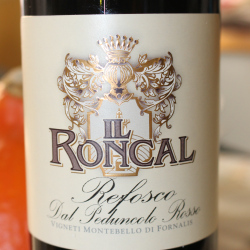
Refosco dal peduncolo rosso 2012 “Il Roncal”

The Roncal, in Friulian “farm set on a hillside planted with terraces”, also called “Ronchi”, is overlooking the charming landscape.

jdjaskaskdIt is the vineyards that surround Montebello Hills, where  the headquarters of the estate are situated. They offer year after year, fresh and fragrant white wines, red wines and full-bodied and velvety red wines.

The farm consists of a piece of land in the eastern hills of Friuli consists of land sandstone marl that thanks to the excellent sun exposure and microclimate allows the cultivation of a wide variety of grapes. The harvest is purely late this of course to take the grapes in its most generous maturity. The wine is made using traditional methods, temperature controlled in the cellars of the company. Not only that, next to the shiny and cold steel tanks, is devoted to scented oak barrels, where the wines mature and aromas complement.

We tasted

Refosco dal peduncolo rosso 2012 “Il Roncal”

Refosco is a Friulian vine of ancient origin from well-defined characters. The harvest, late, is made manually, in boxes with selection of grapes.

The Winemaking takes place once the grapes were cut and pressed, then they undergo maceration on the skins for 15 days and temperature-controlled fermentation. With soft pressing, they are   separated from the skins followed by a natural settling. Half of the product remains in wooden barrels of 25 hl. for 5 months. Then the winemakers perform the join the cuvées  in stainless steel vats and. They are  bottlied in late June.

The color is a ruby red tending to purple, intense and pleasant with hints of blackberry and wild berries. Fruity in the mouth, slightly tannic, full-bodied, warm, with persistent and pleasant aftertaste.
Then we speak of a robust wine that is very suitable for aging.
It is a wine purely from fireplace autumn, which should be accompanied with red meat, fat, venison, and roast.

hb

The largest wine collection takes place in Moldova #wine #cellar #Moldova

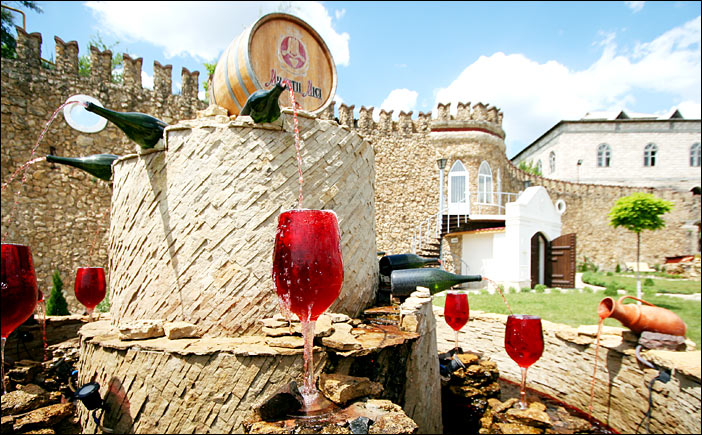
milestii_mici-3Its name is Milestii Mici and it is the biggest cellar of  the world which  has around 2 million of wine bottles highly appreciated. Also known as “The Golden Collection”, 70% of the production is red wine.

Milestii Mici, is a town dedicated to wine production and it is located 20 km far from Chisinau, capital of Moldova.

The winery has complex underground galleries that are spread over a total of 250 km of which about 50 km are used.

In August 2005, Milestii Mici won the Guiness Records award as the largest wine collection in the world. Its wines are exported to several countries as Sweden, the Czech Republic, Poland, Greece, Germany, Denmark, Finland, United Kingdom, United States and Japan.

For visitors, there is the opportunity of booking a tour on which you will be able to choose the date, time and language and after that, there is the chance of select and taste different “Milestii Mici wines”.

Patricia Fernández Ruiz

The Launch of Champagne De Roval #champagne #Brussels


Last week was presented in Brussels the new champagne of La Maison De Roval, which is associated with the French designer Ylan Anoufa and Wolfers, the Belgian jewelery house, to celebrate the birth of its champagne with style.

deroval-bottel

La Maison De Roval has the vocation of elaborating exceptional quality champagnes in a range of special vintages.

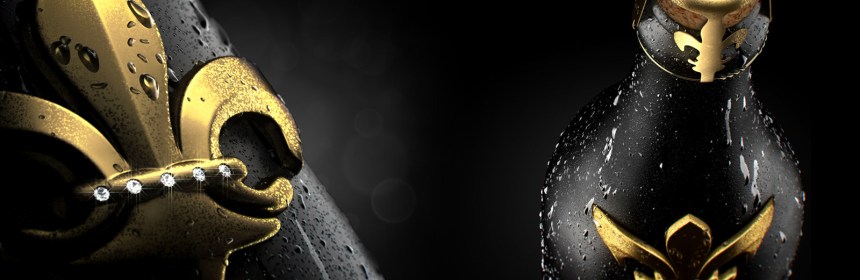
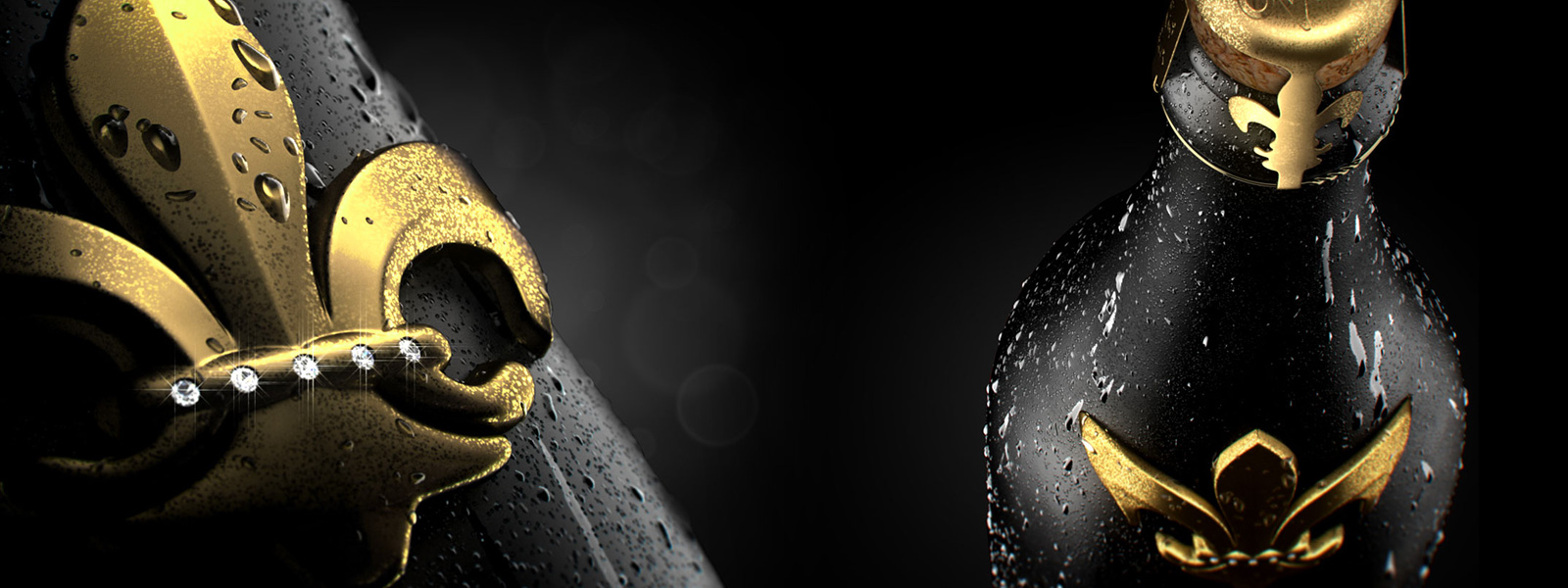
The refinement and preciousness of Champagne De Roval are sublimated by an intriguing charm bottle which meets the deep and bright gold of the wine with the precious metal and sparkle bubbles with diamonds on his medallion from its label. This jewel made with passion is confined in a black bottle with gold and diamonds which is housed in a royal blue casket.

Each bottle is a unique piece of art manufactured by artisans at the peak of their art.

http://www.deroval.com/content/exceptional-champagne

Patricia Fernández Ruiz.


Uruguayan wines exceed expectations in Expo Milan 2015 #wine #Uruguay #expo #Milan

8252388414_b231ec0c5e

Until now, the success of Uruguayan wines on the pavilion of Expo Milan 2015, goes much further than the expectations thought. This result could opens eyes to new possibilities of increasing exports.

The international megaexposition that started on May 1, shows the country with a board and careful selection of wines to be offered to its clientele.

The participant wineries are Juanicó, Carrau, De Lucca, Garzón, Estancia La Cruz and Grupo Traversa and they were selected by the National Wine Institute of Uruguay.

From the very beginning, the public assistance estimated was around 250 and 300 every day, but during the first fifteen days it achieved 400 diners daily.

The economic effort needed for the participation in this international event has been evaluated and an important boost is expected to increase the volume of exports, mainly on those wines with a preferential quality.

Patricia Fernández Ruiz


Learn the basics to taste champagne #france #champagne #wine #education #gastronomy

“There is a moment between the 15th and 16th mouthful of Champagne when every man is an aristocrat”, wrote Amélie Nothomb in her novel “Le fait du prince”.

champagne


Champagne, a sparkling wine

Champagne is an AOC wine produced solely in the eponymous place, from three main grape varieties : the chardonnay (giving white colored grapes),  the pinot noir and the pinot meunier (creating black berries). This beverage responds to a plethora of regional rules. For example, the bottles have to be stored for a period of at least 15 month before being sold. The Champagne-Ardenne is a region that often suffers from unsuitable climatic conditions to grow grapes (too humid, too cloudy). It might happen that grapes are picked up before they reach ripeness. Therefore, domain owners proceed to hide the fruit mediocrity by using two processes. The first one is called “sans année”, and consists in mixing different vintages in order to create a balance between the good and less good harvests, or to create a gustatory continuity over the years. The second one is the “dosage” and demands to add some “liqueur d’expédition”, a sugar-based addition, used to mask excessive acidity.
If you want to taste a high quality product, try to chose a champagne that does not overuse those methods. They should considerably differ from those mass-market brands found in superstores.
champagne conserverStoring the champagne

The sparkling aspect make this wine more difficult to store. The tasting temperature requires a special attention. If it is lower than 4°C, the bubbles might become minimal and make the beverage flat. If it is higher than 17°C, bubbles will explode in your mouth and the champagne will look more alike a cheap lemonade than like liquid gold.

It depends on the vintages and the grape-variety, but I think that the best temperature is 12°C. Before tasting it, refresh the bottle by letting it during 4 hours in your fridge, in a horizontal way, or refresh it 20 minutes in a bucket filled with ice and cold water. If the bottle traveled a lot, let it rest for some days in order to let the aroma come back to normal. Once it is opened, there is no sure way to keep the initial taste. The silver spoon is, unfortunately, an urban legend. Drink it as fast as possible. Trust me.


champagne verserPouring the champagne

Transparent flutes are particularly adapted to champagne, even if some people consider that an opened glass is more appropriate. Chose them transparent, so you can admire the robe. Pour half of the flute, so you can watch the nose without spoiling the bubbles. The bottle will be held by its base, and the champagne poured close to the glass. Flutes will be held by the base to limit the heat transmission.  The best place to taste it is not in the living room, but at the dining table, to facilitate the concentration. I advice not to stuff yourself with loads of appetizers. It might alter the gustatory balance and the aroma perception.
As astonishing as it might seem, champagne should not be served with desserts or sweet food. Champagne should be drunk in accompaniment with fish or poultry, and why not salty biscuits or cheese cubes.


Tasting the champagne

Here comes the most interesting and the most complex part of the procedure. The champagne tasting differs from the wine by one additional criterion : the presence of bubbles. This could disconcert the oenologists but don’t worry!, once the gaseous explosion is passed, there is plenty of aroma to analyse.
champagne teinteStart by admiring it

Take the time to admire the flute. This first thing you will remark is probably the presence of the bubbles. How do they look? They can be large or small, persistent or not… The “collier de perles” (the bubbles around the glass) can stay a long time, or not.
The robe presents a large color palette, easily noticeable with a little bit of attention. The robe can be yellow, green, grey, pink… with all the shades that are associated to the color : gold yellow, salmon pink, light pink, green with shades of gold…


tappoNext step: inhale
Wait a little moment so the first gas go away and that the exhalations release themselves.  Then, approach your nose to the flute and inhale for a certain time.
There are five main categories of champagne aroma. The first one is the floral one : the smells are refreshing and may remind you of summer flowers, the violets, the hawthorn, the lime tree… The second one is gourmand. It goes from the cakes and bakeries, for example crumbs and brioche, to spices like cinnamon or vanilla, passing by the butter, caramel and honey…The third one is végétal : it smells like the woods, the hay, the fern, … and even the truffle! The fourth one is the fruits secs (dried fruits in other words) : wintry reminders of nuts, figs, raisins… The fifth and last one is fruité and smells like sweet, refreshing aromas of summer fruits, citrus fruits (lemon, grapefruit…), white fruits, yellow fruits, and even tropical ones.

It is said that young champagnes (2-3 years) smell floral and fruité, mature (6-8 years) ones smell like gourmand and that the old champagnes (more than 6-8 years) smell fruits secs and végétal.

A simplified version of the 5 aromas

A simplified version of the 5 aromas


Here comes the best moment…

You can finally delight your taste buds. Take a sip and let it roll around in your mouth. Observe the acidity, the taste, the strength, the bitterness, the aroma… It can remind you of green apple, toasts, tropical fruits, vanilla, citrus fruits, nuts… The more experience you have, the more aromas you will perceive.
How is the aftertaste? How long does it last? A high quality champagne is supposed to leave a long finish. Besides, does the taste match the smell?
Share you meaning with your friends or family. Does they think the same way about that champagne tasting?

 
An article that started with a quotation has to finish by the same way. So… as said Coco Chanel, “I only drink champagne at two occasions : when I’m in love, and when I’m not”. In moderation, of course !

Anastasiya Tretyak

Saint Chinian Cuvée Baptiste 2012 #saintchinian #wine #france #languedoc

baptiste_eulalie-z

The Saint Chinian Cuvée Baptiste 2012 comes from the La Croix Sainte-Eulalie wine estate , in the Languedoc-Roussillon region.

The Gleizes family has owned this 31 hectares property since 1971. The village where the wine grows is named Pierrerue. The schist, sandstone and calcareous soil offer it this particular taste. The grapes are harvested manually and, when they have been rigorously selected, the grapes are put in oak barrels.

This wine has an AOC (Appellation d’Origine Côntrolée) Saint Chinian Rouge. It is made with approximately 50% Syrah, 20% Grenache, 20% Mourvèdre and 10% Carignan.

The editorial staff had the opportunity to taste it.
This wine has a dark robe, with ruby and dark violet reflection. The nose is spicy and fruity. It is well-balanced in mouth, but also tannic, bold and gourmet, with some fruity accents.

Anastasiya Tretyak


http://croixsainteeulalie.isasite.net/ElementsSousRubrique.aspx?SITE=EDOCREU&RUB=99&Lang=FR

Cirque grenache gris 2014 #grenache #france #wine #roussillon

20150227_165506 (1)
The Cirque Grenache gris 2014 is a wine from the Catalan coast, from the Languedoc-roussillon vineyards.
The Tautavel wine-growers take care of this traditional variety grenache gris next to the Vingrau village.

The label sketches a Mediterranean climate landscape where, next to the chalky-clay cirque, lay vineyards that have been cultivated since Roman times.

This wine has an IGP appellation Côtes Catalanes (Indication Géographique Protégée), evidence of this wine-variety’s authenticity.

We had the occasion to taste this refreshing wine. Its visual appearance shows a light wine robe, with a gold green reflection. The nose is delicate, fresh and sour. When we taste, we feel a little of white peach. The aroma reveals itself  in a second time : the wine has a floral aftertaste.

It is a light,  summery, feminine wine that we particularly advice to accompany shellfish.

20150227_165524 (1)

Anastasiya Tretyak

Romania, a great country of wines #romania #wines

vinsroumains1

Romania is definitely a great country of wines.  At the heart of the Carpathian Mountains have always been great and extensive plantings of vines. Romania is among the 15 largest producers of wine with eight wine regions and is 6th class in Europe, after France, Italy, Spain, Germany and Portugal. Romania also ranks 5th among European wine countries, with an area of ​​183 400 hectares of vines in 2010.

Romanian wine, even if it is sweet, dry, semi-dry or semi-sweet still has a certain charm that is enjoyed not only by Romanians but also by the wine lovers around the world. The country has indigenous varieties which distinguish as Feteasca Neagra (red) and dried plum taste or Feteasca Alba and Tamaioasa (white). The cellars “Beciul Domnesc” are the largest wine cellar in Romania, with a collection of over 100,000 bottles, the oldest of which dates to 1949. Although it seems hard to believe, Romanian’s wines are appreciated and are purchased by foreign investors.

In the evolution in recent years, the wine market in Romania is surprising, because it has evolved better than other economic sectors. Factors that have contributed to this situation are numerous, for example the development of retail, the appearance of the Internet, foreign investment in the area. Over the past 25 years, the Romanian wine has developed in several stages: the wines, brands, assortments ,. This has directly influenced the preferences of Romanian consumers and revolutionized the tastes and dictated the trends.

vinsroumains3

« Older Entries Recent Entries »