Category Archives: HOT NEWS

WINE: GAS CRISIS ALSO FREEZES ITALIAN WINE, COST SURPLUS AT 1.5 BILLION EURO
UIV-VINITALY Observatory: market holds (for now), but does not compensate for cost escalation


It is a gap of almost 1.5 billion euro that caused by gas and energy on Italian wine. Even one of the healthiest Made in Italy sectors is forced to raise the alarm, and now the main fear is that the escalation in costs will be compounded by a crisis in consumption, in Italy and worldwide. According to the UIV-Vinitaly Observatory survey carried out last week on companies in Italy, the surplus of energy costs alone (+425 million euros) and, consequently, of dry raw materials (over 1 billion more for glass, paper, cardboard, caps, aluminium) are worth an 83% increase on the budgets at the beginning of 2022. In addition to these, other increasing items (bulk wine, commercial costs, workforce) lead to a 28% increase in total costs this year. The result, according to the survey of a panel representing 30% of the market, has the flavour of a mockery for the sector.

The increase in list prices estimated by the Observatory in the first nine months of this year is in fact 6.6%, a positive figure but insufficient to cover an upward variation in prices that companies have requested in the order of 11%. The equivalent gap is equal to EUR 600 million in costs not covered by revenues that Italian wine is forced to bear in order to stay on the market. The ones losing out the most are the supply chain companies, the largest cluster – but with the least bargaining power – made up mostly of small businesses that produce, vinify and bottle everything, or almost everything, in-house. But, with some exceptions, the wine industrialists and the world of cooperation are also suffering due to a dynamic that particularly penalizes the basic and popular segments of the offer, starting with medium-priced sparkling wines. The impact on the premium segment is different, not only because it is better able to absorb variations but also by virtue of a market that is more willing to accept requests for price increases.

For the president of the Italian Wine Union (UIV), Lamberto Frescobaldi: ‘The survey shows how the current crisis does not spare our sector, which is not energy-intensive but in many of its components suffers direct consequences. What we can do now is to consolidate with a supply chain pact all the dynamics that can produce a buffer effect to guarantee competitiveness and the market. Producers, industrialists, cooperatives and distributors will therefore have to absorb part of the increases so as not to dump them completely on consumers and avoid a dangerous depression of consumption’.

 For the CEO of VeronaFiere, Maurizio Danese, “We consider it a duty for Vinitaly to monitor the dynamics of the sector, all the more so in a delicate moment such as this. What is happening also has a strong impact on wine, but we are aware that today’s events, like those of 2 years ago, represent exogenous and non-structuring factors affecting a sector that is in any case healthy. At the next wine2wine, scheduled for 7-8 November, we will present, together with UIV, the second part of this economic study, also with this year’s complete forecast estimates for the market, profitability, and balance sheet of the Italian wine industry”.

www.osservatoriodelvino.it

1982-2022: 40 VINTAGES OF BRICCO DELL’UCCELLONE BRAIDA

There are wines that you fall in love with the very first time you taste them. That you never forget. That go down in history. Wines that actually succeed, somehow, in shaping history. And this is the case of Braida’s Bricco dell’Uccellone, first harvested in 1982, exactly 40 years ago.

At a time when Barbera was regarded as a grape-variety of little prestige, trailblazer Giacomo Bologna reinterpreted the potential of this grape with a view to modernity and internationality. Giacomo knew how to think big: his recipe was based on the selection of crus, much lower yields than usual and the ageing of the wine in French oak barriques to give it elegance and structure. These were the tools that were key to reclaiming dignity and lending new emphasis to one of Piedmont’s most important grape varieties, launching a revolutionary phase for Barbera that was soon emulated by many other winemakers.

Three years after the first harvest, when this bottle, labelled as “table wine” at the time, was released onto the market, its success was overwhelming. The acknowledgements of Bricco dell’Uccellone began to pour in immediately, so much so that the English journalist Jancis Robinson, in her Oxford Companion to Wine, under the heading Barbera wrote: “The man who first put Barbera on a pedestal, proving that it was a serious wine, was Giacomo Bologna of the Braida winery, whose Bricco dell’Uccellone was the first Barbera to be sold internationally”.


To seal this journey, Braida’s Bricco dell’Uccellone Braida received the “Wein Legende” award at Bensberg Castle in 2019. It was the first wine from Piedmont to be listed in the hall of fame of the world’s most important wines and the third Italian wine, along with Ornellaia and Sassicaia.

The first 2022 bunch of this Barbera was been cut on the 12th of September.
A new challenge, according to Giuseppe Bologna: “Since taking over full responsibility for production at the winery in 1994, I have seen some strange vintages… This one is certainly unparalleled, a historic vintage but without any applicable historical references: a whole range of brand-new emotions”.

We’ll discover its value in the glass in three years’ time.

Meanwhile, the overview of all the vintages on the market so far (up to 2019) is impressive.

Some trivia?

  • L’Uccellone was the nickname of a woman who lived on the hill where the vineyards are located. Her nose resembled a bird’s beak, and she always wore black: this earned her the nickname in the village. Hence the name Bricco dell’Uccellone.
  • The label of Bricco dell’Uccellone has remained unchanged since the first vintage, 1982. Together with the label of La Monella, it was the first work of Giacomo Bersanetti and Chiara Veronelli, who designed it even before founding their agency.
  • Bricco proudly bore the indication “Barbera di Rocchetta Tanaro” on the label, from 1982 to 1994, then the production regulations changed the indication to Barbera d’Asti DOC.
  • The 1985 bottle has a darker capsule than the others.
  • The bottle of the 1993 vintage is different from all the others, slightly taller, due to a production blockage in France.
  • The first bottle to bear the Braida serigraphy, to prevent the risk of counterfeiting, was that of the 2004 vintage.
  • The only vintage not produced was the 2002, due to adverse weather conditions.
  • The first vintage to carry the DOCG Barbera d’Asti was the 2008.
  • Several pets and some horses have been named Bricco dell’Uccellone.
  • A collection of photos, stories and anecdotes about this wine was compiled in 2015, to mark the 30th anniversary of the launch of Bricco dell’Uccellone on the market.

Massetino 2020

Sharing the same genotype as its older brother Masseto means the perfect blend of power and opulence

The fourth vintage of the estate’s second vin, Massetino 2020 vaunts a clearly defined character emphasised by elegant flavours and aromas. “Massetino’s strong personality is not surprising as it shares the same DNA as Masseto. Just like its older brother, power and opulence go hand in hand with discretion and classicism,” explains Axel Heinz, Estate Director.

2017 was the year when Massetino made its debut. Now, after four magnificent vintages, this fine wine is an interpreter of the extraordinary terroir where the vines yield a powerful yet elegant expression. “Ever since the inception of Masseto, the grapes have undergone the strictest selection to ensure the best possible quality. In 2017, certain Merlot and Cabernet Franc parcels still had not developed sufficient calibre to be included in Masseto, although they showed the potential and personality, alongside other elements not used in the master blend, to make a second vin: Massetino.

Massetino 2020, which will be released to market on 1 October, is distinguished by an ever-changing microclimate and huge potential. After a wet and mild winter, the spring started slowly, protecting the buds from much-feared frost. A rainy June preceded a prolonged spell of drought and high temperatures until the end of August. The dry conditions prompted a superb, quick, yet even veraison. Rainfall in late August restored the required balance and lowered the temperatures. With swings in day-to-night temperatures, perfect conditions were created for the Merlot to complete the ripening, maintaining the freshness of the grapes. The Merlot was harvested in the first half of September, immediately followed by the Cabernet Franc.

Every parcel was vinified separately to guarantee the identity of each grape variety and vineyard section. Spontaneous fermentation took place in concrete vats using native yeasts aimed at minimizing human intervention and upholding the utmost respect of the grapes. The malolactic fermentation, on the other hand, occurred in 50% new oak barriques. After 12 months of ageing, the wine was blended and returned to the barriques for another 3 months prior to bottling, providing the time needed for each separate detail to become part of the elegant symphony of flavours and aromas.

Winemaker Gaia Cinnirella describes the colours, flavours and bouquet as “a perfect blend of power and opulence on the finish that displays the typical traits of the 2020 vintage. The deep purple hue immediately stands out at first sight, ready to show a strong identity. Ripe cherries and forest floor are discerned on the nose and pair perfectly with the crunchiness and freshness of the fruit in the mouth.” Massetino embodies the genetic makeup of a place where nature never ceases to amaze every year, always revealing new prospects for the future.

Le Serre Nuove dell’Ornellaia 2020

The elegance, amiability and complexity of Bolgheri DOC Rosso make a lasting impression

The 2020 vintage of Le Serre Nuove dell’Ornellaia Bolgheri DOC Rosso has been released to the market on 1 September. The wine originally debuted with the 1997 vintage, when Ornellaia’s second vin became the most immediate expression of the estate’s hallmark style. The wine is produced with the same passion and attention to detail as Ornellaia. Every vintage is a blend of elegant amiability and Bolgheri-style complexity that is capable of evolving in the bottle for many years to come.

Axel Heinz, Estate Director of Ornellaia, describes 2020 as an extraordinary vintage of huge potential: “2020 will go down in history for many obvious reasons, but in terms of winemaking it will also be remembered for its energy, which resulted in the creation of opulent and full-bodied wines of huge potential. Over time, it will be regarded as one of Bolgheri’s greatest vintages such as 2006, 2010 and 2016.”

After a mild and rainy winter, the spring started slowly, protecting the buds from frost. A wet June was followed by a long spell of drought until the end of August. The dry conditions nurtured a slow and even veraison. The changes in temperature between day and night ensured that the grapes could develop all their aromatic potential and the right levels of acidity.

Like every year, each varietal and parcel was vinified separately in order to guarantee the utmost respect of the different traits of the grape with minimal human intervention. The wine was blended in barriques one year later and set aside to harmonize and form an array of flavours and colours.

Olga Fusari, the winemaker at Ornellaia, explains: “Le Serre Nuove dell’Ornellaia 2020, with its deep ruby red hue and purple highlights, fearlessly reveals a clear and generous aromatic expression, marked by ripe red fruit aromas. The wine is soft, rounded and beguiling in the glass, in addition to being full-bodied, showing great balance between the structure, fullness and elegance.” This is a wine that displays attention to detail, character and terroir.

Masseto is ready to reveal its new vintage 2019

The new vintage, 2019, to be released to market on 1 October, an expression of energy brimming with nuances of colour.

Opening a bottle of Masseto is the equivalent of unleashing a liquid kaleidoscope,” says Estate Director Axel Heinz. “It’s the perfect balance between nature and climate, where humans play a fundamental role, like the conductor of an orchestra, gradually revealing the signature notes of a magical place, of a vineyard that still has many secrets to disclose.”

Masseto is an intact, harsh and complex place. The land is difficult to work and the sometimes extreme conditions make the result even more sublime as it can never be taken for granted. Axel Heinz defines it as “a place where nature makes the most important decisions.” Utmost care and simplicity: this is the concept that underpins the philosophy of the Masseto estate. On the score, the notes, shaped by the sea with its light breeze, are respectfully composed with aromatic and flavour accents, as the bunches are guided towards a slow and expert polyphenol maturity.

2019 was a vintage of unpredictable weather conditions, whose evolution has revealed a truly classical expression. Slow vine growth with cold spring temperatures, which delayed budbreak, made way for a hot summer that restored the equilibrium. The perfect balance between sun and rainfall, due to the maritime influence, contributed to the beginning of the harvest in early September, with the gradual gathering of the various parcels that constitute Masseto. Every parcel expresses itself uniquely, resulting in a complex mosaic, with the blue clay forming the core.

In Masseto 2019, the young colour is reminiscent of an intense and harmonious wine of exceptional aromas and flavours, rich in red fruit scents and viola nuances,” explains Gaia Cinnirella, Estate Winemaker. “The dimension of the fruit is striking in the mouth, entwining with dreamy, velvety and elegant tannins, plus a refreshing and vibrant finish, where power and simplicity enchant the palate and tell the story of this unique place.”

Ornellaia: the 2022 harvest is underway

Predictions would indicate smaller quantities, yet potential top quality if the weather stays fair

The 2022 harvest is now underway at Ornellaia. On 25 August, the first red grapes started to be gathered as confirmation of the precociousness already observed for the white grapes, whose harvest began on 9 August.

After the first few days of harvesting Sauvignon Blanc, carried out at night to preserve the utmost integrity and aromas of the fruit, the long awaited mid-August storms began. The plentiful rainfall slightly slowed the ripening, providing us with an opportunity to finish gathering the Sauvignon and Viognier with peace of mind. Merlot and Vermentino were the next varieties to be harvested. The precociousness is a logical consequence of an abnormal season,” observes Axel Heinz, Estate Director.

Heat and drought proved hugely challenging for the 2022 vintage. Key elements for correctly interpreting the harvest have been the agronomical decisions implemented to manage the soil and the vine canopy. Nevertheless, all the elements remain in place for a quality vintage: veraison in superb circumstances, limited natural grape production and potentially concentrated grapes.

“From this moment on and over the next few days, it will be extremely important to pinpoint with even more precision the harvest date for each variety and each vineyard parcel. Right now, our first impressions give the idea of a harvest that is unlikely to be abundant, but – if the weather stays fine – the vintage has high-profile potential. Making predictions is always very delicate and complicated, however. We are all too aware that realistic and concrete opinions can only be shaped after the grapes have arrived in the cellar,” concludes Heinz.

Nathalie Djurberg and Hans Berg for Ornellaia Vendemmia D’Artista 2019 “Il Vigore”

Charity auction supporting the Solomon R. Guggenheim Foundation’s “Mind’s Eye” program

From 5th to 19th October 2022

The charity auction of Ornellaia Vendemmia d’Artista 2019 “Il Vigore” organized by Sotheby’s gets underway from 5th to 19th October. Swedish artists Nathalie Djurberg and Hans Berg designed this vintage’s special labels and this year’s proceeds will once more go to the Solomon R. Guggenheim Foundation for the “Mind’s Eye” program.

Jamie Ritchie, Worldwide Chairman, Sotheby’s Wine says: “This is our twelve partnership with Ornellaia for their annual Vendemmia d’Artista project, which is so special to us because it supports worthy artistic causes and combines the brilliance of the estate’s wines with the visual ingenuity of the artists who take part. We look forward to presenting a range of bottles from the 2019 vintage “Il Vigore” later this year, headlined, as ever, by a unique Salmanazar. With its emphasis on the senses, the Mind’s Eye program has been the ideal beneficiary and, as in previous years, we expect these exclusive bottles to attract international interest from collectors eager to also enjoy the unique experiences on offer.”

Since 2019, the proceeds from the Vendemmia d’Artista charity auction have been donated to support this innovative program, which was created by the Guggenheim’s education department to help the blind and low-vision visitors to experiment with art by the fullest use of the senses.

This enables the development of creative impressions, emotional connections and lasting memories. As in all the arts, the appreciation of fine wines also necessitates the total engagement of the senses. Sharing this idea caused Ornellaia to support the growth of this innovative program.

Ornellaia’s generosity has provided for the expansion of Mind’s Eye, connecting participants across the globe through virtual programs, states Richard Armstrong, Director of the Solomon R. Guggenheim Foundation and Museum. “In the last three years, our knowledge has allowed Guggenheim New York to increase accessibility both to the museum and to works of art through multi-sensorial exploration. We are grateful for the ongoing support of Ornellaia.”

The Guggenheim stands out as an innovative institution for its commitment to accessibility and building the Mind’s Eye Community. Digitalization has enabled Mind’s Eye to reach a vast public from many countries around the world through its Sensory Guide to the Guggenheim New York or through Verbal Descriptions that use specific language to convey a visual experience for artworks and the unique architecture of the Frank Lloyd Wright designed building. 

The proceeds raised have allowed the program to be extended to the two other museums in the Guggenheim constellation, Venice and Bilbao, hence bestowing international prestige on the program.

For this reason, Giovanni Geddes da Filicaja, CEO of the Ornellaia estate, is excited to state: “Since the beginning of Vendemmia d’Artista in 2009, we have donated the proceeds from the auction to charity. It is immensely rewarding to see the project grow internationally and to know that the work we are doing gives the blind and low-vision persons the possibility to explore contemporary art through the senses. This sensibility has always been a key part of our philosophy.”

Le Cupole tells the story of the 2020 growing year

While the gran vin Tenuta di Trinoro will keep the world waiting for another year.

“On the 26th of September, we finally had a break in the weather and the cold arrived. The deeper colours of autumn became visible all around and the sky cleared. On the 30th, the vines dried off and harvest began.”

These are the 2020 harvest notes of Andrea Franchetti (who passed away last December). The growing year at Tenuta di Trinoro opened with a normal spring, followed by a summer that brought heat spells and a week of rains in late August, and finally a September that gifted grapes with optimal ripeness. The estate vineyard team precisely followed the progress of the grapes right up to the harvest, ensuring optimal quality.

All this took place in Sarteano in the Val d’Orcia, in the south-east corner of Tuscany, one of the world’s most intriguing and mesmerising places, on a wine estate that has always successfully imprinted its own distinctive signature on its wines, recognised across the globe.

The 2020 vintage saw the bottling of the entire Tenuta di Trinoro range, but on a different calendar this year. Tenuta di Trinoro 2020 will spend another 12 months in the cellar, before its release in spring 2023. In the lead up to this, its younger sibling – Le Cupole 2020 – tells the story of this growing year.

As Andrea Franchetti used to say, “con la luna di febbraio il vino diventa vino,”or “with February’s moon wine becomes wine”. This is the moment of the winemaking year when wines from the individual vineyard parcels are tasted, to select those that best express the character of Le Cupole. Fermentation takes place in steel vats, followed by ageing in once- and twice-used oak barrels, and finally blending and further ageing in concrete vats.

Le Cupole 2020, a blend of Merlot, Cabernet Franc, Cabernet Sauvignon, and Petit Verdot that can vary from vintage to vintage, possesses, in the words of estate director-winemaker Calogero Portannese, “a vibrant life-force, harmonious complexity, and silky elegance,” a description that can only make us wonder what awaits us with gran vin Tenuta di Trinoro 2020.

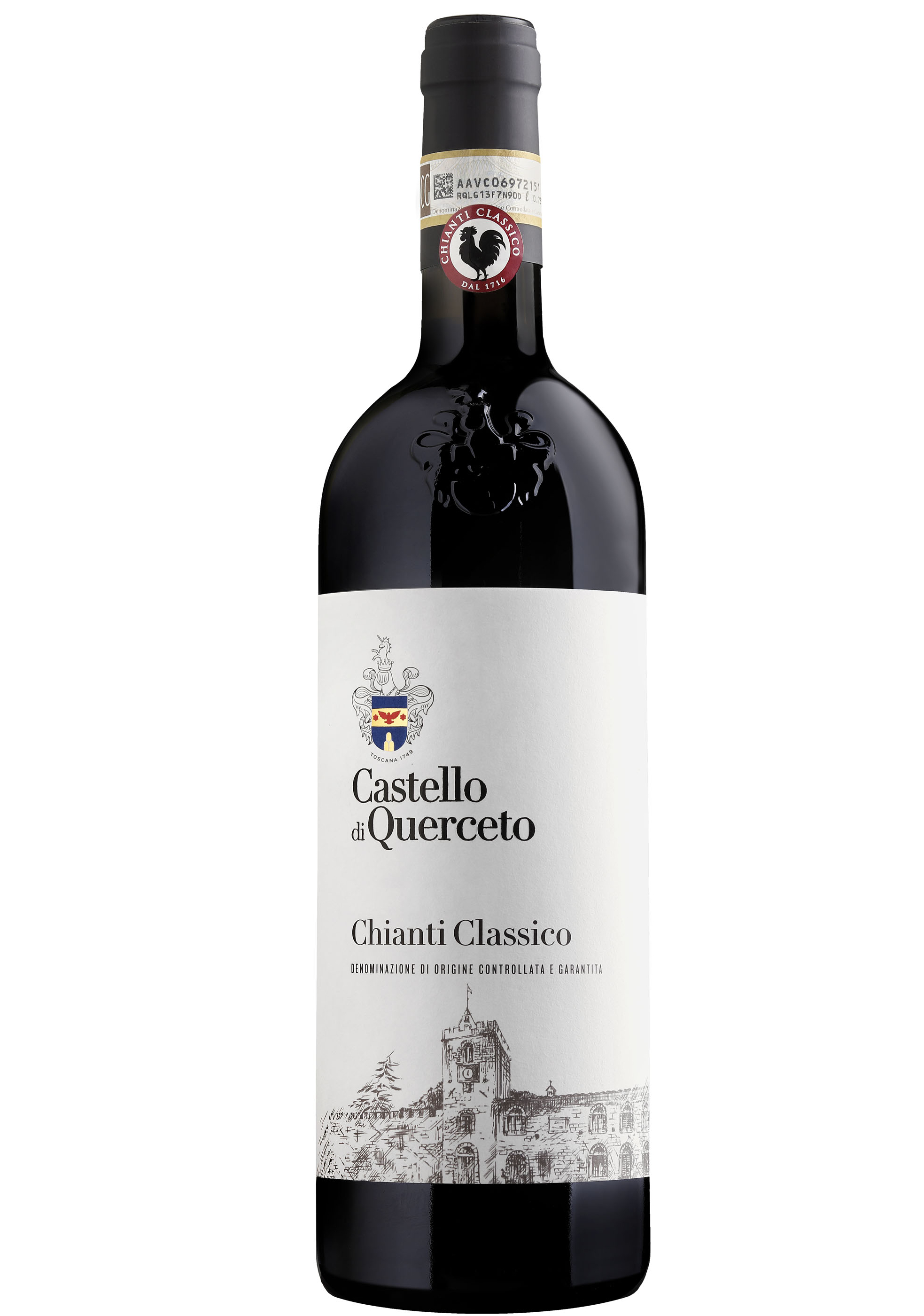
Chianti Classico 2020 and Riserva 2019

Eloquent expressions of a distinctive terroir: Castello di Querceto

At Castello di Querceto, the growing conditions of 2020 and 2019 allowed us, more than in recent seasons, to fashion wines that were eloquently expressive of the terroir of this historic wine estate and in particular wines that displayed the vibrant crispness and depth classic to this distinctive spot lying at elevations of over 400 metres on the highest hills of Greve in Chianti.

Chianti Classico 2020 is fruit of a growing season that was hot but with below-average night-time temperatures. Plentiful rainfall in May and June fortunately topped up groundwater reserves to enable the vines to cope with summer conditions, but it was the day-night temperature ranges that brought the clusters to optimal ripeness and aromatic development. The crop came in slightly less than the norm, but the resultant wines, carefully vinified for 8 months in steel and concrete, have emerged with exceptional structure and acidity.

As for Chianti Classico Riserva, the 2019 growing year was more gradual and balanced. A fairly dry June delayed veraison some two weeks, beyond mid-August, in fact, but the rains, limited though they were, kept conditions to the historical norm, so that cluster development was thoroughly satisfactory. Gorgeous weather in September and October allowed us to push back the start of harvest, and the high quality of the Sangiovese reflected that gift. The wine fermented and macerated in steel some two weeks, followed by 12 months’ maturation in large oak ovals. The overall result is an elegant, intense expression of Castello di Querceto that presages many sensory surprises over the years to come.     

“Thanks to the zonation studies carried out since the 1970s,” stated Castello di Querceto producer Alessandro François, “we now have an in-depth understanding of the characteristics and expressive properties of our vineyards. They lie at elevations higher than the Chianti average, and the soils are rich in polychrome schists, manganese and iron, and earth-alkaline metals. All these factors play an important role in ensuring lively acidities and supple tannins in our wines, qualities emblematic of Castello di Querceto and evident in both these expressions of Chianti Classico and Chianti Classico Riserva.”

To these gifts of nature must be added the François family’s intimate familiarity with its estate Sangiovese, after a full 125 years of experience, plus the near-obsessive attention by the Castello di Querceto team in vineyard and winemaking cellar, both guarantees of authentic, classic Chianti Classico wines, each an impressive marriage of aristocratic austerity and excellent structure.

“We strive, constantly and ever more sensitively, to infuse into our wines the entire wealth of our experience and passion, since each of our wines is an ambassador to the world of our winemaking philosophy and of our terroir here at Castello di Querceto,” concludes Simone François, who supports his father Alessandro in directing the winery.

*

Castello di Querceto, property of the François family and one of the founders of the Consorzio del Vino Chianti Classico in 1924, lies in a small valley in the high hills in Greve in Chianti. The estate, with its agriturism, Castello, and luxuriant park, includes 65 hectares of vineyards. The denomination wine, Chianti Classico, the long-standing estate standard-bearer, is produced in a number of interpretations: standard and Riserva, and two Gran Selezione crus, Il Picchio and La Corte. The portfolio contains a number of IGT crus, the fruit of zonation studies carried out by Alessandro François.

The genius loci of Bolgheri in the bright reflections of Poggio alle Gazze dell’Ornellaia 2020

Ornellaia is proud to present the 2020 vintage of Poggio alle Gazze dell’Ornellaia, which is enhanced by the Poggio alle Gazze dell’Ornellaia Ambassadors project that pays tribute to its relationship with the sea and land to which it belongs.

In Tuscany, wine is often regarded as red by definition. “And yet”, Axel Heinz, Estate Director, explains “with a clear vision, patient research into the best soil and aspect, a suitable selection of the varieties to be planted and a constant commitment to cultivating the vines with care and attention, we are certain that the genius loci of this unique land can also be conveyed in the straw yellow colour of our white wines.”

Poggio alle Gazze dell’Ornellaia owes its elegant Mediterranean style to the special microclimate that distinguishes the estate.

The 2020 vintage was characterized by a rainy yet mild winter. The budbreak occurred later than usual, shielding the vines from any frost damage. A still wet June was followed by a hot, dry summer. The harvest took place earlier, in the first half of August for the Sauvignon Blanc, Viognier and Verdicchio, while we were able to wait until September for the perfect ripening of the Vermentino. “The earlier harvest and the absence of particular water stress, due to the water reserves accumulated in June, enabled the grapes to convey all their hallmark aromas, especially the Sauvignon Blanc,Axel Heinz remarked. 

The winemaking and ageing must support the balance that distinguishes Poggio alle Gazze dell’Ornellaia, without distorting it, in addition to accentuating the texture, without making it heavier. In so doing, the bright colours and refined aromas are kept intact.

The practical winemaking choices are aimed at acquiring additional balance, layers of complexity that allow the wine to withstand the test of time and reveal its deepest soul and the ultimate expression of the terroir with the passing of the years.

The wine is made by gently pressing the grapes, followed by the decision to decant and allow half the wine to age in steel tanks, while the remaining half ages in barriques. The wine subsequently spends six months on the lees with bâtonnage.

The winemaker Olga Fusari, who is particularly attached to Poggio alle Gazze dell’Ornellaia and who has witnessed the revival in conjunction with its maiden vintage led by Ornellaia’s technical team, explains. “With its bright straw yellow colour, Poggio alle Gazze dell’Ornellaia 2020 displays beautiful aromatic complexity on the nose: woodland and white flowers, accompanied by white peach, sage and herbal notes, are released in the glass. On tasting, the wine fills the palate with elegance and decisiveness, showing the right balance between freshness, acidity and density. The finish is vibrant, lasting and on the savoury side.” 

The release of the 2020 vintage is also accompanied by the Poggio alle Gazze dell’Ornellaia Ambassadors project. This initiative is devoted to the Mediterranean Sea and Italian excellence. The ambassadors, who come from all over the peninsula and beyond, having been selected for their creativity and the quality of their cuisine, have created recipes that pair perfectly with Poggio alle Gazze dell’Ornellaia. The chefs that have taken part to this project are Daniele and Andrea Zazzeri, La Pineta in Marina di Bibbona, Gennaro Esposito, La Torre del Saracino in Vico Equense, Andrea Migliaccio and Salvatore Elefante, Il Riccio in Capri, Emanuele Riccobono, Ristorante Zagara in Sciacca, Pietro d’Agostino, La Capinera in Taormina, Enzo Florio, Da Tuccino in Polignano a Mare, Roberto Gatto, Cip’s Club in Venice, Domenico Soranno, Langosteria in Paraggi e infine Antonio Colaianni, Ristorante Ornellaia in Zurich. Their dishes reflect the same salinity of the sea that can be found in Poggio alle Gazze dell’Ornellaia, which has always borne witness to the evolution of mankind and its connection with a land that yields the centuries-old wisdom of time and patience.

« Older Entries Recent Entries »