Category Archives: HOT NEWS

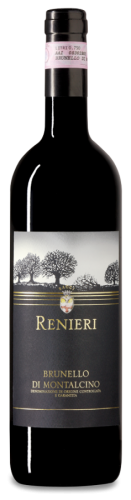
2010 Brunello Riserva Renieri has been awarded 5 grappoli (5 grape bunches)

We would like to let you know that the 2010 Renieri Brunello Riserva has been awarded  5 GRAPPOLI, the maximum score from BIBENDA, the official guide of FONDAZIONE ITALIANA SOMMELIER.
It looks like this time everybody agreed. Suckling 100 points, Wine Spectator 96 points, Parker 96 points and now 5 Grappoli
 
Marco Bacci

Renieri
Brunello di Montalcino Riserva

DOCG

2010


Terra Madre Salone del Gusto 2016 concludes with a wave of positive energy

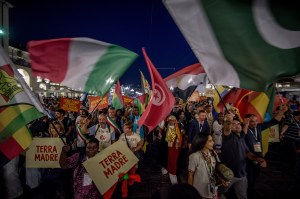
TURIN, ITALY - SEPTEMBER 23:  Atmosphere during the Terra Madre Parade during Terra Madre Festival by Slow Food on September 23, 2016 in Turin, Italy.  (Photo by Tullio M. Puglia/Getty Images for Slow Food Terra Madre)

TURIN, ITALY – SEPTEMBER 23: Atmosphere during the Terra Madre Parade during Terra Madre Festival by Slow Food on September 23, 2016 in Turin, Italy. (Photo by Tullio M. Puglia/Getty Images for Slow Food Terra Madre)

Paolo Di Croce, Slow Food International General Secretary comments: “Seven thousand delegates from 143 countries, 300 Slow Food Presidia and 1000 food communities of the Terra Madre network from five continents. These are not simply numbers, they represent a humanity that is united here to discuss the great challenges which we must confront, above all the safeguarding of agricultural biodiversity. The event’s new open air formula, the discussion spaces and the interactive tours have helped foster a direct and fertile relationship between visitors and delegates, raising awareness and creating positive energy towards the objective of Slow Food: good, clean and fair food for all.”

Over 5000 members of the public followed the series of conferences at the Carignano Theater, dedicated to themes of agroecology, health, migration, the relationship between food and art and cinema. Another 5000 participated in the Terra Madre Forums, listening carefully to the experiences of our delegates.

Victoria Tauli-Corpuz, United Nations Special Rapporteur on the rights of indigenous peoples: “This event has a very important political impact for the Indigenous Peoples pushing and protecting their rights to their territories and resources. Globalization is a tremendous challenge, so we need to enter into partnership because the battle for land rights is a battle for all. Slow Food can definitely be a strong ally for the Indigenous Peoples around the world.”

Sergio Mattarella, President of Italy, who was present at the opening ceremony, said: “Terra Madre Salone del Gusto is, at one and the same time, an Italian challenge and a meeting with the world. I believe that initiatives like this help in the construction of a shared language, and to support changes in our culture which we know are necessary.”

Among the many journalists present, Dan Saladino, BBC Radio presenter and producer, said: “I took part in a forum about the biodiversity of bananas and I heard the stories of producers from Indonesia, Japan, Uganda, and discovered lots of varieties and a thousand uses of this fruit. Nowhere else can you find such a wealth of testimony all in the same place.”

Olivier Roellinger, a French chef known for his extraordinary interpretations Breton cuisine, described his experience in Turin: “Something is happening in the world and the marvelous market of Terra Madre in Turin is part of that change.”

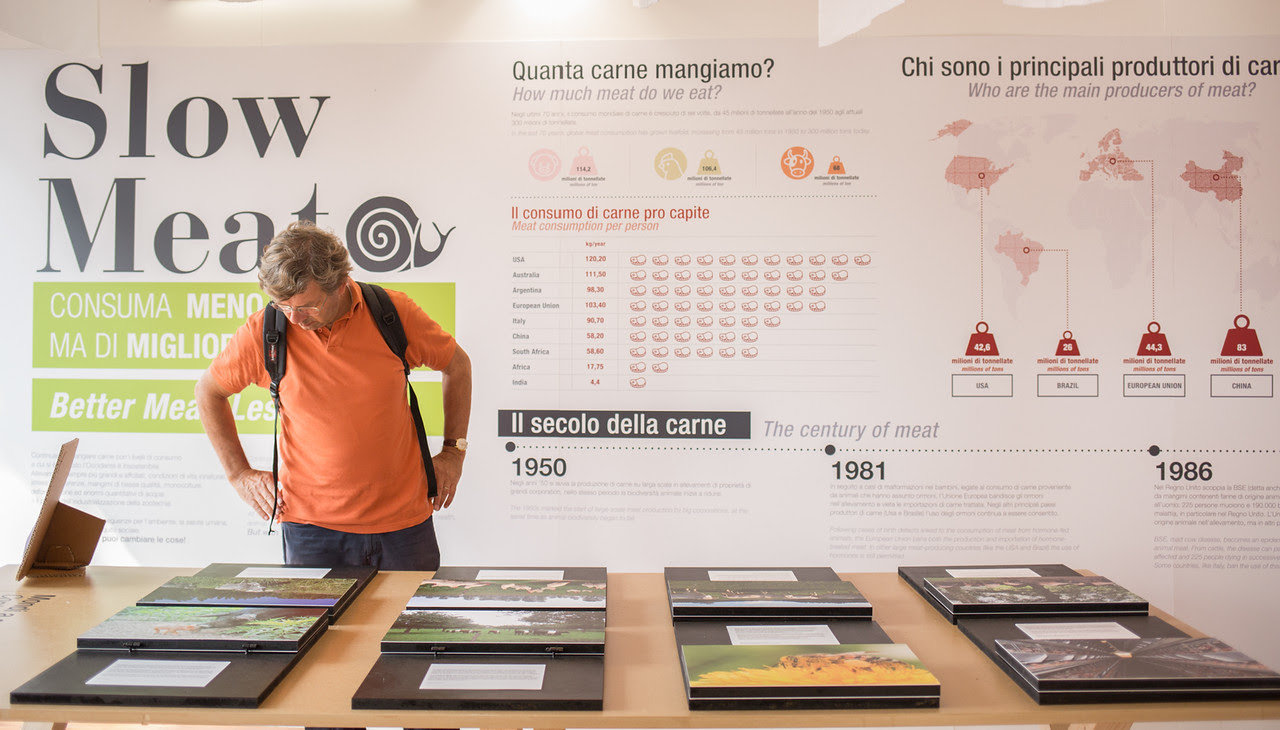
The over-production and over-consumption of meat is a vital problem for the environment and our health. Slow Meat is offering a solution.

unnamedgddgdThe production and consumption of meat has become a central talking point among the public thanks to Slow Meat’s interactive stand at Terra Madre Salone del Gusto, taking place in Turin (Italy) until 26 September.

The production and consumption of meat has become a central talking point among the public thanks to Slow Meat’s interactive stand at Terra Madre Salone del Gusto, taking place in Turin (Italy) until 26 September.

Over the past seventy years, global meat consumption has increased six-fold, from 45 million tons per year in 1950 to 300 million tons today. This figure is expected to rise to 500 million tons by 2050, an increase of 10-fold since 1950 and double what it is today.

What does it mean to eat meat responsibly and sustainably in today’s world? How can we safeguard our rich heritage of raising domesticated animals, something that is central to rural communities across the world? What are the environmental and health implications of industrially raised meat? The Slow Meat campaign is trying to answer all of these questions and more, examining the real cost of the meat that lands on our table and comparing both production methods – industrial and sustainable – to understand the outcomes of our choices.

 Serena Milano, General Secretary of the Slow Food Foundation of Biodiversity says, “It is unsustainable for the West to continue eating meat to the levels that it’s used to. Animals are being raised in inhumane, stressful conditions in increasingly crowded environments. Low quality animal feed, monocultures, deforestation and the use of large quantities of water are all consequences of the industrialization of animal farming. This will have terrible effects on the environment, our health, animal welfare and social justice. But by making better choices, we can change this.”

Slow Meat’s tagline – eat less meat, of better quality – is of crucial importance for both our health and to save the finite natural resources that are being used to produce meat.

For Slow Food, an educational campaign to teach consumers why they should avoid buying cheap meat is important. Low prices are reflective of poor quality. This, in turn, is demonstrative of how poorly farmers are raising their animals, whose welfare is not cared for and whose feed is of poor nutritional quality, as well as the hidden costs that harm the environment. Improving the quality of meat and reducing its consumption would lead to a decrease in diet-related diseases that are currently putting a huge strain on public health systems.

Terra Madre Salone del Gusto has also dedicated a space to the Slow Beans network, demonstrating the many nutritional benefits of beans as an alternative to meat. There are also 40 bean exhibitors at the event and 188 bean varieties at risk of extinction that are being safeguarded by the Slow Food Ark of Taste.

Richard McCarthy, executive director of Slow Food USA presented the Slow Meat Manifesto: “The industrial model of meat production has isolated us from this grand multi-species community, and instead we are isolated in a culture of confinement. Animals are confined in torturous conditions, dollars are confined to the hands of few, and eaters are confined to unsavory options – our future confined to a desolate path. It is time to break free.”

The Slow Food Asia network explained how obesity levels are rising exponentially in the countries where meat is increasingly forming part of the diet. It’s necessary to find alternatives, to reconsider how our ancestors ate with a diet rich in vegetarian protein, which is now being preserved only in indigenous communities.

Latest wine reviews from James Suckling

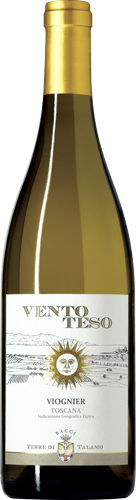
I am glad to inform you that in his article of September 6th, 2016 James Suckling reported on the huge improvement in the quality of the white wines in Tuscany and  our two white wines 2015 Vento Teso with 92 and 2015 Vento with 90 were among the top ones over the 110 he tasted.

Marco Bacci


Terre di Talamo
047f189b-0026-494a-a5cd-d47a1ca5c8c7Vento Teso

VIOGNIER IGT TOSCANA

2015

A very pretty viognier with honey and dried appie character.
Hints of pear. Full body, a/most oily with dried fruit and hints
of tropica/ fruit character. One of the best whites in Tuscany now.
Drink now.

92/100

James Suckling – September 6th, 2016


Terre di Talamo
Vento

34abf23e-c2b4-457c-b56e-6ce4bbb528aeVERMENTINO IGT TOSCANA

2015

A brighi and delicious white with tropical fruit
and stone character. Flavorful. Delicious.

90/100

James Suckling – September 6th, 2016

VINTAGE 2016 HAS THE POTENTIAL TO BECOME ONE OF ORNELLAIA’S GREAT VINTAGE

harvest-in-ornellaia

ORNELLAIA: START TO ONE OF THE EARLIEST HARVESTS IN RECENT YEARS

“For Ornellaia, this will be one of the earliest-concluding growing seasons in recent years: our harvest started immediately following the late-August holidays. The reason is that, contrary to 2015, we had no significant rainfall during the month of August,” explained Axel Heinz, Director and Winemaker of Ornellaia.  “Thus, on Monday, 22 August, Ornellaia brought in the first clusters of Sauvignon blanc and Viognier, which showed excellent component levels, with a potential alcohol of 13% and a good, balanced acidity. We will already finish this week the harvest of our white grapes, while we have just started picking, in these past few days, some Merlot, and we’re planning to continue with the other reds next week.

“Significant heat in July and August speeded up the ripening process,” continued Heinz. “Fortunately, the area of Bolgheri is blessed with wide day-night temperature differentials, which in turn allows the vines to recover during the night from the daytime heat and dryness. In addition, the depth of our soils creates optimal conditions for developing the aromatic qualities of our grapes.    

“As it stands, it is possible 2016 could be among the best vintages at Ornellaia, on a par with 2001, 2006, 2011, and 2012, which were all characterized by hot, dry summers and yet gave us wines of great concentration, structure, and richness. The first rows we pick are never the whole story, so we are still sampling all the various vineyards and evaluating their potential. In point of fact, though, the figures we are seeing do indicate a vintage similar to the great ones of past years.” 


Wine Spectator: Bruce Sanderson’s recommended Brunellos di Montalcino

‘Wine Spectator’ of August 31st, Bruce Sanderson recommends the 2011 Brunello Renieri as one of the best 9 “Top 2011s” and our 2010 Brunello Riserva Renieri as one of the best “Top 2010 Riservas” out of the 160 reviewed.

TOP 2011s

5a6d97bb-7cde-4f0e-a7b6-2d23f3b5c65b

Renieri
Brunello di Montalcino

DOCG

 2011

Packed with cherry, strawberry, floral and salty,
mineral flavors.

93/100


TOP 2010 RISERVAS

504221b8-27e8-4479-8d08-7b9824542028

Renieri
Brunello di Montalcino

DOCG

RISERVA 2010

Reminescent of a fine Burgundy, showing berry, fading cherry, spice and chalky mineral notes. Juicy and elegant, firm yet harmoniuos.

96/100

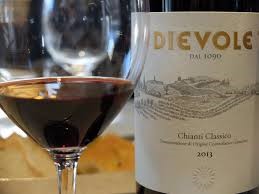
DIEVOLE OF #TUSCANY

dasThe root of the name “Dievole” dates back from centuries in 1090, traces are mentioned in earliest documents and mean in medieval Latin “Dio vuole” (God willing)…

Tuscany is of course from generations to generation a welcoming and valuable region, its beauty never changed making it a little paradise on earth. On the agritourism level “Dievole” is a place with a deep identity, a domain producing oil and wine but where you can also spent your holidays at the residence. The Chef of the restaurant will fill you with the delights of the region. Dievole is a domain of about 600 hectares in the Chianti Classico territory located at about 12 km of Siena. Where time moves at two speeds: one slow, perceived in silence and read in the trees surrounding the hamlet and one that’s vibrant and active. In fact, behind the clear geometry of the vineyards and the imperturbable calm that surrounds olive trees: it’s a constant dialogue between man and nature. sereefd

Respect is the philosophy of the house as well for history past, but also for the more recent one, for the territory – the land, the vines, the olive trees – and especially for all the men and women who work at Dievole with enthusiasm and dedication. The team at Dievole decided to focus on the Sangiovese, the King grape of Tuscany, which represent 80% of the planted grapes at the Dievole vineyards and following the winemaker of the estate Alberto Antonini: “Our goal, is to improve and then maintain the balance of the plant with its environment and allow the vine to better interpret the identity of the terroir”. It is in the historical cellars of the domain that the company organises evocative tastings: at the discoveries of Chianti Classico, Chianti Classico Riserva, Vino Santo… In a landscape like Tuscany that is dotted with olive trees, extra virgin olive oil is also part of the company’s values, and Dievole has charged oleologist Marco Scanu to develop its production. The perfection to a 360° view at Dievole is: hills, farmhouses, cypress trees and vineyards, in the best Tuscan tradition translated to beauty,craftsmanship and tradition. A whole world to be discovered…

dfdfseThe Villa was a former home of the Sienese nobility and overlooks the valley for breathtaking views. Dievole is welcoming you for relax and romantic journey in a peaceful nest.  The complex is literally surrounded by vineyards, olive trees and is integrated into the wine making process. So that the Villa, the Cantina and the Dievole offices become a small village with their ceramic tiles, stone windowsills and old style facade, perfectly situated in the Tuscan landscape. The residence includes the historic Villa, a few farmhouses, the stable (now the breakfast room), a lounge bar and an Enoteca with its cellar door. In total, the Villa offers 27 suites and double rooms spread over five sites, divided between the villa and four completely restored farmhouses. Life at the Villa Dievole spent like in a dream and most of the time out in the open air: every week a barbecue evening is organised, but you can also go to the restaurant of the property. Where the Chef Monica Filipinska is inspired by the surrounding environment and therefore by harmony, nature and freshness. She prepare with passion traditional Tuscan recipes with ingredients of local producers and from the domain. If you will be thrilled by her kitchen, Monica doesn’t keep her recipes so long secret and you can follow one of her mini Tuscan cooking classes. To go straight from theory to practice and be part of this true Dievole Renaissance painting.

http://www.dievole.it/en/


Olivier Bulto

WINES FROM #BULGARIA

burg02dsddsThe 23rd “Concours Mondial de Bruxelles” took place in Plovdiv, an occasion to discover the Bulgarian vineyards.

The main objective of the “Concours Mondial de Bruxelles” is to introduce new wine regions and authentic wines from leading wine regions from Europe which disserve a place on the international scene. The competition and its ceremony happened this year in the second-largest city of Bulgaria. Plovdiv, with an impressive array of historic, cultural and touristic attractions. It will be then become the next European Capital of Culture  for 2019. During the contest about 8750 wines from 51 countries were tasted by a panel of 320 international experts. Three types of medals were awarded: Grand Gold, Gold and Silver, and it revealed also the excellence of Bulgarian vineyards. With some amazing productions of a very high standard,  which some of them were awarded.

Bulgaria’s nature benefits of a  rich historic past and of an extraordinary biodiversity with a lot of natural ressources like mineral water sources and springs among others. The country does not only produce Yogurt, but is also the second world producer of foie gras. The countries between the Black & Caspian Sea are in fact at the origin and the spread of viticulture. During the communist period Bulgaria was already the 5th world producer of wines, the winemakers are now axing their efforts on quality. The Bulgarian vineyards produce nearly 65% of white wine and about 30% of red wine. The main grapes for white wine are mainly Rkatziteli, Misket, Dimyat, Chardonnay. And for red wine are Merlot, Cabernet Sauvignon and Pamid among others. About 30% of the total production is exported mostly to Japan, USA, Canada, Sweden and Benelux.

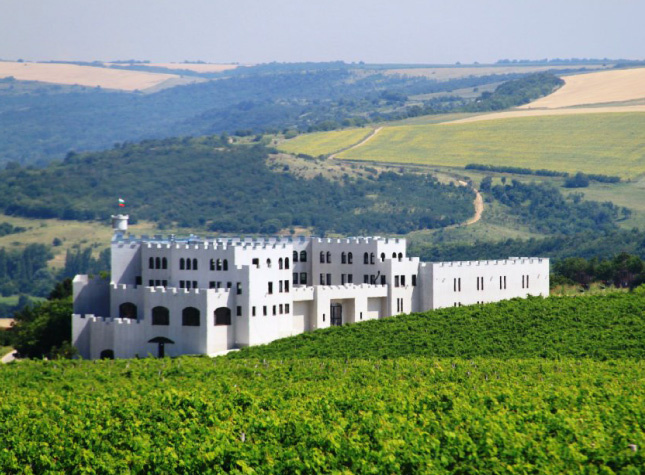
The Burgozone Domain.

The Burgozone Domain.

The “Chateau Burgozone” was awarded of two Gold medal, for its “Chardonnay” 2015 and its “Iris creation” 2014. The castle is named after an ancient Roman fortress that protected the Empire from barbarian invasions, and is located in the plains bordering the Danube to the north of the country. A vineyard of about 100 hectares on a single limestone soil enjoying a warm climate with freshness from the river. Allowing vines to express all their specificities. The main grapes cultivated by the Domain are Chardonnay, Pinot Noir, Sauvignon Blanc, Cabernet Franc, Syrah… And trying also to resettle indigenous varietals of the region such as Gamza and Tamjanka. The estate’s wines are regularly awarded to international competitions such as Mundus Vini and the Wine Ethousiast. The house produces minerals, fruity wines with elegant and soft tannins with a nice balance. The pleasure of tasting remains intact, Burgozone wines are indeed good value for monney and can be found in supermarkets.

The « Chardonnay » 2015, won the Gold medal, is a fine, elegant and well balanced white wine with complex aroma of green apple, citrus, tropical fruit and honey. With a small touch of bitterness at the end of mouth. The “Pinot Noir” 2014 has a taste of black fruit, milk chocolate keeping all its freshness, volume, good density and depth with length and velvety mildness. You can both taste the Château Burgozone confortably installed with friends at home or in Bulgary. The Vineyard is of course located on the “ Road of the Vines on the Danube”.  Bulgarian wines are of course a world to better discover, the country has a lot of wonders to discover onsite…

www.concoursmondial.com

www.probegex.com

www.burgozone.bg

www.vinodis.com


Olivier Bulto

What would be the implications of the #Brexit on wine sector ?

brexit01

The world of the English vine growing would indeed be favored by the protectionism which would entail this separation. But the English consumer who is very lit on the subject, would he suffer from it? The long-term sequels remain still unknown, but on the short-term consequences is for sure that the profession would suffer from it and the trade would not be facilitated there. Mainly nowadays due to the devaluation of the currency. The new Prime Minister is now named, Mrs Theresa May, and wants to make a success of the exit of her country of the EU. Wine stewards, agents and independent distributors remain nevertheless optimistic, due to the long term of the process. And following an english analyst of the domestic wine market : ” The initial biggest losers will, ironically, be those buying the least amount of wine. Namely the growing number of independent merchants and restaurants buying directly from European producers.” Indeed faced with higher supply chain costs.

brexit02All the wine chain will certainly be attentive in the coming months, and surely on the trade issue. The focus will then be shifted to how wine can be bought and moved across the EU. It will certainly be a relevant dialogue to follow between individual wine producing countries and the World Trade Organisation in the next future. The wine of the non-European wine producers will be easier and potentially cheaper to import, and won’t be hit by current EU-import duties. And EU producers will then be encouraged to stay on the Continent. But how the world of commerce of wines will meet the challenge?

The distribution sector can be innovative and be motivated on three levels: the wine shops, the general stores and the digitals applications. To keep consumers entertained to taste and discover new productions. There are now numerous projects ongoing around the world, like Miguel Torres’s efforts to re-introduce old Catalan varieties in Spain. Or the “Wine Mosaic” programme trying to bring to life old indigenous varietals like the “Obeidi” grape in Lebanon. The wine shops can be an alternative to supermarkets, they can offer better advices and more complementarity. Or some consumers can be also attracted by the digital world, for example by targeted marketing. Trade ambassadors can be rewarded with new products and promotions. But ultimately isn’t it to the global wine trade’s interest for the UK to remain a vital export hub. Is a collective international effort not worthy to be made to make it work in everyone’s interest ? By finding solutions and trade agreements.

As a reminder Sir Winston Churchill stated in 1946 in Zurich: “It is to recreate the European fabric, and to provide it with a structure under which it can dwell in peace, safely and freedom. Therefore I say to you, let Europe arise!”. But the final consumer will of course be the regulator of the sector…

Olivier Bulto

http://www.englishwineproducers.co.uk/

https://www.wto.org/ 

Record value for the EU agri-food trade balance in April 2016


The EU agri-food trade balance stood at the record value of €1.5 billion in April 2016, compared to €1 billion in April 2015, according to the latest monthly statistical report.

In the same month, exports were worth almost €11 billion. For the past 12 months, EU agri-food exports reached a value of almost €129 billion, representing an increase of 2.8% compared to the same period one year ago. The increase of EU agri-food exports to China was particularly significant with +29% over the last 12 months. This month’s report focuses on pig meat, one of the EU agri-food flagship products accounting for around 5% of the total agri-food value. Since the Russian sanitary ban was implemented in 2014, pork formerly exported to Russia has been mainly reoriented towards certain Asian countries such as China and the Philippines, which were already growing destinations before 2014. For April 2016, pork was the agri-food product that witnessed the highest increase in monthly export values.

« Older Entries Recent Entries »