Category Archives: A WINE ESTATE UNVEILED

Milazzo wine estate. Cantine della Baronia #wine #sicilia #italy


img_gal_139818075877.71

We are in Sicily and more precisely in the “Terre della Baronia” terroir at 400 m. above sea level in the heart of Sicily, on the hills north east of Campobello di Licata (Agrigento). Right here are the 75 hectares of vineyards owned by Milazzo family.

These climatic characteristics but also morphological and hilly terrain that integrate, in wines, finesse and aromatic freshness, as well as the maturity and structure guaranteed by a climate still inserted in a Mediterranean setting.

150 years of history on growing grapes that, at the end of the sixties, Giuseppe Milazzo has turned into a research and innovation aimed at excellence.
In cultivation the use of machinery is relegated to only use of the tractors for the management of the ground between the rows, while in the row weeds are eradicated with manual hoeing. In cultivation it is used exclusively to the use of organic fertilizers to ensure the genuineness of the product and protect the aquifers from possible alterations.

The pruning is performed exclusively by hand as well as the selected harvest that takes place exclusively with the use of cassettes to about 14 kg which are thoroughly washed after each use. The grapes harvested in the individual boxes are immediately transferred to the cellar. The same boxes are then stored in chill rooms at a controlled temperature.img_gal_140974970073-27
The tasting

Terre della Baronia Rosso Sicilia DOP 2012, it is a wine composed primarily ofNero d’Avola with a part of Perricone. As for the vinification the grapes are harvested in small boxes of 14 kg approximately, in polyphenolic maturity reached. Subsequently they undergo stemming and thermo conditioned, and conveyed to a fermentation cold maceration for 24-48 hours.

It is aged in stainless steel tanks and partly in French oak barrels, first pass, where it rests for about 12 months. After this period, the product is left to mature for about three years in barrels of tanks at controlled temperature.

It has a deep red almost purple. The nose is very inviting with hints of cherry, licorice, coffee, chocolate and vanilla. The mouth is soft and sweet. Tannins of great quality, long persistence. the table is combined with pasta dishes with meat and vegetables, grilled meats, roasts, matured cheeses.
We discovered the wine estate with the marketing manager Luisa Culle:


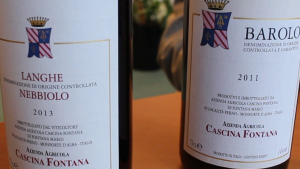
Cascina Fontana, expressive wines. #barolo #italia #fontana

Fontana

To our great pleasure, Edoardo Patrone of Cascina Fontana in Piedmont came to visit our headquarters in Brussels.

The winery Cascina Fontana stands in the hills of the Langhe of Barolo, surrounded by vineyards and villages dominated by impressive medieval castles. A landscape of rare beauty!

In this beautiful area suitable for the production of wine, the Fontana family produces in 4 hectares of vineyards, great wines from six generations.

The winemaker, Mario Fontana continues this tradition, overseeing the entire production cycle, from cultivation of the vines to the production of wine: “I am a manufacturer of traditional wine. I do this by putting the utmost care in the growing of vines, which are the means by which they are able to reach this expression. “

The typical varieties grown are Dolcetto, Barbera and Nebbiolo. The vineyards are located in some of the best production areas in Castiglione Falletto (Villero, Valletti, Pozzo), La Morra (Gallinotto) and Sinio (vigna del Castello).

My purpose is to express in my wines the full taste of my land in the way most pure and direct ..”

The vines grow on different soils, with different exposures and microclimates, producing grapes with characteristics also markedly different. Having vineyards spread across a large area is also a prudent choice in a region which, being close to the mountains, is always at risk hail.
The wines, produced in a natural way, represent the true expression of the territory, in which are contained the typical of the earth and signs of culture.

We tasted

  • Langhe Nebbiolo 2013, produced from 100% Nebbiolo grapes grown in the vineyard of the historic Castle of Sinio
    Fontana together with a small part of Nebbiolo grapes grown in the area of Barolo in the vineyard vigna del Pozzo. It ‘a fresh, harmonious color red garnet. It has good balance of tannins and acidity, allowing him to grow old and better up to 15 years from production.
    It goes well with common foods, such as a nice margarita pizza cooked in a wood
  • Barolo 2011. The Barolo wine of noble origin is produced from Nebbiolo grapes grown in vineyards located in the hilly heart of the Barolo area. It is a wine that requires patience. The slow vinification brings a concentration of extracts and tannins such as to ensure a remarkable capacity for aging for tens of years.

Here is a wine deep and austere: a wine to drink in the company of family and close friends in the best moments of life. This Barolo nose is rich and harmonious with hints of rose, licorice and spices. In the mouth is full and firm, but also tannic. It’s true, Barolo is a wine that can safely be drunk alone and when served together with food, this should be at least of equal importance, as a braised in Barolo, wild boar stew and other dishes typical of the Langhe.

With Edoardo we discovered the Cascina Fontana:

hb

Le Macioche winery, quality and care for details. #wine #italy

Winemaking is not only a matter of generations that hand down knowledge and vineyards. There are stories of friendship that integrate ancient traditions and renew it. Le Macioche is a small ancient winery of Montalcino less 1233554668522than one year ago has been taken over by three friends from Veneto who fell in love with this unique territory.

In Verona they work as consultants in the field of the green economy and environmental sustainability.

When they had the occasion to buy a winery, their first aim was to enclose in their wines a high sense of respect for the environment: a work but also a philosophy of life and a dream become true.

“We were looking for a small reality, a limited production in a unique terroir: and we have found it”, they say. The former team has been preserved, starting from the oenologist Maurizio Castelli, who in 2000 has converted the winery to organic farming and has chosen guyot as training method for the 3-hectare vineyard. Le Macioche proposes three labels and produces 18,000 bottles per year: Rosso di Montalcino, Brunello and Brunello Riserva.

Quality meets a great care for details and tradition is always combined with modernity. The new management has preserved a craftsman-like work as an ancient value, while labels, packaging, look and minimal eleganceare the distinguishing marks of a generation change and of the new imprinting.

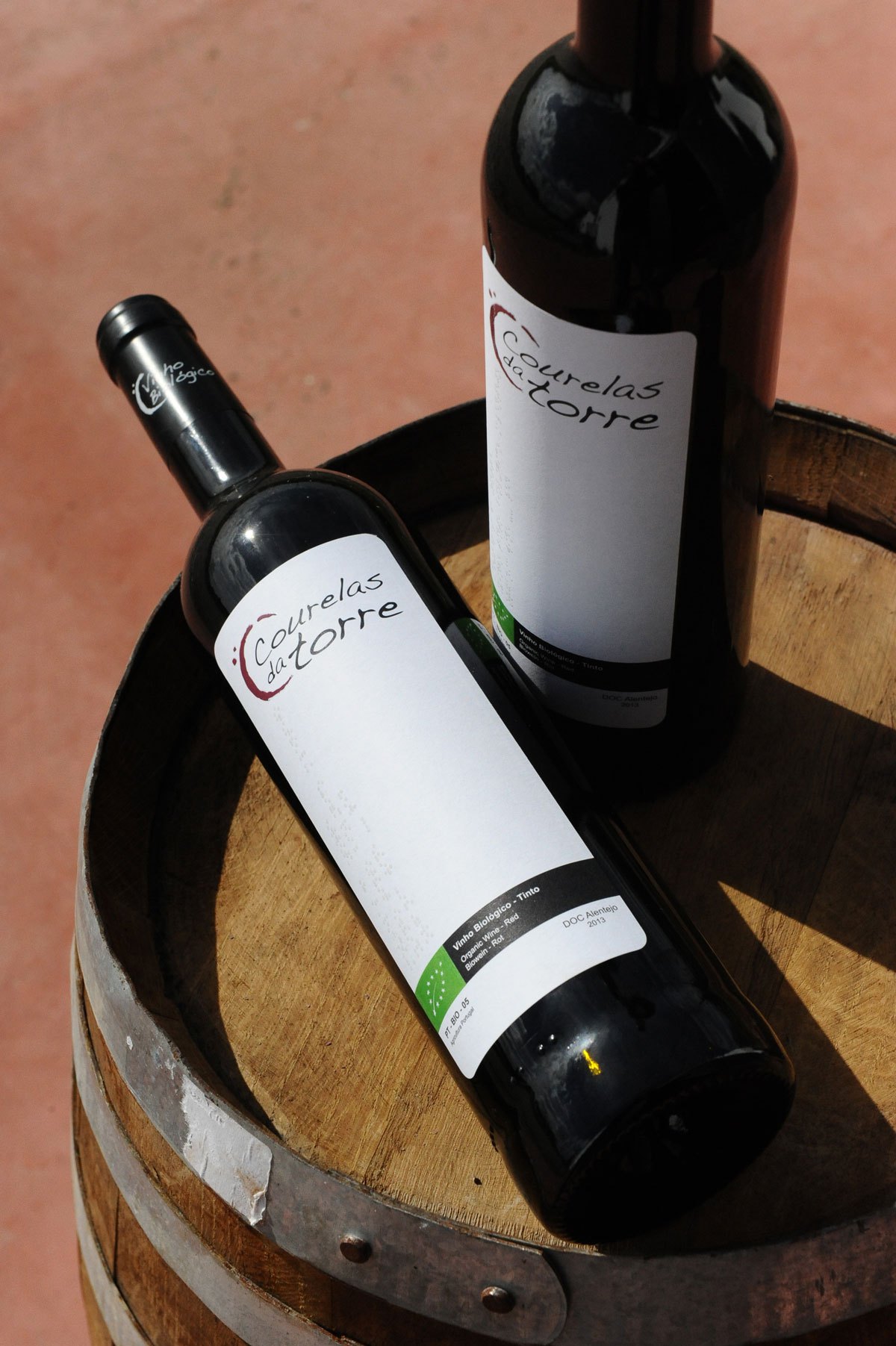
Courelas da Torre, the Portuguese organic wine #wine #Portugal #organic

agrovinaz_vinho_02

Courelas da Torre, is a Portuguese organic wine which was born in the Vineyards of Redondo, Évora (Portugal), a land whose “terroir alentejano” enchants for the fullness and elegance of its plain and sandy fields. This wine is characterized by being produced from grapes that are grown without the use of herbicides or pesticides and it is handpicked to guarantee its excellence.

It also has a very impressive ruby colour, an aroma of forest fruits and subtle notes of chocolate and spices. The palate is rich and elegant with ripe tannins and a smooth but persistent finish.

It is ideal to serve with meat, cheeses and sausages. The serving temperature should be of 16° C to 18 ° C.

This year, Courelas da Torre has obtained the Gold PAR award (Product Analysis Ranking) 2015, an award which prevents the subconscious influence of prejudices and fosters neutrality of each and every wine taster; provides a decided improvement in the quality of wine evaluation for awards as well as quality control and finally serves the improvement of perception of wine tasting results.


Patricia Fernández Ruiz.

Ruggeri Corsini estate: a great Barbera d’Alba DOC

The Ruggeri Corsini estate was founded in 1995 thanks to a passion for the countryside and a love for great wines.

1381833590_armujan_ctmLoredana and Nicola both specialized in Viticulture and Oenology lead a family-run winery. The estate gets its name “Corsini” from the small hamlet of Monforte d’Alba, where one can admire the ancient stone houses. Instead, the name “Ruggeri” is Nicola’s mother’s surname: she, believing in us, helped us to achieve our dream, financing the launch of the estate.

The estate is fairly small. The vineyards cover a surface of 10 hectares and the production varies depending on the year, from 65.000 to 75.000 bottles.

Particular attention is given to food and wine loving tourists, who can discover and taste the wines in our wine-tasting room.

In the beginning, the production only included the classical Langa wines such as Dolcetto d’Alba, Barbera d’Alba and Barolo, which, over the course of the years, have been flanked by other Langhe wines, new reds, a rosé and a white wine.


TASTING

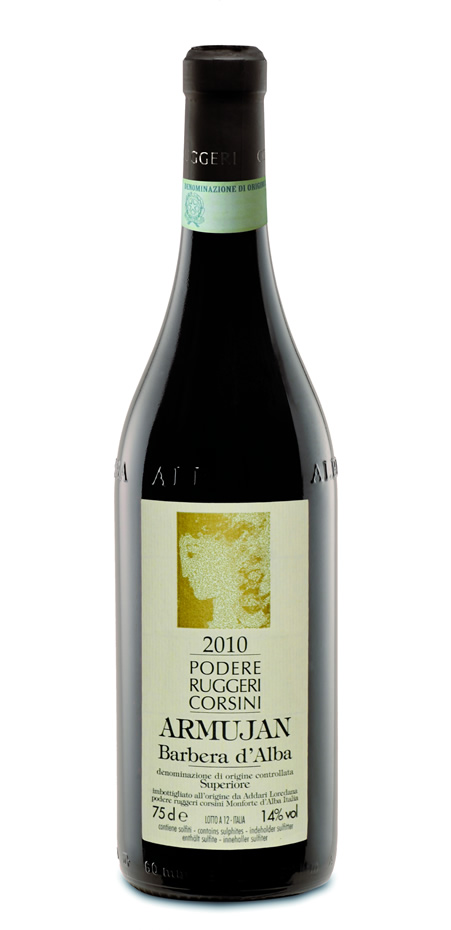
We tasted Armujan Superior Barbera d’Alba DOC

This wine is a red DOC wine produced in Monforte d’Alba, made up of 100% Barbera grapes from their own vineyards.

Vinification starts after a manual harvest in crates with immediate stalk removal, followed by four pump overs a day for the first week. Maceration lasts twelve days.
After the racking, decantering and the malolactic fermentation have occurred, the wine is then put to stand in wood including both different aged French barriques and Slavonian oak barrels for eighteen months. Bottling takes place in the month of July.

It is a wine that can be drunk young or be put to age for eight – ten years. It’s ruby red in color, his nose is fresh with soft scence of ripe plum and wild berries.

FOOD PAIRINGS

It should be served at a temperature between sixteen and eighteen degrees and is ideally paired with pasta dishes with rich meat sauces, meat, game, cheese and cold meats.

The Spanish winery José Pariente #wine #Spain #rueda #valladolid

web_pariente_1_1

In the heart of the Rueda vineyards, the José Pariente winery overlooks a flat landscape of stony soils subjected to a harsh continental climate. In that land of ancient history are rooted the Verdejo vines, a native variety which they cultivate with effort and dedication to elaborate white wines of great elegance, freshness and complexity.

It is the history of a family tradition bound up with a passion for fine wine. Fifty years ago, José Pariente worked these vineyards to produce his own craft white wines. When his daughter Victoria Pariente succeeded him she created the present-day winery and named the first bottled wines. A little later they gained strength and continuity when Victoria’s husband and daughter joined the cellar. The third generation of the family is already an active part of the project.

In 2008, the winery took a decisive step and they openned new premises between the villages of Rueda and La Seca. this solid and practical volume is helping to shape a new vinicultural landscape that is very much of the here and now.

BOTELL21

Some of their most famous wines are the Varietal Verdejo, Varietal Sauvignon Blanc, Verdejo Fermentado en Barrica, Cuvée Especial and Apasionado.


Patricia Fernández Ruiz.

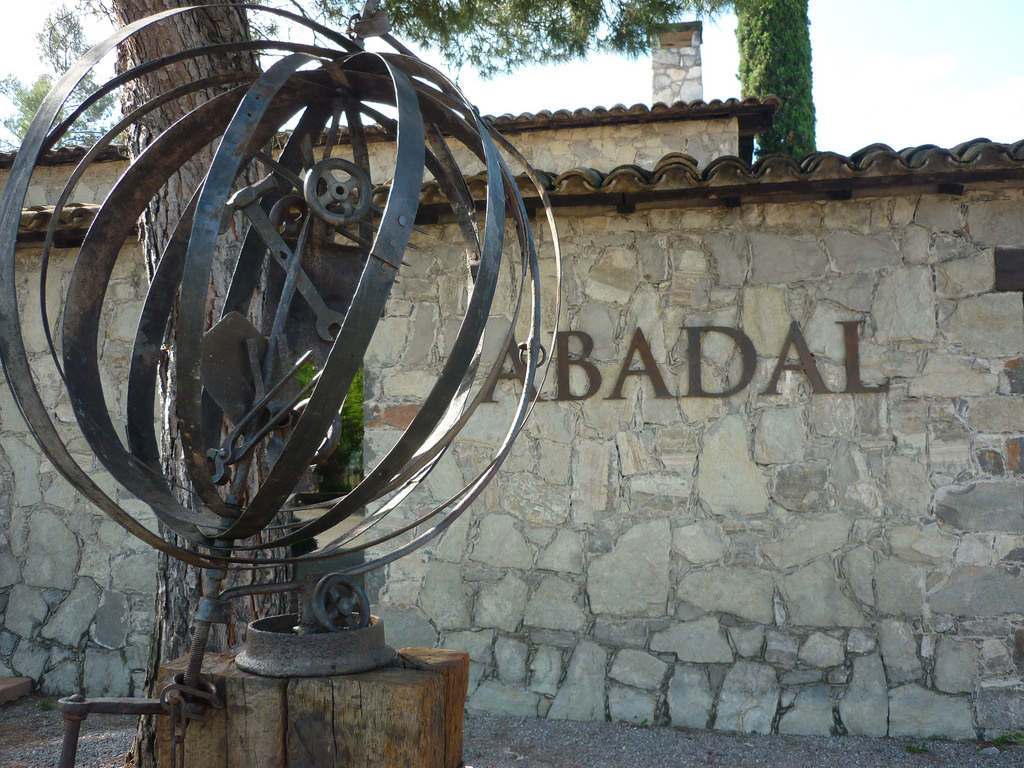
Abadal winery

13886604476_ed24b79ab7_b

Built in 1983 and located in Santa María de Horta, (Barcelona, Spain), the Abadal winery belongs to the Roqueta family, who has elaborated their wines for more than nine centuries.

During the years, its installations have been renovated until today to incorporate all the necessary equipment for their high-quality wine elaboration.

Moreover, in this winery there could be found a modern laboratory, one room for microbiologic studies and also another one for wine tasting and offices.

Some of their most famous wines are:ABADAL_new

-Abadal Blanc

-Abadal Rosat

-Abadal Franc

-Abadal Picapoll

-Abadal Crianza

Furthermore, the Abadal vineyard has more than 10 different grapes variations. Among the white type there are found Picapoll, Macabeo, Chardonnay, Sauvignon Blanc and among the red type the most famous are Tempranillo, Sumoll, Mandó, Cabernet Sauvignon, Merlot, Syrah and Cabernet Franc.

Patricia Fernandez Ruiz

The Lurton: a family of winegrowers. #wine #bordeaux #brussels

Lurton

A world-famous family of the world of wine was recently in Brussels…

The members of the family gathered in Brussels for an exceptional tasting. Belgium is indeed one of their key market. This inescapable oenological event allowed 130 professionals to savour the most beautiful vintage wines of the family Lurton. They actually represent 27castles on 1300 hectares of vineyards around the world. Their main production countries are France, Argentina, Chile, Australia, Portugal and Spain. It is always the same passion for the vinification and the wine that drives each of its members. The family has its roots in the family castle, the Château Bonnet in the Entre-Deux-Mers. But it is in fact 5 generations in the service of the wine… It was around 1992 thatthe current generation has taken over the flambleau transmitted by Andre Lurton. They are dedicated to value their land, their expertiseand the personality of their wines. To be an entrepreneur is  a leitmotif and a very strong charactertype  among the Lurton

Here, among others, the path of Pierre Lurton, another son of Dominique (4th branch of the Lurton) is now manager of Château Yquem in Sauternes and of Château Cheval Blanc in Saint-Emilion. Two properties of the French businessman Bernard Arnault, in association with the belgian businessman Albert Frère for “Cheval Blanc”. One of the four First Grand Cru Classé A, during the classification in 2012 by the Commission of Classification of the Council of wines of Saint-Emilion.

PierreLurton

Pierre has also just acquired  the property of Château Marjosse, a small chartreuse in the Entre-Deux-Mers of the XVIIth, which he desired for 15 years.

There is also Jacques Lurton son of Andre, who besides being consultant in wines, lives  on a small 10 hectares-vineyard and since 2000 makes  a magnificent wine on Kangooroo Island in Australia. He is installed in a fresh region  close to the ocean and the  soils contain  a natural acidity. He succeded  it transmitting  his passion of the history and the wine culture of the old continent into the New World.
At this event,   event, H.E. Bernard Valero, Ambassador of France in Belgium was present . This event wqas of course of high importance  for the development on the belgian market  the whole family.

As Victor Hugo said : God had made only the water, but the man made the wine. “

The following members of the family were present or represented during this unique event:
Marie-Laure Lurton: Vignobles Marie-Laure Lurton.
Sophie Lurton: Château Bouscaut.
Christine Lurton-de Caix: Vignobles André Lurton
François Lurton: Domaines François Lurton.
Marc Lurton: Vignobles Marc et Agnès Lurton.
Pierre Lurton: Château Marjosse.
Jacques Lurton: The Islander Estate Vineyards.
Bérénice Lurton: Château Climens.
Denis Lurton: Château Desmirail.
Thierry Lurton: Château de Camarsac.
André Lurton: Vignobles André Lurton (représenté par Christine Lurton-de Caix).
Henri Lurton: Château Brane-Cantenac (représenté par Bérénice Lurton).
Gonzague Lurton: Château Durfort-Vivens (représenté par Marie-Laure Lurton).

Olivier Bulto
lurton2

Tasting Bancal del Bosc 2013 red. #Spain #wine #catalunya

01ay73wim1cds_375x500


Bancal del Bosc 2013, a red wine with denomination of origin in Montsant, is a wine elaborated by the winery Vinyes Dòmenech (Tarragona, Spain).

The Spanish cellar, owner since 2002 of one of the oldest vineyards of Tarragona produces red and white wines of high quality.

The wine, mostly made of grenache grape (60%) has been six months in barrels of French and American oak. It is characterized by  a black fruit aroma and about its taste it has a greedy and fruity entrance that presents a certain roughness with a sweet and elegant tannin.


Decanter World Wine Awards #wine #awards #Bordeaux

decanterworldwinewards-logo

Last Sunday, on 14th June, the results of the Decanter World Wine Awards 2015, that is the world’s largest and most influential wine competition were published.

A list of 15,929 wines had been judged by the top wine experts from around the globe, where there were 35 international trophies, that it is the highest accolade a wine can achieve at the DWWA.

Among them there were 19 white wines, 14 red wines and 2 pink wines and at the same time eight of them come from France, six from Australia, five from South Africa and four from Spain.

Moreover, the international trophy for Red Bordeaux varietals was given to the Spanish Miguel Torres, for its Reserva Real 2010 (Penedes, Catalonia). This wine, created in the 1990s is a blend of Cabernet Sauvignon, Cabernet Franc and Merlot grapes and it is a further example of Spain’s growing reputation for quality.


Patricia Fernández Ruiz.


« Older Entries Recent Entries »