Author Archives: VinoeStile

CLAYVER, THE INTELLIGENT WINE POT LANDS IN US
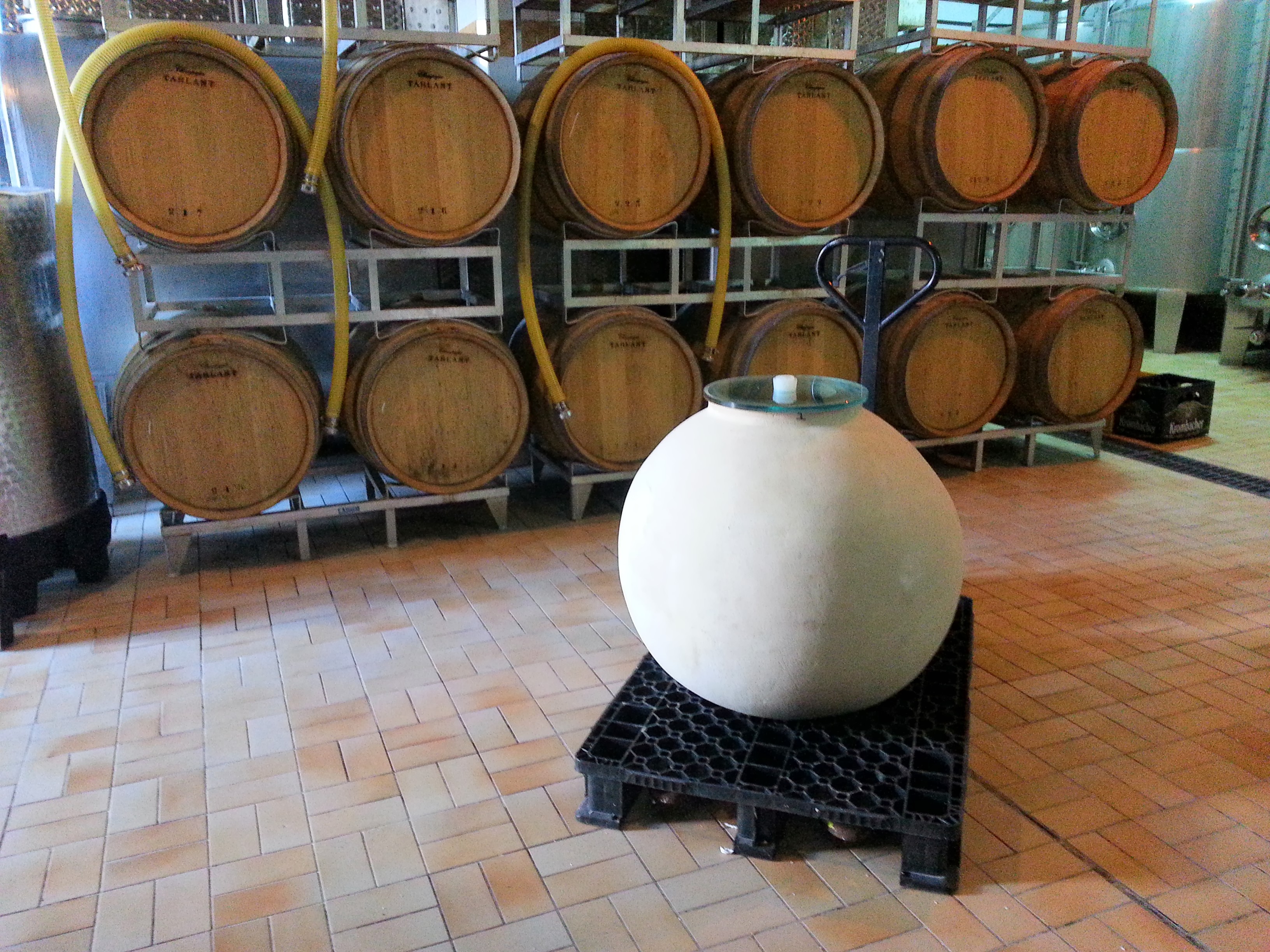
Suitable for both vinification and ageing, Clayver has surprised more than a few.
With a 2017 growth rate of +78%, the porcelain stoneware pot is ready to conquer US wine producers

Created in 2014, Clayver has made a big hit in the market. After having conquered producers such as Veuve-Clicquot and Tarlant with impressive results during comparative ageing trials, Clayver lands in US where it will be used for wine and even cosmetic products.

Clayver is an innovative stoneware round egg conceived for fermentation, vinification and wine ageing. Inspired by clay amphoras, Clayver inventors wanted to go beyond as far as mechanical resistance and impermeability. What makes a difference with traditional amphoras is shape and material.

Along with being aesthetically enjoyable, the round shape allows to keep the grape cap moist during fermentation, helping colour extraction. Convective movements contribute in reshuffling fine lees, thus improving wine structure and ageing potential. Wall thickness guarantees thermal inertia and a uniform, three-dimensional oxygen exchange concerning the smallest possible surface area. Stoneware is a resistant, isolating and easy to sterilize material, in addition to being safe when handling food Clayver is certified for use in foodstuffs.

Maison Veuve-Clicquot and Tarlant who is using it for ageing its Chardonnay, Château Les Carmes HautBrion and Château de Beaucastel, Guido Berlucchi, Livio Felluga, Le Macchiole are but a few names of producers who have been pleasantly surprised by results reached during comparative ageing trials and are now using Clayver.

Clayver has now 150 customers all over the world, with a +37% growth rate in the numbers of customers and a +78% in the amount of pieces ordered from 2016. It is now available in 2 different sizes: 250 and 400 litres.

If wine is Clayver intended use, it is not the only one. Cosmetics companies too have become interested in Clayver for the production of natural body and face lotions. Clayver in particular will be used for the maceration process being an inert material and therefore preventing any loss of matter from the container.

The Essence of Ornellaia 2014

The desire to nurture the Estate’s exceptional qualities has shaped Ornellaia’s philosophy since the beginning. Ornellaia is a cuvée of Cabernet Sauvignon, Merlot, Cabernet Franc & Petit Verdot and the faithful expression of unique terroir developed in harmony with nature.


For Axel Heinz, Ornellaia’s Estate Director and Winemaker, the 2014 vintage exhibits the character of ‘L’Essenza,’ or the Essence. “When one is confronted with a challenging growing season, to make a great wine, one has to focus on simply extracting that year’s very essence. And, in fact, the 2014 year unexpectedly turned into a pleasant surprise, since the heavy rains and low temperatures during the ripening stages were followed by a September and October which brought us exemplary weather conditions; the result was a somewhat later harvest, which delivered optimally vibrant fruit with crisp acidities. We complemented that result with meticulous hand-picking, whose objective was to select only the most sound, healthy clusters. What one notices immediately about the 2014 vintage is the high quality of the tannins: elegant and silk-smooth, with no rough edges at all.

2014 will be remembered in Tuscany for the summer that never was and as one of the most unusual. A warm and rainy winter was followed by a mild and dry spring, a distinctively average July and a cold and rainy August. All of this created difficult conditions for the ripening of the grapes. September and October, however, brought perfect conditions, with mostly sunny and dry weather, offering excellent conditions for ripening, particularly for Merlot. While we had an incredible amount of extra work to do in the vineyard, the combination of the Estate’s varied subsoils, the varietals of Cabernet Sauvignon and Merlot and our own detailed knowledge of the terroir all played distinctively in our favour. Ornellaia underlines the fundamental difference in terroir between the coast and the central Tuscan vineyards.”

In technical words, about the climate of 2014, in our area we had a warm and wet winter was followed by a mild and dry spring which allowed a normal vegetative growth with a punctual and regular flowering. The weather in July was perfect, August however was rainy and cold, creating very difficult conditions for ripening, and greatly increasing the risk of diseases. The meticulous work in the vineyard, with leaf stripping and treatments during the entire month of August enabled us to maintain the good health of our vines, allowing them to develop free of disease during September and October. These two months conditions, with mostly sunny and dry weather, gave us excellent conditions for ripening. During the harvest, it was crucial to select the grape bunches carefully, both in the vineyard – where in some plots we did up to three harvest passages – and on the selection table, so to fill the tanks only with perfectly healthy and fully ripe grapes. 2014 was one of the longest and most delayed harvests at Ornellaia, with the first Merlot harvested the 6th of September, and a large part of the historical vineyards – including some Merlot – harvested in October. The 2014 harvest, that ended on the 22nd of October, was the latest ever.

As always, the grapes were hand-picked into 15-kg boxes and then selected by hand on a double sorting table, before and after destemming, and finally softly crushed. Each grape variety and single vineyard block was vinified separately. Fermentation took place in stainless steel tanks at temperatures between 26-30°C for two week, followed by 10-15 days of maceration on the skins. The malolactic fermentation took place mainly in oak barrels, 70% new and 30% once-used. The wine then remained in barriques, in Ornellaia’s temperature-controlled cellars for about 18 months. After the first 12 months of maturation, the wine was assembled and then returned to the barriques for an additional 6 months. After bottling, the wine aged a further 12 months prior to release.


Harvest in the moonlight, presented by Miolo cellar


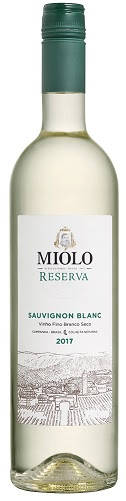
The Miolo winery announces the launch of the 2017 harvest of one of its most unusual wines: the Reserva Sauvignon Blanc Colheita Noturna, made from grapes harvested in the cool dawns of the promising region of Campanha, in Rio Grande do Sul (Brazil).

 The poetic process of elaboration counted on a new technology of nocturnal mechanized harvest, implemented in Brazil in 2016 by the Miolo group, that launched, in the occasion, the first national wine coming from grapes harvested at night mechanically. All the procedures were accompanied by a team of the group, who made an inversion of schedules to dedicate themselves to the elaboration of the new Reserva Sauvignon Blanc.

 “We hide the curls of sunlight during the maturation so that in the moonlight we can harvest. The grapes come fresh to the winery for the beginning of the elaboration, which allows to preserve the aromas and to bring new characteristics to the fruit and, consequently, to the wine “, explains the oenologist and superintendent of the brand, Adriano Miolo.

He notes that the main differential of the process is the influence of low temperatures at night. The colder period preserves the green colors of the must, influencing not only the taste and aroma of the wine, but also its coloration.

“At dawn, the grape is chilled and has a different aromatic preservation from the fruit harvested during the day at high temperatures. We control the temperature of the Sauvignon Blanc still on the vine, allowing to highlight and explore some of its potentialities, in addition to maintaining its natural acidity, “details Adriano.

 Crystalline and young, the label is the expression of the romanticism of the harvest under the light of the moon. Elaborated “ice”,  should be consumed: the ideal temperature to enjoy the new Reserva Sauvignon Blanc is 8 ° C. Besides being ideal as an appetizer, it is the perfect companion for salads, fish, white meats, pastas, pizzas and cheeses. As it is a white wine with pronounced acid freshness, it harmonizes with light and medium-bodied foods. By contrast, it goes well with fatty foods and with tenderness to sweetness.

Sebastiano Sanna

South African wine wins platinum at World Wine Awards

At the recent Decanter World Wine Awards 2017 (DWWA). Klein Constantia estate with Vin de Constance 2013  won a platinum medal.

Vin de Constance is a recreation of a world famous wine of the 18th and 19th centuries; this is a unique and naturally sweet wine.

Due to a prolonged winter and cool spring, the growing season was late in 2013 and delayed budburst by up to 2 weeks. Ideal conditions prevailed with moderate daytime and cool nighttime temperatures. This together with a dry season ensured for perfect ripening and raisining of the Muscat de Frontignan.

After the wine blind taste by wine experts the gold medal winners went on to compete for platinum status.

Vin de Constance 2013 achieved one of the top scores with 96 points.

This is a bright and gold in appearance. It has strong aromas of citrus and frangipani on the nose. In the mouth  appear full-bodied and complex with a balanced acidity and sugar fruit. The wine concludes with a long, spicy and grippy finish.

The wine was aged in a combination of 60 % new French oak, Hungarian oak and French Acacia.  It was left for a period of 3 years in barrel on the gross lees before racking out and blending. It spent a further 6 months in tank before bottling.

SA wine grape harvest excels despite drought

The South African wine grape harvest is slightly larger than last year following a dryseason and consumers can look forward to exceptional wines from the 2017 vintage. The wine industry body VinPro says the 2017 harvest, that is at 1 425 283 tonnes 1.4% larger than in 2016, was initially expected to be smaller. “A decrease was expected due to the second consecutive very dry, hot season.

However, cooler nights throughout the growing season and the absence of significant heatwaves during harvest time buffered the effect of the drought to some extent,” says Francois Viljoen, manager of VinPro’s viticulture consultation service.

The Swartland and Paarl regions obtained much larger crops following sharp declines in 2016. Robertson’s production was close to the record harvest in 2016, while Olifants River and Breedekloof increased somewhat following small crops last year. Slightly smaller yields were noted in the Northern Cape, Stellenbosch and Worcester and a much smaller harvest in the Klein Karoo.

Although higher rainfall brought some relief in certain regions, it was still very much below average and the warmer weather conditions required producers to manage water usage ver y closely.

On the plus side, the dry conditions resulted in very healthy vineyards and smaller berries with good colour and flavour concentration. These conditions, along with the ideal cool weather during harvest time formed the perfect combination for an exceptional quality wine grape harvest, according to Viljoen.

Wines of South Africa CEO, Siobhan Thompson is positive, “Having spoken to many of our producers, general sentiment is that the harvest was one of the best seen in many years, specifically in terms of quality. The cooler than normal weather experienced in February saw to more even ripening periods and winemakers from various regions have commented positively on the outcome, despite the challenging weather conditions we’veexperienced. We are looking forward to seeing what this somewhat exceptional vintage does for South African wines as a whole in international markets.”

“We are grateful that the weather played along during the 2017 harvest, but looking towards the 2018 winegrape season that is around the corner, we are really hoping for rain during the upcoming post-harvest andwinter period,” says Viljoen. South Africa is the 8th biggest wine producer world-wide and produces about 4.1% of the world’s wine. Total crop size:The 2017 wine grape crop is estimated at 1 425 283 tonnes according to the South African Wine Industry Information and Systems (Sawis) at the end of April 2017. This is 1.4% higher than in 2016.

The 2017 wine harvest–juice and concentrate for non-alcoholic purposes, wine for brandy and distilling wine included–is expected to amount to 1 106.3 million litres, calculated at an average recovery of 776 litres per ton of grapes.

The post-harvest period (April and May) was very hot and dry, which led to early leaf-fall in some areas, and the accumulation of reserves was moderate.

Winter arrived late in most regions, but was cold enough to break dormancy. Although rainfall was higher than the previous season in some areas and could carry the harvest through, it was still below average and the dam and soil water levels remained under pressure. Producers therefore had to irrigate meticulously. Spring arrived on time and warm weather in August contributed to somewhat earlier than normal, but even budburst. However, cooler weather in September resulted in some instances of later and more uneven budburst. October and November was characterised by cool nights and warm days, that was beneficial to flowering and berry set. Some producers in the Breedekloof and Worcester regions experienced black frost in October, which resulted in limited crop losses.

The growing season and especially harvest time will be remembered for cooler nights and warmer, drier days. Harvest time kicked off on time in most regions, with the exception of the Northern Cape that started two weeks late due to frequent rainfall. Big showers at the beginning of the Stellenbosch region’s harvest resulted in bottle-necks in the harvesting of some cultivars.

The generally dry season resulted in very healthy vineyards with limited occurrence of pests, diseases or rot.

ExpoVinis Brasil 21st edition


Luis Gutiérrez, of The Wine Advocate magazine – of the critic Robert Parker – comes to the country exclusively to give lecture at Forum ExpoVinis.

Between June 6 and 8, 2017, São Paulo (SP) will host the 21st edition of ExpoVinis Brasil, considered the main meeting of wines in Latin America, with more than 400 exhibiting brands. They are red, white, rosé and sparkling, with three days of intense programming for professionals and drinkers. In addition to tastings, the fair promotes business roundtables, lectures and special events, conducted by professionals who are a reference in the market.

Brazil, Chile, Portugal and Argentina are some of the countries that have already confirmed their presence at ExpoVinis, where they will present their trends in consumption and production. Important associations, such as the Brazilian Wine Institute (Ibravin) and Wines of Chile, will organize the participation of wineries representing their terroirs. The visitor will be able to make a true return to the world of wine through their glasses, as well as close deals with some of the main players in the segment.

Forum ExpoVinis

The first two days of ExpoVinis Brasil will be dedicated to the discussion of current events in wine production and marketing. To do so, it will bring renowned international critic Luis Gutiérrez (photo), who is part of the group of tasters of the magazine The Wine Advocate, signed by Robert Parker, maximum reference in the world of wine.

On June 6, Tuesday, Luis Gutiérrez speaks on the theme ‘The Rumors of the World Wine Industry in the Post-Robert Parker Era – How will the scoring scales and their influence on the wine market in Brazil be reconfigured’. Also will be discussed by market experts ‘Organic Wines and Biodynamic Production’, the ‘Trends and Perspectives of Chilean Wine’ and ‘The Diversity of Brazilian Wine Regions’.

On Wednesday, June 7, the Fórum ExpoVinis will be dedicated to importers, restaurants and retailers. Ari Gorenstein, CEO of the online store Evino, will address ‘E-Commerce in the Wine Sector and Loyalty Programs’. With focus on restaurants, ‘Innovation in Wine Chart Composition – How Great Sommeliers Compose Their Letters’ is the theme of the sommeliers John Pichetti’s lecture, restaurant D.O.M., and Thiago Locatelli, Varanda Grill.

Jorge Lucki, consultant at ExpoVinis Brazil and one of the most renowned wine columnists in the country, will talk about ‘Harmonizations of classic and daring wines’. Then, the sommelier Gabriela Bigarelli presents the theme ‘Improving the Relationship with Importers – Price and Tax Management’. ‘Trends in Wine Bar Allied to Good Food’ is the talk of Rafael Ilan, a member of the Bardega Wine Bar.

The Fórum ExpoVinis will conclude with the discussions on wine retail: how to work wine in a scenario of economic instability, portfolio diversification, how to increase retail profitability through direct import and the price ratio of imported and national wines.

The complete grid with the schedules and all themes will be announced shortly in www.expovinis.com.br.

New Wine of Origin Cape Town Flies Flag for South African Wine Industry

 
The profile of South African wine is set to attract greater international attention now that a new Wine of Origin District named after Cape Town, one of the world’s foremost tourism brands, has been approved by the South African Wine and Spirit Board.
This ground-breaking move aimed at elevating the profile of South African wine through a direct association to Cape Town will unite the wine wards of Constantia, Durbanville, Philadelphia and Hout Bay under the inclusive name Wine of Origin Cape Town.
A total of 30 wineries, including some of South Africa’s leading brands such as Groot Constantia, Durbanville Hills, Diemersdal, Klein Constantia, Nitida, Meerendal, Buitenverwachting and Cape Point Vineyards will join forces under Wine of Origin Cape Town, capitalising on the global recognition Cape Town has achieved as an international tourist destination and sought-after lifestyle brand.
According to Rico Basson, CEO of South African wine producers’ organisation Vinpro, an official Cape Town wine district automatically links the local wine industry to one of the leading place names in international tourism, lifestyle and business. “The collaboration between the various wards and wineries in coming together to form the new wine district is a huge step forward for the South African wine industry,” he says.
“It is an example of innovative co-operation in harnessing producers to market their respective regions under one name, the name Cape Town being much-needed for South African wine to present itself as a global player. As a wine region, Cape Town now encapsulates a wonderful set of dynamics in terms of heritage, culture and modern wine styles. South Africa is already well-known for our wine tourism offering and this new development will add to integrating our strategy of innovative marketing.”
Basson said the wards involved are incorporated in a unique area of the Cape Winelands that includes wards surrounded by the effect of the Atlantic Ocean and representing a similar geography. “South Africa’s Wine of Origin legislation is highly acknowledged and respected as one of the best implemented and regulated in the world, so besides the tremendous marketing opportunities Wine of Origin Cape Town holds, the region represents a wine-making and grape-growing entity with vast similarities.”
Duimpie Bayly, chairman of the Wine and Spirit Board’s Demarcation Committee, says that from a wine production side, the wards of Constantia, Durbanville, Philadelphia and Hout Bay are meant to be together. “We considered the various wards in the new proposed district and found great similarity in terroir as well as clear boundaries in a district that at its furthest point is 36km from the Cape Town City Centre,” he says.

The Slow Food Chefs’ Alliance in Russia is gaining more and more members across the country. At the June 10–11 event organized by the Tipografia restaurant in Gorno-Altaisk, the first Siberian chef will join the Slow Food international project, committing to cooking and promoting products from the Slow Food Ark of Taste and communities of local producers.

The Altai republic is a mountainous region located on the fringes of Central Asia, at the intersection of Mongolia, Kazakhstan and China. It is characterized by a variety of landscapes once populated mainly by nomadic peoples like Chelkans, Kumandins and Tubalars.

The Slow Food Chefs’ Alliance project already has hundreds of members in eighteen countries (Albania, Argentina, Belgium, Brazil, Canada, Colombia, Ecuador, France, Germany, India, Italy, Kenya, Morocco, Mexico, the Netherlands, Uganda, United Kingdom and Russia). In Russia 18 chefs have already joined the Alliance.

On June 10, starting from 4pm, Yulia Fominykh, a Chefs’ Alliance member from the Tipografia restaurant, will prepare a special menu recalling Siberian traditional cuisine, including dishes of horse meat cooked on an open fire.

Yulia Fominykh says: “Being at the intersection of geographic and cultural regions has influenced the gastronomic heritage of Altai. We want to study its history from ancient times to the present, in order to understand the essence of the dishes, the seasonality of the ingredients and the opportunity to interpret and adapt it to modern tastes. It is interesting that at the heart of our ancestral cuisine there was a no-waste concept.

The main idea of the Slow Food Chefs’ Alliance is close to me, since I am worried about the quality of food being produced in our Republic of Altai. The legislative system does not always help us in using local ingredients, and we are forced to buy products from big companies at the expense of quality. So, why not try to change the rules of the game through this international project?

The Slow Food Chefs’ Alliance shows that there are people worldwide united by one idea – the revival of cultural heritage via the preservation of traditional gastronomy and agrobiodiversity. On this occasion we will gather together and talk about the Slow Food philosophy. The purpose is to show to ourselves, our guests and a wider public that our traditional dishes are accessible and that our rich culture needs to be preserved.”

As of today, there are 63 products from Russia on the Ark of Taste. The chefs who have signed up in Russia so far are:

Alexey Kondratiev, Krepostnoi Val, Azov

Anton Abrezov, Gras x Madbaren, Saint Petersburg

Anton Kovalkov, B.E.R.E.G. District, Moscow

Dmitry Novokreshchenov, Gnezdo Pekarya, Suzdal

Dmitry Savkin, LavkaLavka cafe, Moscow

Elena Savchuk, LavkaLavka restaurant, Moscow

Igor Grishechkin, CoCoCo, Saint Petersburg

Maksim Rybakov, Pushkarskaya Sloboda, Suzdal

Mark Statsenko, Spices, Moscow

Mikhail Lukashonok, Mark i Lev – Privolye, Moscow region

Pavel Klepikov, Mark i Lev – Rublevka, Moscow region

Sergey & Ivan Berezutskiy, TWINS and Wine&Crab, Moscow

Stanislav Pesotskiy, Bjorn, Moscow

Tatyana Myakotina, Ptichiy Dvor, Suzdal

Vera Kalashnikova, Suzdalyskaya Trapeza, Suzdal

Yulia Fominikh, Tipografia, Gorno-Altaisk

Yury Kovalchuk, Ogurets, Suzdal


Chile leads the imported wine market in Brazil


The Brazilians increased the consumption of Chilean wines in 2016 and again Chile closed the year leading freely the ranking of imported wines in Brazil. This is what International Consulting recently points out: Last year, growth in relation to 2015 was 14% in value and 18% in volume, representing a market share of 44% in value and 48% in volume, more than double of Argentina, which holds 16%.

 Wines of Chile, the association that represents the Chilean wine industry, operates in Brazil with participation in some of the major wine events, as well as its own activities, such as the long awaited Tasting Wines of Chile in São Paulo, one of the most important events of the national wine calendar.

In 2017 the activities begin with the participation in ExpoVinis Brasil, the main wine fair in Latin America that takes place in São Paulo from June 6th to 9th. To introduce visitors to the news of one of the most diversified terroirs in the world, WOC will bring the trends and highlights of the wineries: Alto Quilipin, Aresti, Bouchon Family Wines, Doña Javiera, La Ronciere, MontGras, Pérez Cruz, Sur Valles Wine Group and Sutil Family Wines.

 “The activities carried out by Wines of Chile in Brazil have as main objective to present the diversity of terroirs, valleys, grapes and techniques of the wine industry in Chile. The high quality and variety of our labels are validated by the Brazilian consumer, who year after year has appreciated Chilean wines more and more “, summarizes Angelica Valenzuela, commercial director of Wines of Chile, who will come to São Paulo especially for the event.

Macron as ‘Ambassador’ of Bacchus

The newly elected President of France Emmanuel Macron reportedly is a connoisseur of French wines, which is a splendid news for wine lovers in the  5th Republic, and around the world. Decanter, the UK reputable wine journal, claimed Macron appears to be not only a wine lover but a skilled enthusiast with serious blind-tasting skills.

Macron’s appreciaton of oenology is a crucial factor for the status of wines because previously French presidents were not overwhelmingly supportive of the viticultre. Nicholas Sarkozy was actively antagonistic to France’s world-leading wine industry, notorious for his  abstinence, while another,  Jacques Chirac, openly preferred Mexican beer ‘Corona’ to wines. The last president who actively supported French wine as an export industry was François Mitterrand in last millenium (!).

In the run-up to the election, French magazine Terre de Vins filmed a series of videos with Macron flaunting his blind tasting skills, concluding the show with a autoproclamation as a  ‘wine is an ambassador’ for the country.

Macron correctly identified two of three unidentified samples: a Bordeaux Blanc and a Côteaux d’Aix en Provence rosé. His only miss came in identifying a Château Pape-Clément 2005 as being from Pauillac, not Pessac-Léognan.

« Older Entries Recent Entries »