Author Archives: VinoeStile

Romania, a great country of wines #romania #wines

vinsroumains1

Romania is definitely a great country of wines.  At the heart of the Carpathian Mountains have always been great and extensive plantings of vines. Romania is among the 15 largest producers of wine with eight wine regions and is 6th class in Europe, after France, Italy, Spain, Germany and Portugal. Romania also ranks 5th among European wine countries, with an area of ​​183 400 hectares of vines in 2010.

Romanian wine, even if it is sweet, dry, semi-dry or semi-sweet still has a certain charm that is enjoyed not only by Romanians but also by the wine lovers around the world. The country has indigenous varieties which distinguish as Feteasca Neagra (red) and dried plum taste or Feteasca Alba and Tamaioasa (white). The cellars “Beciul Domnesc” are the largest wine cellar in Romania, with a collection of over 100,000 bottles, the oldest of which dates to 1949. Although it seems hard to believe, Romanian’s wines are appreciated and are purchased by foreign investors.

In the evolution in recent years, the wine market in Romania is surprising, because it has evolved better than other economic sectors. Factors that have contributed to this situation are numerous, for example the development of retail, the appearance of the Internet, foreign investment in the area. Over the past 25 years, the Romanian wine has developed in several stages: the wines, brands, assortments ,. This has directly influenced the preferences of Romanian consumers and revolutionized the tastes and dictated the trends.

vinsroumains3

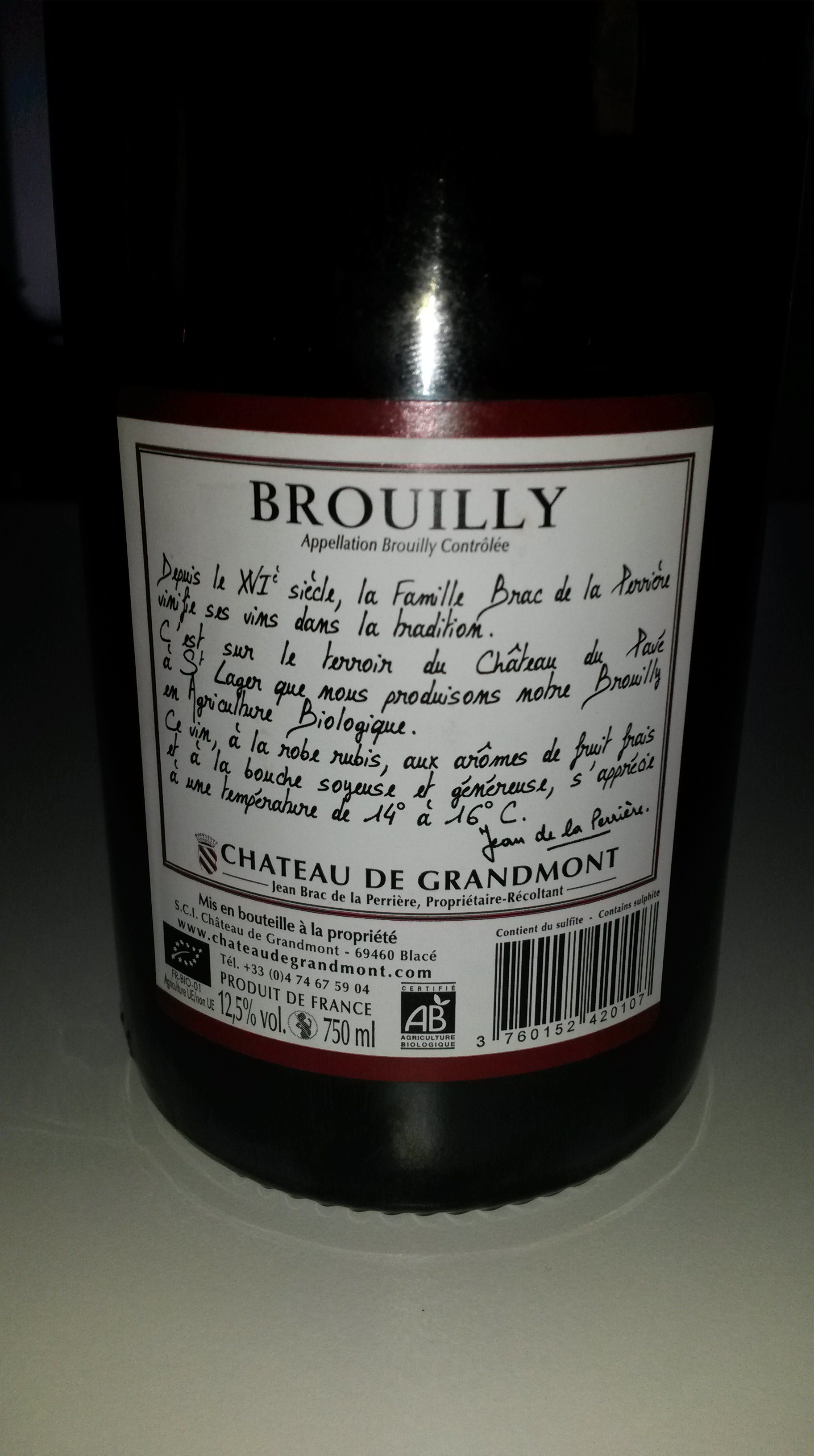
Brouilly 2013. Château de Grandmont. #france #beaujolais #wine

20150227_101113

The Brouilly 2013 Château de Grandmont is an organic wine produced in the Beaujolais region, in Blacé

The label showing a beautiful castle with a bucolic background is not just a selling point.
The wine is made  in a familial property located in the Grandmont hamlet. Originally, monks of Prieuré started to occupy the hamlet in the XIIthe century until year 1769, when Louis XV decided to dissolve this religious order.
At the top of the hill stands a church, built in he 19th century. The depicted castle was also built in the 19th.

This wine has an appellation “agriculture biologique” and testifies of a will to protect the ecosystem. The followed objective is to maintain the natural grounds richness, among others by adopting an ancestral method of fighting against pests.

20150227_101124

Brouilly 2013 is an AOC (appelation d’origine contrôlée).
The grape variety is a gamay noir with white juice. The wine has a generous and silky taste. It is of a dark ruby colour, it has a delecate spicy nose with wild berries accents. When we taste, we feel little red fruit with slight tannins.  It’s a fantastic wine with red meet of sausages. We loved il a lot !

Anastasiya Tretyak

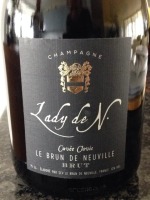
Champagne Lady de N.


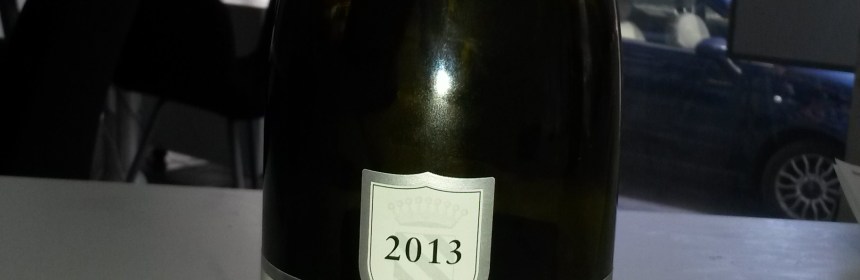
LeBrundeNeuvilleNThis lovely bottle of wine gave us excellent bottle of Lady N. A cuvée partly in oak domain Le Brun de Neuville, a renowned house that has existed for over 150 years Bethon in Marne.

The bottle is very elegant. The brown label is very stylish. This champagn derived primarily from the 2007 harvest has a gorgeous dress. On the palate, it is lively, explosive, powerful. A true champagne with character.

Its long finish is exceptional. It is a suave wine, has a tasty and frank mouth  that delights palate

The aromas are reminiscent of the white flower and pear. Chardonnay, which is present for 99% has with champagne a magnificent expression.


MD Desnerck

http://www.lebrundeneuville.fr/

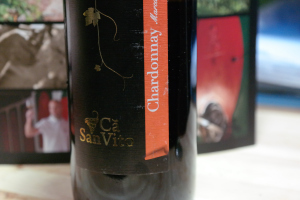
Chardonnay from Ca’ San Vito

SAMSUNG CSC

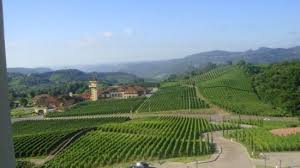
We are in the venetian foothills with its hills and plains near the rivers, fertile land and exclusive where the diversity of the earth and the wind is capable of giving valuable gifts and very different, such as Prosecco and Raboso.

This Chardonnay comes from the flood plains of the Piave river in the province of Treviso.Composed of 100% Chardonnay, this wine shows a straw yellow color with green reflections. The nose gives off an unexpected scent of roasted almonds, licorice and has a floral bouquet. In the mouth it mixes well to the palate is balanced and full-bodied. This wine with real potential, goes well with white meats, fish, fresh cheeses and generally with the classic Mediterranean dishes like pasta with tomato sauce and fresh basil or garlic bread.

The foot hills oft the Veneto is a region where the” being Venetian”is not just a question of territory, it is a way to do, to be passionate about the work quality-consciousness, pointing to the excellence of its wines.It is in this context that the men of the cantina Cà San Vito really use all their knowledge to give perfumes and flavors for a really DOC taste.

 http://www.casanvito.eu

Ca’ di Rajo: a great wine from Veneto

Ca'di Rajo


Our newspaper has enjoyed for a superb Italian wine from the Veneto region. This is CA ‘DI OLAP, Notti di lunal del piave, DOC Riserva 2007 Grape: Raboso e piave
This wine has a deep ruby ​​color makes all the flavors of the Piave. His wine is characterized by a strong intense flavor, reminiscent of the game.
Grapes “Raboso e piave” grows on a vine grown using the method “bellusera” which is an ancient method of growing grapes on the vine to 2.5metres high. the grapes are thus enjoy a sunny climate.
The vinfication of this wine is very special. Besides grapes macerated normally (70%) in the cellar are added later the same grape grapes dried on racks in the attic for 40 days (30%). This wine has therefore strong similarities with a classic Amarone.
Maturation is 36 months in oak barrels of 12 liters.

This wine is 14.5 degrees indicated for game dishes and also to be enjoyed with cheese Gran Padano vieu. Excellent with robortifs dishes where its acidity wonders.

http://www.cadirajo.it/

MD Desnerck

THE INESCAPABLE FROM ROUSSILLON: CHÂTEAU LES PINS.

chateau les pinsChâteau les Pins is first a large and beautiful traditional Catalan building, stone and red brick (the famous “cayrous”), built in the mid-nineteenth century. But it is also, and above!  A vineyard designed as a gem with a complete collection of the best wines of the region. It is on its 28 hectares, for more than 20 years, the Château Les Pins raise wines with both identity and pride of their roots, but also unique in their genre, their quality, with  typical and excellent ageing potential after affinnage in the cellars, whether red or white.
A typical red with the well pronounced  characters of the south and already full-bodied. Intensity,  melting character, accompanied with notes of licorice, with spices and with vanilla. This wine is aged 12 months in oak barrels. Recommended to taste on beautiful red pieces of meat, wild meat, cheeses or any festive dishes.
Multi-award-winning wines that prove, if needed, that the Roussillon is known to produce excellent wines to enjoy on site in summer, but at home too, throughout the year.
Bronze medal at Decanter 2012 and Silver medal at Vinalies 2012 !
A vineyard that produces “AOP” and “IGP Catalan Coast” wines which are representative of the characteristics of the Roussillon terroir. And the only one certified in sustainable development agriculture  in the Roussillon, and which continues to innovate in its techniques to develop its vintages.
Worth to own in his cellar as quickly as possible …elegance and finesse.
Olivier Bulto

SUMMER EARTHLY DELIGHTS AT ALAJMO’S RESTAURANTS

Summer is in full swing in Italy, and as a result of Alajmo kitchen pantries are packed with ripe and colorful ingredients.

alajmo

In celebration of all the earthly delights that continue to arrive at Alajmo doorstep, Max has created new menus for all six of the Alajmo family restaurants and bistros.

At Le Calandre, start your meal with a cold melon soup with lobster crudo and green celery sorbet, followed by olive oil-based risotto with fresh watermelon, mullet bottarga, Tropea onions, bergamot and pistachio.

Next door at Il Calandrino, you will find eggplant ravioli served with a mix of Mediterranean delicacies, like datterini tomatoes, basil pesto, black olives and anchovies. And be sure to save room for a pistachio semifreddo with peach sauce and raspberry puree.

Across town at La Montecchia, the summer menu features mouth-watering dishes like beef carpaccio with hemp seed sauce, lime and chili pepper and bigoli with squab and mushroom sauce.

For a causal lunch on-the-go or a relaxing dinner al fresco, head to abc Montecchia where you will find a wide selection of pizzas and bruschette, as well as Italian summertime classics like eggplant parmesan and vitello tonnato (veal in tuna sauce).

If you find yourself in Venice don’t miss Ristorante Quadri this summer.  Treat yourself to an extra virgin vegetable garden made with sun-soaked summer produce, followed by Venetian-style fried fish with Quadri sauce. And for dessert, choose between Per-Bellini, peach and prosecco sorbet with apple and peach meringue, or gin tonic fruit salad with pineapple mousse.

And for a quick lunch or dinner, stop by abc Quadri for acold tomato soup with crispy vegetables or club sandwichwith light curry mayonnaise.

http://www.alajmo.it/

Henry BORZI

BELGIAN BEER EXPERIENCE PROJECT AT BRUSSELS STOCK EXCHANGE IN 2018

The City of Brussels approved the idea of establishing a temple dedicated to belgian beers at the previous Brussels stock exchange “La bourse”. 

bourse

Failing to be recognized intangible cultural heritage of humanity by UNESCO, one of our national treasures will soon have its temple: beer. It will be a public/private  cooperation between the City of Brussels, the Government of the Brussels-Capital Region and the federation of belgian brewers to make discover the belgian cultural beer traditions.

Philippe Close, alderman for tourism, expects over 400000 visitors a year, the temple will become  among the five most touristic attractions of the City. The temple for belgian beers will present in a recreative and educational way to this national symbol: beer !

The project will be based on the experience of the brewers to make discover belgian beers and all the culture of the brewing world.  The visit will generate both curiosity and the senses of visitors, polls of intentions have already been made ​​and are very positives.

The belgian brewers federation director, Sven Gatz, saying: “nevertheless maintaining the international reputation of our country, is added the will to strengthen our image of expertise in the brewing industry. Then, as well belgians as tourists will discover the sector of belgian beers in an emblematic neighbourhood in the historical center of Brussels.”

Even the Ministry for Budget and Finance of the Brussels-Capital Region invests in a feasibility study dedicated to this project. The brewing world will be discovered in all its culture, diversity and history.

More details on this project from these three partners will be announced in september.

To be discovered…

Olivier BULTO


CEJA WELCOMES PROGRESS MADE IN CAP REFORM

After negotiations continued late into last night, the Irish Presidency said that it had agreed in principle to support a mandatory top-up of direct payments for young farmers in Pillar I of the new CAP 2014-2020.


SONY DSCAs Ministers meet in the Agriculture Council and discuss the latest proposal for a revised negotiating mandate, CEJA urges them to accept the new mandate so that it can be put to the European Parliament Committee for Agriculture and Rural Development (COMAGRI) tomorrow in order to achieve political agreement on a strong CAP for the future of European agriculture and to provide farmers with an end to uncertainty by the end of the Irish Presidency.

Young farmers have been a key part of this reform, and CEJA has been particularly vocal on the importance of a mandatory young farmer scheme in Pillar I of the new CAP – in order to stop distortions across the Union and therefore an unfair playing field for young people attempting to enter the sector. The European Commission has supported this from the beginning and included it as a mandatory scheme in its legislative proposals released in October 2011; this was reinforced in turn by the European Parliament after votes in COMAGRI and then plenary on the Parliamentary reports on the CAP proposals. CEJA now welcomes progress made in trilogues over the past two days, and calls on the Council to accept the Presidency’s revised negotiating mandate which includes a mandatory top-up of direct payments for young farmers.

Commenting on the developments, CEJA President Joris Baecke stated that: “We are pleased to hear that the Presidency believes Ministers are willing to shift on this point – we have said from the beginning that the demographic crisis in EU agriculture is simply too important to ignore. However, we are well aware that ‘nothing is agreed until everything is agreed’, but, considering the impressive progress made in the last few months, and even more so in the last few days, CEJA trusts that the institutions will find agreement by tomorrow therefore providing some foresight and longer term perspectives for farmers across Europe – especially for young farmers and young people considering entering the sector in the future.”

IN BRAZIL WINE SPEAKS ITALIAN

In Brazil, Italians have been able to be known not only for their contribution to the development of one of the most promising emerging markets in the global economic landscape but also in the territory entrench the culture of knowing how to make good wine.

Bento goncalvesEverything began in 1875 when Italian immigrants settle in the south of Brazil for the first importing a new philosophy in the cultivation of the vineVitis vinifera with the adoption of new cultivation techniques with traditional row and pergola or pylons.

In fact, prior to their arrival there was only a variety of American vines and the wine produced was limited to the typical “Suave” wine with a sweet tatse and a lack of  structure. In short, a true cultivation that it focused on the quality did not exist also because protectionism persisted for years. It prohibited the importation of wine from other countries and then to establish a  competitive benchmark in terms of quality. A good taste was almost unthinkable.

Settlement in Rio Grande do Sul

Italians settled in the state of Rio Grande do Sul and they  were able to make of  winemaking  a successfulwine entrepreneurial activity. These italians are mostly natives of the Northeast as the Venetians families like the Miolo, the Carraro with the brand “Lidio Carraro“, or the Boscato and the winemakers Casa Valduga originating from Rovereto in Trentino.

The Miolos originating fro;  Piombino Dese in the province of Treviso, arrived on Brazilian soil at the end of the nineteenth century and by the will of the patriarch Giovanni, they  decided to purchase immediately a small plot in the city of Bento Goncalves, soon becoming the wine capital of Brazil.

Today, the  Miolo Wine Group with 40% of the market for quality wines in Brazil and 15% of production of sparkling and demi-sec sparkling wine is considered as the first winery in the country. The company that makes of internationalisation a key to its revival, produces 12 million liters of wine for about a thousand acres scattered throughout Brazil and also in the famous Vale do Sao Francisco at Bahia, the only place in the world where you can get 2 crops per year.

With the start of the first imports from Argentina, Chile, France before  the 70s and then finally in the 90s the few Brazilian producers to remain in the market had to review the methods of production focusing on quality and starting to grow international varieties , Cabernet Sauvignon, Merlot, Cabernet Franc and Malbec, Chardonnay, Riesling Italico, Pinot Noir and many others.

The first quality wines produced in Brazil are derived mostly from Merlot and in Brazil has all its features. A harmony of aromas and flavors that we unexpect: black cherry, currant, cedar, mint green olives but also tobacco, tea leaves short, elegance and style are not lacking.

 Henry BORZI


« Older Entries Recent Entries »