Tag Archives: winery

South African Wines: A Journey Through the Land of Diversity and Quality

If there’s one thing wine teaches us, it’s that every bottle tells a story. And when it comes to South African wines, that story is particularly captivating. South Africa, with its unique blend of climate, geography, and winemaking tradition, is emerging as one of the most fascinating and dynamic regions in the global wine landscape. But what makes these wines so special? And why should we start paying more attention to this remarkable wine-producing country?

South Africa is not only a land of breathtaking landscapes, but also a land of contrasts, where biodiversity is truly extraordinary. Its wine regions stretch along the coast, from the Western Cape to inland areas, and the variety of soils and microclimates offers winemakers a broad range of possibilities.

The famous “Cape Doctor”—the wind blowing in from the Atlantic Ocean—is one of the key climatic elements that defines South African viticulture. On the one hand, it helps to keep temperatures cool, but on the other, it presents challenges in the vineyard. Yet, as in any great story, these challenges are met with creativity and passion, resulting in the production of some truly remarkable wines.

South Africa has a long winemaking tradition that dates back to 1659, when Jan van Riebeeck, founder of the Cape Colony, planted the first vines. Today, the country is one of the world’s largest wine producers, and it’s also a place where experimentation is part of daily life.

Among South Africa’s most emblematic grape varieties is undoubtedly Pinotage, a cross between Pinot Noir and Cinsault, created in 1925 by Professor Abraham Perold. This unique grape gives rise to full-bodied red wines marked by bold black fruit notes, along with more complex smoky and earthy undertones. Loved by some and criticized by others, Pinotage has become a symbol of South African wine—much like Chianti for Italy or Malbec for Argentina. Modern expressions are well-balanced and often offer surprising elegance and structure.

Alongside Pinotage, another variety gaining attention is Chenin Blanc. Although originally from France, this grape has found a second home in South Africa, where it expresses itself with freshness and energy, making it incredibly versatile. From dry, mineral styles to richer and rounder expressions, South African Chenin Blanc is building a strong reputation, especially due to its adaptability to different styles and terroirs. It’s a wine that can be fruity yet complex—ideal for a wide range of food pairings.

While South Africa is known for its native grapes, international varieties like Merlot and Cabernet Sauvignon still play a major role. The cooler climates along the coast and in inland regions allow for slow, steady ripening, giving wines refined tannic structure and good acidity. These South African interpretations are often marked by ripe red fruit, subtle spice, and excellent aging potential.

In recent years, South African producers have also started experimenting with international grapes like Sangiovese and Syrah. Some of the more adventurous winemakers, inspired by the Italian Supertuscans, are blending native and international varieties to create cuvées with strong character and personality.

Another aspect that sets South African wines apart is the growing commitment to sustainability. The country’s viticulture sector is investing heavily in responsible agricultural practices, such as biodynamic techniques, water resource management, and biodiversity preservation. The increased environmental awareness is also backed by certifications like Integrated Production of Wine (IPW), which guarantees environmentally friendly wine production.

South Africa’s wine areas, especially the Cape of Good Hope region, have long been central to environmental conservation projects. Beyond winemaking, the country is home to an incredible variety of flora and fauna, and more and more producers are working to protect this natural heritage.

Although South African wines are increasingly appreciated and present in international markets, wine is truly a part of everyday life at home. South African families love their wine and view it as an essential part of daily living. Winery visits and tastings are common experiences, and wine regions such as Stellenbosch, Constantia, and Paarl have become major wine tourism destinations. The hospitality in the cellars is warm and authentic, offering visitors the chance to dive into the local wine culture while tasting some of the country’s most renowned labels.

South African wines are not only an intriguing choice for those looking to explore new wine experiences, but they are also a testament to how viticulture can adapt and thrive in a complex and diverse environment. From Pinotage to Chenin Blanc, and from Bordeaux-style reds to bold blends, South Africa offers a range of wines that can please every palate—from the curious beginner to the seasoned connoisseur.

If you haven’t yet had the chance to explore the wines of this extraordinary land, now is the time. Quality is rising, passion is palpable, and every bottle is a new discovery. As a wine lover, South Africa is a chapter worth reading—and sipping—carefully.

Personally, I had the pleasure of being guided on this new oenological journey by Fabio Albani of Afriwines, the main importer of South African wines in Italy. For those looking to explore new experiences: www.vinisudafrica.it.

Marco Lucentini

Making Wine Today: An Art of Passion, Challenges, and Bureaucracy

Producing wine today is not just a matter of passion and tradition. It is an activity that requires technical expertise, managerial skills, strategic vision, and above all, great resilience to the daily challenges that go far beyond the vineyard. From vine cultivation to the bottle that reaches the table, the journey is long, arduous, and often underestimated.

The first obstacle is nature itself. Climate change is revolutionizing viticulture. Prolonged droughts, late frosts, sudden hailstorms, and heat waves make every season unpredictable. Added to this is the spread of new diseases and pests, requiring constant and costly interventions. Furthermore, vineyard work requires specialized labor, which is difficult to find and retain. Agricultural labor regulations, rightly strict, entail fixed costs and obligations that not all small producers can easily sustain.

Even when the grapes are perfect, turning them into wine is anything but simple. Beyond the technical care required in the cellar, producers must comply with a myriad of regulations: labeling, traceability, certifications, electronic records, health authorizations, environmental constraints. Every mistake can result in fines or sales blocks. And making “a good wine” is no longer enough. Modern consumers are informed, demanding, looking for authenticity but also innovation. This means that producers must balance tradition and technology without losing the identity of their territory.

Italian wine is loved worldwide, but precisely because of this, competition is fierce. The market is flooded with thousands of labels, from industry giants to small winemakers. Standing out is a real challenge, especially when focusing on quality. Margins are tightening: costs increase, but prices often do not. Large retailers impose rigid conditions, and many buyers want the best at the lowest price. The risk is that quality will no longer be rewarded and small producers will be squeezed out.

Today, a good winemaker must also be a good communicator. Managing websites, social media, newsletters, events, tastings, and collaborations with restaurateurs and influencers has become crucial. Telling the story behind the wine is essential, but it’s a continuous commitment that requires time, skills, and resources. Knowing how to narrate one’s journey, values, and land is not easy, especially for those more accustomed to working with their hands than with words. Yet, communication is precisely what makes the difference between a bottle that remains in the cellar and one that conquers the market.

Finally, the bitterest chapter: taxes. The tax burden on wine in Italy is among the highest in Europe, and it does not just involve VAT or excise duties. Producers must face costs related to income tax, social security contributions, property taxes on land, and fees for accountants and consultants. For those producing small quantities, all this risks becoming unsustainable.

Making wine today is an extraordinary profession, but also an extremely complex one. Those who do it, often with dedication and personal sacrifices, are not just seeking financial returns but striving to preserve a unique cultural and territorial heritage. Supporting these producers means recognizing the value behind every bottle—not just a product, but a story of effort, passion, and resilience.

Marco Lucentini

An exploration of the fabulous Höpler winery #wine #austria #höpler

Rollei


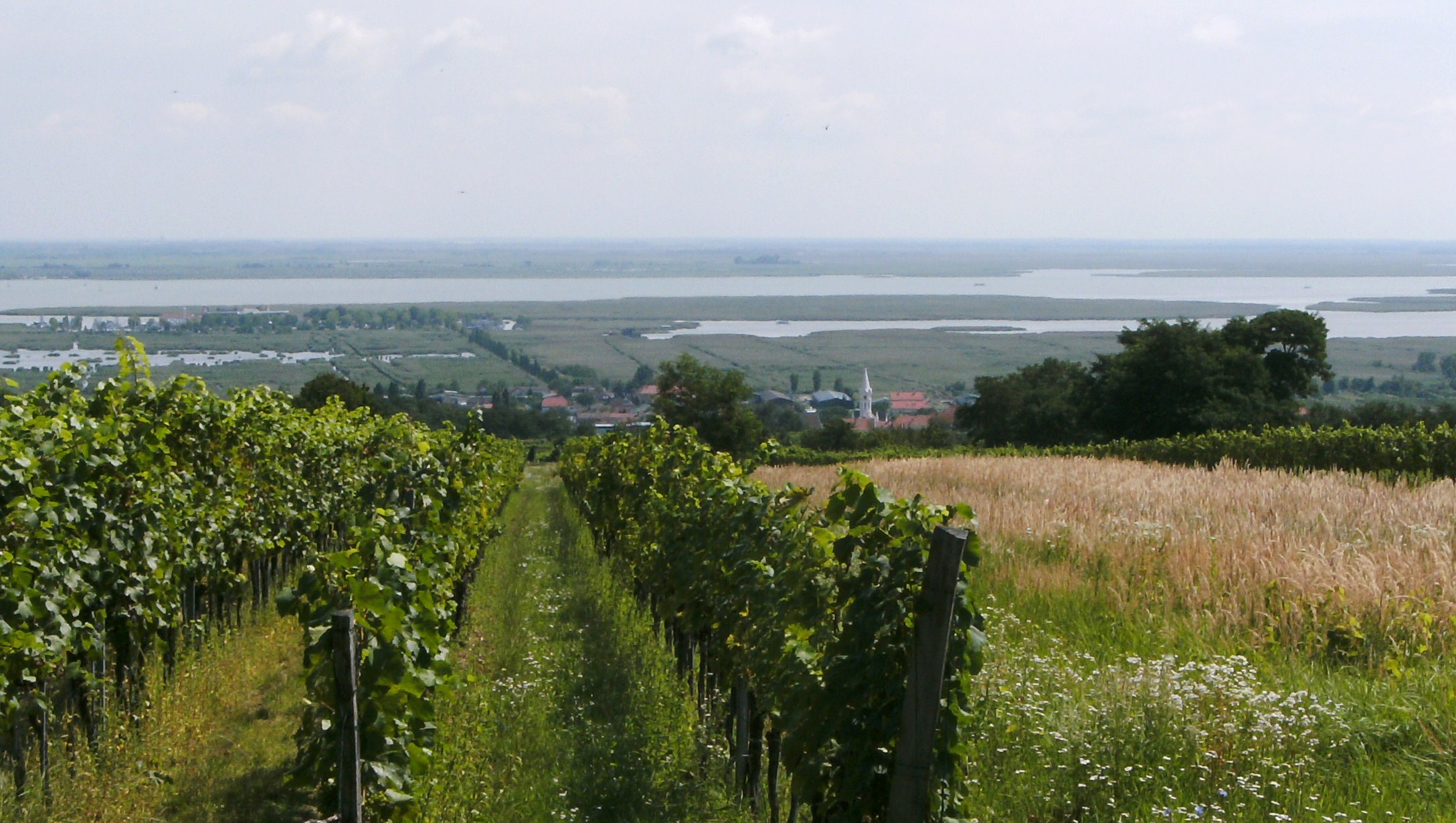
Höpler wine estate, placed in the small village of Breitenbrunn, in the Austrian State of Burgenland, has 46 hectares, whose 50% white wine, 45% red wine and 5% sweet wine.

The Pannonian climate, with hot summers and temperate winters, is the optimal condition to allow the growth of good quality grapes, all hand-picked. The soil, composed by different rocks such as clay, limestone and gravel, gives to wines special characteristics.

Exquisite quality of Blaufränkish, St. Laurent, Cabernet Sauvignon, Merlot and Syrah grapes perfectly ripe with their particular flavors.

Gradual implementations of technology in the winery are determining evolution of wine production since 2005.

The property has several wine rooms: Aroma room, Treasure room, Sound room, Tasting room etc, where you have the opportunity to gradually discover the world of wine and sharpen your senses. After this unique experience you can go to the cellar and buy wines you have tasted at a completely convenient price.

The company produces world renowned wines: superb reds, fine whites and special sweet wines.

In particular, we have been fascinated by Pinot White, a light yellow wine, very juicy and mouth-filling. It has the unique flavor of the Chinese fruit lychee, mixed with ananas aroma that make it inimitable.

It suits well with white meat and Asian dishes.

Höpler winery website: http://www.hoepler.at/1-1-Home.html


Wine Advocate reviews about Castello di Bossi wines #wine #siena

castello-di-bossi

Castello di Bossi winery has received really good reviews by the famous wine critic Robert Parker of Wine Advocate on 30 October 2015.

In particular the three wines reviewed were: Castello di Bossi Girolamo, Castello di Bossi Corbaia and Castello di Bossi Berardo; the first is a Merlot, the second one is a Cabernet Toscana IGT and the other one is a Chianti Classico Riserva DOCG.

The three wines have reached very high scores in 100 points wine scoring-scale: respectively 94/100, 93/100 and 92/100.

All commentaries are extremely detailed about characteristics of wines and enhance their attractive peculiarities and high qualities.


eRobertParker-wineadvocate


Valentina Gagliano

Padelletti winery #tuscany #montalcino #wine

Brunello Padelletti

In Montalcino town, close to Siena, in the beautiful area nearby Monte Amiata and Val d’Orcia, Padelletti family is one of the oldest and famous vintner, since 1571.

All members of the family have been involved in military and political affairs of their hometown. They have traveled abroad for work reasons, however they have always been maintained a close bond with their land and never forgot to take care of their winery and enrich family tradition with modernity and innovation they have experienced during their several trips abroad.

The wines produced by the family have incredible features due to the fertile soil, in which vineyards are extended. Thanks to this particular ground, rich in water and cinders, coming from eruptions of Monte Amiata, the wine is characterized by aroma and notes extremely hard to reproduce.

In order to have a very high quality wine, family members carry out a meticulous selection of fine red grapes (Sangiovese grape) every year. Among about 480 quintals of grapes, only 100 quintals are chosen, for a maximum production of 7000/8000 bottles of wine. The result is a full-bodied red wine, the so-called “Brunello”, well known for its special intense colour and strong taste, a combination of history and culture.

Brunello is aged in barrels made of the Slavonic wood for many years, a valuable type of wood, that has made the wine very expensive. A really high level of tannins is contained in these barrels, so it is important to constantly control wine, in order to avoid to have an unpleasant taste.

The two iconic wines produced by Padelletti family are Brunello di Montalcino and Rosso di Montalcino, powerful wines but gentle and velvety wines at the same time. By tasting these strong flavoured wines, your palate will be overwhelmed by vivid emotions.

They are perfect to be paired with red and white meat, salmon and tuna.

Padelletti wine estate website: http://www.padelletti.it/azienda_en.html

Valentina Gagliano


Col d’Orcia wine estate #wine #montalcino #tuscany

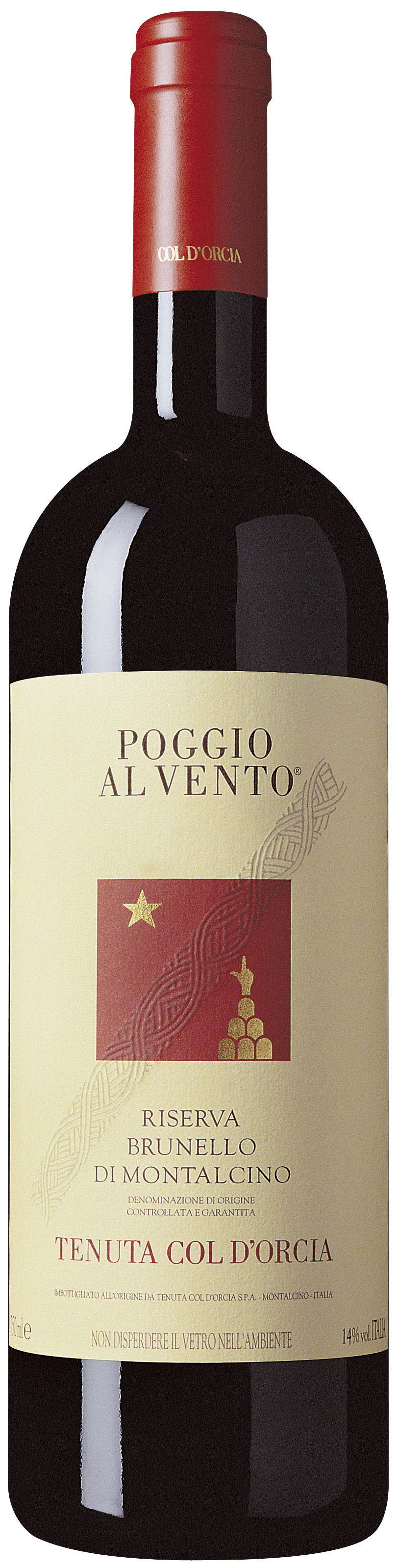
Surrounded by a beautiful natural scenery, Col d’Orcia winery is situatedCOL6near the fabulous medieval village of Montalcino, in Siena province of Tuscany. It offers fantastic views with its Montalcino hills, Monte Amiata and Brunello vineyards. In this scenic location you will have the opportunity to taste delicious products like wines, organic extra virgin olive oil and grappa.
The wine estate is considered as the largest organic wine farm in Tuscany, it obtained organic certification in 2010. Col d’Orcia literary means “windy hill”, that is the amazing place where you can find Poggio al Vento vineyard.  The company is owned by Cinzano family since 1973.

DOCG wines produced have a very high quality and the most important are wide range of fine Montalcino red wines, Chianti DOCG and Pinot Grigio. Moreover Col d’Orcia is well-known for its unique patrimony of more than 50,000 bottles of vintages Brunello di Montalcino.

Col d’Orcia regularly opens its cellars to all wine lovers and connoisseurs, you can take part of a tour discovering the estate and tasting wines.

We have been charmed by the taste of Brunello di Montalcino Riserva DOCG, that we really liked it. It is a deep and dense ruby red wine made from a rigorous selection of best bunches of Sangiovese grape, locally called “Brunello”.  It requires a long maturation of more than four years in steel tanks first and then in Slavonian oak barrels.

This pure Sangiovese variety has an elegant body and a firm acidity, slightly attenuated by fruit fragrances. A full-bodied, powerful wine with a long and memorable aftertaste.

Col d’Orcia estate website: http://www.coldorcia.com/

Valentina Gagliano


Weingut Herbert Pazen wine estate #germany #moselleriver #wine

Zeltingen-Rachtig-Schleuse


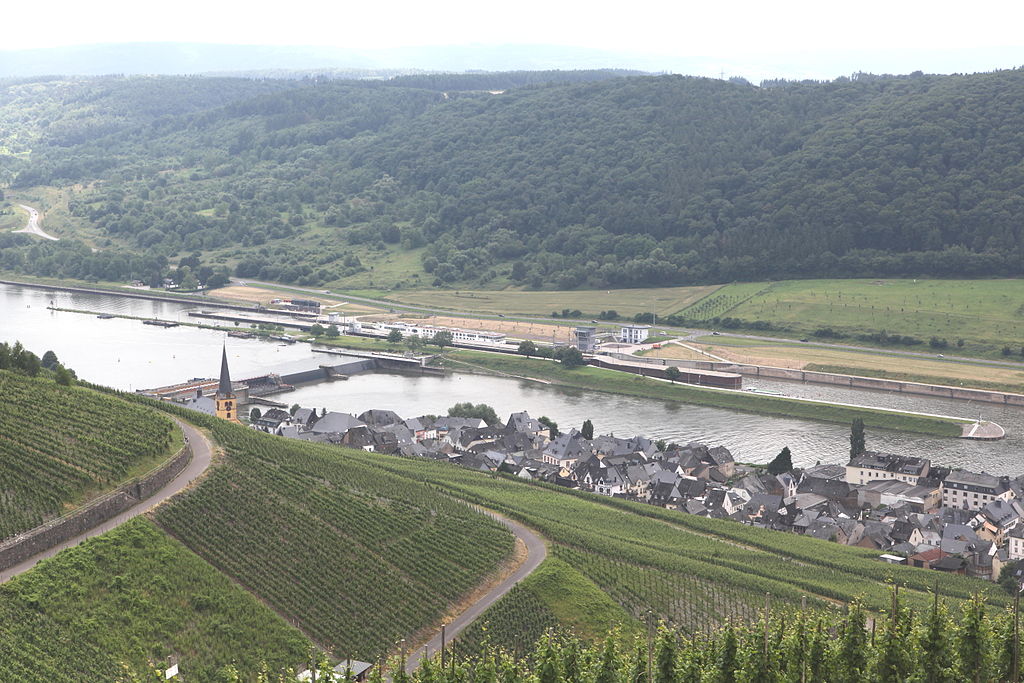
Weingut Herbert Pazen winery is placed in Zeltingen-Rachtig, a small town in Germany. Its vineyards are settled along the famous Moselle river.

The beautiful Moselle valley region extends in north eastern France, south western Germany and eastern Luxembourg. The surrounding area has developed a strong tourist industry, thanks to its exceptional natural landscape.

 All wines produced are multifaceted and have various fruity and spicy flavors. Riesling grape is the most important variety of the region.

The wide range of wines includes:

  • Herbert Pazen, Riesling Kabinett, exotic fruity tones,
  • Herbert Pazen Secco, semi sparkling and dry wine
  • Feinster Apfelbrand, pure apple brandy.


Weingut Herbert Pazen winery website: http://www.herbert-pazen.de/index.php?p=1000

Valentina Gagliano

In the heart of Chianti: la Castellina winery #chianti #tuscany #wine

La castellina Rugiada

If you are looking for an enjoyable and relaxing holiday, immerse yourself in the peaceful and uncontaminated nature of “La Ferrozzola” guest house, in the heart of Chianti, in Tuscany. Not too far from that, in the historic centre of the medieval village of Castellina, there are the wonderful Hotel “Palazzo Squarcialupi”, full of elegant rooms and old paintings, and the family farm, excellent synthesis of history and nature.

The winery has its origins from the past properties of the noble Squarcialupi family. Today, the farm belongs to the Bojola-Targioni, Monica Targioni and her husband Tommaso Bojola have been restored the property and took care of vineyards with great passion and devotion over the years. The farm is exactly settled in the amazing Palazzo Squarcialupi, with its cellars and shop, where family organizes wine tours to discover cellars and taste wine, as well as workshops about family and farm history.

The farm produces red, white and rosé wines, grappa, extra virgin olive oil and the traditional Vinsanto, typical Italian dessert wine. These wines are multifaceted, with particular blend of flavors, wild fruit scents and nuances of spices.

The most sought wine is the Chianti Classico, with its intense ruby color.

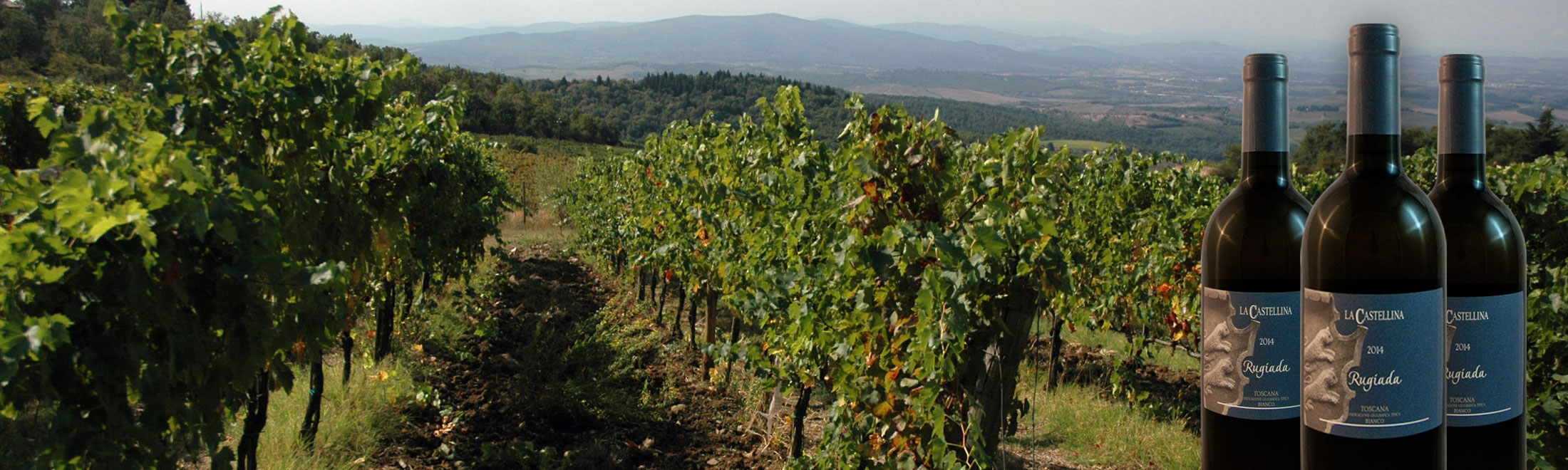
We were very pleased to taste the white wine called “Rugiada”. It is made up of 50% of Chardonnay grape and 50% of Malvasia del Chianti. All grapes are hand harvested. With its characteristic intense straw-yellow hue, this wine is lightly aromatic of powerful tropical fruits notes and fresh white flowers nose.

A balanced wine with a lovely almond aftertaste. It needs to be seasoned for six/eight months, poured into appropriate French oak barrels.

Fine accompaniments: pasta, risotto, fish, poultry.

La Castellina website: http://www.lacastellina.it/index_en.asp

Valentina Gagliano

Lanius-Knab wine estate #wine #rhine #germany

Lanius-Knab

We are in Oberwesel, a small town on the left bank of Rhine river, in Rhineland-Palatinate State, in Germany. Lanius-Knab is located in this fantastic landscape. The propriety belongs to VDP, the national German association of top quality wine production.

Winemakers themselves affirmed that their high quality wines are made thanks to excellent production process in their cellars and to the quality of their grapes as well, coming from vineyards of the middle Rhine valley.

All the wines of this region are, indeed, well-known for the variety of their splendid nuances, essentially influenced by the different “terroirs” where grapes grow, so weather and territory morphology are the two main elements that made wines singular in their style.Lanius

Modernity and tradition are combined together to produce the wines of the company. First of all, wine is poured into big steel tanks of great value, and then it is refined in traditional seasoned oak barrels.

Engehöller Bernstein vineyard represents more than half of total vineyards of the firm. The basic soil component, the slate, enriches wine of unique peach and apricot aromas. Wines produced in Engehöller Goldmund vineyard have peculiar lemon and apple notes.

Whereas Oberweseler Oelsberg vine has a soil composed of humus, sandstone and slate, which gives special flavors to wines.

We have greatly enjoyed Riesling, all wines are under VDP quality certification:

Riesling 2014, a superb wine.  We can define it as a light, fresh, fruity and mineral wine. Citrus notes strengthen its freshness and make the wine a pleasure for the palate.

Riesling GG (Gewächs lordi) Engehöller Bernstein is an extraordinary wine variety. It has the same particular characteristics of classic Riesling, but it stands out for its strong fragrances. This is more mineral and softer body then others, and very intense too. We really appreciated its lemon aroma and we have been charmed by the production of Riesling carried out in a classic and traditional way, that we didn’t find in other German winemakers instead.

A wonderful winery that we really recommend to visit.

Lanius-Knab company website: http://www.lanius-knab.de/en/

Valentina Gagliano (translation)

Scheiblhofer collection #wine #austria #burgenland

Scheiblhofer wein

The Scheiblhofer is one the largest wineries in Andau village in Burgenland, the easternmost State of Austria. In this exclusive area, where the sun shines bright, a wide range of excellent wines are produced. High temperature and rich soil are the ideal conditions for an abundant growth of exceptional ripe grapes.

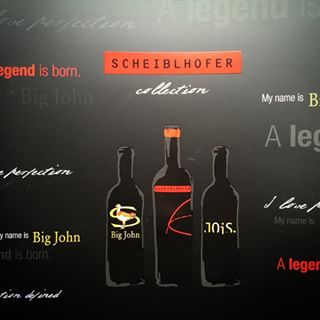
The Scheiblhofer collection is very unique. They are full-bodied wines, characterized by high aroma and splendid tasting. The three most representative collections of the company are: Big John, Perfection and Jois, a singular trilogy in Burgenland.

Big Joh is the legendary pioneer red wine. It is a dense ruby red, famous for the mixture of fruit scents and delicious aroma of caramel, powerful tannin and with oak roasted flavor. Its label is inimitable; there is a great bustard in it, a representative image for Andau community, as it is the only place in the world where great bustards are native. We tasted Big John, a blend of zweigelt, cabernet sauvignon and pinot noir it and loved it immediately for its strong nose, its bold character and its long aftertaste.

Perfection collection includes Shiraz, Legends, Merlot, Cabernet Sauvignon, Pinot Noir, all dark ruby reds, full-bodied varieties perfect to be paired with red meat.

Jois is a 30 year old vine. The typical cherry fruit with the combination of strong acidity makes the wine refreshing and explosive at the same time.

You can send an online request to visit the winery and have the opportunity to taste its sumptuous wines. Moreover, if you are a wine lover and want to stay more, the newly built guest house will be ready to give you a very warm welcome.

Scheiblhofer winery website:  https://www.scheiblhofer.at/en/startseite.html

Valentina Gagliano

« Older Entries