Tag Archives: featured

Crémant de Bourgogne, sophistication and authenticity

For a long time served with crème de cassis, Crémant de Bourgogne is now establishing a reputation in its own as a high-quality sparkling wine worthy of the finest tables.
•   A relatively recent story

Sparkling Bourgogne wine first came to attention in 1830, via the plume of Alfred de Musset, who celebrated it in “Les Secrètes pensées de Raphaël”, and from the early 19th century, it was being produced in Chablis, Nuits-Saint-Georges, Rully, and Tonnerre.
The Crémant de Bourgogne appellation was created in 1975, in recognition of strict production rules, traditional and rigorous expertise, and high-quality vinification.

•   Did you know?

This wine is always white (blanc de blancs or blanc de noirs) or rosé, brut, extra brut and less often, demi-sec. The Éminent and Grand Éminent categories, introduced two years ago, are the most rigorous in terms of production. Because the ageing is so lengthy, wines bearing these labels are only now coming to market. The area covered by the appellation is the same as that of the Régionale Bourgogne appellation.

•   All the characteristics of a Bourgogne wine

For Grégory Georger, owner of the Maison Parigot & Richard, the two words that make up this appellation are significant: “The word Crémant, which is the guarantee of the production method; and the word “Bourgogne”, which takes on all its importance here because lovers of Bourgogne wines know they’re going to find all the characteristics of a Bourgogne wine – sophistication, elegance, and authenticity,” he says.
Miolo is the most awarded winery in the “Grande Prova de Vinhos 2018”

Unique winery with five championship labels in their respective categories and six more with the gold award, the brand celebrates the excellent performance

Considered to be the largest blind competition of Brazilian wines available on the market, the Grande Prova de Vinhos 2018 of Brazil enshrined and reinforced the high quality of Miolo wines in its last edition: the winery was the great winner of the competition, with six wines awarded with Gold and five champions in the categories Tinto Superpremium, Branco Sauvignon Blanc, Rosé, Tinto Outras Castas and Branco Riesling.

When Miolo presents the 2018 harvest as legendary – reissuing all its iconic labels and launching innovative wines, the winery’s performance in the Grande Prova de Vinhos 2018 is yet another validation of its excellent momentum and optimum expectation of future results.

“Critical awards such as the Grande Prova de Vinhos 2018 are the seal of the work we have been doing in recent years in improving quality and in the creation and development of new wines and sparkling wines in the four different Brazilian terroirs in which we operate,” summarizes Adriano Miolo, the group’s superintendent.

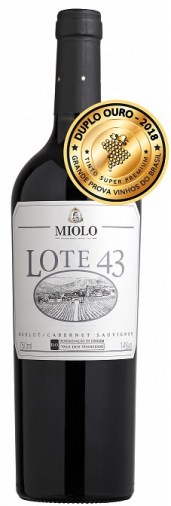
The main highlight of the achievements goes to the already recognized Miolo Lote 43, which won the Double Gold / Champion. Cultivated at the winery’s headquarters in the Vale dos Vinhedos, the wine is a tribute to the property acquired by the Italian immigrant Giuseppe Miolo in 1897, when it settled in the South of Brazil. Produced from a harmonic cut of Merlot and Cabernet Sauvignon grapes , aged in French and American oak barrels, was first produced in 1999. The Miolo Lote 43 also has an appellation of origin Vale dos Vinhedos – a great achievement in the region.

New: Viré-Clessé producers are now authorized to make levrouté and demi-sec wines!

Since June 2018, producers in the Viré-Clessé appellation have been officially authorized by the INAO to produce Viré-Clessé with the words “levrouté” or “demi-sec” on the label.
•   Recognition – at long last!

Until now, Viré-Clessé enjoyed a special dispensation with regard to the production specifications of the Viré-Clessé appellation to produce wines that are “levrouté”, that is to say wines that contain residual sugars. An official decree signed on 26 April 2018 has now modified these specifications, so they can now add the words “levrouté” and “demi-sec” to their labels. For them, their traditional practices have finally obtained the recognition they deserve.

These wines, classed as moelleux, are different from liquoreux wines. They are not produced every year: the weather must be optimal. For example, in 2017, a handful of producers were able to make these two types of wine:
Viré-Clessé demi-Sec: These wines have a lower sugar content lower than Viré-Clessé levrouté, but higher than those of the Viré-Clessé AOC, of between 4-8 grams per liter.
Viré-Clessé levrouté: Everything starts in the vines where the harvest conditions are more rigorous. According to the official decree, they must be harvested by hand and the sugar content must be between 8-18 grams per liter. Ageing must be at least until 1 February of the second year following the harvest.

•   The meaning of the word “levrouté
This term is unique to the Mâconnais region. Here, noble rot or Botrytis cinerea turns the grapes a brown color reminiscent of a hare’s fur, or the “pelage du lièvre”.

•   What the wines taste like
For Franck Michel from the Domaine Michel, Vice President of the AOC and who was responsible for the campaign to change the appellation specifications, “These wines are indeed sweet, but they are also wonderfully vigorous with lovely minerality making them very evenly balanced.”

Viré-Clessé demi-sec often reveals aromas of white blossom and candied fruit. One also detects floral aromas in Viré-Clessé levrouté along with hints of ripe fruit and honey.

Tasting wine consciously: some hints

Wine is a manifold product that keeps natural and cultural elements in itself. It can be drunk as any other drink, to match a food while having dinner with our friends or it can be tasted in a professional way, to value all its organoleptic qualities and deliver a judgement.
In this article, we are trying to outline some elements to suggest a “third way”, that is neither that of the careless table-companion, nor that of the skilful technician.

A way to taste wine that everyone can easily understand and, above all, that can promote a greater consciousness (and greater pleasure, obviously!).

From a practical point of view, now almost everybody knows the typical sequence of wine tasting: first the visual test, then the olfactory one and finally the gustative test. Here we don’t want to dwell upon every step, but we want to point out three aspects, or conditions, that can foster a better experience to approach wine in general:

1. TIME: haste is an enemy in many situations, but it is even more, when you are going to taste a wine. In fact, this needs time and patience in waiting for the wine to disclose all its features in fragrance and taste. Some wines seem to say nothing by the first olfactory or gustative test, but shortly afterwards, they open up and let their qualities come out. So please take the necessary time and calmness, maybe in a quiet place, without noises.

2. KNOWLEDGE: as we were saying before, wine is not simply a drink. It is the expression of a territory, of its history, of all those craftmade practices that were carried out to produce it. To know these aspects helps us to understand why a wine has got a certain taste and not another and even to understand the richness of diversity. So, if possible, when you taste a wine, make also room for the story about it told by the person who knows it well, maybe because he/she has produced it. Or simply get information about its origins.

3. ATTITUDE: if we do not belong to a committee that has to judge a wine, perhaps the best way to taste it, is to be open-minded, ready to welcome it and to be surprised by it. In other words, we’d better not have prearranged expectations about how a certain wine should be, so that we can concentrate on the feelings that it gives us at that very moment, on what it wants to communicate to us.

These are only a few hints which can be useful for a more conscious and pleasant tasting. What matters, as always, is practice, and creating the right opportunities as well.
If you want to experiment directly this approach, you have this possibility here in Trecciano!

For any information about our tastings see: Visits – or contact us: info@trecciano.it

Torres Vedras/Alenquer European wine city 2018

Torres Vedras and Alenquer represent two Denominations of Origin (DOC) of the Lisbon region, possessing a strong tradition in the culture of the vine and the wine, that is maintained and defended. Wine and wine tourism are central to the economic development of the region, both through the production of numerous high quality wines, nationally and internationally recognized, as well as investments in tourist units that add to the wine production a high added value tourist component.

Territory (s) of secular winemaking tradition, Torres Vedras and Alenquer involve their resources, dynamics, infrastructures, equipment and services, with the main objective of fostering synergies with the economic agents of both municipalities.

In addition to its history and cultural heritage, Torres Vedras and Alenquer build a common future through a shared strategic vision in areas such as economic activity, especially wine production, adaptation to climate change and sustainability.

In short, Torres Vedras and Alenquer are a territory united by the past and the future, making sense in the present to assume, with responsibility and commitment, the challenge of being EUROPEAN WINE CITY, sharing the mission and vision of this initiative created by RECEVIN to promote a global economic activity that unites a vast set of cities, regions and countries of a constantly growing Europe.
About the “European Wine City”

The European Wine Cities Network, RECEVIN advanced in 2012 with the annual “European Wine City” competition, within the context of the defense and dissemination of tourism.

This competition is a unique opportunity for wine cities with a European vision to promote the development of the wealth, diversity and common resources of wine culture at European level, offering a better knowledge of the landscape, economy and gastronomy, for a better mutual understanding between the citizens of the European Union.

The Prosecco Valdobbiadene DOCG harvest opens with optimistic predictions

It has officially begun the Prosecco DOCG Val D’Oca harvest: in the Cantina Produttori di Valdobbiadene, the tractors are filled with the grapes of the 600 member farmers, ready for processing. The manual harvest of Prosecco Superiore DOCG began on Monday 15 September in the banks of Colbertaldo and, probably, will continue more slowly until the end of the month, in the other shores as the grapes are still ripening.

This year the conditions of the vines are particularly good: no crop has been affected by downy mildew, a serious disease caused by a fungus, or by botrytis, mold caused by a pathogen. To date, moreover, only 50 hectares hit by hail, with losses of around 30%. All this makes us hope for an excellent year, which will offer Spumante and Prosecco Superiore of high quality, enough to allow for 20% more production compared to the 2017 harvest (a vintage that should be mentioned as poor due to the low fertility of the buds and further decimated by the late April frost). “We are pleased with how the first part of the harvest is going” – commented the general director Aldo Franchi. “We are grateful to nature, which this year has given us a good fertility of the vine. Most likely this year we will reach the record of conferring grapes, about 160.00 quintals. An important share, which will bring our Prosecco to the tables, a wine recognized among the best in the world, an expression of our beloved territory, guaranteed in quality from the vine to the bottle. “.


Primitivo di Manduria: grows Docg dolce naturale and Riserva Dop

Satisfaction for the Protection Consortium

The Primitivo di Manduria grows and grows in all its variants: Primitivo di Manduria Dop, Primitivo di Manduria Riserva Dop e Primitivo di Manduria dolce naturale Docg .

Almost 13 million liters, equivalent to just over 17 million bottles, of which 70% are exported, for an estimated value of around 100 million euros (domestic consumption of around 30 million euros and abroad of around 70 millions of euros). An increase of 13.87% compared to 2016 which once again confirms the supremacy of great doc in the major markets of the world.

These are the actual numbers of the year 2017 for Primitivo di Manduria. In particular, the DOP represents 91.2% of the entire bottled, the 8.1% Reserve and the natural sweet DOCG 0.7%.

The novelty concerns the increase for the DOCG (first DOCG in Puglia) and for the Reserve.

In 2017, about 95 thousand liters of Docg were bottled, equivalent to about 127 thousand bottles with an increase of 33.45% compared to the previous year.

In the sector Primitivo di Manduria Riserva Dop there was a sector growth of 24.27% compared to 2016 for a total of just over one million liters equivalent to almost one and a half million bottles. Data that support the “premiumization” process of Primitivo di Manduria, ie consumers tend to prefer more expensive bottles perceived as higher quality.

The Primitivo di Manduria Dop also grew by 12.90% for a total of almost 12 million liters, equal to about 16 million bottles.

The Primitivo di Manduria is no longer a novelty, but a pillar of the wine industry not only in Puglia but also in Italy. – says satisfied Roberto Erario, president of the Consortium for the protection of Primitivo di Manduria – It is a wine that knows no crisis, especially abroad with an important exploit on all markets “.

We have won new members, – continues Erario – the Consortium currently boasts 46 wineries and bottling companies and over 900 winemakers. The promotion and communication projects are becoming fundamental to make our wines and the territory that expresses them abroad known. Soon, for example, the machine of the great Primitivo Taste Experience project – Il Primitivo di Manduria in Chinese and American glasses conceived by us consists of incoming activities and participation in foreign fairs. A good bet on our identity that today is increasingly a distinctive element of the Puglia brand. Ours is a rich, flourishing and growing territory and I would like to thank all the companies, both the big and the small ones, who produce this wonderful doc with sacrifice and passion “.

But who drinks Primitivo di Manduria?

The Primitivo di Manduria is the Apulian doc that is part of the Top five of the most exported wines with a turnover of around 100 million euros, especially loved by the X generation (37 – 57 years). Present all over the world.
The final consumer of Primitivo di Manduria in general is a career man, cultured and refined who loves to consume wine from Puglia inspired by the behavior of “luxury”. He drinks it during an important business dinner, to celebrate an anniversary or during a marriage proposal. Normally he chooses it for the perfect harmony between body and taste.

46% of consumers are women. It is estimated that almost half of the turnover obtained from the sale of the product in Italy and abroad is given by the women’s market. He chooses it for his unmistakable bouquet: rich, complex, ample and fruity, with notes of Mediterranean scrub.

The senses are exacerbated and very sensitive to the minimum effluvium and the female palate discovers subtlety that that of men ignores. Women drink little but well, less quantity but more quality so they choose Primitivo di Manduria.

The release of Masseto 2015 is imminent


Perfect harvest conditions have resulted in a great vintage


Masseto is pleased to announce the release of the eagerly awaited 2015 vintage on October 1, 2018.  Considered to be among the most coveted vintages ever produced by Masseto, Masseto 2015 is impressive, sumptuous and silky, and decisively Mediterranean in character.

The 2015 vintage presented an ideal growing season in Bolgheri,and saw the ever magical balance between power and elegance that defines Masseto. In the vineyard, vines benefitted from the unique elements which come into play each year on the Masseto hill. The climate, the presence of the blue clay in the soils, the interaction of the marine influence and the constant, tender care of our workers.

The development of the vines until the summer of 2015 was normal, but a very hot, dry July risked a temporary shut-down in their ripening. But luck would have it that cooler temperatures and some rain came in mid-August, enabling the grapes to conclude ripening at their own pace and under the best conditions. Fundamental to this was the marine influence of the Tyrrhenian Sea – producing cooler sea breezes and a magnified intensity of light, especially towards the end of the day, – which accompanied the grapes to a perfect ripening and ensured ideal temperatures during harvest.

“Vintage 2015 will go down in Masseto’s history as one of the great vintages,” noted Axel Heinz – Masseto Estate Director & Winemaker. “The almost textbook-like growing conditions produced a wine with a perfect balance between a mature, yet complex, aromatic expression of great freshness and a rare quality of ample, silky and smooth tannins. The dark and intense color is followed by a rich aroma with hints of fully ripe red fruit and spicy, balsamic and cocoa notes. In the mouth, it becomes sensual and rich, with great density and an ample and perfectly smooth tannin. The fruity notes are balanced by the spicy flavor of wood; its fresh and vivid final taste comes to a close with a hint of cocoa. Given the greatness of the vintage this is a wine which will go on developing over decades to come.”

As with previous vintages of Masseto, the 2015 release will come equipped with a Prooftag™ on the neck of each bottle, guaranteeing authenticity and provenance.


Ornellaia: beginning of the harvest

After already two weeks of white wine harvest, this 31 August, harvest of the red grapes has started in Ornellaia.

A rainy spring that has required solid nerves to keep up with explosive vine growth and high risk of disease, but rewarded us with excellent fruit set and even development of the grapes. Summer has not been short of sunny weather and high temperatures, with just enough rain to prevent from any drought. Ripening has been even without any rush, allowing us to kick off at a normal date for Ornellaia. Next week is expected to bring cooler temperatures to hopefully create ideal conditions for a harvest that should last for all of September and should finish the first days of October for the latest ripening varieties.


Axel Heinz – Estate Director and winemaker Ornellaia

September is the “Wine Month” in California

©Visit California


The Golden State wine regions such as Napa, Sonoma and Paso Robles are famous all over the world for their prized locally produced bottles.

But it is only a small portion of the wine production, which is carried out in the entire state, from Siskiyou County, to the north, to the Cucamonga Valley in southern California. In fact, 49 of the 58 Californian counties are, in fact, cultivated vines and the perfect event to celebrate its importance, regardless of which part of the State you are visiting, is the California Wine Month, organized during the entire month of September, from 2004.
In fact, some of the most famous vines are found, on average, a couple of hours drive from the main metropolitan areas, including San Diego, Orange County, Los Angeles, San Francisco and Sacramento.

©Visit California


The California Wine Month is an initiative that affects the whole of California and that coincides with the month of the harvest, providing tastings, festivals, concerts, tours and menus of the best chefs and winemakers, rigorously accompanied by tasty local wines.

Among the most suggestive experiences planned for the Wine Month in California, it is possible to taste different qualities of wine, but also give a hand in the production of grape must, visit suggestive family cellars, have the opportunity to meet the leading experts and winemakers and enjoy special tours aboard a tractor or wagon in the vineyard.

The Golden State produces an average of 85% of US wine production, and during these celebrations, visitors are invited to try out everything the different Californian wine regions have to offer.

« Older Entries Recent Entries »