Author Archives: VinoeStile

Campe Dhei Raboso, Cantina Ponte

Cantina Ponte is a wine cooperative with traditionally strong ties to its own region, which has become the engine of development initiatives for the entire Venetian wine district. Cantina Ponte  was created in 1948 by the will of a small group of winegrowers who joined forces to face the aftermath of the postwar crises.

The cooperative has always considered its most important company asset to be its “human capital”: a wide and varied working group of farmers, laborers, managers, agriculture experts, wine experts, agents and sales people who make the company a big family. The Cantina is committed to the environment with the aim of promoting ever more sustainable famring.

At present, the cooperative has 1200 producer societies for 2000 hectares in the whole of the Veneto region, from the north of Venice to the banks of the river Piave.

We tasted: Campe Dhei Raboso

It is a deep red wine that tends to garnet. The nose we recognizes hints of marasca with notes of plum and chocolate. In the mouth is well balanced dry and slightly acidic.
Ideal wine during winter season with game, grilled meats and seasoned cheeses.

Poggio Lupo, Della Luna Merlot 2016


The wine estate Poggio Lupo is a young company founded from the dream of Massimo, Manuela and Marco Morgante.

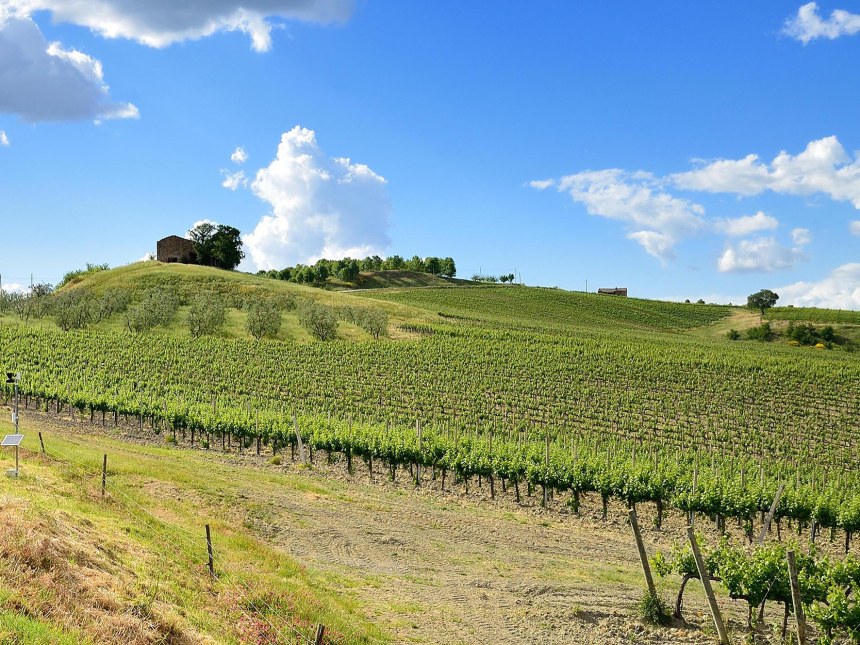
The farm is located in the municipality of Allerona, in the province of Terni (Italy). The territory is characterized by the presence of clay-sandy soils comprising gray-blue clays, dating to the lower middle-sized pliocene. The vineyard stretches for about 32 hectares and is placed in a natural amphitheater with a south-eastern exposure that allows a great solar irradiation throughout the day.

The vineyard is made up of international varieties such as Chardonnay, Sauvignon blanc, Merlot Cabernet, Sauvignon and Petit verdot. The wines of Poggio Lupo derive from sustainable agriculture for a clientele attentive to the environmental issues in the search for products coming from a low impact agriculture and respectful of nature.

We tasted:

Della Luna Merlot 2016

It is a ruby red wine with purple shades. The olfactory bouquet features sweet spicy scents and red cherry and black berries. In the mouth is well balanced and of good persistence.

This wine is aged for 6 months in steel with batonnage on fine lees and for at least 3 months in bottle.

For the food pairing it is ideal with traditional Umbrian dishes like croutons with liver pans, salami, and semi-matured cheeses and with the stuffed cake (Capocollo, sausage, sausage and vegetables).

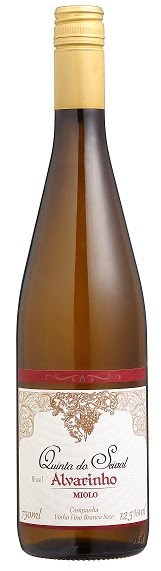
Miolo Quinta do Seival Alvarinho, Brazilian wine with Portuguese essence

Label was the big winner in the category ‘Brancos de outras castas e cortes‘ in the Great Event Wines of Brazil

A wine with a Brazilian signature and Portuguese essence: Quinta do Seival Alvarinho is the first Alvarinho wine made in Brazil with one of the grapes icons of Portugal. The Miolo winery invested in its adaptation in the terroir of the Southern Campaign in Rio Grande do Sul, in order to extract unique characteristics and express the whole personality of a great wine.

The first vines of alvarinho were planted in 2003, in our vineyards in the Southern Campaign / RS. It is a liquid relic. It is a unique wine of a Portuguese variety very much in vogue, but still little cultivated in Brazil. The Quinta do Seival Alvarinho is a label that reminds us of our Portuguese heritage and the historical connections between the two countries “, summarizes Adriano Miolo, superintendent of the group.

Versatile and medium intensity aromatic, has notes of peach, mango and honey. Its straw-yellow color translates all the elegance of the wine, whose label is a re-reading of the baroque, artistic movement of great influence in the Portuguese aesthetics of the XVI to XVIII centuries.

The high quality of this white wine with Brazilian DNA and Portuguese soul has just been recognized in the Great Wine Tasting 2017. Among the hundreds of samples tasted the Quinta do Seival Alvarinho stood out as the great winner in the category “Brancos de outras castas e cortes” being one of the 30 winners of the competition, which reinforces its perfect adaptation to the terroir of the Campaign and the excellent work that Miolo has been developing with the caste.

In addition to the Quinta do Seival Alvarinho, 8 other Miolo wines elaborated in the Rio Grande do Sul projects won Gold Medals at the tasting: Miolo Millésime Brut 2012, Miolo Tempranillo Reserva 2015, Miolo Sauvignon Blanc 2017, Miolo Reserva Pinot Noir 2016, Miolo Cuvée Tradition Brut Rosé, Miolo Cuvée Tradition Demi-Sec, Miolo Cuvée Giuseppe Chardonnay 2015 and Miolo Selection Pinot Grigio / Riesling 2016.

From the vineyards of the brand in the Valley of the São Francisco (BA) also received Gold Medals the sparkling Terranova Moscatel and Terranova Brut Rosé, and the red Testardi Syrah.

November flavors: the new olive oil by Tenuta di Trecciano

On the typical red clay soil, a medieval villa and 22 hectares of vineyards and olive groves this is Tenuta di Trecciano.

In the Chianti Senese 22 hectares of Vineyards and Olive groves, laying in a beautiful valley with the typical red clay soil. The territory is rich in ancient churches and castles, that represent an important heritage to be protected, and where man’s economic activity has been able to respect the natural environment.

Olive oil is an ever-present food on the tables of Italians and, just like wine, depending on the production areas, can be characterized by a wide variety of quality. To better and fully appreciate its value, it is important to know its origin and also how it is produced.

Tenuta di Trecciano let us discover olive oil, starting with its history and typical Tuscan olive varieties.

History
Source: http://www.olioextraverginetoscana.it

In all the Mediterranean basin civilizations, the olive tree has always been considered a sacred tree and the oil extracted from its fruits was used not only as food but also for religious and ritual purposes: Egyptians it considered it as a gift from the gods; through trade the Phoenicians help spread the production throughout various territories, calling it “liquid gold”; the Greeks and the Romans used it for medicinal purposes and as fuel in the votive lamps; the Jews used it to “flatter” their King, Christians have always used it in important rites. Olive oil represents one of the fundamental products of Mediterranean agriculture, of undeniable nutritional value for its chemical composition and organoleptic characteristics that are highlighted when using it as a dressing/seasoning.

Tuscan Olive varieties
Source: http://www.olioextraverginetoscana.it

Each oil is bound to its own territory, and thus is a synthesis of each native varietal of olive from which it is produced. There are hundreds of varieties of olives, for oil, for food or for both. They come in different shapes and sizes, each may be characterized by a different ratio between pulp and seed and therefore contain different quantities of oil, on average ranging between 10 to 16%. The trees’ productivity depends on several climatic and cultivation style factors, which also help determine the production in its two-year cycle.
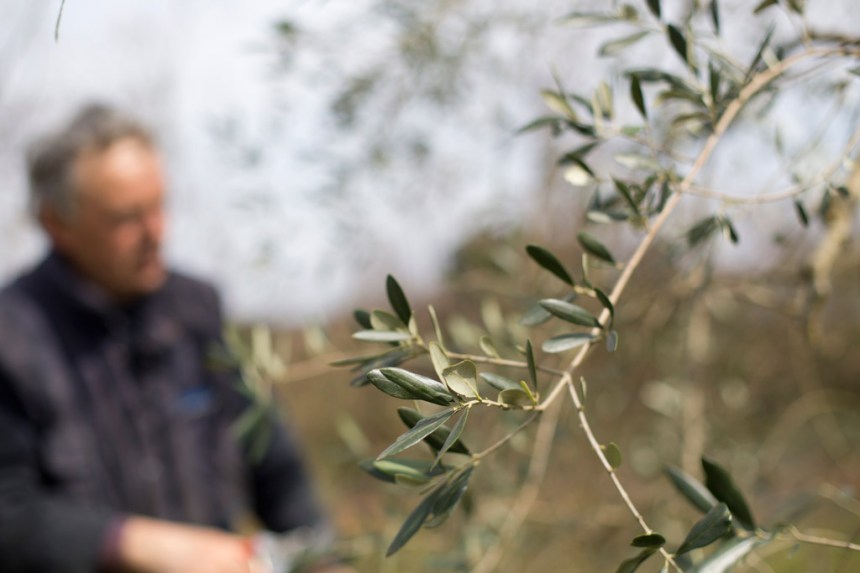
Here at the Tenuta di Trecciano we cultivate the most typical Tuscan varieties: FrantoioMoraioloLeccino and Pendolino.

http://www.trecciano.it

Tenuta di Trinoro triumphs at Merano WineFestival

The Wine Hunter names Palazzi 2015 as Best Wine


The best wine at the Merano Wine Festival 2017, the prestigious wine show that attracts producers from Italy and across the globe, is Palazzi from Tenuta di Trinoro, the cult winery of so many wine-lovers.

Palazzi stood out from all the Platinum wines (over 95 points) that had been selected by The Wine Hunter Helmuth Köcher (award.winehunter.it) and which this year too included world-class wines such as Saffredi, Le Serre Nuove dell’Ornellaia, Le Pergole Torte, D’Alceo, and Il Marroneto—to mention just few examples from Tuscany, Tenuta di Trinoro’s winegrowing region.

“I am extremely proud of this recognition, which is such a tribute to our interpretation of Merlot,” commented . “Here in the Val d’Orcia, in our clay-rich soils, this grape gives us a remarkably fleshy, deep wine.

“The 2015 growing year was essentially trouble-free, with rains coming regularly and at substantial intervals right up to November, allowing us to bring in exceptional-quality Merlot without any haste.”  

Today, the results are on full display in the bottle—if one can find one of the 3,700 produced.

The 2017 Vintage, the epitome of Bourgogne elegance

In 2017, everything came good for the Bourgogne winegrowing region in terms of both quality and quantity.

And after several years of harvests that suffered the whims of  the weather, 2017 has provided volumes set to satisfy the market, with wines that are already promising great things to  come from this elegant vin tage.

After spending the winter building up their strength, the vines profited fully from a very warm spring, with budburst
in early April ensuring a head start in terms of the growth cycle that was maintained right up to the harvest. The  plants progressed from  stage to stage free from hindrance, and by mid-June, were flowering before rapid fruit set.
An early vintage was confirmed.  During the summer, a few spells of heatwave alternated with more mixed weather.

However, ripening continued  at a good pace and by  the end of August, the first grapes were being picked, two weeks ahead of average. Harvesting  continued until mid-September as each plot reached peak maturity. The grapes were in exceptional health and required virtually no sorting. Everyone was very enthusiastic about this fabulous fruit, its peak ripeness, and the volumes produced. The only downside were a few areas hit by spring frosts, where yields were below norms.

Vinification went without a hitch and the mood was one of serenity for this vintage wh en the Bourgogne  winegrowing region returned to more habitual levels of quality and quantity.

Castello di Querceto 120 years history of wine

Entering Castello di Querceto, one’s gaze is immediately caught by a late 18th-century photo of some François family’s ancestors. The images are a bit time-scarred, but those piercing eyes, even 120 years on, leave no doubt about the reasons why this family, still today owners of this wine estate, has become one of the leading lights in Chianti Classico, driven by their desire to offer wine-lovers authentic expressions of classic Tuscan grape varieties.    

Starting in the early 1900s, with their first all-Sangiovese vineyards, through 1924, when they and a select group of 32 other producers founded Consorzio del Vino Chianti Classico, and right up to the present moment, Castello di Querceto has always, through its wines, spoken to the world in an intensely family and personal fashion.   

The interpretation of the cru vineyards and the identification of grape selections that best represent the estate have always been, since the 1970s, Alessandro François’ objectives, and he has succeeded in winning recognition across the globe for Castello di Querceto as one of Chianti Classico’s best-known producers. Today, in fact, 90% of its production is exported to over 50 countries, a marketing achievement of which Alessandro and Antonietta François are justly proud.    

2017 ushers in Castello di Querceto’s commemoration of its 120 years of winemaking, and it is celebrating that milestone by uncorking two of its iconic wines–both obviously monovarietal Sangioveses. The first, La Corte IGT Colli della Toscana Centrale, was the winery’s first cru, and some early-1900s vintages of it are still lying in collectors’ cellars. The second, Chianti Classico Gran Selezione DOCG Il Picchio, is the quintessential expression of the best vineyards in the south-eastern part of the estate. 

“There will be no special commemorative label for either wine,” states François; “the wines themselves are perfectly capable of recounting our history.” And in fact, these two interpreters of the wine estate’s philosophy prefer to reveal themselves directly in the glass: La Corte through its elegance, its fruit and subtle hint of balsam, Il Picchio with its structure and impressive length, heightened by herbaceous and floral notes and a touch of chocolate.   

Raising a glass of Castello di Querceto is a full-immersion into the history of Chianti Classico. 


Ruinart: the origins of champagne

If it’s the vines that give birth to our champagnes, it’s well below there that they grow. Here, 38 meters under our feet, the underground chalk tunnels has been keeping watch for 60 million years.

The sea, in pulling back from these lands and smoothing out all of the crayères mud that had accumulated, strengthened and transformed this ground into chalk. And thus, the chalk pits came to life. We’ve been making our gems here since the 18th century and these most prestigious sparkling wine were granted UNESCO World Heritage status in 2015.

For novices, the crayères are true labyrinths; only the initiated can understand. They’re the ones who know that when you come down the massive staircase, supported only by a wrought iron railing, you’ll soon find yourself in a maze of tunnels…

We can still find new ones today! Here, the stretched-out bottles slumber, lying upside-down on the racks. Here still, these precious containers are shielded from the other side of the champagne mirror. A must-see in Reims, with eyes wide open.

Siddura, nine wines to tell an island

Siddura winery founded in 2008 from the fusion of the experience of a German industrialist and the profound knowledge of the territory and market of Massimo Ruggero, Siddura CEO.
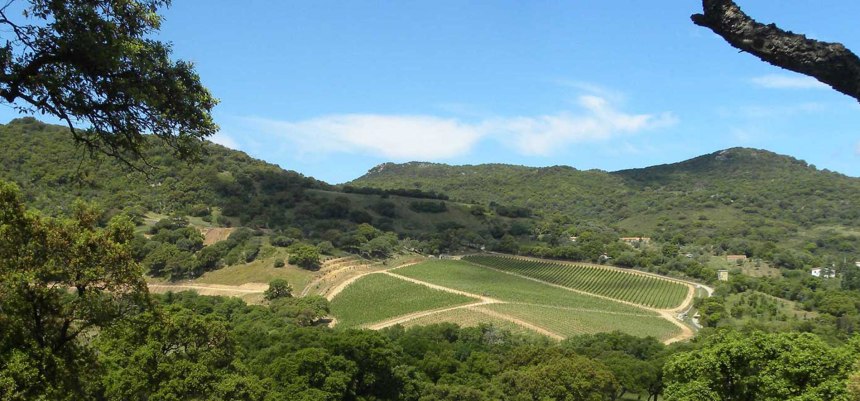
Located in the little village of Luogosanto in Sardinia, it has in the “Terroir” the strong feature of the winery. The estate is immersed in a valley surrounded by granite, protected by the mighty winds of maestrale and caressed by the sea breeze.

The union of climatic factors and the specificity of the granite soil degradation give the wines a particular minerality. The cellar was born around its fulcrum: a fully-buried amphitheater building that exploits the geothermal potential of the site and boasts an innovative control system for the fermentation of individual tanks.

Here, the entire production chain, from grape to bottle, takes place, privileging spontaneous fermentations and using the most diverse types of containers from concrete tanks to barrels.
The estate stretches for two hundred acres and the grounds are a mixture of granite, sand and clay. They are loose soil, often arid, ideal for viticulture.
Sardinia in purity” is the Siddura philosophy, which has made it possible to produce a line with eight high quality wines. The company’s goal is to produce wines that identify with the terroir from which they come from. Production therefore provides limited harvests to ensure maximum quality, selective handmade harvest, micro-wine making and aging in the best oak barrels built in France.

In five years, Siddura wines have conquered over 450 medals in the most renowned national and international wine competitions.

To point out a revolutionary concept of Siddura; the innovative winemaking of white wines as if they were red, that is to create a long-lasting Vermentino that improves after a year of aging.

Siddura wines

1) SPÈRA Vermentino di Gallura DOCG in purity, about 13 °.

2) MAIA A Vermentino di Gallura coming from another squad of our vineyard, always in purity DOCG.

3) BERU Extreme processing, French vinification, small Chardonnay cut on Vermentino’s mass.

4) ÈREMA red sardine grapes, vinified in long fermentation a Cannonau Doc.

5) BÀCCO Cagnulari in purity, historical grape of Sardinia recently rediscovered by the great international oenologists.

6) FOLA Cannonau in purity DOC.

7) TIROS It is the Sardinian super Tuscan, a base of Sangiovese and Cabernet sauvignon as the great wines of Tuscany.

8) NÙALI Moscato di Sardegna DOC Passito.

9) NUDO rose’

Recovered the first sea refined Brazilian wine

Miolo the Brazilian wine estate, announces the recovery of the first batch of aged Brazilian sparkling wine in an underwater cave. The company is the first and only in Brazil to use this method.

The operation was carried out on 12 October, 12 months after Miolo Cuvée Brut diving in the Brittany Sea, France. The labels will reach the Brazilian and European markets by the end of this year, for a special and limited edition.

“In Brazil and Europe there are high expectations regarding the withdrawal of bottles from the sea. We are approaching the end of the year, an expressive moment for sparkling wine sales and no doubt, lovers and collectors will want to have in their cellars and the first Brazilian product aged in an underwater cave, “says Adriano Miolo, superintendent of the Brazilian group.

Strategically immersed in the island of Ouessant, in the region known as Baie du Stiff, bottles of Miolo Cuvée Tradition Brut have been kept in contact with sea temperatures (11 to 13 ° C). The underwater cave creates ideal conditions for aging wines: darkness, total humidity, constant temperature and pressure.

According to Director Adriano, the effects of conservation of sparkling wines on the seabed are observed in laboratory tests and tastings. A submerged label has up to 10 times more molecular compounds than those aged with traditional methods; these compounds are responsible for the formation of aromas and complexity of the beverage. In the tests the results indicate the quality of the method: sparkling wines have a richer floral flavor, complexity, freshness and clear notes of butter and nuts.

New lots in 2018

In 2018 it will be possible to appreciate the results of the aging of another Miolo in a submerged cave: Miolo Cuvée Tradition Brut Rosé, in an even smaller edition. A small batch of the product rests in the Brittany Sea from June this year and has to stay there for 12 months. A second batch of Miolo Cuvée Tradition Brut was also submerged in June and will arrive in the market next year.

The labels of the Miolo Cuvée Tradition line are processed in the Vale dos Vinhedos in the state of Rio Grande do Sul in Brazil, with Chardonnay and Pinot Nero grapes using the traditional method, ie fermentation in the bottle itself; the process is the same as used by French maisons for processing Champagne.

« Older Entries Recent Entries »