Author Archives: VinoeStile

Wines from Spain: Bancal del Bosc white 2013 #spain #wine #catalunya

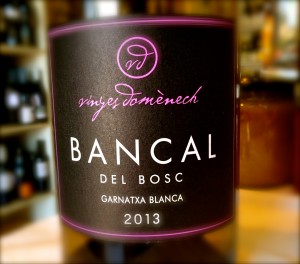
foto-1-7-300x264Bancal del Bosc Blanc 2013, which its denomination of origin is Montsant, is an incursion that the Spanish winery Vynes Domènech (Tarragona, Spain) presented two years ago with the harvest of 2013.

Vynes Domènech winery is an innovative project focused on the GreenCeller including organic vineyard,bioclimatic architecture and green technologies.

With a variety of 60% of white grenache and after an elaboration that took 5 months with fine lees in stainless steel, Bancal del Bosc Blanc 2013 is a very pleasant wine able to convince everyone.

It is characterized by a straw yellow color with an intense aroma of fresh white fruit, mainly pear and apple with touches of citrus fruit. Moreover, it has a liqueur flavor that is very fine leaving a long lingering end. Therefore, it is a perfect wine to be combined with fish, seafood, cheese, white meat or snacks.

After the success of the winery with their first white wine called Rita, Bancal del Bosc Blanc 2013 becomes the second white wine reference of this acclaimed cellar.


Patricia Fernández Ruiz.

Why Mendoza is the most important wine region of Argentina? #Mendoza #wines #Argentina #GreatWineCapitals

2-vinedos-otonales

The availability of pure meltwater from The Andes, the structure of arid soils and the abundance of sunshine are some of the natural competitive advantages that this region enjoys.

All of them, together with new infrastructures and new technologies investment had allowed Mendoza enhancing competitiveness and its wine’s diversity.

Mendoza, the most important wine region of Argentina covers around the 80% of the country’s wine production. Due to its brilliant characteristics, the result is the obtention of excellent wines and it is for this reason that it has been selected as one of the Great Wine Capitals.


Patricia Fernández Ruiz.

Uruguayan wines exceed expectations in Expo Milan 2015 #wine #Uruguay #expo #Milan

8252388414_b231ec0c5e

Until now, the success of Uruguayan wines on the pavilion of Expo Milan 2015, goes much further than the expectations thought. This result could opens eyes to new possibilities of increasing exports.

The international megaexposition that started on May 1, shows the country with a board and careful selection of wines to be offered to its clientele.

The participant wineries are Juanicó, Carrau, De Lucca, Garzón, Estancia La Cruz and Grupo Traversa and they were selected by the National Wine Institute of Uruguay.

From the very beginning, the public assistance estimated was around 250 and 300 every day, but during the first fifteen days it achieved 400 diners daily.

The economic effort needed for the participation in this international event has been evaluated and an important boost is expected to increase the volume of exports, mainly on those wines with a preferential quality.

Patricia Fernández Ruiz


The spanish wineries, the thirds best in the world #wineries #spain

Agroinformacion.com06042013_81703In modern wine history, Spain has often lagged behind France and Italy, but nowadays, spanish wine is in a growing moment. From the dry white wine of Rias Baixas to the red wine of Priorat, Spain leaves a great taste in our mouths.

Among the best wineries of Spain are Penedès, with Bodegas Miguel  Torres (Spanish wine export  leader and  Spanish domestic market supplier leader) and Jean Leon (Catalonia);  Priorat, with Clos Erasmus, Clos Mogador, Costers de Siurana, Mas Martinet and Principales bodegas y vinos del Priorat, (Catalonia); Ribera del Duero, with Tinto pesquera, Dominio de Pingus and Vega Sicilia, (Castile and Leon) and finally, Rioja, with Marqués de Riscal (The oldest and most traditional winery of La Rioja).

Furthermore, among the top wine producers of Spain are Álvaro Palacios, one of the most prestigious in the Priorat region and one of the most succesful winemakers of the moment. With René Barbier and Carles Pastrana, he has revolutionized the Spanish wine in the recent decades. Álvaro Palacios makes some of the most important wines of Spain, where we can find brands marketed as L’Ermita, Finca Dofí and Les Terrases.

It is also important to mention the Danish producer Peter Sisseck with his highest level wine, the Pingus, which is the most expensive wine of the country, but also Flor de Pingus is one of the best Spanish wines. He also has other wines known as Psi and Clos d’Agon.

Patricia Fernández Ruiz.


Learn the basics to taste champagne #france #champagne #wine #education #gastronomy

“There is a moment between the 15th and 16th mouthful of Champagne when every man is an aristocrat”, wrote Amélie Nothomb in her novel “Le fait du prince”.

champagne


Champagne, a sparkling wine

Champagne is an AOC wine produced solely in the eponymous place, from three main grape varieties : the chardonnay (giving white colored grapes),  the pinot noir and the pinot meunier (creating black berries). This beverage responds to a plethora of regional rules. For example, the bottles have to be stored for a period of at least 15 month before being sold. The Champagne-Ardenne is a region that often suffers from unsuitable climatic conditions to grow grapes (too humid, too cloudy). It might happen that grapes are picked up before they reach ripeness. Therefore, domain owners proceed to hide the fruit mediocrity by using two processes. The first one is called “sans année”, and consists in mixing different vintages in order to create a balance between the good and less good harvests, or to create a gustatory continuity over the years. The second one is the “dosage” and demands to add some “liqueur d’expédition”, a sugar-based addition, used to mask excessive acidity.
If you want to taste a high quality product, try to chose a champagne that does not overuse those methods. They should considerably differ from those mass-market brands found in superstores.
champagne conserverStoring the champagne

The sparkling aspect make this wine more difficult to store. The tasting temperature requires a special attention. If it is lower than 4°C, the bubbles might become minimal and make the beverage flat. If it is higher than 17°C, bubbles will explode in your mouth and the champagne will look more alike a cheap lemonade than like liquid gold.

It depends on the vintages and the grape-variety, but I think that the best temperature is 12°C. Before tasting it, refresh the bottle by letting it during 4 hours in your fridge, in a horizontal way, or refresh it 20 minutes in a bucket filled with ice and cold water. If the bottle traveled a lot, let it rest for some days in order to let the aroma come back to normal. Once it is opened, there is no sure way to keep the initial taste. The silver spoon is, unfortunately, an urban legend. Drink it as fast as possible. Trust me.


champagne verserPouring the champagne

Transparent flutes are particularly adapted to champagne, even if some people consider that an opened glass is more appropriate. Chose them transparent, so you can admire the robe. Pour half of the flute, so you can watch the nose without spoiling the bubbles. The bottle will be held by its base, and the champagne poured close to the glass. Flutes will be held by the base to limit the heat transmission.  The best place to taste it is not in the living room, but at the dining table, to facilitate the concentration. I advice not to stuff yourself with loads of appetizers. It might alter the gustatory balance and the aroma perception.
As astonishing as it might seem, champagne should not be served with desserts or sweet food. Champagne should be drunk in accompaniment with fish or poultry, and why not salty biscuits or cheese cubes.


Tasting the champagne

Here comes the most interesting and the most complex part of the procedure. The champagne tasting differs from the wine by one additional criterion : the presence of bubbles. This could disconcert the oenologists but don’t worry!, once the gaseous explosion is passed, there is plenty of aroma to analyse.
champagne teinteStart by admiring it

Take the time to admire the flute. This first thing you will remark is probably the presence of the bubbles. How do they look? They can be large or small, persistent or not… The “collier de perles” (the bubbles around the glass) can stay a long time, or not.
The robe presents a large color palette, easily noticeable with a little bit of attention. The robe can be yellow, green, grey, pink… with all the shades that are associated to the color : gold yellow, salmon pink, light pink, green with shades of gold…
 

tappoNext step: inhale
Wait a little moment so the first gas go away and that the exhalations release themselves.  Then, approach your nose to the flute and inhale for a certain time.
There are five main categories of champagne aroma. The first one is the floral one : the smells are refreshing and may remind you of summer flowers, the violets, the hawthorn, the lime tree… The second one is gourmand. It goes from the cakes and bakeries, for example crumbs and brioche, to spices like cinnamon or vanilla, passing by the butter, caramel and honey…The third one is végétal : it smells like the woods, the hay, the fern, … and even the truffle! The fourth one is the fruits secs (dried fruits in other words) : wintry reminders of nuts, figs, raisins… The fifth and last one is fruité and smells like sweet, refreshing aromas of summer fruits, citrus fruits (lemon, grapefruit…), white fruits, yellow fruits, and even tropical ones.

It is said that young champagnes (2-3 years) smell floral and fruité, mature (6-8 years) ones smell like gourmand and that the old champagnes (more than 6-8 years) smell fruits secs and végétal.

A simplified version of the 5 aromas

A simplified version of the 5 aromas


Here comes the best moment…

You can finally delight your taste buds. Take a sip and let it roll around in your mouth. Observe the acidity, the taste, the strength, the bitterness, the aroma… It can remind you of green apple, toasts, tropical fruits, vanilla, citrus fruits, nuts… The more experience you have, the more aromas you will perceive.
How is the aftertaste? How long does it last? A high quality champagne is supposed to leave a long finish. Besides, does the taste match the smell?
Share you meaning with your friends or family. Does they think the same way about that champagne tasting?

 
An article that started with a quotation has to finish by the same way. So… as said Coco Chanel, “I only drink champagne at two occasions : when I’m in love, and when I’m not”. In moderation, of course !

Anastasiya Tretyak
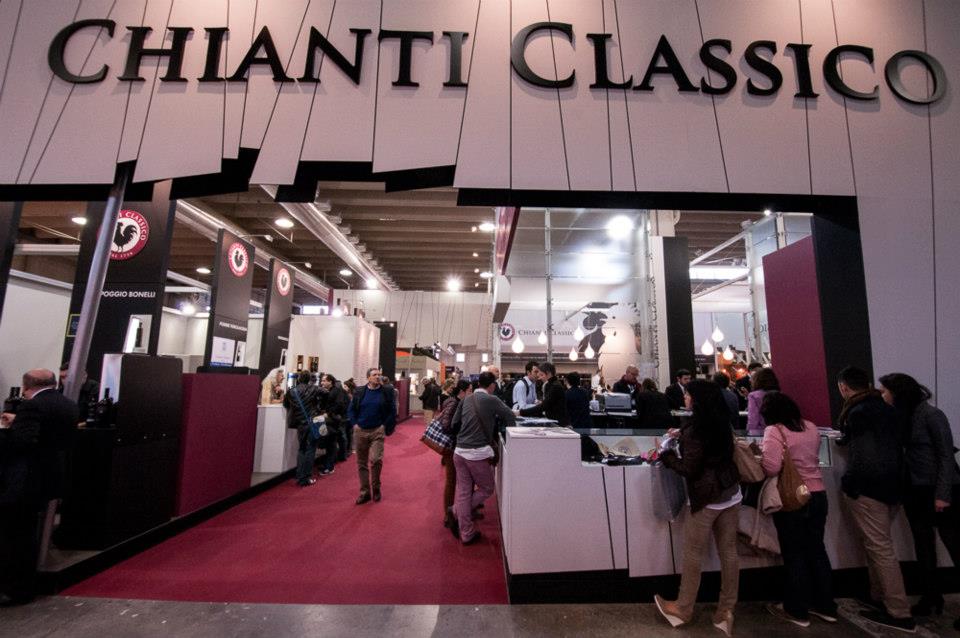
VINITALY 2015: MORE INTERNATIONAL BUYERS THAN EVER

150,000 visitors. More than 2,600 journalists from 46 countries. Revival on the domestic market with Horeca and retail operators.

Vinitaly2015_FotoEnnevi_255A7192_20150322The whole world at Vinitaly, with professionals from 140 countries – 20 up compared to 2014. “The result achieves the goal that we h:ad set ourselves. Thanks to an increase of 34% in investments dedicated to incoming promotions and cooperation with the Ministry of Economic Development, the Italian Trade Agency-ICE and the Ministry for Agricultural, Food and Forestry Policies, we further boosted the already high involvement of foreign buyers,” said Ettore Riello, President of Veronafiere.

Total visitors came to about 150,000, but compared to the past there were more from the Far East, especially Thailand, Vietnam, Singapore and Malaysia. Mexico and Africa also grew, with interesting new entries such as Cameroon and Mozambique. Even North Africa performed well, with a recovery by of Egypt, Tunisia and Morocco both for wine and olive oil at Sol&Agrifood.

“The huge US and Canadian markets alone account for 20% of international visitors totalling 55,000 people. German-speaking countries – Germany, Switzerland, Austria – confirmed their status as the most important with 25% of overall attendance; the United Kingdom took third place with 10%, followed in numerical terms by buyers from Scandinavian countries and Benelux,” said Giovanni Mantovani, CEO & Director General. We have seen considerable satisfaction among exhibitors as regards Vinitaly’s capacity year and year to improve the number of foreign buyers and the quality of visitors, maintaining a high number of contacts, so much so that several leading private-sector companies have already signed three-year renewals for coming editions.”

This is also thanks to new visitor profiling system adopted this year, with further refinement of visitor target selection and registration of all persons entering the show: this will create a database of extraordinary value for future marketing initiatives and international development.

The top ten countries saw impressive growth by France, ahead of Japan, while China, Hong Kong and Taiwan took eighth place. Russia came in ninth, the only country going against trends – the outcome of the current difficult geopolitical situation. The list closes with Brazil in tenth place.
Attendance from other European Union countries also improved, in particular from Poland and Romania.

This edition of Vinitaly also saw the return of a degree of optimism on the domestic market, with operators arriving from all over Italy.
The event was attended by more than 2,600 journalists from 46 countries.

Massimo Paccagnella


Photo Credits: Vinitaly 2015 – Foto Ennevi

The City of Pully want to unit its activities in Rochettaz #Switzerland #Pully #wine

OLYMPUS DIGITAL CAMERA

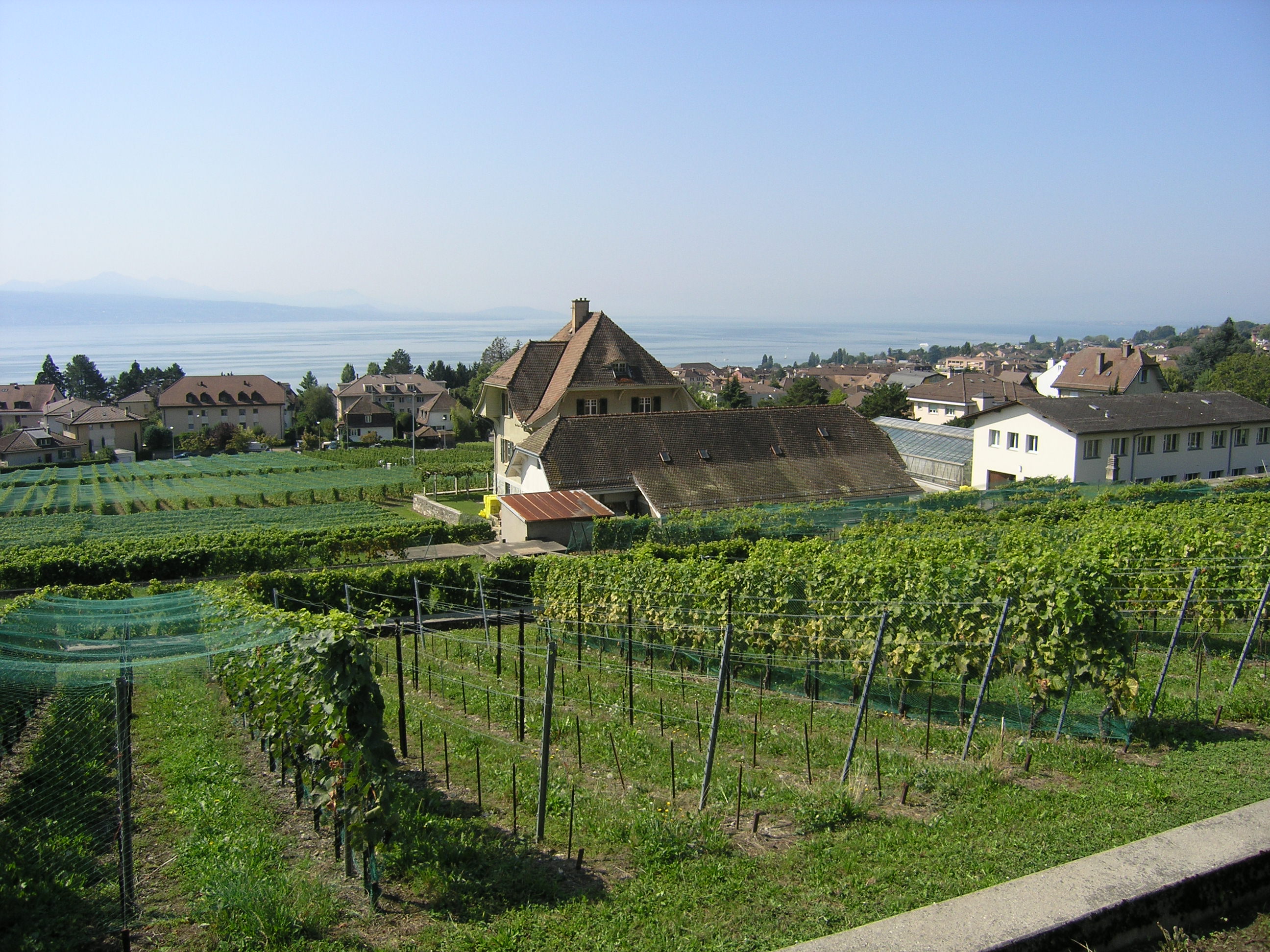
The city of Pully (Switzerland) has proposed a project that has the aim to unit the viti-vinicultural activities at one unique site, in Rochettaz (the second wine-growing place is Prevet), with the aim to free the land and galvanize the center of the city.

This reorganization should cost around 2,7 million of Swiss Francs, prompting reactions from the residents and the elected members.

Pully is a Swiss piece of  land, located in the Vaud Canton, near the city Lausanne and just in front of the Lake Leman. The cultivated area is 3.5 ha and the wines cultivated there have an AOC Pully (Appelation d’Origine Contrôlée). Traditionally, the grape varieties grown there are Chasselas, Chardonnay, Sylvaner and Sauvignon for white wine, and Pinot Noir, Gamaret, Gamay, Diolinoir and Garanoir for the red ones.

Saint Chinian Cuvée Baptiste 2012 #saintchinian #wine #france #languedoc

baptiste_eulalie-z

The Saint Chinian Cuvée Baptiste 2012 comes from the La Croix Sainte-Eulalie wine estate , in the Languedoc-Roussillon region.

The Gleizes family has owned this 31 hectares property since 1971. The village where the wine grows is named Pierrerue. The schist, sandstone and calcareous soil offer it this particular taste. The grapes are harvested manually and, when they have been rigorously selected, the grapes are put in oak barrels.

This wine has an AOC (Appellation d’Origine Côntrolée) Saint Chinian Rouge. It is made with approximately 50% Syrah, 20% Grenache, 20% Mourvèdre and 10% Carignan.

The editorial staff had the opportunity to taste it.
This wine has a dark robe, with ruby and dark violet reflection. The nose is spicy and fruity. It is well-balanced in mouth, but also tannic, bold and gourmet, with some fruity accents.

Anastasiya Tretyak


http://croixsainteeulalie.isasite.net/ElementsSousRubrique.aspx?SITE=EDOCREU&RUB=99&Lang=FR

Vinitaly 2015, a model for wine promotion between business and product culture #business #vinitaly #wine #italy

vinitaly
 «Today we can present a fundamental appointment for the Italian system since Vinitaly represents the entirety of Italy’s wine experience all over the world. Verona will provide an occasion to take stock of what has been done by the Government to simplify bureaucracy and promote the internationalisation of companies, as well as to launch new objectives going beyond Expo 2015, including the consolidated law on wine, with a focus on reorganization of the sector».
The press conference presenting the 49th Vinitaly (22-25 March 2015) held yesterday in Rome at the Auditorium Via Veneto so heard Agriculture Minister Maurizio Martina re-launch the Government’s commitment to support Italian wine and the validity of the collaboration with Veronafiere to implement economic development policies and promote Made in Italy on international markets.
«We are aware of the role acknowledged to us by companies and institutions», – said Ettore Riello, President of Veronafiere, – «as a platform of services for business internationalisation. It is with this commitment that we are working to achieve the goal launched last year by Prime Minister Matteo Renzi during his visit to Vinitaly to increase wine exports by 50% by 2020».
«In keeping with the b2b identity of the exhibition,» explained Giovanni Mantovani, CEO & Director General of Veronafiere, «Vinitaly 2015 will bring to fruition the intense incoming activities we have created and enhanced with the important support of the Ministry for Economic Development and the Italian Trade Agency–ICE – as well as the Ministry of Agriculture. Joining forces in this way has enabled us to involve buyers and delegations of selected operators from around the world, with an increase of 34% in the financial investment compared to last year»
2014 was a difficult year for various international situations but the sentiment of companies is positive – as emerges from a Vinitaly survey involving 30 of Italy’s most important wine realities. This is a “scientifically unrepresentative” but undoubtedly significant panel in terms of business dynamism and overall turnover coming to approximately 2 billion euros. It appears that 2014 saw growth in revenue by Italian wine cellars of 5% compared to 2013 and, importantly, 55% expresses confidence for 2015; 35% in these first two months of the year has already achieved positive feedback and 5% envisage a very positive year. «We have learnt that it is difficult to make forecasts in times such as these and that numbers change quickly, especially in the light of sudden and unpredictable changes in international geo-political frameworks that can have direct effects on the sector, yet there is no doubt,» as Mantovani concluded, that the Italian wine sector is highlighting all its liveliness and capacity for growth».
vinitaly2
The 49th Vinitaly has been specifically designed to help producers and operators expand currently emerging opportunities and also create new ones. B2b meetings have been organised between buyers, guest delegations and exhibitors within the scope of the International Buyers Lounge. A major convention – requested by tutelage consortia, wine-makers and other realities in the sector – will analyse ITTP talks (Transatlantic Trade and Investment Partnership with the United States). This will be joined by focus meetings discussing Hong Kong, China, USA, Russia, Brazil and Australia.
Confidence in the quality of initiatives at Vinitaly is confirmed by figures consolidating attendance by more than 4,000 exhibitors and display area bookings of more than 91,000 square metres – which leap to 100,000 with Sol&Agrifood and Enolitech, respectively the quality agro-food event (with the section dedicated to olive oil organised in collaboration with Unaprol) and the technical show for wine and olive oil production systems scheduled at the same time.
Major events during Vinitaly include OperaWine scheduled on 21 March in collaboration with the authoritative American magazine Wine Spectator and, 16-20 March in Verona, the first certification course for specialists in Italian wine. This is an innovative initiative set in motion by VIA-Vinitaly International Academy (the Vinitaly International educational project with the scientific direction of Ian D’Agata), which, after a final exam, will issue two types of certificate: Italian Wine Ambassador (IWA) and Italian Wine Expert (IWE). Fifty highly professional candidates from the sector (managers of several major international hotel chains, journalists, Masters of Wine) will take part from China, United States, Australia, Austria, Brazil, Canada, Korea, France, Germany, Hong Kong, Netherlands, Russia, Singapore, United Kingdom and Ukraine. VIA is also organising three Master Classes+ during Vinitaly, not only involving Italian wines. Collaboration with Ismea includes a convention on craft wines, another great wealth in Italian wine-making.
Vinitaly will also host the official presentation of Vino – A taste of Italy – the Wine Pavilion set up inside the Italy Pavilion at the Universal Exposition in Milan, organized by Veronafiere-Vinitaly on the invitation of the Ministry of Agriculture, Padiglione Italia and Expo 2015 SpA. «I am indeed extremely grateful for the work carried out by Veronafiere.» – said Minister Martina at the end of the Press Conference, – «as well as its efforts as the country prepares for Expo 2015».
Antonio Gala


Cirque grenache gris 2014 #grenache #france #wine #roussillon

20150227_165506 (1)
The Cirque Grenache gris 2014 is a wine from the Catalan coast, from the Languedoc-roussillon vineyards.
The Tautavel wine-growers take care of this traditional variety grenache gris next to the Vingrau village.

The label sketches a Mediterranean climate landscape where, next to the chalky-clay cirque, lay vineyards that have been cultivated since Roman times.

This wine has an IGP appellation Côtes Catalanes (Indication Géographique Protégée), evidence of this wine-variety’s authenticity.

We had the occasion to taste this refreshing wine. Its visual appearance shows a light wine robe, with a gold green reflection. The nose is delicate, fresh and sour. When we taste, we feel a little of white peach. The aroma reveals itself  in a second time : the wine has a floral aftertaste.

It is a light,  summery, feminine wine that we particularly advice to accompany shellfish.

20150227_165524 (1)

Anastasiya Tretyak

« Older Entries Recent Entries »