Author Archives: VinoeStile

Sinuelo prime

28316e8d6879364d385a5f19371f093fFrom south of Brazil in the Serra Gaucha comes Sinuelo Prime wine made up of a selection of Cabernet Sauvignon (87%) and Merlot (13%).

Sinuelo Prime is a limited edition with numbered bottles. It is definitely a remarkable complexity and evolved wine, fruity, ripe blackberry with hints of spice, chocolate and coffee.

The color is of an intense ruby-red. The palate, with ripe tannins has a pleasant balance between alcohol and acidity. It has also good body and persistence.
In the kitchen, it goes very well with pasta with a strong sauce and game meat.

http://www.sinuelo.com.br

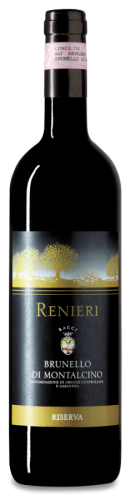
2010 Brunello Riserva Renieri 3° at JS TOP100 Wines of 2016

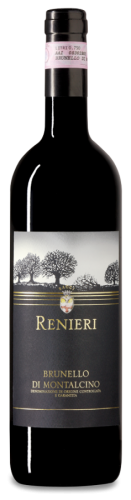
2010 Renieri Brunello Riserva is on the top 100 wines of the world for James Suckling.

It is in position n 3. The best European and  Italian wine. The third wine of the world.
504221b8-27e8-4479-8d08-7b9824542028

Renieri
Brunello di Montalcino Riserva

DOCG

2010


What a time to be a wine critic. I can’t think of many years more exciting to be one than 2016. We rated no less than 20 perfect wines after tasting more than 10,000 bottles, and our Top 10 are all rated 100 points. All the wines in our list were tasted from bottle, so barrel samples were not included. That’s why we didn’t include categories like 2015 Bordeaux, which is a fantastic vintage but not available in bottle until 2018. Most of the tastings were done in the region themselves. And with the help of contributing editors Nick Stock and Stuart Pigott, JamesSuckling.com rated wines from Argentina, Australia, Austria, California, Chile, France, Germany, Italy, New Zealand, Oregon, and Spain.

In a departure from last year’s emphasis on top-scoring value wines, we focused strictly on pure quality for this year’s Top 100. Most of the 100-point wines were from Italy and Napa Valley, and I believe that 2013 could be the latter’s greatest vintage. Napa produced rich and structured cabernet sauvignon-based wines, while the 2010 vintage in Tuscany made phenomenal Brunello di Montalcinos. Wines like these will serve as reference points for wine lovers around the world and will be benchmarks for generations to come. Unfortunately, the same can’t be said for 2013 Bordeaux, which was a disappointing vintage and didn’t come close to cracking the Top 100 with the exception of dry and sweet whites.

Italy came in at No. 3 this year with the Renieri Brunello di Montalcino Riserva 2010, which showed a similarly harmonious and understated character as Viñedo Chadwick. The Renieri owes its success to a superb vintage and the deft winemaking of Marco Bacci, the owner of the estate.

jamessuckling.com

Milantino wines: a year of awards

sfsfsfsfsfsfThis was a year full of successes for Milantino!  The quality and attention it give to its labels, and as a reward received national and international awards.

In Brazil Wine Challenge, which is Directed by the Brazilian Association of Oenology (ABE) and the magazine Adega, they were gathered labels of South Africa, Germany, Argentina, Australia, Bolivia, Brazil, Chile, Colombia, Spain, United States, France, Greece, Hungary, Italy, New Zealand, Portugal and Uruguay, consolidating its position as one of the most important in the Americas. The Milantino Gran Reserva 2005 was one of four wines to take the Great Gold Medal.

In the 14th selection of the best wines, sparkling wines and Garibaldi juices held by the Association of Winegrowers of Garibaldi, with the aim of consolidating every year the excellence of the products and the efficiency of enterprises showing prepared for the domestic capturefsfsfsdfand international markets.

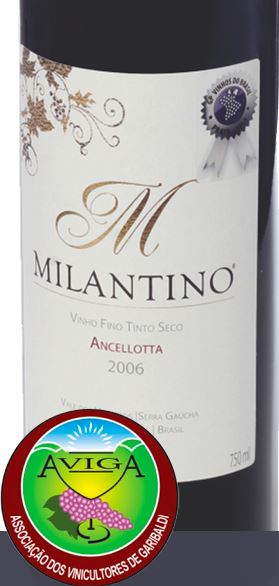
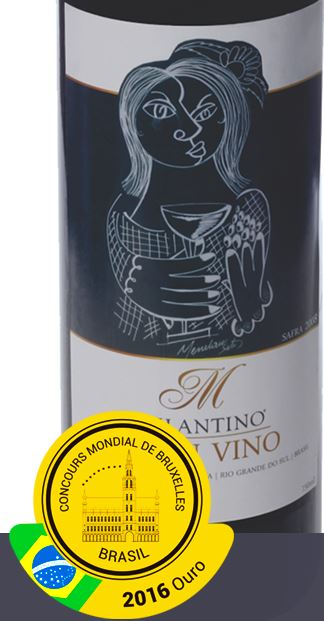
The Milantino was awarded two gold medals, in our Red Wine Fine Ancellota 2006 and the Red Wine Fino Gran Vino 2008.

The Milantino Fine Wines was founded in 1989 with the philosophy of developing high quality and limited wines production .
Located in the beautiful Valley of the Vineyards in Bento Gonçalves, the Milantino elaborates wines with grapes grown in its own vineyards, under careful care, from the cultivation of the vines to the selection of grapes during harvest and winemaking.

http://www.vinicolamilantino.com.br

Masseto 2013

Vintage 2013 will be remembered as one of the latest harvests in  history with particularly favorable growing conditions for Merlot. 


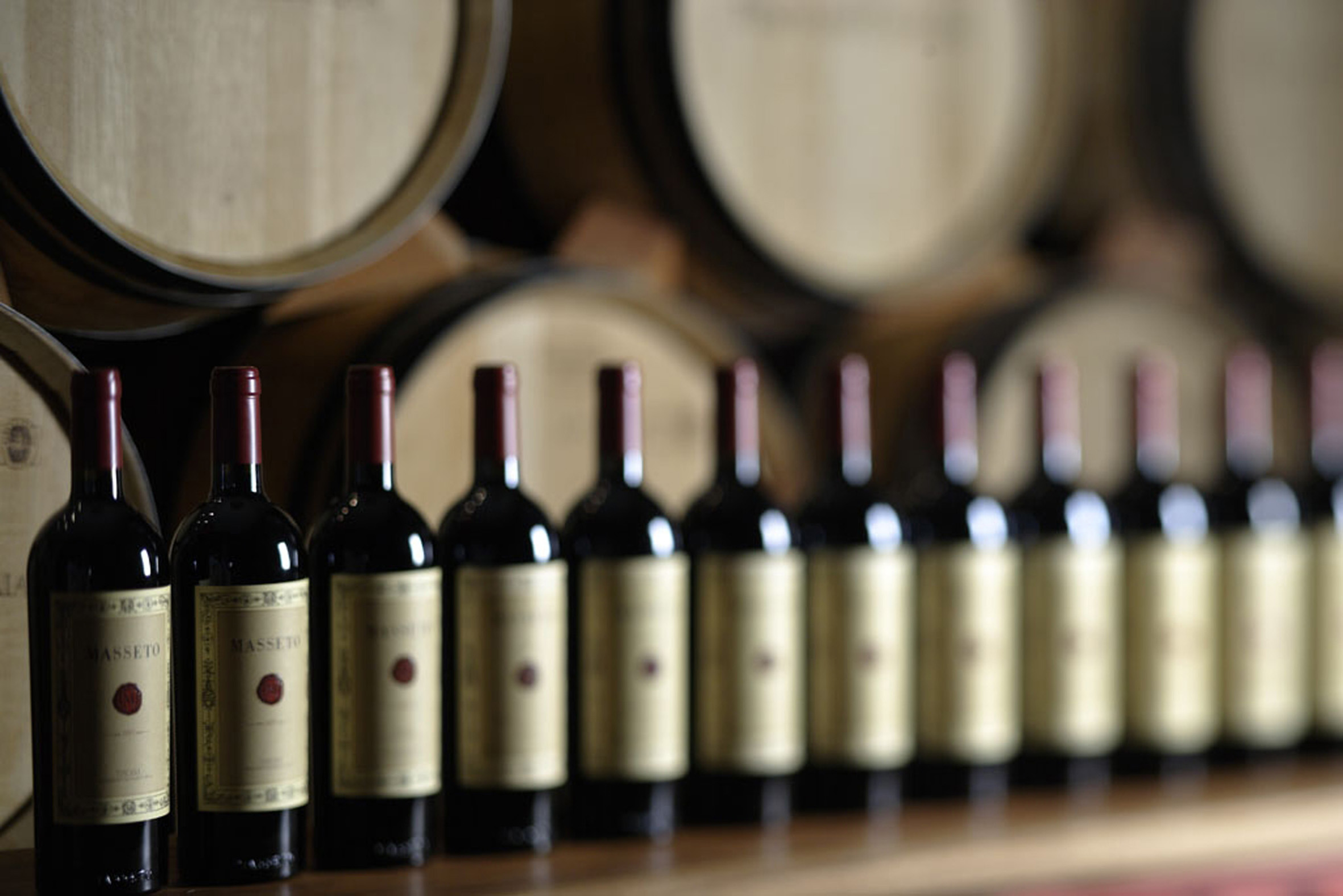
masseto-bottlesThe Masseto vineyard is a unique place with a mosaic of different soils including an exceptional presence of grey clay. The gentle breezes coming off the sea during the warm summer months, the intensity of the sunlight and the specificity of the unique soils, allow the vines to develop and ripen gradually and contribute to granting Masseto its enchanting combination of freshness and ripeness.

Masseto 2013, which is being released in this period,  is once again testimony to the unique alliance of terroir, climate and human talent determining its timeless value. This vintage will be remembered as one of the latest harvests in the history of Masseto to date”. Alex Belson, Director MASSETO

After a dry 2012, winter 2013 was characterized by mild but very rainy weather, which caused a delay in budding of up to 15 days. A cool, rainy spring also led to an irregular, very long flowering period, with  two-week delay compared to the average, which reduced the crop and resulted in uneven development of the grapes. Fortunately the summer, which arrived punctually at the end of June, was perfect, dry and sunny, with a few peaks of heat in July and August. The slow vegetative development was ultimately beneficial because it deferred ripening until after the hottest period. The August storms significantly lowered temperatures, especially at night, which favoured aromatic expression. This however led to a later than average harvest, which started on 12 September with the “Masseto Alto” vineyard parcel and concluded on 25 September with the last parcel of “Masseto Centrale”, with predominantly sunny weather

without excessive heat.

“Masseto 2013 is the result of an overall late, fresh weather during the harvesting period. These are particularly favorable conditions for Merlot, which was able to ripen slowly and completely in sunny weather, without excessive heat. These conditions enhanced full expression of the aromatic qualities and perfect ripening of the polyphenolic content. Intense ruby in colour, the nose immediately reveals fully ripe fruitiness endowed with great freshness and complexity, underlined by delicate notes of vanilla and cocoa. On the palate, the wine is substantial and rich, with great density, and a rare tannic quality of silkiness and smoothness. Black fruit aromas are accompanied by a strong note of freshness and a long, elegant finish, which is prolonged with a delicate hint of cocoa”. Axel Heinz, Winemaker and Estate Director MASSETO

The clusters, hand-picked in 15 kg boxes, were graded and selected by hand on a double sorting table before and after de-stemming, and then gently pressed. Each of the four vineyard blocks was vinified separately. Fermentation took place in either steel or wooden vats, followed by maceration for 15-20 days at a temperature of between 25 and 30°C. Malolactic fermentation was started in 100% new oak barrels, keeping the different lots separate for the first 12 months of maturation. The final blend was subsequently assembled and reintroduced in the barrels for a further year, for an overall  total of 24 months. After bottling, the wine was aged for an additional 12 months prior to release.


2010 Brunello Riserva Renieri has been awarded 5 grappoli (5 grape bunches)

We would like to let you know that the 2010 Renieri Brunello Riserva has been awarded  5 GRAPPOLI, the maximum score from BIBENDA, the official guide of FONDAZIONE ITALIANA SOMMELIER.
It looks like this time everybody agreed. Suckling 100 points, Wine Spectator 96 points, Parker 96 points and now 5 Grappoli
 
Marco Bacci

Renieri
Brunello di Montalcino Riserva

DOCG

2010


Terra Madre Salone del Gusto 2016 concludes with a wave of positive energy

TURIN, ITALY - SEPTEMBER 23:  Atmosphere during the Terra Madre Parade during Terra Madre Festival by Slow Food on September 23, 2016 in Turin, Italy.  (Photo by Tullio M. Puglia/Getty Images for Slow Food Terra Madre)

TURIN, ITALY – SEPTEMBER 23: Atmosphere during the Terra Madre Parade during Terra Madre Festival by Slow Food on September 23, 2016 in Turin, Italy. (Photo by Tullio M. Puglia/Getty Images for Slow Food Terra Madre)

Paolo Di Croce, Slow Food International General Secretary comments: “Seven thousand delegates from 143 countries, 300 Slow Food Presidia and 1000 food communities of the Terra Madre network from five continents. These are not simply numbers, they represent a humanity that is united here to discuss the great challenges which we must confront, above all the safeguarding of agricultural biodiversity. The event’s new open air formula, the discussion spaces and the interactive tours have helped foster a direct and fertile relationship between visitors and delegates, raising awareness and creating positive energy towards the objective of Slow Food: good, clean and fair food for all.”

Over 5000 members of the public followed the series of conferences at the Carignano Theater, dedicated to themes of agroecology, health, migration, the relationship between food and art and cinema. Another 5000 participated in the Terra Madre Forums, listening carefully to the experiences of our delegates.

Victoria Tauli-Corpuz, United Nations Special Rapporteur on the rights of indigenous peoples: “This event has a very important political impact for the Indigenous Peoples pushing and protecting their rights to their territories and resources. Globalization is a tremendous challenge, so we need to enter into partnership because the battle for land rights is a battle for all. Slow Food can definitely be a strong ally for the Indigenous Peoples around the world.”

Sergio Mattarella, President of Italy, who was present at the opening ceremony, said: “Terra Madre Salone del Gusto is, at one and the same time, an Italian challenge and a meeting with the world. I believe that initiatives like this help in the construction of a shared language, and to support changes in our culture which we know are necessary.”

Among the many journalists present, Dan Saladino, BBC Radio presenter and producer, said: “I took part in a forum about the biodiversity of bananas and I heard the stories of producers from Indonesia, Japan, Uganda, and discovered lots of varieties and a thousand uses of this fruit. Nowhere else can you find such a wealth of testimony all in the same place.”

Olivier Roellinger, a French chef known for his extraordinary interpretations Breton cuisine, described his experience in Turin: “Something is happening in the world and the marvelous market of Terra Madre in Turin is part of that change.”

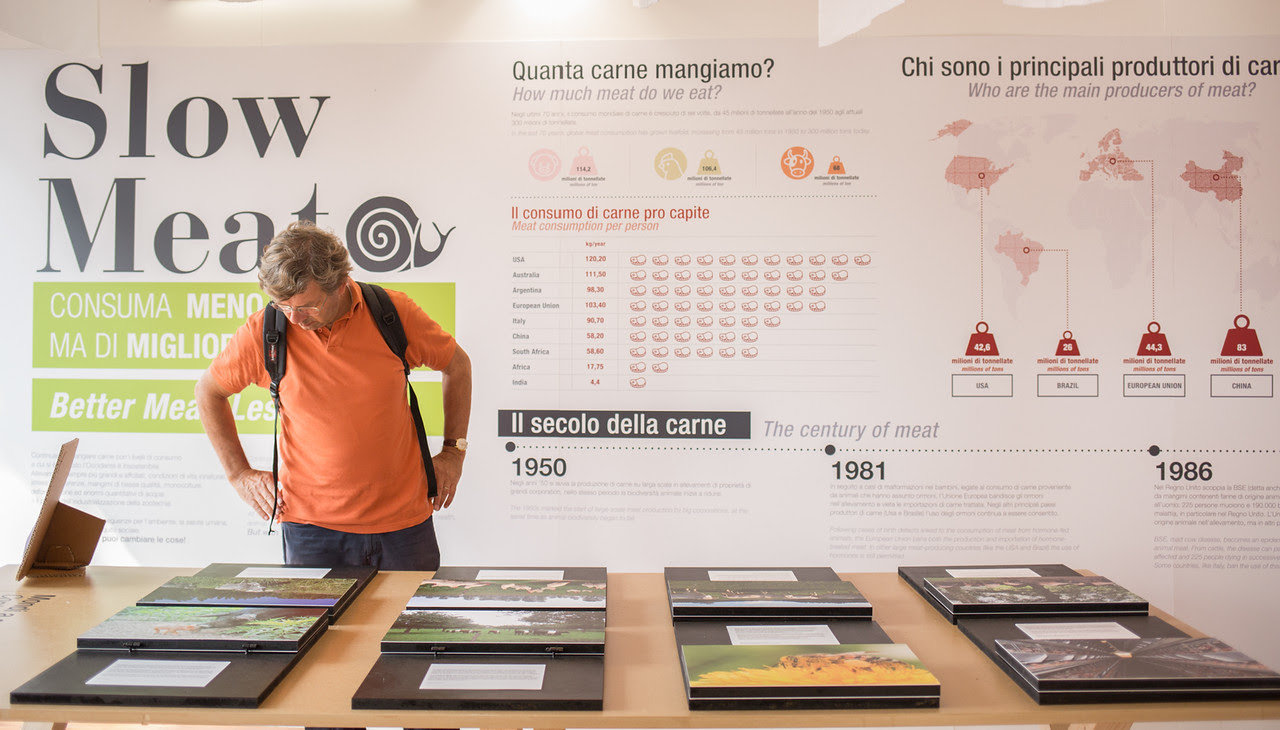
The over-production and over-consumption of meat is a vital problem for the environment and our health. Slow Meat is offering a solution.

unnamedgddgdThe production and consumption of meat has become a central talking point among the public thanks to Slow Meat’s interactive stand at Terra Madre Salone del Gusto, taking place in Turin (Italy) until 26 September.

The production and consumption of meat has become a central talking point among the public thanks to Slow Meat’s interactive stand at Terra Madre Salone del Gusto, taking place in Turin (Italy) until 26 September.

Over the past seventy years, global meat consumption has increased six-fold, from 45 million tons per year in 1950 to 300 million tons today. This figure is expected to rise to 500 million tons by 2050, an increase of 10-fold since 1950 and double what it is today.

What does it mean to eat meat responsibly and sustainably in today’s world? How can we safeguard our rich heritage of raising domesticated animals, something that is central to rural communities across the world? What are the environmental and health implications of industrially raised meat? The Slow Meat campaign is trying to answer all of these questions and more, examining the real cost of the meat that lands on our table and comparing both production methods – industrial and sustainable – to understand the outcomes of our choices.

 Serena Milano, General Secretary of the Slow Food Foundation of Biodiversity says, “It is unsustainable for the West to continue eating meat to the levels that it’s used to. Animals are being raised in inhumane, stressful conditions in increasingly crowded environments. Low quality animal feed, monocultures, deforestation and the use of large quantities of water are all consequences of the industrialization of animal farming. This will have terrible effects on the environment, our health, animal welfare and social justice. But by making better choices, we can change this.”

Slow Meat’s tagline – eat less meat, of better quality – is of crucial importance for both our health and to save the finite natural resources that are being used to produce meat.

For Slow Food, an educational campaign to teach consumers why they should avoid buying cheap meat is important. Low prices are reflective of poor quality. This, in turn, is demonstrative of how poorly farmers are raising their animals, whose welfare is not cared for and whose feed is of poor nutritional quality, as well as the hidden costs that harm the environment. Improving the quality of meat and reducing its consumption would lead to a decrease in diet-related diseases that are currently putting a huge strain on public health systems.

Terra Madre Salone del Gusto has also dedicated a space to the Slow Beans network, demonstrating the many nutritional benefits of beans as an alternative to meat. There are also 40 bean exhibitors at the event and 188 bean varieties at risk of extinction that are being safeguarded by the Slow Food Ark of Taste.

Richard McCarthy, executive director of Slow Food USA presented the Slow Meat Manifesto: “The industrial model of meat production has isolated us from this grand multi-species community, and instead we are isolated in a culture of confinement. Animals are confined in torturous conditions, dollars are confined to the hands of few, and eaters are confined to unsavory options – our future confined to a desolate path. It is time to break free.”

The Slow Food Asia network explained how obesity levels are rising exponentially in the countries where meat is increasingly forming part of the diet. It’s necessary to find alternatives, to reconsider how our ancestors ate with a diet rich in vegetarian protein, which is now being preserved only in indigenous communities.

Latest wine reviews from James Suckling

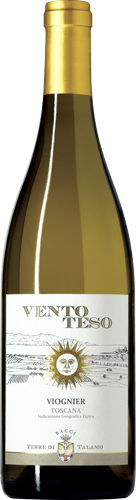
I am glad to inform you that in his article of September 6th, 2016 James Suckling reported on the huge improvement in the quality of the white wines in Tuscany and  our two white wines 2015 Vento Teso with 92 and 2015 Vento with 90 were among the top ones over the 110 he tasted.

Marco Bacci


Terre di Talamo
047f189b-0026-494a-a5cd-d47a1ca5c8c7Vento Teso

VIOGNIER IGT TOSCANA

2015

A very pretty viognier with honey and dried appie character.
Hints of pear. Full body, a/most oily with dried fruit and hints
of tropica/ fruit character. One of the best whites in Tuscany now.
Drink now.

92/100

James Suckling – September 6th, 2016


Terre di Talamo
Vento

34abf23e-c2b4-457c-b56e-6ce4bbb528aeVERMENTINO IGT TOSCANA

2015

A brighi and delicious white with tropical fruit
and stone character. Flavorful. Delicious.

90/100

James Suckling – September 6th, 2016

VINTAGE 2016 HAS THE POTENTIAL TO BECOME ONE OF ORNELLAIA’S GREAT VINTAGE

harvest-in-ornellaia

ORNELLAIA: START TO ONE OF THE EARLIEST HARVESTS IN RECENT YEARS

“For Ornellaia, this will be one of the earliest-concluding growing seasons in recent years: our harvest started immediately following the late-August holidays. The reason is that, contrary to 2015, we had no significant rainfall during the month of August,” explained Axel Heinz, Director and Winemaker of Ornellaia.  “Thus, on Monday, 22 August, Ornellaia brought in the first clusters of Sauvignon blanc and Viognier, which showed excellent component levels, with a potential alcohol of 13% and a good, balanced acidity. We will already finish this week the harvest of our white grapes, while we have just started picking, in these past few days, some Merlot, and we’re planning to continue with the other reds next week.

“Significant heat in July and August speeded up the ripening process,” continued Heinz. “Fortunately, the area of Bolgheri is blessed with wide day-night temperature differentials, which in turn allows the vines to recover during the night from the daytime heat and dryness. In addition, the depth of our soils creates optimal conditions for developing the aromatic qualities of our grapes.    

“As it stands, it is possible 2016 could be among the best vintages at Ornellaia, on a par with 2001, 2006, 2011, and 2012, which were all characterized by hot, dry summers and yet gave us wines of great concentration, structure, and richness. The first rows we pick are never the whole story, so we are still sampling all the various vineyards and evaluating their potential. In point of fact, though, the figures we are seeing do indicate a vintage similar to the great ones of past years.” 


Wine Spectator: Bruce Sanderson’s recommended Brunellos di Montalcino

‘Wine Spectator’ of August 31st, Bruce Sanderson recommends the 2011 Brunello Renieri as one of the best 9 “Top 2011s” and our 2010 Brunello Riserva Renieri as one of the best “Top 2010 Riservas” out of the 160 reviewed.

TOP 2011s

5a6d97bb-7cde-4f0e-a7b6-2d23f3b5c65b

Renieri
Brunello di Montalcino

DOCG

 2011

Packed with cherry, strawberry, floral and salty,
mineral flavors.

93/100


TOP 2010 RISERVAS

504221b8-27e8-4479-8d08-7b9824542028

Renieri
Brunello di Montalcino

DOCG

RISERVA 2010

Reminescent of a fine Burgundy, showing berry, fading cherry, spice and chalky mineral notes. Juicy and elegant, firm yet harmoniuos.

96/100

« Older Entries Recent Entries »