Author Archives: VinoeStile

Ernesto Neto interprets Ornellaia 2014 ‘L’Essenza.’

ernesto-neto-signature-ornellaia-2014The Bolgheri Estate presents the 9th edition of Ornellaia Vendemmia d’Artista project.

Artist Ernesto Neto has created unique labels that will dress a limited edition of numbered large-size bottles of Ornellaia, 9 lots of which will be auctioned by Sotheby’s at New York’s Solomon R. Guggenheim Museum and Foundation, which will receive the proceeds. 

The Brazilian artist who works with the Huni Kuin tribe is inspired by Mother Nature to convey the character of the 2014 vintage.

The art project has now donated more than 1 million euros to art foundations and museums across the globe

For this year’s 9th annual Ornellaia Vendemmia d’Artista art project, which was launched in 2009, in which Bolgheri-based Ornellaia selects an internationally-famous artist to create an artwork that will interpret the distinctive character of each individual vintage, Ornellaia has commissioned Brazilian artist Ernesto Neto to illustrate Ornellaia 2014 “L’Essenza”. http://www.ornellaia.com/it/vendemmia-d-artista/

For Axel Heinz, Ornellaia’s Director and Winemaker, the 2014 vintage exhibits the character of ‘L’Essenza,’ or the Essence. “When one is confronted with a challenging growing season, in order to make a great wine, one has to focus on simply extracting that year’s very essence. And, in fact, the 2014 year unexpectedly turned into a pleasant surprise, since the heavy rains and low temperatures during the ripening stages were followed by a September and October which brought us exemplary weather conditions; the final result was a somewhat later harvest, which delivered optimally vibrant fruit with crisp acidities.

We complemented that result with meticulous hand-picking, whose objective was to select only the most sound, healthy clusters. What one notices immediately about the 2014 vintage is the high quality of the tannins: elegant and silk-smooth, with no rough edges at all. 2014 will be remembered in Tuscany for the summer that never was and as one of the most unusual. A warm and rainy winter was followed by a mild and dry spring, a distinctively average July and a cold and rainy August. All of this created difficult conditions for the ripening of the grapes. September and October, however, brought perfect conditions, with mostly sunny and dry weather, offering excellent conditions for ripening, particularly for Merlot. While we had an incredible amount of extra work to do in the vineyard, the combination of the Estate’s varied subsoils, the varietals of Cabernet Sauvignon & Merlot and our own detailed knowledge of the terroir all played distinctively in our favour. Le Serre Nuove dell’Ornellaia underlines the fundamental difference in terroir between the coast and the central Tuscan vineyards.

ornellaia-2014-lessenza-vda-ernesto-neto-3_6_9_075-liters-emotionalTo artistically interpret Ornellaia 2014 ‘L’Essenza’ Brazilian artist Ernesto Neto turned to his current field of art research, shamanism as science, natural phenomena, and the artisanal arts that are the collective fruit of the community. In 2014, Neto and the members of the Huni Kin tribe in Brazil undertook a series of artistic collaborations that analysed shamanic rituals and traditions. The spiritual life of that tribe, their striving for healing in harmony with nature, and the wisdom and serenity that they draw from their intimate bond with the energy of our earth infused into Neto’s oeuvre an unprecedented awareness of the power of nature and of the dynamic factors that regulate it. Drawing generously from these traditions, and from the shamans and their rituality, the artist’s recent works convey aspects of transformation and add multiple layers of meaning to his research into social- and ecology-based connectivity.

For Ornellaia’s Vendemmia d’Artista project, Ernesto Neto sought to convey the concept of natural balance as it is exemplified in our modern societies. He encapsulated 111 large-format bottles with an interwoven mesh, specifically 100 3-litre double magnums, 10 6-litre Imperials, and a single 9-litre Salmanazar, which together represent a social hierarchy with a single King, 10 Nobles, and a populace of 100 subjects, and in so doing illustrates the equilibrium that should reign in every community, with a hierarchy that is necessary so that all can live in harmony within the group and in uniformity with Mother Nature.

In addition, Neto designed a special label for the 750ml bottles of Ornellaia, and one bottle bearing that label will be included in every 6-bottle wood box.

To date, Ornellaia’s art project has gathered more than 1 million euros, all of which it has donated to foundations and museums that support art across its full range of expressions, including the Whitney Museum of New York, the Neue Nationalgalerie of Berlin, the Royal Opera House of London, the H2 Foundation of Hong Kong and Shanghai, as well as the Museo Poldi Pezzoli of Milan, the AGO of Toronto, the Fondation Beyeler of Basel, and the Hammer Museum of Los Angeles.

On the upcoming 27 April, the spotlight will be focused on Ornellaia at a benefit auction centring on 9 lots, which will include the special bottles created by Ernesto Neto for the Ornellaia 2014 L’Essenza – Vendemmia d’Artista. Jamie Ritchie, Sotheby’s CEO & President, Americas & Asia, will preside at a gala dinner and auction that will raise funds to be donated in their entirety to the host sponsoring the event, the Solomon R. Guggenheim Museum and Foundation in New York, directed by Richard Armstrong.

“The Vendemmia d’Artista series is a wonderful way of combining the characteristics of each vintage of Ornellaia with a world class artist’s interpretation of that specific year. For the ninth edition, Sotheby’s Wine are delighted to continue our collaboration with the launch of Ornellaia 2014 L’Essenza Vendemmia d’Artista, through a very special dinner and auction benefiting the Solomon R. Guggenheim Museum in New York.” Jamie Ritchie, Sotheby’s CEO & President, Americas & Asia.
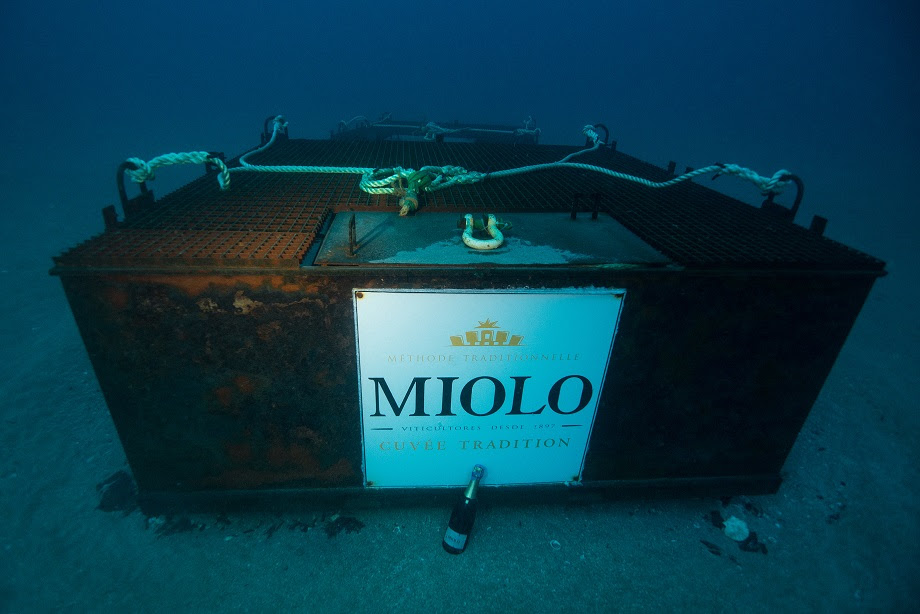
 

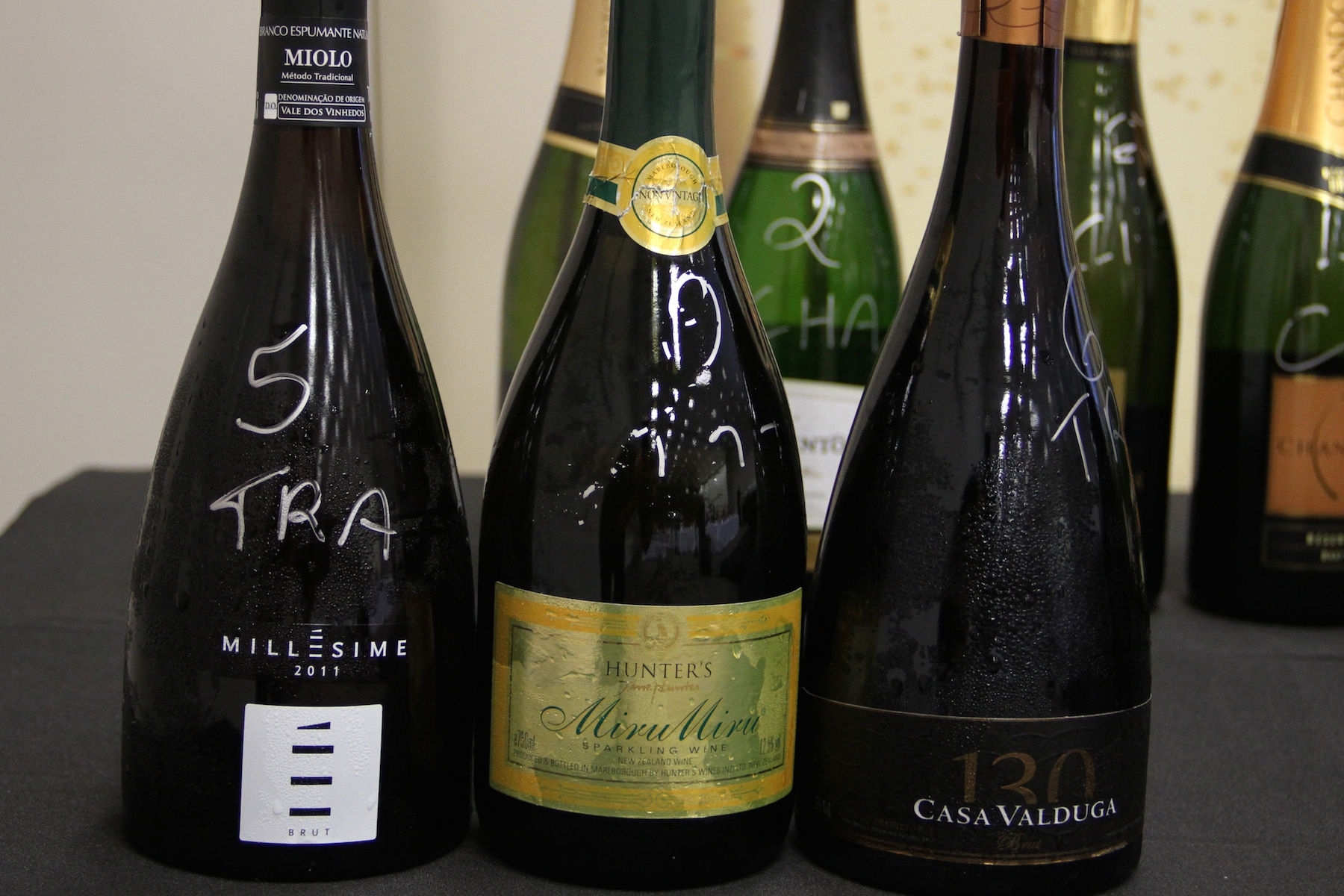
Espumante do mar: Miolo is the first Brazilian winemaker to immerse bottles in underwater cave

unnamedSubmerged sparkling wines have 10 times more molecular compounds than those aged by the traditional method. Richer and floral flavor and clear notes of butter and nuts were also observed.

To celebrate the successful sales of the Miolo Cuvée Tradition Brut sparkling wine on French soil, Miolo Group bets on a unique system of aging and stabilization of the product: the immersion of bottles in underwater cellars.

Just over two months ago, a lot of sparkling wine celebrated in the foreign market was immersed in the sea of the province of Bretagne, France in the North Atlantic.

The whole operation was carried out in underwater cellars, creating ideal conditions, not only to age, but also to confer unique characteristics to the wines submitted to this process.

Strategically immersed in the island of Ouessant, in the region known as Baie du Stiff, bottles of Miolo Cuvée Tradition Brut are in contact with sea temperatures (between 11 and 13 ° C) and air (8 to 10 ° C) Besides receiving the beneficent influences of the constant and gentle sea agitation.

According to Adriano Miolo the surprising effects resulting from the conditions of conservation of the bottles are observed in laboratory tests and tastings frequently performed to accompany the ripening of the beverage submitted to the immersion process. “In a mass spectrometry analysis, for example, a submerged foamer presented 10 times more molecular compounds than those aged by the traditional method. These compounds are responsible for the formation of the aromas and the complexity of the wine. ”

ffdsfdsfStill according to Adriano Miolo, in blind tastings conducted by specialists in the area, the results brought some relevant highlights to affirm the quality of the process: the sparkling wines present a richer and more floral flavor, they acquire complexity without losing the freshness perceiving itself, also, clear notes of butter and nuts.

The bottles of Miolo Cuvée Tradition Brut are arranged horizontally in a special container and will stand for one year in the submerged cellar. The sparkling wines will be removed from the sea in November this year and marketed in Brazil and France in a special edition.

The Miolo Cuvée Tradition Brut is made in the Vale dos Vinhedos (RS) with Chardonnay and Pinot Noir grapes by the Traditional Method (with fermentation in the bottle itself).

THE CULTURE OF WINE IN MALTA

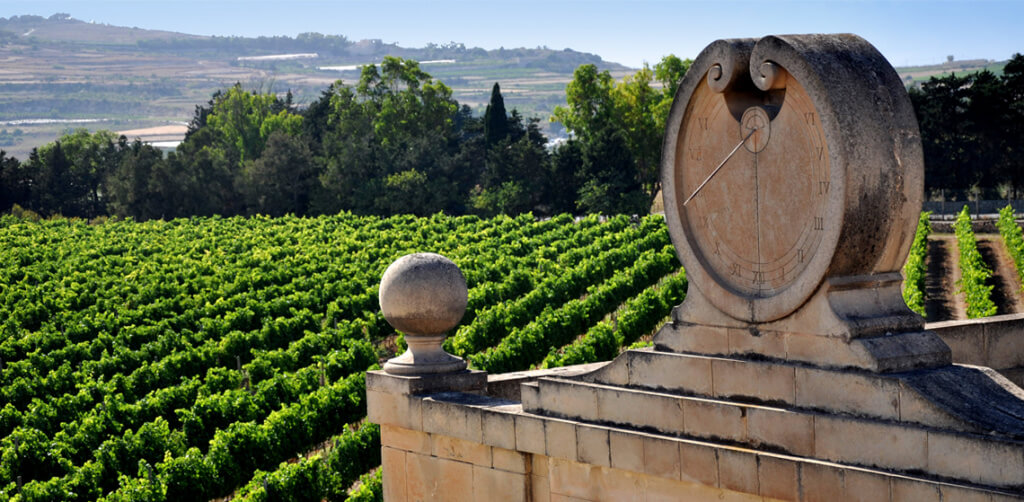
malwine01There are so many things to be discovered during a stay on the Maltese islands.

When travelling to Malta for business or holidays, an all year destination, you will be amazed by the huge quantity of activities to do there. A lot of cultural heritage or museums to visit, get acquainted with the history of the knights of Malta, drive through breathtaking coastal landscapes, Valetta which will become in 2018 the EU capital of culture, the variety of the various festivals all year round and above all to benefit of a high standard of living with great food and fine wines.

Wine production to Malta dates back to the time of the Phoenicians. With the viticultural revival mainly five topwinemakers are established and are producing the quality and style of the Maltese wines. Since the entering of the country in the EU in 2004, they are especially focusing on a higher quality of wine production and they vinify fine DOK wines, the local appelation. Several international varieties of grapes are growing on the islands but two indigenous grapes named Gellewza for red wine and Ghirgentina for white wine also do.  The climate is optimal for the culture of wines on the archipelago, which is generally hot and there are no biting winds, fog, snow or frost, and malwine02rain falls only for short periods. But hot summer days and nights are tempered by cool breezes from the Mediterranean sea. The vinification of wines in Malta appeal to all the craftmenship of the winegrowers because of the aridity of the soils, it will be then their choose of grape varieties matching to the typicity of the soils which will made the differents tastes and sensitivities you will feel in their wines.

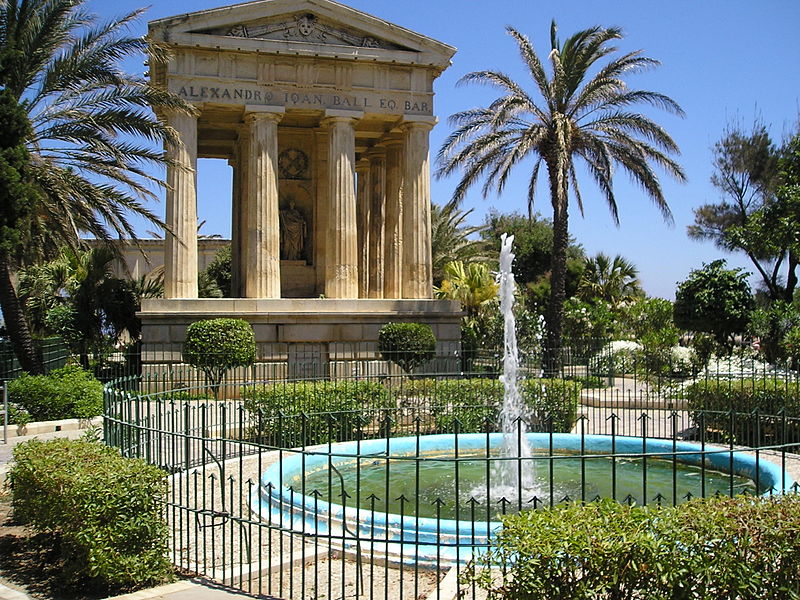
Two wine festivals are organised during the summer in the Upper Barraka gardens or in Hastings gardens of Valletta, perfectly located for a walk through the historical part of the city with many pedestrians streets. And offering majestic views from the bastions, the marina and the harbour. Both festivals are presenting exquisite IGT or DOK quality wines that can be paired with tasty food while listening to live musicians or viewing entertainers acting.

Feel the Maltese variety…

Olivier Bulto

http://www.winesofmalta.eu/

http://www.visitmalta.com/en/

http://www.qualityassuredmalta.com/

Brazil is among the best wine producers in the world

Steven Spurrier no Panorama dos Espumantes do Hemisfério Sul. Foto: Janice Prado/Ibravin

Steven Spurrier no Panorama dos Espumantes do Hemisfério Sul. Foto: Janice Prado/Ibravin

The World Association of Wine and Spirits Journalists and Writers (WAWWJ) last ocober 2015 has published a list of the 10 best wines in the world, two of them are Brazilian. In addition, extending the list to the 100 best wines, two more Brazilians appear.

The national products chosen were:

– 8th place: Marcus James Sparkling Brut, from the winery Aurora;

– 9th place: Garibaldi Prosecco Brut sparkling wine from Cooperativa Vinícola Garibaldi;

– 39th place: Aurora Sparkling Chardonnay Brut, from Aurora winery;

– 52nd place: Garibaldi Sparkling Moscatel, from Cooperativa Vinícola Garibaldi.

The list was made up of 74 world drinks contests, such as the Concours Mondial de Bruxelles and the International Wine Challenge. Drink scores varied according to the relative importance of the contest and the position of each label. 650 thousand drinks were evaluated.

Foto: Janice Prado/Ibravin

Foto: Janice Prado/Ibravin

The Brazilian brands divide the space with famous Australian, French and Spanish labels. The first on the list is Champagne Charles Heidsieck Blanc des Millénaires Millesime 1995, by French Vranken Pommery Monopole Heidsieck.

In second and third place, there were two Spaniards: Pedro Ximenez Selection of Robles 1927, of Bodegas Robles, followed by Bioca Godello 2013, of Bodegas María Teresa Nuñez Vega.

Among the top ten, three labels are French, two are Spanish, two from Brazil, two from Australia and one from the USA.

In the ranking of the best wine producing countries, Brazil appears in 13th place among 62 nations.

Ahead were: USA, France, Spain, Italy, Australia, Portugal, South Africa, Argentina, Chile, New Zealand, Germany and Canada.

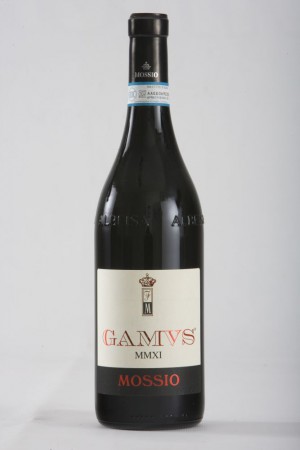
Gamvs MMXXII Dolcetto d’Alba Superiore

Passion for wine, an indissoluble passion for the Mossio family. Valerio and Remo, supported by Michele, their grandson, are personally committed to produce Dolcetto d’Alba, Bricco Caramelli and Piano delli Perdoni; Barbera, Nebbiolo and Langhe Rosso, the result of a happy union between Nebbiolo, Barbera and Dolcetto, “Gamvs”, Dolcetto d’Alba Superiore (premium quality) and “Le Margherite”, a passito (dessert) wine.
Mossio – the synonym of a hard working family, whose members on one hand have specific roles and on the other hand are committed towards the same goal: wine quality.

The Langa and Roero wine and food heritage, a knowledge conscious of the passing of time and seasons in autumn, is caused by the bouquet of wine and the flavor of the white truffle of Alba; in spring and summer the cooking innovates with appetizers made with vegetables, meat and the first courses are characterized by “tajarin” (home-made noodles) and “agnolotti del plin” (home-made stuffed pasta)…We don’t leave out the Fassone meat, the cheeses and also the desserts with their unmistakable taste of “Tonda e Gentile” (round and gentle) hazelnut from the Langhe.

resized_gamvs-300x450

We tasted: Gamus MMXXIII  Dolcetto d’Alba Superiore 2013

The name of this wine is due to the recovery of a white marble slab. The colour is deep ruby red with violet reflections. The nose is intense with hints of plum, blackberry and red fruits on a spicy background. In the mouth is enveloping, soft and full, with a sweet finish but not too much, well balanced with tannins typical of the grape dolcetto. Ideal for dishes with meat game, ham and seasoned cheese.

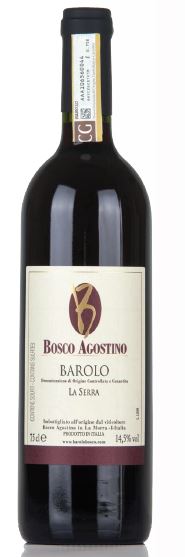
Barolo la Serra by Bosco Agostino wine estate

The Bosco Agostino farm is run as a family business with one goal: achieve grapes of the maximum quality to be transformed into a wine with personality rendering it special and unique.

The total vined surface area of the farm is currently at about 4 hectares divided between Nebbiolo, Barbera and Dolcetto. All vineyards are property of and found exclusively within the confines of the Comune of La Morra.

captureThe company is dedicated to the production of the four wines most characteristic to the area: Barolo, Dolcetto d’Alba, Barbera d’Alba and Langhe Nebbiolo.

We tasted: Barolo la Serra 2011

A historical cru of La Morra. The vineyard faces southeast at an altitude of about 400 meters. The soil is tufaceous (limestone) and calcareous (clay/chalk). The esposition and soil composition endow this wine with both structure and tannins suitable for a long aging. During the aging the wine is held in barriques and tonneaux for about 6-7 months before transfer to botti.

The bouquet will definitly surprise you! It  presents complex aromas of berry marmalade and brandied cherries, with detectable spicey notes. For the food pairing is perfect with red meat, arrosti, wild games and seasoned cheese.


Brunello di Montalcino 2011, Tenute Silvio Nardi

Tenute Silvio Nardi, thanks to its expansive size, encompasses a wide variety of aspects and soils. The Nardi vineyards amount to fully 50 hectares planted to Sangiovese for Brunello, one of the largest vineyard holdings in the entire denomination.

The Brunello di Montalcino Silvio Nardi, enfolds two growing areas (Casale del Bosco and Manachiara), two different hillslopes (both the west slope of Montalcino and the east slope), and a multitude of soils, aspects, and elevations, which only the most painstaking mapping can interpret and exploit.  The Manachiara “clear morning” Vineyard continues to be the focus of widespread interest. The southeast exposure affords its vines sunlight right from the earliest morning. The Poggia Doria vineyard receives its share of attention, with its dark, volcanic soil and abundant rock, loved by the vines, since only this plant’s roots can penetrate deep in search of water.

The winemaking process then brings out of the fruit all of the qualities that derive from the vineyard. Multiple fermentation tanks allow separate fermentations for each individual vineyard parcel, keeping the lots separate until the final blend; the lots are kept separate even during the maturation process in small oak barrels and larger casks and  finally, comes the final blending.

brunello-nardiWe tasted: Brunello di Montalcino 2011

“Pure- Noble” Sangiovese wine. A wine for which blending translates to capturing different notes from different terroirs where softness arrives by gentle aging.

A “Pure- Noble” 100% Sangiovese. This wine has intense ruby red colour. The nose is clean, sophisticated, intense and complex AROMAS, rich in evolved overtones, with hints of anise, ripe wild berries and a light touch of vanilla. In the mouth is warm with supple tannins, great structure, good length and considerable aging capacity. Ideal for pasta with wild boar sauce and game meat dishes.

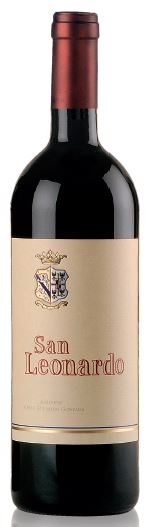
San Leonardo 2011 a “warm northern character”

The winery lies in the southern portion of the Trentino region, just a few steps from the border with the Veneto, in what was once a fief of the Church, but today is a small hamlet synonymous with one of treasures that contributed to the creation of Italy’s wine culture.

The vineyards, 25 hectares in all are sited at a relatively low elevation of 150 metres, Merlot is planted in gravel-rich soils that were once the bed of a branch of the Adige.

captureOnly red-wine grapes are cultivated in the vineyards behind Tenuta San Leonardo’s ancient stone walls; they produce four wines, San Leonardo, Villa Gresti, Terre di San Leonardo, and Carmenère. Ten hectares are dedicated to growing white-wine grapes, planted in the Val Cembra, whose soils and climate ensure grapes with distinctive crispness and minerality.

What sets San Leonardo apart from other wines and gives it an inimitable uniqueness is its terroir, that “warm northern character” of its growing area, which allows no over-opulence or excessive alcohol, but rather infuses the wine with a judicious natural balance.

We tasted :  San Leonardo 2011

San Leonardo is a skilful blend of wines from different grapes that are fermented and aged separately: Cabernet Sauvignon, Cabernet Franc, Carmenere and Merlot. The maturation is made in early months in cement tanks are followed by 18-24 months in new and pre-used barriques.

The colour is Intense ruby red with garnet highlights. On the nose is of remarkable

intensity which layers bell peppers and wild berries over a background note of vanilla. The palate is full, warm and impressively rounded, with intense aromatics that linger on the palate. Reagrding the food pairing is perfect with red meat dishes, poultry, roasts, braised or stewed meats, game and mature cheeses.

Mosnel, Parose’ Rose’ pas dose’ Millesimato 2011

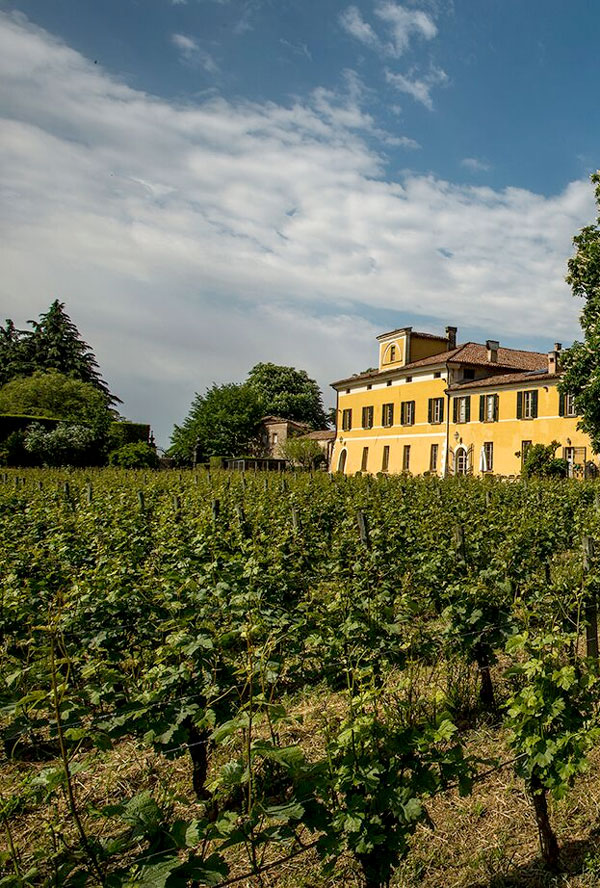
origini-proprietaIn the heart of Franciacorta, in Camignone, lies the historic villa with its sixteenth-century cellars and the adjoining lands, evidence of the long winemaking tradition “Mosnel”, the dialect name of Celtic origin meaning stony, heap of stones; on which stands the Company.

All 38 hectares of land are Mosnel properties and cultivation, is conducted with organic methods.

All the vineyards have spur cordon systems or Guyot, with a density between 4000 and 8000 plants per hectare. Hand picking into small boxes, soft pressing and fermentation control then further contribute to obtain the recognized quality of Mosnel Franciacorta.

adadasdasdWe tasted: Parose’ Rose’ pas dose’ Millesimato 2011

The fruit and the elegant touch of Chardonnay melding into the decisive personality of Pinot Noir, is the impressive harmony displayed by Parosé. This wine is composed by 70% Pinot Noir – 30% Chardonnay grape varieties.

The aroma releases orange peel, rhubarb, and redcurrant, rose petals, shot through with a vein of pink pepper. In the mouth, a slight hint of tannin serves as an intriguing foil to the appealing crispness of the fruit, imparting a touch of youthful vigour to the wine. Supple and seductive, clean-edged and crisp, boasting a lengthy, sapid finish hinting of citrus, mixed nuts, and dried fruit, Parosé is truly a gourmet companion for every occasion.

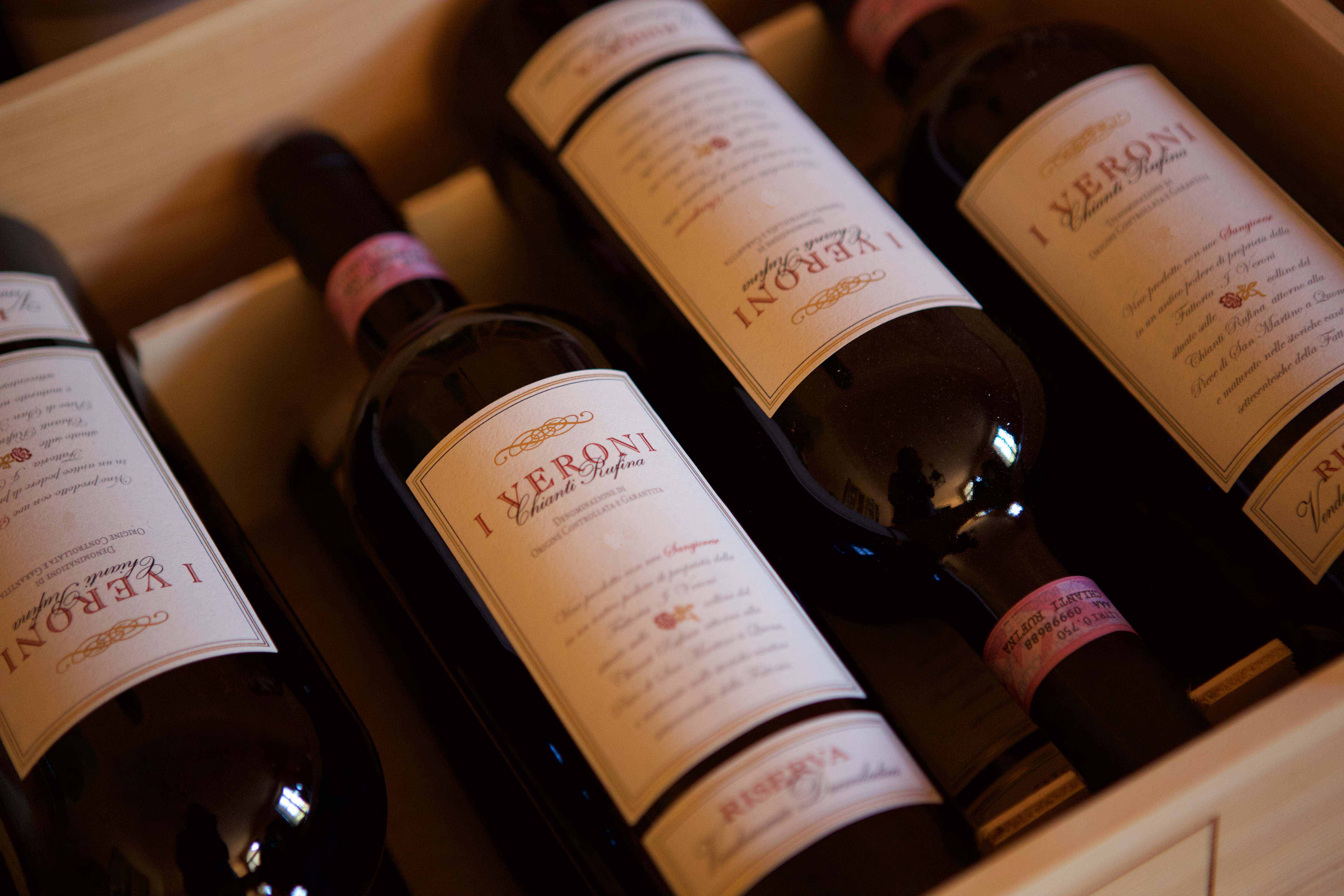
Chianti Ruffina DOCG Riserva 2013

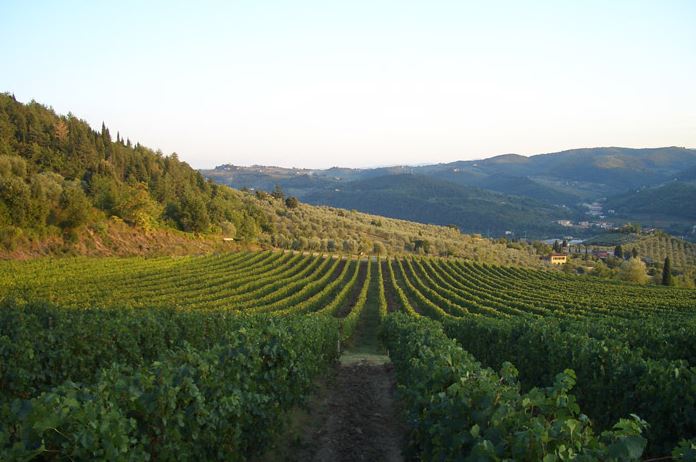
captureWe are only ten miles from the border of the province of Florence, right on the edge of the wine-production zone of Chianti Rùfina, the smallest and oldest sub-zone in the great family of Chianti zones. On one side lie the famous city of Florence and the valley of the Arno River with its warmer microclimate; on the other, the long valley that follows the course of the Sieve River, with the vineyards of the Chianti Rùfina appellation becoming ever more numerous.

The real history of I Veroni, like many other corners of Tuscany, is its feudal past, which began with a watchtower that was later incorporated into the sixteenth-century estate of the noble Tuscan family of Gatteschi. I Veroni possesses a total of 70 hectares of land, 20 of which is dedicated to vineyards and about 30 to olive groves.

The primary grape variety grown at I Veroni is of course Sangiovese, dditionally there are 2 hectares of the Canaiolo, Colorino, Malvasia and Trebbiano varieties, and small plantings of Merlot, Petit Verdot and Syrah.

Three wines fully express the philosophy and passion of the company: I Veroni Chianti Rùfina, Riserva, and Vin Santo.

i-veroni_chianti-rufina-riservaWe tasted: I Veroni Chianti Ruffina DOCG Riserva 2013

The impressive all-Sangiovese vineyard of St. Martin in Quona produces I Veroni Riserva. A 100% San Giovese grapes. The grapes are fermented in Oaks vats with ambient yeasts, followed by malolactic in 20hl oak ovals and maturation for 16-18 months in 500l French oak casks. The wine then receives a further ageing in the bottle for at least 10 months.

This wine has deep, luminous and purple-red. The nose is composed of black berryfruit, spice, liquorice taste of tobacco leaf and hint of oak. The palate presents a decided body with structure   well-integrated tannins, concluding with a long-lingering finish. For the food pairing is ideal with red meats, wild game, and aged cheeses.

« Older Entries Recent Entries »