Tag Archives: featured

Encounter with #storiedivino 15 Italian wine producers live on Facebook and Instagram.

Wine-lovers across the globe can now enjoy a virtual encounter with 15 top-ranked wine producers throughout Italy in a “virtual wine fair.” In place of the usual stands will be direct social-media encounters right from the wineries, vineyards, or desks of these wine producers in most of Italy’s regions. Anyone using social media can meet with them via the wineries’ Facebook and Instagram pages.


During these weeks, while almost all of us in the world are “sheltering in place” in our homes, spring has awakened the vines. In synch with the season, wine producers are looking resolutely towards the future. Each of them is ready to personally describe the wines that, following long months of maturation and bottle-ageing, are ready for their journey to the tables of consumers in all corners of the globe. Each bottle has a story of a growing year, and, behind that, the passion, beauty, and values classic to Eternal Italy.       


After they introduce their new vintages, the producers will be happy to engage in conversation with wine-lovers and wine sector professionals and to respond “live” to any questions they may have.  (Note: All times are CET-Central European Time)

Monday, 6 April: Ricasoli 1141 (IG 3pm), Tenuta di Ghizzano (FB 4pm), Pio Cesare 1881 (IG 6pm)

Tuesday, 7 April: Azienda Vitivinicola Passopisciaro (FB 4pm), Conte Vistarino (IG 4.30pm), San Leonardo (IG 5pm)

Wednesday, 8 April: Tenuta di Trinoro (4pm on Instagram under „passopisciaro_trinoro“), Tenute Silvio Nardi (FB 4.30pm), Castello di Querceto (FB 5pm), Fattoria Le Pupille (IG 5.30pm)

Thursday, 9 April: Ornellaia (FB 3pm), Antico Podere Gagliole (IG 3.30pm), Alliance Vinum (FB 4pm), Giodo (IG 4.30pm), Luce della Vite (IG 5pm)

GIOVANNI GEDDES (ORNELLAIA): ‘THE CHINESE WINE MARKET IS RE-STARTING’


“A slender ray of sunshine seems to be arriving from China regarding wine sales,” is the cautiously welcome message from Ornellaia Ceo Giovanni Geddes da Filicaja. “With orders slowly increasing, in particular for the currently-available 2017 vintage of Ornellaia, it actually seems that one of the most important markets for Italian exports, and not just wine, is re-opening. This positive change is a great relief and reason for optimism, not only for us but for all of Italy’s wine industry.”

CUSUMANO PRESENTS BENUARA 2018 A SMALL RED FLOWER


It is to a small red flower that grows in the spring around the Mediterranean that Benuara owes its name. And, just like that flower, this wine presents itself in the new vintage, 2018, at the end of the cold season, at the end of those five thousand hours of work that the brothers Alberto and Diego Cusumano dedicate to each of the twelve labels that produce in five, very different, kept scattered throughout Sicily.

Benuara was born in Presti and Pegni, from the union of the all Sicilian power of Nero d’Avola to the complexity of Syrah which has found a home suitable for developing its spicy character in the vineyards of this estate. We are in Monreale, on hills where the vineyards are exposed to the sun from sunrise to sunset. To cool the air comes the sea breeze, about 10 km away, which dissipates the heat. Here the soils are clayey and compact, a factor that gives wines greater complexity, starting from the color. The harvest is manual: it starts with Syrah in late August, continues with Nero d’Avola in the first ten days of September. Vinification, with frequent pumping over and punching down, allows to enhance the full color of this wine. The aging takes place at 80% in steel, the rest in large barrels, of 20 hl, to enhance the spicy notes of Syrah and the tannins of Nero d’Avola. The result is a complex wine, but very pleasant and refined.

An elegance, that of Benuara, which is also reflected in its new guise, recently chosen by Cusumano for each of its twelve labels: material colors and interweaving of dark and light backgrounds translate the shades, shades and harmony into color the vines offer the palate. To complete the sensorial experience, the Touching Experience: a plot of free lines placed in relief on the label depicts the rows of Tenuta Presti and Pegni and allows the consumer to enter, with a simple touch, in this corner of Sicily which, like the mosaic tile, it composes the multiple and courageous identity of Cusumano.

Benuara

Sicily D.O.C.
Grapes: Nero d’Avola 70%, Syrah 30%

Nero d’Avola in a complex, refined guise marries Syrah. Elegance and drinkability from the vineyards of Tenuta Presti e Pegni.

Like all Cusumano wines, Benuara uses the SOStain / VIVA “Sustainable Wine” certification. In fact, the common denominator of the diversity and uniqueness of Cusumano wines is the commitment to sustainable viticulture that stems from the sentiment and ethical obligation to protect resources, limiting their waste. A research that translates into actions compliant with the SOStain protocol, the sustainability program for Sicilian viticulture, sponsored by the Ministry of Agricultural and Forestry Policies and recognized by the Ministry of the Environment, Land and Sea, through the V.I.V.A.

Harvest 2018: quality / price award, Berebene 2020, Gambero Rosso.
Harvest 2017: 93 points, Yearbook of the Best Italian Wines 2019, Luca Maroni; 90 points, Wine Enthisiast, Feb. 2020; 89 points, Robert Parker’s Wine Advocate.


Ornellaia 2017: “Solare” is sumptuously Mediterranean


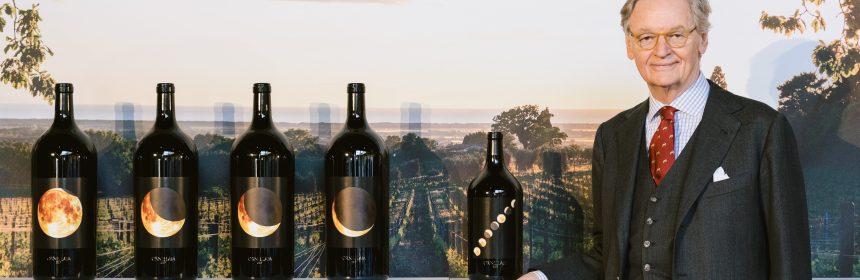
The Argentinian artist Tomás Saraceno interprets the 12th edition of Vendemmia d’Artista

“Vintage 2017 was certainly one of extremes, in which frosts, sun and drought certainly captured the imagination. Despite the fact it was a challenging year for the team in the vineyards and for us winemakers, I am very happy with the high quality and character of this vintage. We have chosen the word “Solare” (which in English translates as “Radiant”) to describe Ornellaia 2017 because it expresses its positive qualities,” explains Axel Heinz, Estate Director of the Bolgheri winery. “To preserve the strong and opulent personality of this wine, we had to apply the upmost care and attention from the vineyard to cellar – more so than in a normal vintage. This careful management of the grapes, starting with an early harvest, has resulted in a harmonious wine in which scents of black berries and liquorice prevail alongside velvety tannins typical of warm vintages. In short I would say that Ornellaia 2017 is sumptuously Mediterranean”.


In line with these words from Axel Heinz, this year’s Vendemmia d’Artista project turns its attention to our planet and the star that illuminates it. The artist chosen to interpret the character of “Solare” is the visionary Tomás Saraceno, known worldwide for his interactive installations that, in this age of ecological upheaval, propose new, more sustainable ways to live.
For Ornellaia, sustainability has always played an important role. The estate itself is a harmonious ecosystem with internal checks and balances that expresses the characteristics of each single plot and its unique terroir. Sustainable viticulture, defined by the conservation and enrichment of our terrain and the landscape in general, is essential to Ornellaia’s production philosophy. Through minimal intervention, we encourage the plant’s spontaneous tendency towards equilibrium. Precision viticulture addresses the specific needs of each parcel, whereas low-impact intervention stimulates the plant’s natural defenses.


Ornellaia 2017 Solare was produced in a year with above-average temperatures, with early budbreak and a sharp dip in temperatures in April that fortunately did not influence the vegetative growth cycle. The proximity of the Bolgheri DOC to the Mediterranean Sea played a decisive role and meant that we avoided the spring frosts that struck other parts of Italy. We then moved from one extreme to another with a dry heat spell that lasted from May until nearly the harvest. Luckily, hot and dry summer days were followed by much cooler nights which contributed to the development of Ornellaia 2017’s olfactory complexity.


Inspired by the radiant nature of Ornellaia 2017, Tomás Saraceno looked to the connection between the Sun and the Earth, inviting greater care and attention to the most important source of our planet’s energy. This is the concept behind the artwork developed for the estate and transposed to the unique Salmanazar. PNEUMA 4.21×10⁵ recalls an atomic structure composed of glass spheres which, like clouds, create a suspended city whose form and size are in constant evolution – an expansion of traditional concepts of borders and territories. The suspended sculpture’s forms, as imagined by Saraceno, would be able to float without fossil fuels, powered only by the sun.


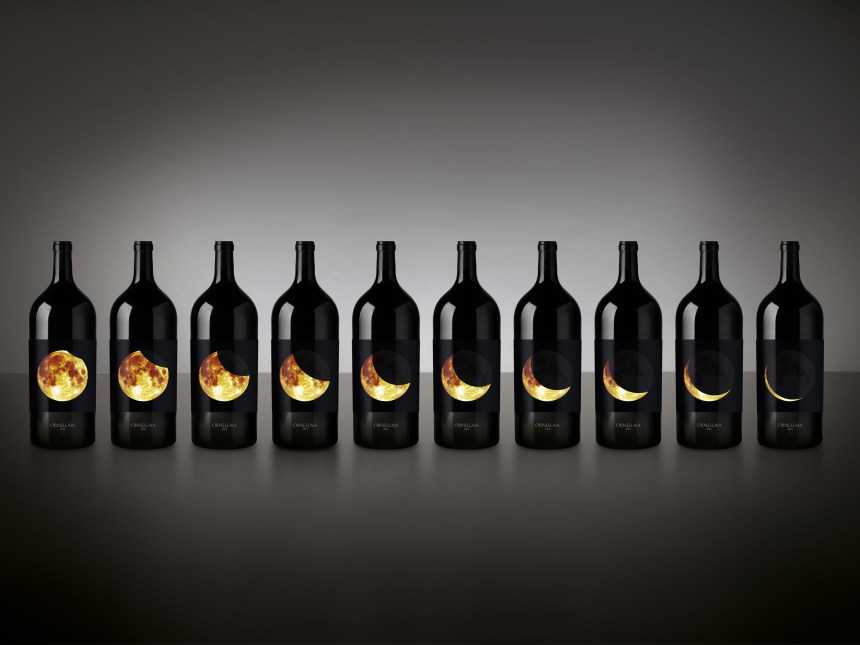
Alongside the installation for the estate and the Salmanazar, the artist has also customized 110 large-format bottles and designed a special thermochromic label for the 750ml format, through which he invites us to reflect on the impact that the human behaviour has on the environment.


As with every year, the 100 double magnums will be sold to avid collectors around the world meanwhile the unique Salmanazar and the 6 litre Imperials will only be available for sale through an online auction, hosted by Sotheby’s, the profits of which will be donated exclusively to the Solomon R. Guggenheim Foundation’s “Mind’s Eye” program.


Sotheby’s Wine is delighted to continue our long-term partnership with Ornellaia supporting the 12th edition of their Vendemmia d’Artista project. The 12 lot online auction of the 2017 “Solare” vintage, illustrated by Tomás Saraceno and including many experiences, will open on Sotheby’s online platform, where clients can easily bid through the Sotheby’s app. Similar to last year, we anticipate these lots will attract a truly global roster of bidders who wish to buy these exclusive bottles and enjoy unique experiences.” Jamie Ritchie, Worldwide Head of Sotheby’s Wine.


“Since the inception of Vendemmia d’Artista in 2009, we continue to have the pleasure of supporting leading cultural foundations through celebrating the unique character of Ornellaia,” says Giovanni Geddes da Filicaja, CEO. “In 2019, we embarked on a three-year partnership with the Solomon R. Guggenheim Foundation in New York, which in the first year raised $312,000 for the project through auction at Sotheby’s. The connection between art and wine remains a passion for many people, ourselves included; we hope that in the years to come we will be able to contribute just as much, if not more, to the Mind’s Eye program through which the Guggenheim assists blind and low vision persons to experience art.”


Donations from the Ornellaia Vendemmia d’Artista auction will make it possible to advance superb educational programs at the museums in the Guggenheim constellation.

“We offer our sincere appreciation to Ornellaia for their longstanding involvement with the visual arts and their ongoing support of our Mind’s Eye program,” stated Richard Armstrong, Director of the Solomon R. Guggenheim Museum and Foundation. “With the generosity of Ornellaia, we are able to expand the programs that allow us to promote an understanding and appreciation of modern and contemporary art to audiences of all abilities.” 


The artist Tomás Saraceno will open the Vendemmia d’Artista online auction during the annual event organised by Ornellaia at the Solomon R. Guggenheim Museum in New York on April 30, 2020. 

The profits will be announced and donated to the Mind’s Eye program on May 15 when the auction will close on Sotheby’s website, the long-time partner of Ornellaia Vendemmia d’Artista project.

VIN SANTO FROM CHIANTI

Generally we consider the Vin Santo (or Vinsanto) a raisin wine made from dried grapes, which is traditionally produced in Tuscany and Umbria, but also in Emilia-Romagna, Veneto and Trentino. As it often happens in Italy, the variety and diversity of wines is very high in every region and even inside the same region there are often many production subareas.
This is exactly the case of the Vin Santo from Chianti, which is subdivided in Classic, Colli Aretini, Colli Fiorentini, Colli Senesi, Colline Pisane, Montalbano, Montespertoli, Rufina.
vinsanto del chianti

WHERE DOES THE NAME “VIN SANTO” COME FROM?

Let’s take a step backward … What is the origin of this name and, in particular, of the word “santo”? There are different hypothesis; the most common one traces the name to an anecdote: during the Florence ecumenical council in 1439, the Byzantine Cardinal Bessarione tasted a local liquor wine and exclaimed: «This is the wine from Xàntos!», referring to a very well known wine that was produced in Greece; then the term had been probably Italianized as “santo”. Other interpretations link up the term with the use of a liquor wine for the Eucharist during the Mass, or to the fact that grapes are dried until the Holy Week.

HOW IS THE VIN SANTO FROM CHIANTI PRODUCED?

Apart from its etymology it is very interesting to know the special way in which Vinsanto is produced, in particular we are talking about the one from Chianti. First of all the origins of grapes, that are mostly wite grapesTuscan Trebbiano and Malvasia. However, there is also a version produced with red grapes (Sangiovese), which is called “Vinsanto occhio di pernice”(soft corn).
These grapes are carefully selected during the harvest period and then taken to a room (appassitoio – wilting room) that has to be well-aired in order to limit the mold formation. Here grapes are placed on reeds (“cannicci”), mats of reeds, or are hung on hooks on frames for wilting, that usually goes from December to March. At the end of the wilting process, only the healthiest grapes are pressed and the must is fermented in special wooden kegs (“caratelli“, small casks with a capacity between 50 and 200 litres), that are stored in the vinsantaia (the aging cellar), where it will stay for a minimum aging of 3 years.

THE PAIRINGS OF VIN SANTO

Like all raisin wines, Vin Santo is an excellent dessert wine, that accompanies dry pastries in a fabulous way (in particular the cantuccini or the Sienese ricciarelli). Anyway, in its driest versions, it can be tasted even before the dessert, paring it with liver croutons, Tuscan cold cuts, seasoned and blue cheeses.

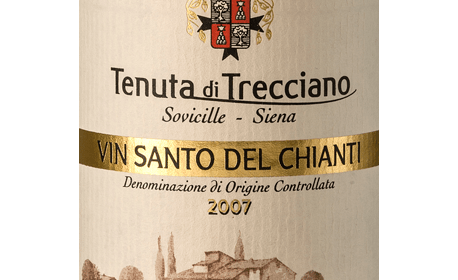
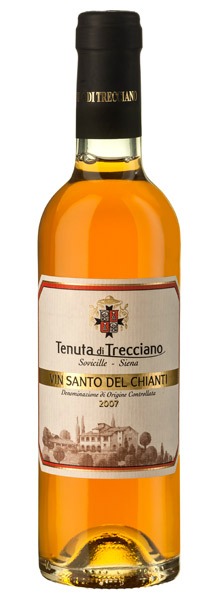
You can see more details in the technical sheet of Vin Santo del Chianti DOC produced by Tenuta di Trecciano.
We are waiting for you to taste it together!

New Executive Team for Masseto Estate

Giovanni Geddes da Filicaja, CEO of Masseto, has announced today the new executive team of Masseto Estate which will see Tim Banks as the new Sales & Marketing Director, alongside Axel Heinz, who continues his commitment as Estate Director.


The role of Sales & Marketing Director was held until 2019 by Alex Belson who decided to retire after two decades of successful work. Alex Belson joined Ornellaia in 1999 and since 2015 she has dedicated herself exclusively to Masseto in the role of Sales & Marketing Director, becoming an international point of reference for the winery.


The quality, creativity and complete dedication of Alex” states Giovanni Geddes in his message of thanks and greetings “have greatly helped the growth of these two companies which in recent years have seen an important increase in their turnover”.  

Tim Banks, Ornellaia’s Sales & Marketing Director since 2015, thus doubles his role and begins a new further professional path. He will be supported by a new team formed of Vianney Gravereaux as the new Global Sales Manager, Susanne Weber as Brand Manager and Elena Oprea in the role of Communication Manager. Eleonora Marconi continues as winemaker of Masseto.


www.masseto.com

Lungarotti wine: Rubesco 2017 limited edition by Mamo

Special edition for Rubesco 2017, the iconic Rosso di Torgiano Doc of Cantine Lungarotti, born in 1962 and now exported to 50 countries worldwide. A limited series of 350 bottles in magnum version with a label signed by the eclectic artist Massimiliano Donnari from Perugia, known as MaMo, and accompanied by the “Scatolo”, a package with a coordinated design. The exclusive edition was presented today in Torgiano during the opening ceremony of the exhibition “MUVIT MAMO MOO – Un filo rosso tra arte e vino” (MUVIT MAMO MOO – A red thread between art and wine), scheduled for 23 November, until 12 January 2020 and which sees 16 works by the artist on display at both the Wine Museum (Muvit, 8 canvases) and the Olive and Oil Museum (Moo) of the Lungarotti Foundation.

For Chiara Lungarotti, managing director of the group: “Art and wine are a union that has always characterized Lungarotti’s identity, starting with the Foundation’s commitment to the Museums of Torgiano, dedicated to the millenary culture of oil and wine, to collaborations with contemporary artists. A contamination that, together with our wines, allows us to export the history and culture of Umbria and the Mediterranean to the world”.
The label designed by MaMo for Lungarotti sees E.T. coming out of a new flying saucer depicted with the Fontana Maggiore of Perugia, in the act of indicating a glass of Rubesco circling among the stars.

Translated with http://www.DeepL.com/Translator

Vernaccia di Serrapetrona DOCG from Quacquarini wine estate

Serrapetrona is a small town in the countryside around Macerata, at the heart of central Italy, where the mountain has preserved its natural origins: the cold chill of winter and the summer Mediterranean sun have created a natural balance between man and nature. This is the homeland of the “Vernaccia di Serrapetrona DOCG” wine.

Love for the land, experience and tradition in cultivating vines have nourished the entrepreneurial enthusiasm of the Quaquarini’s family along the years. Alberto is the founder of this family concern; assisted by Francesca, his wife, he has defied the occurrences of life, and together they have set solid foundations for the future generations. Monica, Luca and Mauro have accepted the challenge and at present run the business, co-operating with each other in a sort of natural symbiosis. Alberto Quacquarini is the leading manufacturer of Vernaccia di Serrapetrona Docg that is produced in 35 hectares of vineyards planted with Vernaccia Nera – Black Vernaccia.

THE METHOD OF WINE

The intense quality of the grapes is obtained in places of semidarkness, where the grapes are hung up and left to dry for 3 months. The new grape-picking takes place in January: the must from the grapes is a fiery ruby red, sweet and thick like honey. This is added to ferment in the October wine where the freshness of the recent harvest is blended with the richness of the dried grapes. The new wine, which has matured in cool fresh cellars, is left to ferment further still to obtain the sparkling wine. In this way this natural sparkling wine acquires its final precious crucial flavours. The dense ruby red consistent effervescence captures different scents and aromas, those of the refined perlage of an elite sparkling wine with the simplicity of clear, well-defined flavour. The long drawn-out process makes it impossible to put the product on the market until one year and a half has gone by since the vintage.

THE VERNACCIA DI SERRAPETRONA DOCG

The Vernaccia di Serrapetrona is produced using the superior Vernaccia Nera, or black Vernaccia. The vineyards are small with little foliage and few grapes, and the Alberto Quacquarini wine business can count on no more than 8.000 kilograms of Vernaccia grapes per hectare. Only the grapes grown and cultivated by Alberto Quacquarini are used in the winemaking. The high point of this wine is the special method of vinification which makes it the only Docg red sparkling wine undergoing three distinct and consecutive fermentations.

Antonio Gala

Pernice 2015, the Pinot Noir according to Conte Vistarino


The Pernice cru wine is grown in a vineyard that legendary Luigi Veronelli, back in 1961, already recognised as the cradle of a “superb Pinot Noir (…) with a lovely pale ruby and intense nose…”  

Lying at 350 metres’ elevation and planted in largely limestone soils, the south-southeast-facing Pernice has been yielding Pinot Noir grapes that since 1997 have been vinified as a separate cru. Harvest after harvest, they have consistently produced an elegant, complex Pinot Noir that boasts a near-endless, spice-laden finish that embodies the quintessence of Conte Vistarino.    


The 2015 growing season was characterised by an unusually warm spring. Contrary to the previous season, rainfall was not particularly heavy (about 600mm in total), but groundwater reserves that had been previously charged allowed the vines to cope well with the hot, dry months. The vineyards are managed according to sustainable, low environmental-impact viticulture, and yield never exceeds 6 tons of grapes per hectare. Following the harvest on August 31—obviously completely manual—, the grapes went through a chilled pre-maceration, and fermented part in oak and part in steel. The wine then matured in small oak barrels, and was released about 40 months after the harvest as Pernice, IGT Province of Pavia.   


A proud ambassador of the Oltrepò Pavese, Pernice 2015 Provincia di Pavia IGT Pinot Noir has always played a leading role in the history and current reputation of its growing area. 

It was, in fact, Conte Augusto Giorgi di Vistarino who, in the mid-1880s, imported the noble grape directly from France, and it flourished to become today one of the main grape varieties planted in the Oltrepò area. For Conte Vistarino Pinot Noir is a true passion, planted on 140 hectares and produced in a variety of styles.   

“Our objective,” states winery director Ottavia Giorgi di Vistarino, “is to bottle the finest selections of Pinot Noir that we grow in our estate vineyards, wines that will continuously improve the reputation of the Oltrepò denomination, whose beckoning natural beauty and simply stunning wine quality, have the potential to carve out a high reputation in the Italian and international wine world.”  

Conte Vistarino’s new wine cellar, “La Casa del Pinot Nero” (The Home of Pinot Noir), has everything to give the winery’s iconic grape the finest vinification technologically possible, through use of cutting-edge equipment, micro-vinifications, and gravity-fed transfers. This modern temple of wine, which evidences as well a meticulous sensitivity to its environment, welcomes visitors, who, struck by the contemporary-keyed complex of glass, light, and steel, can follow the entire course of winemaking, as well as a small rural museum. Following the visit is a tasting of a broad portfolio of Pinot Noirs in a suggestive tasting room surrounded by stacks of barrels.          


Conte Vistarino is one of the truly historic wine producers in the Oltrepò Pavese growing area. The wine estate extends over 826 hectares, of which more than 200 are in vineyard (140 just in Pinot Noir). Pinot Noir, its main grape, is produced in a number of styles. Costa del Nero is the house standard-bearer, while Pernice, Bertone, and Tavernetto are renowned individual cru wines, and Saint Valier stands out as the grape’s white version. Equally prominent are the sparkling wines, which include Metodo Classico 1865, Saignee della Rocca rosé, and Cépage brut. Conte Vistarino also pays homage to traditional expressions of its growing area, with Bonarda or Buttafuoco, and it makes an intriguing White Riesling, Ries. The soul of the estate is the historic Villa Fornace, still today the family’s private residence; as of a few months ago, alongside it now rises the new winecellar, the fruit of a radical re-structuring of the old farmstead complex dating back to 1904.  

2016: An exemplary vintage reconfirms the legend of Masseto

In Masseto’s thirty-year history, each new vintage is eagerly awaited with the anticipation that this wine deserves.  An anticipation which was fully satisfied with a 2016 which, thanks to a textbook vintage, was able to capture and fully express the distinctiveness of the hill it comes from.

Masseto 2016 is once again a remarkable expression of power and class, of silky concentration, of extremely balanced complexity coming from a vineyard located 120 meters above sea level, only a few kilometres away from the Mediterranean coast and planted on blue clay soils, which are unique in the Bolgheri area.

In the glass, the wine reveals “a particularly intense and young colour, on the nose, the intense aroma of ripe dark fruit blends with subtle notes of cocoa and spices. On the palate, the rich and dense structure of ripe and silky tannins is balanced by a sensual and vibrant fruity note and a lively acidity that creates a long finish that is clean and full-bodied”. This is how Eleonora Marconi describes it, the winemaker of Masseto who works under the directorship of Axel Heinz. A verdict unanimously shared by influential wine critics who reviewed Masseto even before its official release on the market.

After a legendary 2015, it was perhaps ambitious to expect another textbook vintage but 2016 turned out to be highly successful with a dry and sunny growing season, plenty of sunshine and the right amount of rain, which accompanied the grapes to a perfect maturation. After verifying the excellent phenolic potential of the grapes and the balanced sugar/acidity ratio, harvest began on 24 August, starting from the youngest vines/rows and ended on 20 September in the ‘Masseto Centrale,’ section of the vineyard, home to the older vines/plants.

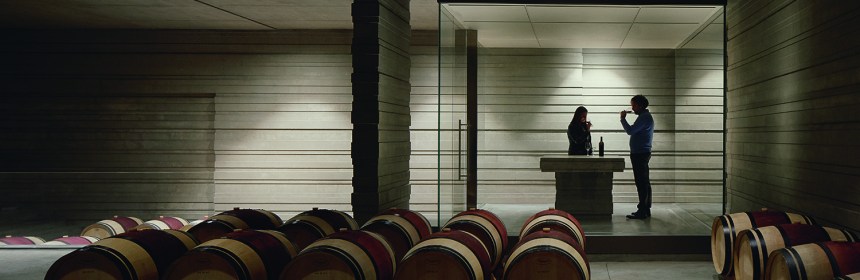
Today Masseto, a wine that has been internationally acclaimed since its inception in the 1980s, has its own winery.  Only the grape receiving area and a farmhouse called ‘Casa Masseto’ are externally visible. It is within the depths of the hill that most of the winery is located. A series of spaces with varying internal volumes, heights and levels that are reminiscent of a sacred place and offer the perfect wine-making and aging conditions for Masseto.

In the heart of the winery lies the ‘Masseto Caveau,’ – the winery’s historical library. Few bottles from each and every vintage are preserved here as the jewels of the winery, suspended inside a stainless-steel mesh. And it is right here where a few bottles of Masseto 2016 have been laid down to age in a perfect environment.

***

This April, Masseto has inaugurated its “home” with a wine cellar designed by the architects ZitoMori. Carved deep into the ancient blue clay that underpins the vineyard, the Masseto winery is a physical and symbolic tribute to the Estate’s history and rapid evolution from intuition about the hidden potential of a vineyard site, to internationally acclaimed wine.

Masseto, located on the Tuscan coast close to the small village of Bolgheri, is a wine that was never meant to exist. The potential of the slope where the vineyard now sits was finally seen in the 1980’s, when, against all odds, advice and local tradition, the first vines were planted. Intuition paid off. The blue clay, cooling coastal breezes and abundant refracted light from the Tyrrhenian Sea all contribute to Masseto’s intriguing combination of power, elegance and complexity. Masseto has received international acclaim since its birth in 1986.

The Masseto estate is controlled by the Frescobaldi Family group.

« Older Entries Recent Entries »