Category Archives: SA WINES

South African Wines: A Journey Through the Land of Diversity and Quality

If there’s one thing wine teaches us, it’s that every bottle tells a story. And when it comes to South African wines, that story is particularly captivating. South Africa, with its unique blend of climate, geography, and winemaking tradition, is emerging as one of the most fascinating and dynamic regions in the global wine landscape. But what makes these wines so special? And why should we start paying more attention to this remarkable wine-producing country?

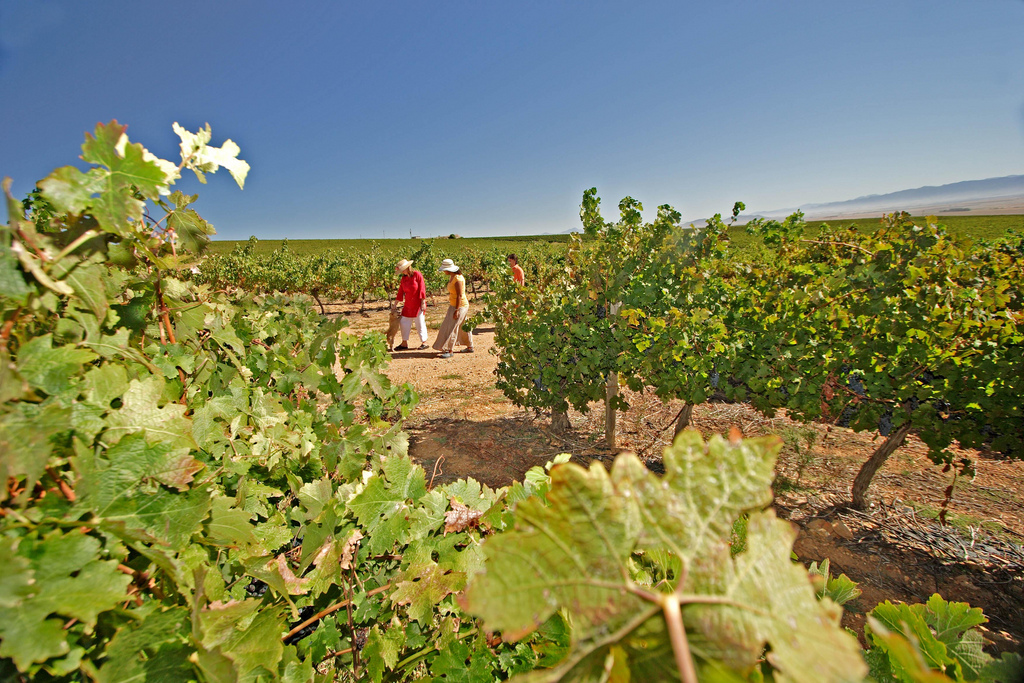
South Africa is not only a land of breathtaking landscapes, but also a land of contrasts, where biodiversity is truly extraordinary. Its wine regions stretch along the coast, from the Western Cape to inland areas, and the variety of soils and microclimates offers winemakers a broad range of possibilities.

The famous “Cape Doctor”—the wind blowing in from the Atlantic Ocean—is one of the key climatic elements that defines South African viticulture. On the one hand, it helps to keep temperatures cool, but on the other, it presents challenges in the vineyard. Yet, as in any great story, these challenges are met with creativity and passion, resulting in the production of some truly remarkable wines.

South Africa has a long winemaking tradition that dates back to 1659, when Jan van Riebeeck, founder of the Cape Colony, planted the first vines. Today, the country is one of the world’s largest wine producers, and it’s also a place where experimentation is part of daily life.

Among South Africa’s most emblematic grape varieties is undoubtedly Pinotage, a cross between Pinot Noir and Cinsault, created in 1925 by Professor Abraham Perold. This unique grape gives rise to full-bodied red wines marked by bold black fruit notes, along with more complex smoky and earthy undertones. Loved by some and criticized by others, Pinotage has become a symbol of South African wine—much like Chianti for Italy or Malbec for Argentina. Modern expressions are well-balanced and often offer surprising elegance and structure.

Alongside Pinotage, another variety gaining attention is Chenin Blanc. Although originally from France, this grape has found a second home in South Africa, where it expresses itself with freshness and energy, making it incredibly versatile. From dry, mineral styles to richer and rounder expressions, South African Chenin Blanc is building a strong reputation, especially due to its adaptability to different styles and terroirs. It’s a wine that can be fruity yet complex—ideal for a wide range of food pairings.

While South Africa is known for its native grapes, international varieties like Merlot and Cabernet Sauvignon still play a major role. The cooler climates along the coast and in inland regions allow for slow, steady ripening, giving wines refined tannic structure and good acidity. These South African interpretations are often marked by ripe red fruit, subtle spice, and excellent aging potential.

In recent years, South African producers have also started experimenting with international grapes like Sangiovese and Syrah. Some of the more adventurous winemakers, inspired by the Italian Supertuscans, are blending native and international varieties to create cuvées with strong character and personality.

Another aspect that sets South African wines apart is the growing commitment to sustainability. The country’s viticulture sector is investing heavily in responsible agricultural practices, such as biodynamic techniques, water resource management, and biodiversity preservation. The increased environmental awareness is also backed by certifications like Integrated Production of Wine (IPW), which guarantees environmentally friendly wine production.

South Africa’s wine areas, especially the Cape of Good Hope region, have long been central to environmental conservation projects. Beyond winemaking, the country is home to an incredible variety of flora and fauna, and more and more producers are working to protect this natural heritage.

Although South African wines are increasingly appreciated and present in international markets, wine is truly a part of everyday life at home. South African families love their wine and view it as an essential part of daily living. Winery visits and tastings are common experiences, and wine regions such as Stellenbosch, Constantia, and Paarl have become major wine tourism destinations. The hospitality in the cellars is warm and authentic, offering visitors the chance to dive into the local wine culture while tasting some of the country’s most renowned labels.

South African wines are not only an intriguing choice for those looking to explore new wine experiences, but they are also a testament to how viticulture can adapt and thrive in a complex and diverse environment. From Pinotage to Chenin Blanc, and from Bordeaux-style reds to bold blends, South Africa offers a range of wines that can please every palate—from the curious beginner to the seasoned connoisseur.

If you haven’t yet had the chance to explore the wines of this extraordinary land, now is the time. Quality is rising, passion is palpable, and every bottle is a new discovery. As a wine lover, South Africa is a chapter worth reading—and sipping—carefully.

Personally, I had the pleasure of being guided on this new oenological journey by Fabio Albani of Afriwines, the main importer of South African wines in Italy. For those looking to explore new experiences: www.vinisudafrica.it.

Marco Lucentini

South African wine wins platinum at World Wine Awards

At the recent Decanter World Wine Awards 2017 (DWWA). Klein Constantia estate with Vin de Constance 2013  won a platinum medal.

Vin de Constance is a recreation of a world famous wine of the 18th and 19th centuries; this is a unique and naturally sweet wine.

Due to a prolonged winter and cool spring, the growing season was late in 2013 and delayed budburst by up to 2 weeks. Ideal conditions prevailed with moderate daytime and cool nighttime temperatures. This together with a dry season ensured for perfect ripening and raisining of the Muscat de Frontignan.

After the wine blind taste by wine experts the gold medal winners went on to compete for platinum status.

Vin de Constance 2013 achieved one of the top scores with 96 points.

This is a bright and gold in appearance. It has strong aromas of citrus and frangipani on the nose. In the mouth  appear full-bodied and complex with a balanced acidity and sugar fruit. The wine concludes with a long, spicy and grippy finish.

The wine was aged in a combination of 60 % new French oak, Hungarian oak and French Acacia.  It was left for a period of 3 years in barrel on the gross lees before racking out and blending. It spent a further 6 months in tank before bottling.

SA wine grape harvest excels despite drought

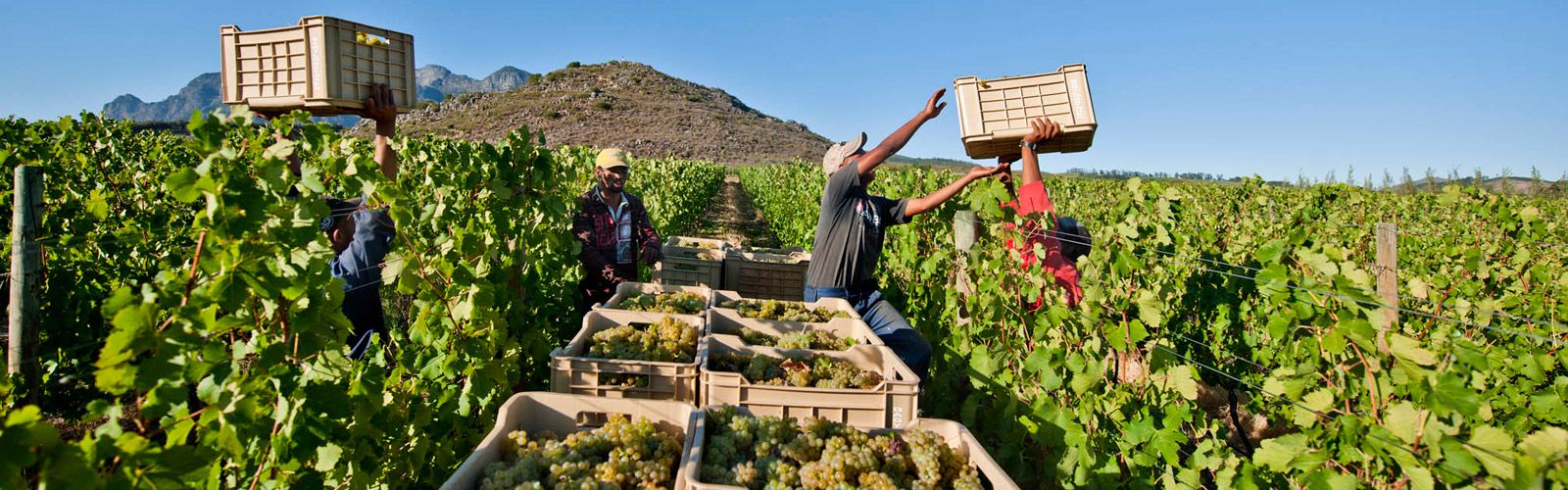
The South African wine grape harvest is slightly larger than last year following a dryseason and consumers can look forward to exceptional wines from the 2017 vintage. The wine industry body VinPro says the 2017 harvest, that is at 1 425 283 tonnes 1.4% larger than in 2016, was initially expected to be smaller. “A decrease was expected due to the second consecutive very dry, hot season.

However, cooler nights throughout the growing season and the absence of significant heatwaves during harvest time buffered the effect of the drought to some extent,” says Francois Viljoen, manager of VinPro’s viticulture consultation service.

The Swartland and Paarl regions obtained much larger crops following sharp declines in 2016. Robertson’s production was close to the record harvest in 2016, while Olifants River and Breedekloof increased somewhat following small crops last year. Slightly smaller yields were noted in the Northern Cape, Stellenbosch and Worcester and a much smaller harvest in the Klein Karoo.

Although higher rainfall brought some relief in certain regions, it was still very much below average and the warmer weather conditions required producers to manage water usage ver y closely.

On the plus side, the dry conditions resulted in very healthy vineyards and smaller berries with good colour and flavour concentration. These conditions, along with the ideal cool weather during harvest time formed the perfect combination for an exceptional quality wine grape harvest, according to Viljoen.

Wines of South Africa CEO, Siobhan Thompson is positive, “Having spoken to many of our producers, general sentiment is that the harvest was one of the best seen in many years, specifically in terms of quality. The cooler than normal weather experienced in February saw to more even ripening periods and winemakers from various regions have commented positively on the outcome, despite the challenging weather conditions we’veexperienced. We are looking forward to seeing what this somewhat exceptional vintage does for South African wines as a whole in international markets.”

“We are grateful that the weather played along during the 2017 harvest, but looking towards the 2018 winegrape season that is around the corner, we are really hoping for rain during the upcoming post-harvest andwinter period,” says Viljoen. South Africa is the 8th biggest wine producer world-wide and produces about 4.1% of the world’s wine. Total crop size:The 2017 wine grape crop is estimated at 1 425 283 tonnes according to the South African Wine Industry Information and Systems (Sawis) at the end of April 2017. This is 1.4% higher than in 2016.

The 2017 wine harvest–juice and concentrate for non-alcoholic purposes, wine for brandy and distilling wine included–is expected to amount to 1 106.3 million litres, calculated at an average recovery of 776 litres per ton of grapes.

The post-harvest period (April and May) was very hot and dry, which led to early leaf-fall in some areas, and the accumulation of reserves was moderate.

Winter arrived late in most regions, but was cold enough to break dormancy. Although rainfall was higher than the previous season in some areas and could carry the harvest through, it was still below average and the dam and soil water levels remained under pressure. Producers therefore had to irrigate meticulously. Spring arrived on time and warm weather in August contributed to somewhat earlier than normal, but even budburst. However, cooler weather in September resulted in some instances of later and more uneven budburst. October and November was characterised by cool nights and warm days, that was beneficial to flowering and berry set. Some producers in the Breedekloof and Worcester regions experienced black frost in October, which resulted in limited crop losses.

The growing season and especially harvest time will be remembered for cooler nights and warmer, drier days. Harvest time kicked off on time in most regions, with the exception of the Northern Cape that started two weeks late due to frequent rainfall. Big showers at the beginning of the Stellenbosch region’s harvest resulted in bottle-necks in the harvesting of some cultivars.

The generally dry season resulted in very healthy vineyards with limited occurrence of pests, diseases or rot.

New Wine of Origin Cape Town Flies Flag for South African Wine Industry

 
The profile of South African wine is set to attract greater international attention now that a new Wine of Origin District named after Cape Town, one of the world’s foremost tourism brands, has been approved by the South African Wine and Spirit Board.
This ground-breaking move aimed at elevating the profile of South African wine through a direct association to Cape Town will unite the wine wards of Constantia, Durbanville, Philadelphia and Hout Bay under the inclusive name Wine of Origin Cape Town.
A total of 30 wineries, including some of South Africa’s leading brands such as Groot Constantia, Durbanville Hills, Diemersdal, Klein Constantia, Nitida, Meerendal, Buitenverwachting and Cape Point Vineyards will join forces under Wine of Origin Cape Town, capitalising on the global recognition Cape Town has achieved as an international tourist destination and sought-after lifestyle brand.
According to Rico Basson, CEO of South African wine producers’ organisation Vinpro, an official Cape Town wine district automatically links the local wine industry to one of the leading place names in international tourism, lifestyle and business. “The collaboration between the various wards and wineries in coming together to form the new wine district is a huge step forward for the South African wine industry,” he says.
“It is an example of innovative co-operation in harnessing producers to market their respective regions under one name, the name Cape Town being much-needed for South African wine to present itself as a global player. As a wine region, Cape Town now encapsulates a wonderful set of dynamics in terms of heritage, culture and modern wine styles. South Africa is already well-known for our wine tourism offering and this new development will add to integrating our strategy of innovative marketing.”
Basson said the wards involved are incorporated in a unique area of the Cape Winelands that includes wards surrounded by the effect of the Atlantic Ocean and representing a similar geography. “South Africa’s Wine of Origin legislation is highly acknowledged and respected as one of the best implemented and regulated in the world, so besides the tremendous marketing opportunities Wine of Origin Cape Town holds, the region represents a wine-making and grape-growing entity with vast similarities.”
Duimpie Bayly, chairman of the Wine and Spirit Board’s Demarcation Committee, says that from a wine production side, the wards of Constantia, Durbanville, Philadelphia and Hout Bay are meant to be together. “We considered the various wards in the new proposed district and found great similarity in terroir as well as clear boundaries in a district that at its furthest point is 36km from the Cape Town City Centre,” he says.

South African Winery Stellenzicht new ownership


The co-owner of Ernie Els Wines is expanding his Stellenbosch presence, buying the neighboring Stellenzicht winery. Baron Hans von Staff-Reitzenstein, who has been majority shareholder in Ernie Els wines since 2015, has purchased the farm and winery from Lusan Holdings.

Stellenbos viiew

According to Els executives, the deal is part of a strategy to secure more of their own fruit. The 550-acre property in the Helderberg region, with 250 acres currently planted, is one of the largest in the region and significantly larger than Ernie Els Wines’ 178 acres. The purchase price was not disclosed, but industry sources say Stellenzicht was listed for $9.84 million.

Stellenzicht