|

|
|
|
The newly elected President of France Emmanuel Macron reportedly is a connoisseur of French wines, which is a splendid news for wine lovers in the 5th Republic, and around the world. Decanter, the UK reputable wine journal, claimed Macron appears to be not only a wine lover but a skilled enthusiast with serious blind-tasting skills.
Macron’s appreciaton of oenology is a crucial factor for the status of wines because previously French presidents were not overwhelmingly supportive of the viticultre. Nicholas Sarkozy was actively antagonistic to France’s world-leading wine industry, notorious for his abstinence, while another, Jacques Chirac, openly preferred Mexican beer ‘Corona’ to wines. The last president who actively supported French wine as an export industry was François Mitterrand in last millenium (!).
In the run-up to the election, French magazine Terre de Vins filmed a series of videos with Macron flaunting his blind tasting skills, concluding the show with a autoproclamation as a ‘wine is an ambassador’ for the country.
Macron correctly identified two of three unidentified samples: a Bordeaux Blanc and a Côteaux d’Aix en Provence rosé. His only miss came in identifying a Château Pape-Clément 2005 as being from Pauillac, not Pessac-Léognan.
“When I received the email I read it over a few times, because it almost didn’t seem real to me”, – said Luca Melilli (39), a Sicilian wedding planner, or ‘scenographist of events’, who reportedly dressed gala dinners for Donald & Melania Trump in picturesque city of Taormina for G7 Summit. Luca Melilli (pictured) has already been named among the world’s top 50 wedding planners by Brides Magazine, when he received the US President commission. (Photo: illustration)

Previously Melilli has organised exquisite events for his Panta Rhei agency for a decade, styling events for Bill Gates in the Valley of the Temples and gala dinners for the Taormina Film Festival featuring the world’s Seventh Art celebrities.
The stylist confessed he could hardly believe his eyes when he got the request to dress two galas for the US President and First Lady.
The secrecy imposed by security rules, did not allow Melilli to reveal a lot of his creative ideas: there are two evenings on 26 and 27 of May, one of a Sicilian theme which makes G7 guests feel the warmth of the island, said the stylist, opting for the mise-en-scene highlighting Sicilian folklore, Mediterranean colours, with the typical flowers and scents. The second evening as “full-blown” gala will be overwhelmed by opulence of Mediterranean fresh flowers.
 Pioneering winemaker Fred Brander is being honored as Vintner of the Year at the February 17, 2018, Santa Barbara Wine Auction. The biennial auction is a benefit for Direct Relief and is coordinated in part by the Santa Barbara Vintners Foundation. The foundation is the charitable arm of the Buellton-based trade association Santa Barbara Vintners.
Originally from Argentina, Brander grew up in Santa Barbara, and later earned a master’s degree in food science with an enology emphasis from University of California, Davis. He and his father established The Brander Vineyard when they purchased 40 acres in Los Olivos. They planted their first vineyard in 1975 and broke ground on their winery in 1979. Brander specializes in Bordeaux varietals, including sauvignon blanc and cabernet sauvignon.
Brander is known for his advocacy of Santa Barbara County wines. He spent nearly a decade working on the establishment of the Los Olivos District AVA. His petition to the federal government was approved in February 2016.
“Fred is one of the pioneers here. It’s wonderful to be able to honor someone who has been in the business as long as he has,” said Vintners Foundation Past President Frank Ostini. “He proved that Bordeaux varietals could grow in the Santa Ynez Valley and led the efforts to have the Los Olivos District AVA come into being. Plus, Fred is just a funny guy.”
The value of California wine shipments to the US market hit $34.1 billion in 2016, up 4.6% on the previous year and a record for the golden state’s winemakers.
The volume of shipments also increased by 2%, shipping an all-time high of 238 million cases to the US, as reported by the Wine Institute.
Overall, California wines in the US market have increased from 191 million cases shipped in 2006 to 238 million cases in 2016.
Much of this growth has been driven by an increase in population and a growing taste for wine among millennials, says Jon Moramarco, founder and managing partner of BW166, who purchased The Gomberg-Fredrikson Report last year.
“The growth trend has been driven by population, which is up more than 12% over the last decade, and by the fact that baby boomers, traditionally the large population segment of frequent wine consumers, have been joined by millennials aged 21-38 who are also driving the growth in wine consumption,” he said.
Moramarco pointed to the consolidation of both major retailers and distributors as a major trend in the US market, which is creating “fierce competition and crowded sales channels”.
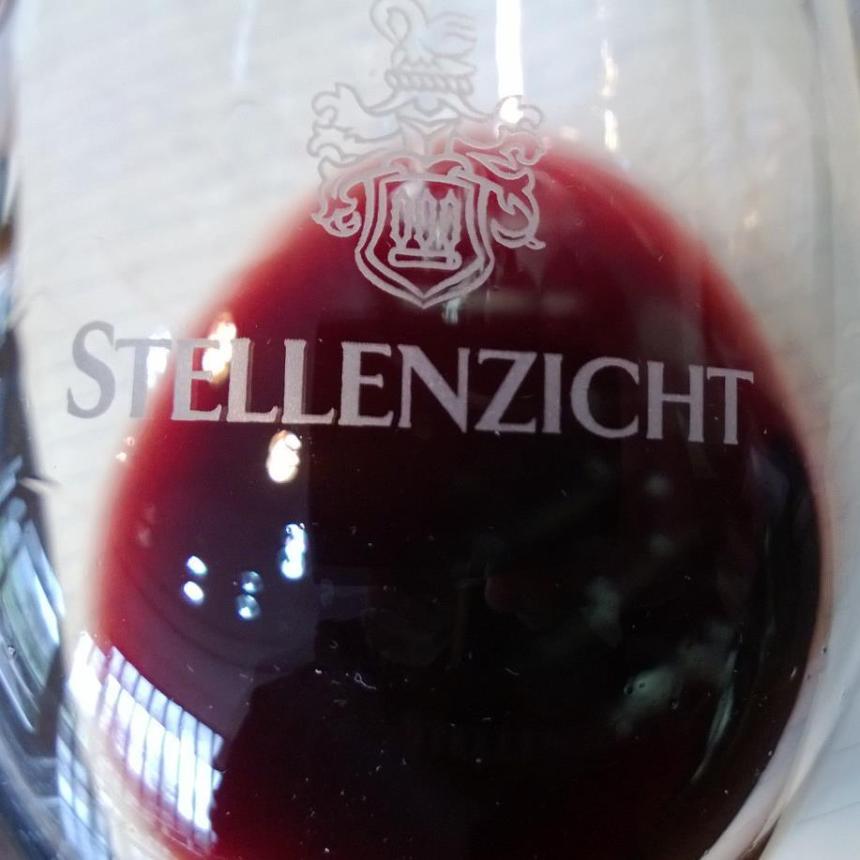
The co-owner of Ernie Els Wines is expanding his Stellenbosch presence, buying the neighboring Stellenzicht winery. Baron Hans von Staff-Reitzenstein, who has been majority shareholder in Ernie Els wines since 2015, has purchased the farm and winery from Lusan Holdings.

According to Els executives, the deal is part of a strategy to secure more of their own fruit. The 550-acre property in the Helderberg region, with 250 acres currently planted, is one of the largest in the region and significantly larger than Ernie Els Wines’ 178 acres. The purchase price was not disclosed, but industry sources say Stellenzicht was listed for $9.84 million.
|
|
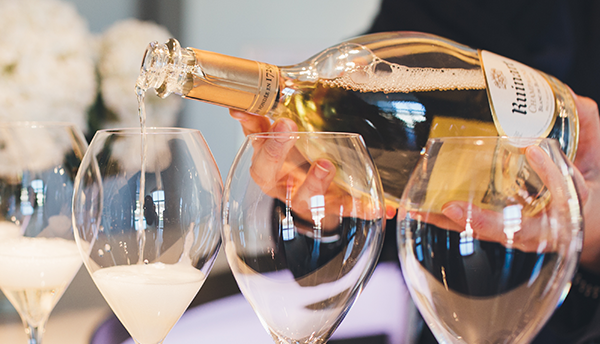 Bubbles are the soul of any champagne. Their delicate fizz, at once lively and refined, are what give champagne its character and personality.
Unlike non-sparkling wines, champagne is privy to a second fermentation inside the bottle, which infuses the base wine with carbon dioxide. This alone doesn’t create bubbles, though. Rather, they appear when you pop the cork, exposing the liquid to impurities in the air and along the sides of your glass: a vital and necessary step.
A single glass of champagne will give rise to nearly a million bubbles, which fill the air with their scent as they surface and burst at the top. The size of those bubbles depends on their age: the older a champagne, the more delicate its sparkle. A subtlety you can experience firsthand in a glass of Dom Ruinart.
FROM FRÉDÉRIC PANAÏOTIS
« The bubbles play an important role in carrying aromas. »
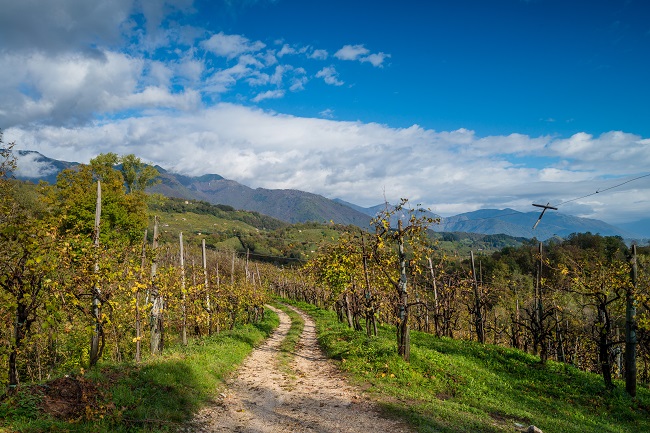 The Assembly of Consortium Prosecco DOC, confirmed the commitment of the President Stefano Zanette to ban, for the vintage 2018, Glyphosate, Folpet and Mancozeb, removing the same principles, already this year, from the Handbook viticulture 2017.
“We planted the first nail and from here we will never go back, but the summit is ambitious, the path towards total sustainability is long, we have to plan well the subsequent moves” said President Stefano Zanette commenting the success of the ordinary assembly that approved all agenda items, even those less obvious.
The Assembly has decided to vote in favor of the elimination of Glyphosate, Mancozeb and Folpet from the wine year 2018 with an unprecedented measure will become mandatory for all producers who want to be assured of the possibility of producing Prosecco Doc.
This first concrete step toward the system certification, announced just a month ago during a press conference that provoked strong discussion, is the confirmation of the determination with which the Consortium is progressing towards sustainability. More thrust that includes not only farming practices that protect water, air and soil, but also the economic and social sustainability.
“The year ahead – explains Zanette – is the time required to enable us to adopt, with extensive involvement of the supply chain, the most suitable solutions to achieve a goal even more ambitious: a certification of sustainability for the entire name.
As I have explained to our members, this is a choice that could be called ‘social responsibility‘, which has nothing to do with the scientific assessments of competence of other bodies. The science instead there was a comfort to ensure that, even without these substances, we can make a quality wine! “.
“I am convinced – continued Zanette – that beyond the concerns expressed by some members, we will be able, once again, to demonstrate the maturity and dynamism of our name that so proves not to look only to profit but can interpret in a responsible way the expectations of consumer and residents in our territories “.
“Now I appeal to the sense of responsibility of everyone – concluded Zanette – to successfully carry out the cultural leap that we wanted to accomplish. It ‘a difficult passage that I for first I wanted to experience in my company so I clearly know what I would have asked you to do. “
The Consortium provides all the necessary support to the companies for better address this difficult but irreversible step.
 A Sur-lie reminds us ancient vinifications styles. When wines used to be just a little less perfect, and imperfections were probably their greatest qualities.
Not just a fragrant and fresh wine, easy to pair, but also an easy-going wine concept.” This sur-lie comes from my idea of playing the variety ‘native Corvina: natural, fragrant, fresh hearted. A garden wine to drink without clock.” sayd Camilla Rossi Chauvent owner of Massimago wine estate.
A new way to introduce and approach a unique territory.

 Vineyards Magazine