Author Archives: VinoeStile

2017 Ornellaia harvest

“Here at Ornellaia 2017 has been an unusually early year dominated by a long lasting drought period, which has forced us to startharvest two weeks earlier than usual. It is certainly a challenging year with a very small crop and very concentrated fruit. The Merlot have been harvested from last week of August to first week of September. The Cabernets have benefitted from some rain in mid September and could be picked in perfect conditions in the last decade of the month.”

“In the cellar it was crucial to drastically sort out any dehydrated and dried fruit and go through very gentle extraction with moderate maceration times. The quality of the red wines is definitely a nice surprise, they are certainly ripe and concentrated, with intense and dark colour, abundant but ripe and silky tannins and, luckily, healthy acidities to balance out the alcohol levels. The whites are equally beautiful for all varieties, they are concentrated with bright aromatics and excellent acidities.” Axel Heinz, winemaker and Estate Director

Barolo Castle, “Food & Wine Experiences”

The “Food & Wine Experiences” will be part of the new “permanent project” of Collisioni

Every weekend, from October 7th to November 26th 2017, in the Barolo Castle, tastings of the wines of prestigious wine producing companies of Langhe paired with top quality food products.


Strada del Barolo e grandi vini di Langa and Collisioni have sealed a deal to include the Food & Wine Experiences in the new permanent project launched last May at Castello Comunale Falletti di Barolo and entirely addressed to the promotion of the best territories of Piedmont in a tourist perspective.

Aim of the new permanent project of Collisioni is to amaze the thousands of tourists that come here every year so that they will fall in love with Piedmont. In other words, the goal is to better tell the wonderful places they can visit, as well as the great wines and top quality food production they can find and discover.

The project Wine Tasting Experience® fully expresses the soul of this initiative: and here stands the reason of this partnership. On schedule there is a calendar with 16 Food & Wine Experiences, some special Wine Tasting Experiences® paired with top quality food productions of Piedmont. Exclusive tastings addressed to a public of international wine lovers during which the great wines of Langhe e Roero will meet D.O.P. cheeses and cold cuts and other culinary delicacies of the region in an extraordinary explosion of flavours!

The events will be from October 7th to November 26th 2017, every Saturday (in English) and Sunday (in Italian) at 11.30 in the courtyard of the Barolo Castle, know as Castello Comunale Falletti di Barolo.

The topics, that will rotate, are “The taste of the hills” and “The Crus of Barolo”: the first is an introductive journey among the most peculiar productions of Piedmont, with the tasting of four different wines among Arneis, Dolcetto, Barbera, Nebbiolo, Barolo and Moscato; the second is a travel marked by the tasting of three different Barolo labels. The tastings last 1.5 hours and include the tasting of 3 or 4 wines, according to the topic, and 3 or 4 tastings of food products.

It will be possible to buy the tickets online on www.winetastingexperience.it or directly on site at a cost of 30 euros per person.

Beside these appointments, the agreement with Collisioni also includes the use of the spaces in the courtyard of the castle for on demand Wine Tasting Experiences®. There will also be a promotional corner with the wines of the members of Strada del Barolo inside the Wine Bar, which will be located in the courtyard of the Barolo Castle.

www.winetastingexperience.it

2017 Eu wine grape harvest: the lowest in 36 years

2017 seems the poorest wine grape harvest in 36 years, this caused by heavy hailstorms, late frosts in spring and a hot, dry summer.

According to the European Commission, production of pressed juice, or must, in Spain was set to be down 16 percent from 2015/2016 volumes. In France it would be 17 percent lower and in Italy down by 21 percent. Wine must production across the 28 members of the EU is seen at 145.1 million hectoliters, down 14 percent from the 2015/2016 level.

Alta Langa, sparkling wine of the Alba Truffle Show

Alta Langa azienda Bera

From the 7th of October to the 26th of November, lots of opportunities to try out the pairing between the white truffle and Piedmont’s finest sparkling wine

The sparkle of Alta Langa and white truffle: Alta Langa is the Official Sparkling Wine of the Alba Truffle Show for this 87th edition of the event.

Lots of different events will be taking place from the 7th of October to the 26th November, offering visitors the chance to explore all the nuances of the pairing between Alta Langa and white truffle, celebrating the strong link between the unison of flavours and tradition, and the excellences of the local Langa produce.

Last Tuesday, 26 September, Piedmont’s finest sparkling wine was used for the opening toast at De Truffle. Alessi Design meets the Alba White Truffle and during the lunch that followed at Guido Ristorante Villa Reale Tenuta di Fontanafredda (chef Ugo Alciati). And it will be served again on the 3rd of October, for the toast at the press conference to present the event at the Foreign Press Association in Rome.

Alta Langa will be present at the official opening of the show on Friday the 6th of October, at the Teatro Sociale Busca di Alba, and at the Gala Dinner held at the Fondazione Ferrero.

During the Show, a space will be dedicated to tasting Alta Langa in the Grande Enoteca and an Alta Langa corner will be set up in the Sala Beppe Fenoglio, Cortile della Maddalena.

From cooking demonstrations by acclaimed chefs (Pasquale Laera, Luca Zecchin, Andrea Berton, Andrea Larossa, Michelangelo Mammoliti, Eugenio Boer, Cristina Bowerman, Stefano Paganini, Federico Gallo, Marco Giacosa, Marco Stabile, Ugo Alciati, Giampiero Vento, Luigi Taglienti, Mariuccia Roggero, Damiano Nigro, Davide Palluda, Christian Milone, Flavio Costa, Massimiliano Musso, Walter Ferretto, Francesco Oberto, Andrea Ribaldone, Davide Oldani, Massimo Camia, Marc Lanteri and Andrea Larossa) to meetings with guests, all the appointments of the Alba Truffle Show will be accompanied by Alta Langa.

And there will be an Alta Langa Lounge in the Salotto dei Gusti e dei Profumi (piazza Risorgimento).

MASSETO 2014


This year will enter the record books as one of the longest seasons and latest harvests ever, in which the unique qualities of the Masseto terroir played a crucial role.


 The 2014 vintage will remain one of the most unusual in Masseto’s history. A warm, rainy winter yielded to a mild, dry spring that encouraged normal vegetative development with a timely, even flowering. After normal conditions in July, August turned rainy and cold, making it difficult for the grapes to ripen and significantly increasing the risk of fungal diseases. However, meticulous work carried out in the vineyard throughout August, including leaf-pulling and anti-fungal treatments, allowed the grapes to remain healthy and arrive in excellent condition at harvest in September and October, when the weather was mostly sunny and dry. As always, great terroirs reveal their qualities, and in 2014 the blue clays of Masseto proved their enviable powers, swelling and making the soils impermeable, thus avoiding excessive accumulation of water and consequent dilution of the grapes. During the harvest, the painstaking selection of clusters was essential and some individual vineyard blocks were harvested in up to three separate passes. A rigorousquality-selection was also carried out on sorting tables, so that only sound, perfectly-ripe grapes went into the tanks. .

“Stylistically, the wine displays outstanding balance, with supple, velvety tannins and remarkably complex aromatics,” noted Alex Heinz, Winemaker and Estate Director. “This Masseto expresses a refined sensuality and silk-smooth seductiveness, all in its own distinctively classic, elegant fashion. The 2014 vintage is testimony to the incredible ability of Masseto to cope with adverse weather conditions, thanks as well to the crucial role played by the clay and by the overall natural balance of these vines. All of which amounts a harmonious combination of terroir and human interpretation.”

“This year has been an auspicious one for Masseto,” explained Alex Belson, Director of Masseto. “We have just started excavations into the heart of the Masseto hill to lay the foundations for a dedicated wine production facility that will be ready in time for the 2018 harvest. It has been incredibly exciting to see these blue clays emerge, impermeable and so distinctive, with their mysterious secrets of millions of years”

To offer some specifics regarding processing, the clusters, harvested by hand into 15kg boxes, were selected by hand on a double sorting tables before and after de-stemming, and then gently pressed. A full eight individual vineyard blocks were picked and vinified separately. Fermentations took place in tanks of both steel and wood, followed by a maceration of 15-20 days at a temperature between 25 and 30°C. Malolactic fermentation started in 100% new oak barrels, and the different lots were kept separate for the first 12 months of maturation. The wine was then assembled and reintroduced into the barrels for another year. After bottling, the wine was aged for an additional 12 months prior to release.

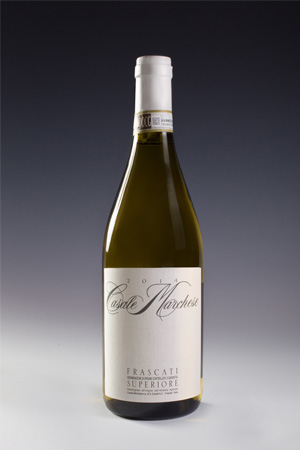
Casale Marchese, Frascati Superiore

The Casale Marchese winery estate, which extends over more than 50 hectares is dedicated mainly to specific grape cultivars. It is situated in the heart of the Frascati DOCG zone and overlooks one of the most charming landscapes of Rome and the Tuscolo hills, where vineyards interweave with ancient olive groves. The terrain is of volcanic origin and is ideal for this kind of crop as it has excellent drainage and varied exposures.

We tasted: Frascati Superiore DOCG 2015

This wine is a blend of grapes Malvasia del Lazio, Trebbiano toscano, Bonvino and Bellone. In the nose we noticed hints of tropical fruit, nuanced with light, herby floral notes.

In the mouth is robust, with a soft, elegant, mouthfilling finish. Frascati should always be consumed before the next harvest starts. Casale Marchese Frascati is very drinkable even as early as February-March, but it comes into its own as summer approaches, enhanced by a brief stay in the bottle.

As food pairing is an excellent aperitif and with fish recipes, meat and fish carpaccios, pizza, fresh goat cheese.

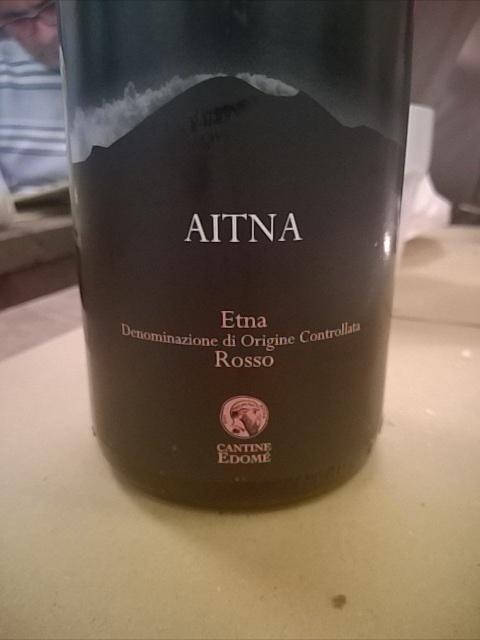
Aitna Etna Rosso

Aitna was a Greek-Siceliot polis located on the slope of the volcano Etna.  They called this wine Aitna to honour their volcano on which it grows, choosing the Aetna tetradrachm as our winery logo.

It is produced from autochthnous grapes: Nerello Mascalese and Nerello Cappuccio cultivated using the classic “alberello” system. They have been cultivated since ancient times and produce a wine enriched by flavours and scents. The sandy volcanic soil gives the wine unique and characteristic mineral notes. The vineyard of Edome’ cantine is situated in Passopisciaro, in the district of Feudo di Mezzo and it is at 700 m a.s.l.

We tasted: Etna Rosso 2014

It is a Ruby red wine with fine hints of violet. The bouquet is ethereal, spicy with hints of tobacco and vanilla. The flavor is full bodied, with the right amount of tannin, dry, persistent and harmonic. For the food matching it is ideal with  red meat, and seasoned cheese.

Malabalia, Mezzavilla, Barbera d’Alba Superiore

The vineyard belonging to the possession of Cascina Vallaretto, property of Canale Malabaila’s Counts from 1583, year of purchase by Roero’s Counts.

This wine is a 100% Barbera grape variety. The colour is intense ruby red with warm purple tones. The bouquet is impressive, concentrated and rich cherry, hot cherry jam, dark spices, chocolate and balsamic puffs. In the mouth has important structure characterized by a soft tannin, with a hint of vanilla. For food pairing this wine is Ideal with meats, salami and Parmesan cheese accompanied with the local friable breadsticks: the Rubatà.

Champagne will meet growing demand

At a meeting between the Syndicat Général des Vignerons (SGV) and the Unions des Maisons de Champagne (UMC) on 21 July in Epernay, it was agreed to fix 2017’s marketable yield at 10,800 kilograms per hectare, which is identical to last year’s figure.

However, this year’s limit includes the release of 500kg/ha from the reserve – still wine held in tanks, which is held back as security in case of a bad harvest, as well as to add balance and complexity to non-vintage blends.

As the quantity from the reserve is significantly lower than last year’s figure, which was 1,100kg/ha, it means that the amount of grapes that can be picked for making base wine for Champagne from this year’s harvest is higher in 2017 – it was agreed to set 2017’s harvest yield at 10,300 kilograms per hectare with the aforementioned 500kg/ha from the reserve taking the total to 10,800kg/ha.

Last year’s large allowance from the reserve was granted because the 2016 vintage was naturally low-yielding by Champagne standards due to late spring frosts, hail and, as a result, a high incidence of grey rot in the region.

In other words, to reach the desired 10,800kg/ha for 2016, more wine had to be released from still wine from previous harvests.

In contrast, this year, the Comité Champagne has recorded good conditions in the vineyards and a favourable weather forecast for harvesting, which together should ensure a natural yield of around 10-11,000kg/ha on average in the region.

It will be an early harvest too, with unusually warm weather early on in the season bringing forward the growing cycle by 10 days compared to the average over the past decade, according to the Comité Champagne, which has also forecast that harvesting will start in late August, making 2017 among the five earliest harvest start-dates in the region’s history. (Other vintages with an August start-date are 2003, 2007, 2011 and 2013).

With the total marketable yield for Champagne remaining the same, it is clear that the region is attempting to prevent an oversupply of Champagne, and this year’s limit continues a trend of keeping supply below 11,000kg/ha since 2013, when total yields were set at 10,500kg/ha (lower than the 11,000kg/ha total set in 2012, which in turn marked a 12% decrease on 2011).

But, while the total yield is the same in 2017 as 2016, retaining an identical level of supply actually points to a positive mood in the region – a yield of 10,800kg/ha translates into roughly 315 million bottles, which, in 2016, was significantly greater than worldwide sales of Champagne, which totalled 306 million.

Indeed, in January this year Michel Letter, the director of Mumm said during a discussion about yields from the 2016 harvest – that the region had thought sales of Champagne would be higher when the decision on yields was made in mid-2016.

“We were a bit optimistic”, he said, pointing out that the global market for Champagne was looking more promising in May and June last year when the yields were set, adding that the French and UK markets had declined more than expected, while the US had not risen as much as many in Champagne had initially thought.

Moving forward to the situation today, the Comité Champagne pointed out that marketable yield of 10,800kg/ha gives Champagne “the means to meet a growing demand”.

Venissa, the wine of Venice

(c) Mattia Mionetto

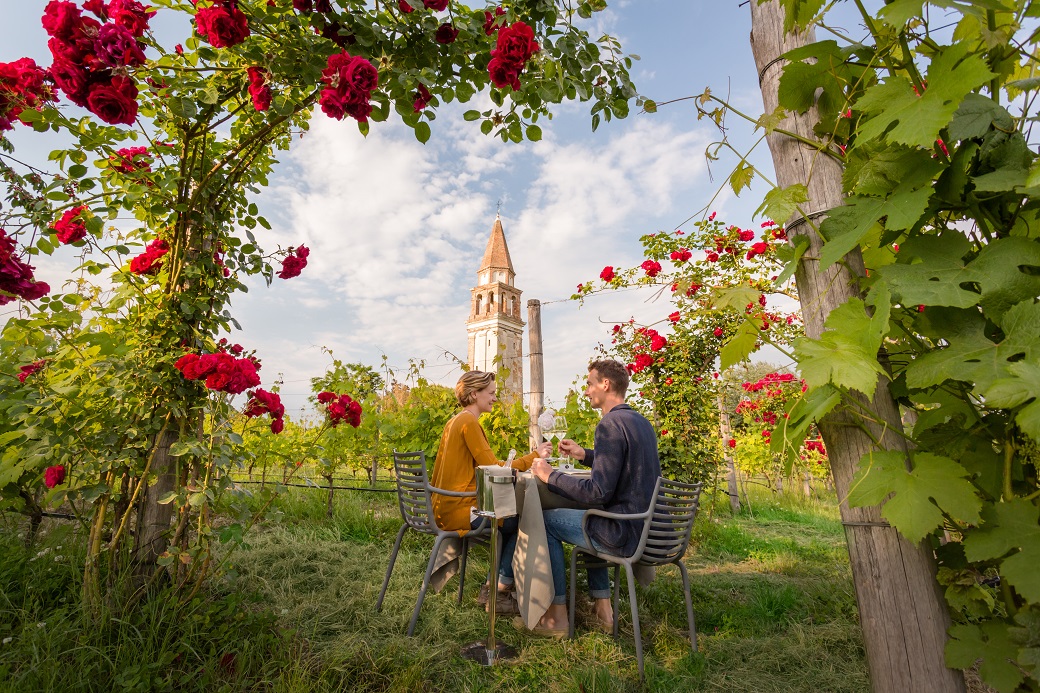
The Venissa Estate lies on Mazzorbo, one of the three islands of Native Venice, an archipelago of nature, colors, flavors, and art that also includes Burano and Torcello.

While accompanying several customers on a trip to Torcello, I noticed an old grapevine in a private garden beside the Cathedral of Santa Maria Assunta. I managed to persuade the owner to send me some of the grapes when they had matured. The crates arrived full of lovely, thick-skinned grapes with a brilliant golden color. It was the famous Dorona, also known as the golden grape, well-loved by the Venetians and served during the banquets of the Doges and then lost to history.” – Gianluca Bisol. Venissa’s story began by chance and resulted in an incredible discovery: some of the very last grapevines in Venice, the final trace of a winegrowing culture that was destroyed by the flood of 1966.

(c) Mattia Mionetto

It is a winemaking story that goes back more than 2000 years to 1100, when vineyards could be found in Piazza San Marco but whose ultimate destiny was to be cut down to make space for the great Venetian palazzos that the world admires today. There were many islands in the Venetian Lagoon where wine was produced until fifty years ago, especially on the islands of Mazzorbo, Burano, and Torcello, otherwise known as Native Venice. The Dorona di Venezia is a native white-skinned variety that adapted well to the high waters and the particular conditions of this unique terroir, and Gianluca Bisol discovered 88 vine plants in 2002 in the gardens and remaining vineyards of Venice.

After the first microvinifications were carried out, Gianluca Bisol and his colleagues decided to replant the variety, which, in the lagoon, produces a nectar that cannot be found anywhere else in the world. The ideal location turned out to be the island of Mazzorbo on the Scarpa Volo estate, which had been a walled vineyard and winery for centuries until the great flood of 1966. It is here that the Bisol family decided to replant 4000 vine plants of Dorona (less than 1 hectare) that produces just shy of 4000 bottles per year. Vinification is carried out by Desiderio Bisol and Roberto Cipresso, a renowned enologist with a passion for viticultural history. Cipresso calls for a long maceration on the skins, a practice once used by farmers, to obtain a white wine with the structure and longevity of a red. From the skins, the Venissa wine extracts the flavors and unique aromas typical of this inimitable terroir: notes of salt, honey, wormwood, and white peach.

Venissa has been a pioneer in bringing wine back to the lagoon, whose reputation is quickly spreading among international wine lovers as an ideal and unique place for viticulture. After Venissa came Rosso Venissa, a red wine produced from Merlot and Carmenere from a 50-year-old vineyard located on the island of Santa Cristina.

Both are wines that immediately drew the interest of wine connoisseurs. The first vintage of Rosso Venissa, the 2011 harvest, was awarded 93 points by the prestigious Italian Veronelli guide, while the 2010 vintage of Venissa was named one of the top 100 Italian wines by the highly respected Gatti Massobrio guide.


« Older Entries Recent Entries »